Blog

  • There Will Be No WeddingThere Will Be No Wedding

    There Will Be No WeddingThere Will Be No Wedding

    Many years have passed since those events, yet the memory still comes back clearly, as if it were only yesterday. Lily stepped into the room and stopped at the doorway. There before her stood Charlotte in her wedding dress, and she looked radiant. The gown suited her figure perfectly, and a quiet, almost weightless happiness shone in her eyes. Lily could not hold back her delight.

    “Oh my God, you look as if you’re glowing!” she exclaimed, unable to take her eyes from her friend. “I’m so happy for you! At last you’ve turned the page and opened your heart to new feelings, leaving Nathan behind. You’re really something!”

    Charlotte gave the slightest wince and her smile vanished at once. She reached quickly for the fastenings of the dress, trying not to meet Lily’s gaze.

    “I’d better take it off,” she muttered, unfastening the small hooks along the side with practiced fingers. “Only two weeks remain until the ceremony. If anything happens to this dress, we won’t find another like it.”

    Lily bit her lip. She realized at once that she had spoken out of turn. Why mention Nathan now? A good man had finally entered Charlotte’s life, and any reminder of the past was entirely out of place. Nathan had never been worth a single one of Charlotte’s tears, especially after all he had done.

    There had been a time when Charlotte truly believed he was the one. She had been certain their relationship was serious and lasting. But gradually everything began to fall apart. He started to draw away, finding reasons not to meet, then openly criticized her choices, her friends, her dreams. He persuaded her to drop a promising project at work, talked her out of an internship abroad, and finally insisted she change her career.

    Charlotte’s family could not understand what was happening to her. They watched her change and lose herself, yet they could do nothing. Attempts to talk turned into arguments. Nathan had convinced Charlotte that her relatives simply did not accept him and were trying to destroy their “perfect love.” The conflict grew until Charlotte almost stopped speaking to her parents.

    Then he disappeared. He left without explanation or even a note. All that remained was a deep wound in her heart and the child she chose to keep, no matter what.

    Now, watching her friend hurry out of the wedding dress, Lily felt a sharp stab of guilt. She had only wanted to share Charlotte’s happiness. She had never meant to awaken painful memories.

    Little Nathan had turned four. He was a lively, curious boy who asked questions about everything around him. Sometimes he wondered why the sky was blue, sometimes where the clouds went, and sometimes he examined insects with delight during walks. The staff at the nursery often remarked on his quick mind. Nathan learned new things easily, memorized rhymes without trouble, and listened with interest to long stories.

    He spent nearly all his time with his grandparents, Charlotte’s parents. They gladly took charge of their grandson and did their best to help him grow. They chose the nursery that included English lessons, took him to the swimming pool, and enrolled him in dance classes. Charlotte visited her son several times a week but never stayed longer than an hour.

    The reason was simple and painful. Little Nathan looked remarkably like his father, with the same dark curly hair, the same shaped eyes, and the same slightly teasing smile. Every time Charlotte looked at her son she seemed to return to the past, to the days when she had believed their family would be happy. She loved the boy with all her heart and felt proud of his successes, yet that love always brought a sharp, aching pain. As soon as she held him or met his eyes, tears would rise. She would turn away, pretend to adjust her clothes or search in her bag, and later cry quietly once he could not see.

    One evening Charlotte came to collect Nathan from her parents’ house. The boy sat on the carpet working on a puzzle, his brow furrowed in concentration. When he saw his mother he jumped up happily and ran to her.

    “Mom, look!” he pulled her toward the puzzle. “I’m nearly finished. There’s the house and the tree here, and over here there will be a dog!”

    Charlotte knelt beside him and tried to smile.

    “That’s lovely,” she said, patting his head. “Well done, you’re putting everything together so neatly.”

    Nathan paused, then looked up at her.

    “Mom, where’s my dad? All the other children at nursery have dads, but I don’t.”

    Charlotte froze. Everything inside her tightened, but she kept her voice calm.

    “I don’t know, love. Your dad is far away right now. But he does think about you.”

    “Why doesn’t he call?” Nathan frowned as if solving a hard problem. “I could tell him I learned to tie my own shoelaces!”

    “He’s just very busy,” Charlotte murmured, feeling a lump rise in her throat. “But I’m sure he’s proud of you.”

    The boy thought for a moment, nodded as though accepting her words, and returned to the puzzle.

    “All right. I’ll finish this house then, and Dad will see how clever I am!”

    Charlotte sat beside him, watching and swallowing her tears in silence. She wanted to say something more to comfort him, but no words came. Instead she reached out and smoothed his hair again, breathing in the scent of children’s shampoo and trying to hold on to this moment when her son was there, happy and trusting, despite all the questions she could not answer.

    Even so, Charlotte could not stop thinking about Nathan. Deep down she continued to find excuses for him. Perhaps something terrible had happened to him? Perhaps he had fallen into trouble and could not get in touch? Those thoughts helped her hold on and avoid sinking into despair.

    Her family and friends had tried more than once to speak plainly. Her mother gently hinted that she should not live in the past and should focus on her son and her own life. Friends spoke more directly: “He left you. It’s time to accept that and move on.” But Charlotte refused to listen. She argued passionately, recalling how happy they had been and the promises he had made. The discussions often ended with her withdrawing into herself while the others sighed and stepped back.

    At the same time Charlotte did not remain idle. Now and then she checked social media, rang old places where he might appear, and even posted requests for help in finding him. Nothing came of it. Yet she could not, or would not, accept that Nathan had simply walked away of his own choice and had no intention of returning.

    Then, after five long years, a man entered Charlotte’s life who managed to melt her heart. It happened almost by chance. They met at the birthday party of a mutual friend. Edward caught her attention at once. He was reliable, there was no other way to describe him. He was genuine, sincere, kind, and caring, the very best.

    From the first meetings Charlotte felt she could be herself with him. Edward did not demand a show of cheerfulness or a constant smile. If she was tired he simply suggested they go home. If she wanted silence he did not try to draw her out. He proved to be the serious, steady man she seemed to have been seeking, and above all he was truly in love with her.

    His feelings showed in small ways, in learning in advance what coffee she liked, in remembering her colleagues’ names and asking after them, in quietly taking on everyday matters. He seemed ready to do anything for her, and Charlotte, if truth be told, made full use of that devotion.

    What touched her most was how easily Edward connected with little Nathan. At their first meeting the boy watched the stranger warily, holding his mother’s hand. But Edward surprised her here too. He crouched down to Nathan’s level and asked which cartoons he liked. Within half an hour they were building with blocks together, and Nathan was excitedly showing the guest his favorite toys.

    Before long Edward became a regular visitor at Charlotte’s parents’ house where Nathan lived. He took the boy to the park, taught him to ride a bicycle, and read stories at bedtime. One day, when Charlotte found them drawing together, Edward said calmly, “I would like to be a real father to him. If you allow it, I am ready to adopt Nathan.”

    Lily rejoiced sincerely for her friend. She saw Charlotte changing gradually, a new light in her eyes, the constant shadow of worry gone from her face, her smile becoming genuine rather than forced. But today Lily had made a careless mistake by mentioning Nathan senior and touching an old wound. Now she could only hope Charlotte had not been too upset and would not sink into gloom.

    Yet Charlotte behaved surprisingly calmly.

    “I’ve grown up,” she said with a faint smile, laying the dress carefully on the bed. “And I know clearly that my feelings for Nathan belong in the past. Sometimes I even regret giving my son the same name. I was foolish and would listen to no one’s advice. How did you all bear with me?”

    Lily touched her hand gently.

    “Are you planning to take Nathan from your parents?”

    “Yes,” Charlotte answered, becoming serious at once. “Edward especially insists on it. He even suggested changing the boy’s name. He says it will be easier for me. In any case the birth certificate will need updating once the adoption is complete.”

    She paused, watching raindrops slide down the window glass.

    “You know, I used to fear that little Nathan would always remind me of the past. But now I see I was wrong. He is my son, and he deserves a full childhood with two parents who love him. His grandparents are wonderful, of course, but they cannot replace parents. And Edward understands that. He truly wants to be a father to him. You should see how attached he has become to the boy.”

    “That’s a fine idea,” Lily said brightly. “You could ask your son which name he prefers. It might help him adjust more quickly.”

    “I’m not sure. I still don’t know what to do. We have time to think it over.”

    In truth Charlotte was not being entirely open. She still loved Nathan, and that love had never faded. It had simply led to nothing good. Her parents were growing more reluctant to let her see her son because she nearly cried at every visit, frightening the child. Her friends no longer wished to hear about her troubles and privately doubted her judgment. It was time to let the past go and focus on the present, such as the wedding.

    The only trouble was that it proved terribly hard.

    Edward was undoubtedly a good man, yet he was not Nathan. Charlotte felt no deep affection for him and was simply using his attachment for her own ends.

    If Nathan returned, she would give anything to be with him.

    There will be no wedding, Charlotte declared with shining eyes, almost dancing in place. We are parting, like ships passing in the night.

    Edward stared at her in bewilderment, trying to grasp her words. Only a week remained until the wedding. They had already chosen the menu, selected the flowers, and invited the guests. Everything had seemed so real and close. And now she said there would be no wedding.

    “What do you mean there will be none?” he asked, trying to decide whether his fiancée was serious or making a poor joke. “Charlotte, what happened? Explain properly.”

    But Charlotte brushed aside his questions. She paced the room, grabbing things from shelves and tossing them into an open suitcase. Her eyes sparkled and an unfamiliar, genuine smile played on her lips.

    “Nathan is back!” she burst out, not looking at Edward. There was such real happiness in her voice that something inside him broke. “He arrived yesterday and we talked. I could hardly believe it at first!”

    She stopped at last and turned to him. There was no regret in her gaze, only delight and impatience.

    “I’m grateful for the last six months,” she continued, softening her tone a little. “It was calm and comfortable with you. You’re a good man, Edward. But I never truly loved you. Now that I have a chance at real happiness, I cannot let it slip away.”

    Edward felt a cold emptiness spreading in his chest. Nathan again. The same man Charlotte spoke of with such adoration that Edward felt like an outsider. He had known she still thought of him but had hoped time and their life together would change her feelings.

    “Have you spoken to him already?” he finally managed, his voice strained as if he lacked air. “What did he say? What excuse did he offer this time?”

    “He made no excuses,” Charlotte replied sharply. “He simply said he understood what a mistake he had made. That all this time he thought only of me!”

    She turned away once more and continued packing while Edward stood still, feeling the world around him slowly lose its color.

    “We spoke on the phone,” she went on, sorting through the desk drawer to check if anything important remained. “His parents insisted he study in London and he could not warn me he was leaving. Can you imagine? All that time he thought only of me but had no way to contact anyone. Now everything will be fine. We will be together and live a long, happy life!”

    In Charlotte’s memory rose that very conversation with Nathan, their first phone call after the long separation. His voice had sounded agitated and slightly halting.

    “Charlotte, I know it all looks terrible. But understand, my parents gave me no choice. They said either study in London or they would disown me. I tried to resist, I truly did. But they blocked all my bank cards and cut off access to the accounts. I did not even have my own phone.”

    “Why didn’t you call me even once?” Charlotte’s voice had trembled, though she tried hard not to show her hurt.

    “What could I have told you? That I had been too weak to stand up to my parents?”

    Listening to his stumbling explanations, Charlotte had felt warmth spread inside her. All the hurt and bitterness of the recent months seemed to dissolve in his voice. She realized she had been waiting for that call every day, every hour.

    “Everything will be different now,” Nathan had continued. “I have quit my studies and returned. I am not going anywhere else.”

    Those words echoed in her mind as she now stood before Edward.

    She fell silent for a moment, glancing quickly around the room as if making sure she had forgotten nothing. Only then did she notice how pale Edward had become. His face was almost white and his gaze fixed on one spot, as if he were looking straight through her.

    “Don’t worry,” Charlotte added more softly but with no doubt in her voice. “I have already told everyone the wedding is off. I explained everything and asked them not to trouble you. Of course people will feel sorry for you, but you’re strong and will manage.”

    She pulled the suitcase toward herself and adjusted the handle, as if that were the most important task now. Then she looked at Edward again, and there was no regret or hesitation in her eyes.

    “And please don’t call me, don’t send pointless messages, and don’t leave voicemails,” she said firmly, almost as an order. “My decision is final and I will not change it under any circumstances!”

    She lifted the suitcase, swayed slightly from its weight, then straightened and headed for the door, as if any delay might shake her resolve.

    Edward stood in the middle of the room, feeling everything inside him tighten with pain and confusion. He drew a deep breath, trying to steady himself. He wanted to shout and demand explanations but held back. He did not want to appear weak or desperate. He clenched his fists, then slowly relaxed them, and spoke in a calm, almost everyday tone.

    “Are you sure you’re not rushing?” he asked, watching Charlotte closely.

    She stopped at the door, holding the suitcase handle, but did not turn. Her shoulders were tense, her fingers gripping the leather handle tightly.

    “What if he doesn’t want to resume the relationship?” Edward continued, stepping nearer. “Or refuses to acknowledge his son? Or perhaps he’s already proposed to someone else?”

    Charlotte spun around. Her face flushed with excitement and irritation. She took several steps toward Edward as if to prove something and make him understand.

    “He invited me for a serious talk!” she burst out. “That’s enough! And stop trying to make him sound bad. Nathan isn’t like that!”

    Her voice faltered on the last words, but she pulled herself together at once, stood taller, and tugged the suitcase toward the door again.

    “You could at least help,” she muttered through her teeth, struggling with the heavy case.

    Edward stepped forward automatically, as if truly about to assist, then stopped. Why help someone who had trampled on his feelings? He could see clearly that mentally she was already far away, beside Nathan. Her eyes held confidence, almost elation. A new life full of happiness and love was about to begin. She was clearly picturing Nathan greeting her with a smile, saying everything would be fine, that they would finally be together.

    But reality was different. Nathan, who had invited her for a serious talk, had no intention of proposing or swearing eternal love. He only wanted to explain and close the old chapter so he could start a new one without Charlotte. Especially since he was already married.

    Carried away by her dreams, Charlotte did not see what was plain. She had waited so long for this moment that she was ready to believe anything rather than face disappointment again.

    After dragging the suitcase to the door with difficulty she paused for a second, her hand on the handle, as if about to speak. But she thought better of it, flung the door open and left without looking back.

    Edward remained in the middle of the room, staring at the closed door. A faint scent of her perfume still lingered in the air, and her last words echoed in his ears: “Nathan isn’t like that!”

    He sank slowly onto a chair, overcome by a heavy wave of tiredness. Everything had happened too quickly and too finally. Now he would have to learn to live with it, without Charlotte, without plans for the future, without illusions.

    Many years later the memory still surfaces, showing how quickly certainty can turn to loss.

    Nathan opened the door, surprised by such an early visit. On the threshold stood Charlotte with two suitcases, her face glowing with joy and her eyes bright with expectation. He froze, unable to utter a word. Only one thought turned in his head: how could she have been so mistaken?

    He had been certain everything was long over. When Charlotte began seeing Edward, Nathan had finally breathed a sigh of relief. Now he could return quietly to his hometown, live there with his wife, and not fear sudden calls, tears, or accusations. He had even felt grateful to Charlotte for finding someone else. It had solved every problem at once.

    Yes, he had phoned her and tried to explain that everything had changed, even suggesting they meet on neutral ground, but it had been nothing more than a formality.

    And now she stood at his door with her luggage, clearly expecting something more than a conversation. Nathan stepped back without thinking, trying to gather his thoughts.

    “Nathan!” Charlotte exclaimed as soon as she saw him. “I’ve decided everything. I’m here and we will finally be together!”

    Her voice sounded so certain, as if no other outcome were possible. She moved forward, but Nathan raised his hand instinctively to stop her.

    “Charlotte, wait,” he began, trying to speak as gently as possible. “You probably don’t know everything.”

    She frowned and her smile slowly faded.

    “What do you mean? We agreed to meet and discuss everything!”

    Nathan drew a deep breath, knowing the moment could not be avoided.

    “I’m married, Charlotte. For two years now. My wife and I are very happy.”

    Charlotte froze, her eyes widening in shock. She said nothing for several seconds, as if she could not believe what she had heard. Then her face twisted, a mixture of panic, hurt, and anger in her eyes.

    “What are you saying?” she whispered, shaking her head. “That cannot be. You called me and said everything had changed!”

    “I called to say a proper goodbye,” Nathan answered quietly. “I wanted to explain that time had passed and each of us now has our own life. But you seem to have understood it differently.”

    Charlotte stepped back, her hands trembling. She clenched her fists, trying to control herself, but emotion overwhelmed her.

    “You lied to me the whole time!” she cried, her voice shaking with anger. “How could you do that? I gave up everything for you!”

    Nathan felt irritation rising inside him. He had not wanted a scene or to justify himself, but Charlotte clearly would not leave without answers.

    “I never promised you anything,” he said firmly. “You decided we would be together. I simply did not want to hurt you, so I chose my words carefully. But now it is clear, isn’t it?”

    Charlotte cried out, grabbed one suitcase and hurled it to the floor with force. Things scattered across the hallway, but she paid no attention. She screamed accusations and demands, her voice growing louder and louder.

    Nathan had to guide her firmly but politely into the hallway and close the door, hoping that would end the matter. But Charlotte did not calm down. She banged on the door, shouted his name. Neighbors began to peer out from their flats, some coughing in disapproval, others complaining loudly.

    After an hour, when her shouts grew even louder and the neighbors seriously threatened to call the police, she finally left. Before going she turned, looked at Nathan’s door, and cried through her tears:

    “I’ll be back! You’ll regret this!”

    Nathan closed his eyes, feeling exhaustion wash over him. He knew this was not the end. Charlotte was stubborn, and once she had set her mind on something she would not give up easily.

    He went into the living room, sat on the sofa, and thought. He needed to act quickly. Staying in this flat was no longer possible. Charlotte might return, cause another scene, and disturb the neighbors. Nathan took out his phone and opened a property website.

    “I need to sell this place and find somewhere else,” he decided. “Preferably on the other side of the city.”

    Charlotte walked along the street without noticing anything around her. Tears blurred her eyes, fragments of thoughts spun in her head, and her heart felt heavy and empty. She still could not fully grasp what had happened. In her imagination Nathan was to have met her with open arms, saying he had been waiting for this moment, that they would finally be together. But reality had proved cruel and merciless.

    She wandered the city for a long time, trying to gather her strength. Her feet led her to Edward’s door. Charlotte stopped at the entrance, wiped her tears, and tidied her hair, wanting to appear at least somewhat composed. Taking a deep breath, she went up to the right floor and pressed the bell uncertainly.

    Edward did not open at once. When he finally appeared in the doorway his face remained cold and distant. He looked at Charlotte in silence, making no move to invite her inside.

    “Edward, please,” she began in a trembling voice. “I know what I’ve done. I understand how foolish and cruel it was. But I want to put it right.”

    She fell silent, searching for words. Fresh tears glistened in her eyes.

    “I’ll never mention Nathan’s name again,” she continued, looking him straight in the eyes. “I swear. All this was a mistake. I’ve realized I can only be happy with you. Please give me another chance.”

    Her voice sounded sincere, almost desperate. At that moment she truly believed what she said. It seemed to her that if Edward forgave her, everything would work out.

    Edward slowly shook his head. No, he was not falling for that a second time.

    “Charlotte,” he said quietly, “you’ve already decided everything. A few hours ago you stood in my flat with suitcases and said you were leaving for him. You were certain of your choice.”

    “I was wrong then!” she interrupted. “I didn’t understand what I was doing! I was upset!”

    Edward sighed and ran a hand through his hair. It was difficult, but he knew he could not let emotion rule him again.

    “You didn’t just leave me. You left for him. You made a choice and I accepted it. Now that it hasn’t worked out, you want to come back?”

    “Yes!” Charlotte exclaimed. “Because I love you. Only you.”

    He was silent for a few seconds, then gave a small smile and spoke firmly.

    “I no longer believe in the sincerity of your words. Goodbye.”

    Charlotte felt something break inside her. Edward looked at her calmly, without anger, yet there was no doubt in his eyes. He really did not believe her any longer.

    “Please,” she whispered, but her voice trembled and broke.

    “I’m sorry,” Edward said. “But this will be better for both of us.”

    He closed the door, leaving Charlotte standing in the empty corridor. She remained motionless for a few more seconds, then slowly sank onto a step, covered her face with her hands, and wept. This time the tears were not from anger or hurt but from the bitter realization that she had lost both Nathan and Edward and now had no idea how to go on.Many years have passed since those events, yet the memory still comes back clearly, as if it were only yesterday. Lily stepped into the room and stopped at the doorway. There before her stood Charlotte in her wedding dress, and she looked radiant. The gown suited her figure perfectly, and a quiet, almost weightless happiness shone in her eyes. Lily could not hold back her delight.

    “Oh my God, you look as if you’re glowing!” she exclaimed, unable to take her eyes from her friend. “I’m so happy for you! At last you’ve turned the page and opened your heart to new feelings, leaving Nathan behind. You’re really something!”

    Charlotte gave the slightest wince and her smile vanished at once. She reached quickly for the fastenings of the dress, trying not to meet Lily’s gaze.

    “I’d better take it off,” she muttered, unfastening the small hooks along the side with practiced fingers. “Only two weeks remain until the ceremony. If anything happens to this dress, we won’t find another like it.”

    Lily bit her lip. She realized at once that she had spoken out of turn. Why mention Nathan now? A good man had finally entered Charlotte’s life, and any reminder of the past was entirely out of place. Nathan had never been worth a single one of Charlotte’s tears, especially after all he had done.

    There had been a time when Charlotte truly believed he was the one. She had been certain their relationship was serious and lasting. But gradually everything began to fall apart. He started to draw away, finding reasons not to meet, then openly criticized her choices, her friends, her dreams. He persuaded her to drop a promising project at work, talked her out of an internship abroad, and finally insisted she change her career.

    Charlotte’s family could not understand what was happening to her. They watched her change and lose herself, yet they could do nothing. Attempts to talk turned into arguments. Nathan had convinced Charlotte that her relatives simply did not accept him and were trying to destroy their “perfect love.” The conflict grew until Charlotte almost stopped speaking to her parents.

    Then he disappeared. He left without explanation or even a note. All that remained was a deep wound in her heart and the child she chose to keep, no matter what.

    Now, watching her friend hurry out of the wedding dress, Lily felt a sharp stab of guilt. She had only wanted to share Charlotte’s happiness. She had never meant to awaken painful memories.

    Little Nathan had turned four. He was a lively, curious boy who asked questions about everything around him. Sometimes he wondered why the sky was blue, sometimes where the clouds went, and sometimes he examined insects with delight during walks. The staff at the nursery often remarked on his quick mind. Nathan learned new things easily, memorized rhymes without trouble, and listened with interest to long stories.

    He spent nearly all his time with his grandparents, Charlotte’s parents. They gladly took charge of their grandson and did their best to help him grow. They chose the nursery that included English lessons, took him to the swimming pool, and enrolled him in dance classes. Charlotte visited her son several times a week but never stayed longer than an hour.

    The reason was simple and painful. Little Nathan looked remarkably like his father, with the same dark curly hair, the same shaped eyes, and the same slightly teasing smile. Every time Charlotte looked at her son she seemed to return to the past, to the days when she had believed their family would be happy. She loved the boy with all her heart and felt proud of his successes, yet that love always brought a sharp, aching pain. As soon as she held him or met his eyes, tears would rise. She would turn away, pretend to adjust her clothes or search in her bag, and later cry quietly once he could not see.

    One evening Charlotte came to collect Nathan from her parents’ house. The boy sat on the carpet working on a puzzle, his brow furrowed in concentration. When he saw his mother he jumped up happily and ran to her.

    “Mom, look!” he pulled her toward the puzzle. “I’m nearly finished. There’s the house and the tree here, and over here there will be a dog!”

    Charlotte knelt beside him and tried to smile.

    “That’s lovely,” she said, patting his head. “Well done, you’re putting everything together so neatly.”

    Nathan paused, then looked up at her.

    “Mom, where’s my dad? All the other children at nursery have dads, but I don’t.”

    Charlotte froze. Everything inside her tightened, but she kept her voice calm.

    “I don’t know, love. Your dad is far away right now. But he does think about you.”

    “Why doesn’t he call?” Nathan frowned as if solving a hard problem. “I could tell him I learned to tie my own shoelaces!”

    “He’s just very busy,” Charlotte murmured, feeling a lump rise in her throat. “But I’m sure he’s proud of you.”

    The boy thought for a moment, nodded as though accepting her words, and returned to the puzzle.

    “All right. I’ll finish this house then, and Dad will see how clever I am!”

    Charlotte sat beside him, watching and swallowing her tears in silence. She wanted to say something more to comfort him, but no words came. Instead she reached out and smoothed his hair again, breathing in the scent of children’s shampoo and trying to hold on to this moment when her son was there, happy and trusting, despite all the questions she could not answer.

    Even so, Charlotte could not stop thinking about Nathan. Deep down she continued to find excuses for him. Perhaps something terrible had happened to him? Perhaps he had fallen into trouble and could not get in touch? Those thoughts helped her hold on and avoid sinking into despair.

    Her family and friends had tried more than once to speak plainly. Her mother gently hinted that she should not live in the past and should focus on her son and her own life. Friends spoke more directly: “He left you. It’s time to accept that and move on.” But Charlotte refused to listen. She argued passionately, recalling how happy they had been and the promises he had made. The discussions often ended with her withdrawing into herself while the others sighed and stepped back.

    At the same time Charlotte did not remain idle. Now and then she checked social media, rang old places where he might appear, and even posted requests for help in finding him. Nothing came of it. Yet she could not, or would not, accept that Nathan had simply walked away of his own choice and had no intention of returning.

    Then, after five long years, a man entered Charlotte’s life who managed to melt her heart. It happened almost by chance. They met at the birthday party of a mutual friend. Edward caught her attention at once. He was reliable, there was no other way to describe him. He was genuine, sincere, kind, and caring, the very best.

    From the first meetings Charlotte felt she could be herself with him. Edward did not demand a show of cheerfulness or a constant smile. If she was tired he simply suggested they go home. If she wanted silence he did not try to draw her out. He proved to be the serious, steady man she seemed to have been seeking, and above all he was truly in love with her.

    His feelings showed in small ways, in learning in advance what coffee she liked, in remembering her colleagues’ names and asking after them, in quietly taking on everyday matters. He seemed ready to do anything for her, and Charlotte, if truth be told, made full use of that devotion.

    What touched her most was how easily Edward connected with little Nathan. At their first meeting the boy watched the stranger warily, holding his mother’s hand. But Edward surprised her here too. He crouched down to Nathan’s level and asked which cartoons he liked. Within half an hour they were building with blocks together, and Nathan was excitedly showing the guest his favorite toys.

    Before long Edward became a regular visitor at Charlotte’s parents’ house where Nathan lived. He took the boy to the park, taught him to ride a bicycle, and read stories at bedtime. One day, when Charlotte found them drawing together, Edward said calmly, “I would like to be a real father to him. If you allow it, I am ready to adopt Nathan.”

    Lily rejoiced sincerely for her friend. She saw Charlotte changing gradually, a new light in her eyes, the constant shadow of worry gone from her face, her smile becoming genuine rather than forced. But today Lily had made a careless mistake by mentioning Nathan senior and touching an old wound. Now she could only hope Charlotte had not been too upset and would not sink into gloom.

    Yet Charlotte behaved surprisingly calmly.

    “I’ve grown up,” she said with a faint smile, laying the dress carefully on the bed. “And I know clearly that my feelings for Nathan belong in the past. Sometimes I even regret giving my son the same name. I was foolish and would listen to no one’s advice. How did you all bear with me?”

    Lily touched her hand gently.

    “Are you planning to take Nathan from your parents?”

    “Yes,” Charlotte answered, becoming serious at once. “Edward especially insists on it. He even suggested changing the boy’s name. He says it will be easier for me. In any case the birth certificate will need updating once the adoption is complete.”

    She paused, watching raindrops slide down the window glass.

    “You know, I used to fear that little Nathan would always remind me of the past. But now I see I was wrong. He is my son, and he deserves a full childhood with two parents who love him. His grandparents are wonderful, of course, but they cannot replace parents. And Edward understands that. He truly wants to be a father to him. You should see how attached he has become to the boy.”

    “That’s a fine idea,” Lily said brightly. “You could ask your son which name he prefers. It might help him adjust more quickly.”

    “I’m not sure. I still don’t know what to do. We have time to think it over.”

    In truth Charlotte was not being entirely open. She still loved Nathan, and that love had never faded. It had simply led to nothing good. Her parents were growing more reluctant to let her see her son because she nearly cried at every visit, frightening the child. Her friends no longer wished to hear about her troubles and privately doubted her judgment. It was time to let the past go and focus on the present, such as the wedding.

    The only trouble was that it proved terribly hard.

    Edward was undoubtedly a good man, yet he was not Nathan. Charlotte felt no deep affection for him and was simply using his attachment for her own ends.

    If Nathan returned, she would give anything to be with him.

    There will be no wedding, Charlotte declared with shining eyes, almost dancing in place. We are parting, like ships passing in the night.

    Edward stared at her in bewilderment, trying to grasp her words. Only a week remained until the wedding. They had already chosen the menu, selected the flowers, and invited the guests. Everything had seemed so real and close. And now she said there would be no wedding.

    “What do you mean there will be none?” he asked, trying to decide whether his fiancée was serious or making a poor joke. “Charlotte, what happened? Explain properly.”

    But Charlotte brushed aside his questions. She paced the room, grabbing things from shelves and tossing them into an open suitcase. Her eyes sparkled and an unfamiliar, genuine smile played on her lips.

    “Nathan is back!” she burst out, not looking at Edward. There was such real happiness in her voice that something inside him broke. “He arrived yesterday and we talked. I could hardly believe it at first!”

    She stopped at last and turned to him. There was no regret in her gaze, only delight and impatience.

    “I’m grateful for the last six months,” she continued, softening her tone a little. “It was calm and comfortable with you. You’re a good man, Edward. But I never truly loved you. Now that I have a chance at real happiness, I cannot let it slip away.”

    Edward felt a cold emptiness spreading in his chest. Nathan again. The same man Charlotte spoke of with such adoration that Edward felt like an outsider. He had known she still thought of him but had hoped time and their life together would change her feelings.

    “Have you spoken to him already?” he finally managed, his voice strained as if he lacked air. “What did he say? What excuse did he offer this time?”

    “He made no excuses,” Charlotte replied sharply. “He simply said he understood what a mistake he had made. That all this time he thought only of me!”

    She turned away once more and continued packing while Edward stood still, feeling the world around him slowly lose its color.

    “We spoke on the phone,” she went on, sorting through the desk drawer to check if anything important remained. “His parents insisted he study in London and he could not warn me he was leaving. Can you imagine? All that time he thought only of me but had no way to contact anyone. Now everything will be fine. We will be together and live a long, happy life!”

    In Charlotte’s memory rose that very conversation with Nathan, their first phone call after the long separation. His voice had sounded agitated and slightly halting.

    “Charlotte, I know it all looks terrible. But understand, my parents gave me no choice. They said either study in London or they would disown me. I tried to resist, I truly did. But they blocked all my bank cards and cut off access to the accounts. I did not even have my own phone.”

    “Why didn’t you call me even once?” Charlotte’s voice had trembled, though she tried hard not to show her hurt.

    “What could I have told you? That I had been too weak to stand up to my parents?”

    Listening to his stumbling explanations, Charlotte had felt warmth spread inside her. All the hurt and bitterness of the recent months seemed to dissolve in his voice. She realized she had been waiting for that call every day, every hour.

    “Everything will be different now,” Nathan had continued. “I have quit my studies and returned. I am not going anywhere else.”

    Those words echoed in her mind as she now stood before Edward.

    She fell silent for a moment, glancing quickly around the room as if making sure she had forgotten nothing. Only then did she notice how pale Edward had become. His face was almost white and his gaze fixed on one spot, as if he were looking straight through her.

    “Don’t worry,” Charlotte added more softly but with no doubt in her voice. “I have already told everyone the wedding is off. I explained everything and asked them not to trouble you. Of course people will feel sorry for you, but you’re strong and will manage.”

    She pulled the suitcase toward herself and adjusted the handle, as if that were the most important task now. Then she looked at Edward again, and there was no regret or hesitation in her eyes.

    “And please don’t call me, don’t send pointless messages, and don’t leave voicemails,” she said firmly, almost as an order. “My decision is final and I will not change it under any circumstances!”

    She lifted the suitcase, swayed slightly from its weight, then straightened and headed for the door, as if any delay might shake her resolve.

    Edward stood in the middle of the room, feeling everything inside him tighten with pain and confusion. He drew a deep breath, trying to steady himself. He wanted to shout and demand explanations but held back. He did not want to appear weak or desperate. He clenched his fists, then slowly relaxed them, and spoke in a calm, almost everyday tone.

    “Are you sure you’re not rushing?” he asked, watching Charlotte closely.

    She stopped at the door, holding the suitcase handle, but did not turn. Her shoulders were tense, her fingers gripping the leather handle tightly.

    “What if he doesn’t want to resume the relationship?” Edward continued, stepping nearer. “Or refuses to acknowledge his son? Or perhaps he’s already proposed to someone else?”

    Charlotte spun around. Her face flushed with excitement and irritation. She took several steps toward Edward as if to prove something and make him understand.

    “He invited me for a serious talk!” she burst out. “That’s enough! And stop trying to make him sound bad. Nathan isn’t like that!”

    Her voice faltered on the last words, but she pulled herself together at once, stood taller, and tugged the suitcase toward the door again.

    “You could at least help,” she muttered through her teeth, struggling with the heavy case.

    Edward stepped forward automatically, as if truly about to assist, then stopped. Why help someone who had trampled on his feelings? He could see clearly that mentally she was already far away, beside Nathan. Her eyes held confidence, almost elation. A new life full of happiness and love was about to begin. She was clearly picturing Nathan greeting her with a smile, saying everything would be fine, that they would finally be together.

    But reality was different. Nathan, who had invited her for a serious talk, had no intention of proposing or swearing eternal love. He only wanted to explain and close the old chapter so he could start a new one without Charlotte. Especially since he was already married.

    Carried away by her dreams, Charlotte did not see what was plain. She had waited so long for this moment that she was ready to believe anything rather than face disappointment again.

    After dragging the suitcase to the door with difficulty she paused for a second, her hand on the handle, as if about to speak. But she thought better of it, flung the door open and left without looking back.

    Edward remained in the middle of the room, staring at the closed door. A faint scent of her perfume still lingered in the air, and her last words echoed in his ears: “Nathan isn’t like that!”

    He sank slowly onto a chair, overcome by a heavy wave of tiredness. Everything had happened too quickly and too finally. Now he would have to learn to live with it, without Charlotte, without plans for the future, without illusions.

    Many years later the memory still surfaces, showing how quickly certainty can turn to loss.

    Nathan opened the door, surprised by such an early visit. On the threshold stood Charlotte with two suitcases, her face glowing with joy and her eyes bright with expectation. He froze, unable to utter a word. Only one thought turned in his head: how could she have been so mistaken?

    He had been certain everything was long over. When Charlotte began seeing Edward, Nathan had finally breathed a sigh of relief. Now he could return quietly to his hometown, live there with his wife, and not fear sudden calls, tears, or accusations. He had even felt grateful to Charlotte for finding someone else. It had solved every problem at once.

    Yes, he had phoned her and tried to explain that everything had changed, even suggesting they meet on neutral ground, but it had been nothing more than a formality.

    And now she stood at his door with her luggage, clearly expecting something more than a conversation. Nathan stepped back without thinking, trying to gather his thoughts.

    “Nathan!” Charlotte exclaimed as soon as she saw him. “I’ve decided everything. I’m here and we will finally be together!”

    Her voice sounded so certain, as if no other outcome were possible. She moved forward, but Nathan raised his hand instinctively to stop her.

    “Charlotte, wait,” he began, trying to speak as gently as possible. “You probably don’t know everything.”

    She frowned and her smile slowly faded.

    “What do you mean? We agreed to meet and discuss everything!”

    Nathan drew a deep breath, knowing the moment could not be avoided.

    “I’m married, Charlotte. For two years now. My wife and I are very happy.”

    Charlotte froze, her eyes widening in shock. She said nothing for several seconds, as if she could not believe what she had heard. Then her face twisted, a mixture of panic, hurt, and anger in her eyes.

    “What are you saying?” she whispered, shaking her head. “That cannot be. You called me and said everything had changed!”

    “I called to say a proper goodbye,” Nathan answered quietly. “I wanted to explain that time had passed and each of us now has our own life. But you seem to have understood it differently.”

    Charlotte stepped back, her hands trembling. She clenched her fists, trying to control herself, but emotion overwhelmed her.

    “You lied to me the whole time!” she cried, her voice shaking with anger. “How could you do that? I gave up everything for you!”

    Nathan felt irritation rising inside him. He had not wanted a scene or to justify himself, but Charlotte clearly would not leave without answers.

    “I never promised you anything,” he said firmly. “You decided we would be together. I simply did not want to hurt you, so I chose my words carefully. But now it is clear, isn’t it?”

    Charlotte cried out, grabbed one suitcase and hurled it to the floor with force. Things scattered across the hallway, but she paid no attention. She screamed accusations and demands, her voice growing louder and louder.

    Nathan had to guide her firmly but politely into the hallway and close the door, hoping that would end the matter. But Charlotte did not calm down. She banged on the door, shouted his name. Neighbors began to peer out from their flats, some coughing in disapproval, others complaining loudly.

    After an hour, when her shouts grew even louder and the neighbors seriously threatened to call the police, she finally left. Before going she turned, looked at Nathan’s door, and cried through her tears:

    “I’ll be back! You’ll regret this!”

    Nathan closed his eyes, feeling exhaustion wash over him. He knew this was not the end. Charlotte was stubborn, and once she had set her mind on something she would not give up easily.

    He went into the living room, sat on the sofa, and thought. He needed to act quickly. Staying in this flat was no longer possible. Charlotte might return, cause another scene, and disturb the neighbors. Nathan took out his phone and opened a property website.

    “I need to sell this place and find somewhere else,” he decided. “Preferably on the other side of the city.”

    Charlotte walked along the street without noticing anything around her. Tears blurred her eyes, fragments of thoughts spun in her head, and her heart felt heavy and empty. She still could not fully grasp what had happened. In her imagination Nathan was to have met her with open arms, saying he had been waiting for this moment, that they would finally be together. But reality had proved cruel and merciless.

    She wandered the city for a long time, trying to gather her strength. Her feet led her to Edward’s door. Charlotte stopped at the entrance, wiped her tears, and tidied her hair, wanting to appear at least somewhat composed. Taking a deep breath, she went up to the right floor and pressed the bell uncertainly.

    Edward did not open at once. When he finally appeared in the doorway his face remained cold and distant. He looked at Charlotte in silence, making no move to invite her inside.

    “Edward, please,” she began in a trembling voice. “I know what I’ve done. I understand how foolish and cruel it was. But I want to put it right.”

    She fell silent, searching for words. Fresh tears glistened in her eyes.

    “I’ll never mention Nathan’s name again,” she continued, looking him straight in the eyes. “I swear. All this was a mistake. I’ve realized I can only be happy with you. Please give me another chance.”

    Her voice sounded sincere, almost desperate. At that moment she truly believed what she said. It seemed to her that if Edward forgave her, everything would work out.

    Edward slowly shook his head. No, he was not falling for that a second time.

    “Charlotte,” he said quietly, “you’ve already decided everything. A few hours ago you stood in my flat with suitcases and said you were leaving for him. You were certain of your choice.”

    “I was wrong then!” she interrupted. “I didn’t understand what I was doing! I was upset!”

    Edward sighed and ran a hand through his hair. It was difficult, but he knew he could not let emotion rule him again.

    “You didn’t just leave me. You left for him. You made a choice and I accepted it. Now that it hasn’t worked out, you want to come back?”

    “Yes!” Charlotte exclaimed. “Because I love you. Only you.”

    He was silent for a few seconds, then gave a small smile and spoke firmly.

    “I no longer believe in the sincerity of your words. Goodbye.”

    Charlotte felt something break inside her. Edward looked at her calmly, without anger, yet there was no doubt in his eyes. He really did not believe her any longer.

    “Please,” she whispered, but her voice trembled and broke.

    “I’m sorry,” Edward said. “But this will be better for both of us.”

    He closed the door, leaving Charlotte standing in the empty corridor. She remained motionless for a few more seconds, then slowly sank onto a step, covered her face with her hands, and wept. This time the tears were not from anger or hurt but from the bitter realization that she had lost both Nathan and Edward and now had no idea how to go on.

  • When It’s Already Too LateWhen It’s Already Too Late

    When It’s Already Too LateWhen It’s Already Too Late

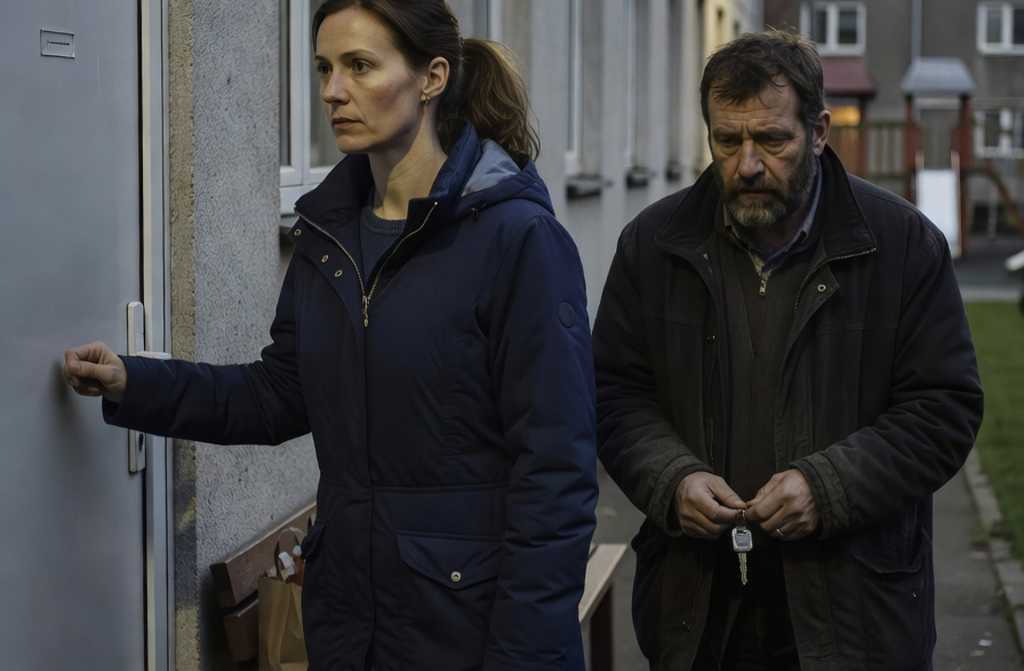
    It was many years ago now, but the memory still lingers clearly in the mind. Emily stood outside the entrance to her new home, a plain concrete block of flats in a quiet suburban neighbourhood, nothing distinctive among the rows of similar buildings. She had just got back from work, the bag of groceries hanging from her hand in a way that spoke of the ordinary comfort of home she had been reaching for in those days.

    The evening was cool. Emily shivered and pulled her coat more tightly around her. A gentle breeze tugged at the loose strands of hair from her untidy ponytail, and a faint flush coloured her cheeks from the chill. She was reaching for the intercom when she spotted James.

    He stood a few paces away, seeming unsure whether to come any closer. His hands gripped the car keys tightly, that same silver key fob she had chosen for him one birthday. Everything about his stance showed how uneasy he felt: shoulders stiff, fingers turning the keys over and over, eyes darting across her face as though searching for answers before she could give them.

    “Emily, please hear me out,” he said, his voice softer and more hesitant than usual. He edged forward a little but stopped at once, as if worried he might frighten her off. “I’ve thought it through. Let’s try again. I… I got it wrong.”

    Emily let out a slow breath. She had heard these words before, at different times in their years together, always leading to the same place. Fine speeches were followed by the old patterns, the same slips, fresh wounds. She met his gaze steadily, showing no sign of distress.

    “James, we’ve been over this. I’m not coming back.”

    He moved nearer, almost touching her. His eyes held a desperate hope, as though he truly thought this time she might relent.

    “But look how it’s turned out!” His voice shook. “Without you… everything’s coming apart. I can’t manage!”

    Emily watched him without speaking. The street light fell gently on his face, and she saw for the first time the changes that had come over the past six months. Lines had deepened around his eyes that she had not noticed before. His beard, once neatly kept, now looked rough, as if he had stopped caring for his appearance. And his eyes carried a weariness she had not seen in all the fifteen years they had shared.

    James took one more step, closing the space between them. A pleading tone entered his voice.

    “Let’s begin again. I’ll buy a flat. The one you wanted. And a car, the sort you dreamed about. Just come back…”

    For a brief moment something inside Emily shifted. There was such honesty in the way he spoke, such real longing in his eyes to put things right, that she almost believed him. Yet the feeling faded quickly. She ran through the list of earlier promises in her mind, grand and heartfelt but never more than talk. How often he had sworn he would change, how often he had vowed to start fresh… and each time things slipped back to where they had been.

    “No, James,” she said firmly. “My mind is made up. I won’t change it. You sent me away, you treated me as though I was nothing… I’ll never forgive you.”

    Emily sighed softly and set the bag of groceries down on the wooden bench beside the entrance. The air was growing colder, so she fastened her coat once more, more securely this time.

    “Don’t you see it, James?” Her voice stayed calm, though the firmness remained. “It’s not the flat or the car that matters.”

    James started to speak, but Emily lifted a hand to quiet him. He paused, swallowed, and gave a small nod to show he would listen.

    “Think back to how we began,” she said, her eyes turning distant as though she looked past him into earlier times. Her gaze narrowed a little, as if trying to make out those distant days through the haze of years.

    She waited a moment to gather herself before going on.

    “We were young and full of hope. You worked at a building firm, and I had only just started as a teacher in the primary school. We rented a small flat, cramped but cosy enough for us. Money was short; at times we counted every penny until payday, yet we kept our spirits up. We made meals side by side, laughed at our mistakes, and talked about what lay ahead. We pictured having children, pushing a pram through the park, and setting out as a family for the start of the new school year…”

    James nodded without a word. That time stayed with him as one of the happiest stretches he had known. Anything seemed within reach then. Every difficulty felt like a passing hurdle they could clear together. He thought of that first rented flat, the narrow kitchen, the squeaking sofa, the tap that dripped no matter what they did until they moved. He recalled sitting on the floor, eating pizza straight from the box, and laying out plans with the sure belief that all would fall into place.

    “Then the girls arrived,” Emily’s voice softened, though a trace of sadness crept in. “First Olivia, then Sophia five years later. You were so pleased, so proud. I remember you holding Olivia in the hospital, looking overwhelmed and joyful all at once. When Sophia came, you brought a large bunch of roses and a cake, even though the doctors had warned against anything sweet…”

    She gave a small smile, but it carried a touch of sorrow, as though the memory brought both warmth and ache.

    “After that, things shifted,” she went on, her tone growing steady again. “You began to earn more, bought the larger flat in the new development, got the car… Life looked different. You became the provider, the man in charge. And I… I was simply the wife who ‘did nothing’. Do you recall saying once, ‘You stay at home while I’m out working my fingers to the bone’? You never saw what lay behind that ‘staying at home’: the nights without sleep when the children were ill, the school gatherings, the clubs and extra lessons, the washing, the cleaning, the cooking… all the things you dismissed as not counting for work.”

    Emily stopped and studied James. Her eyes held no anger, only tiredness and a quiet sorrow from someone who had spent years trying to make a point that had gone unheard.

    James opened his mouth, ready to defend himself, but Emily raised her hand once more. Her look was steady, yet it showed she meant to finish what she had started.

    “Don’t cut in, please,” she said, speaking a little louder to be sure he caught every word. “I held my tongue for too long and put up with it. You often claimed I was never satisfied, that I picked fights over trifles. But why did it happen that way? Because I was trying to reach you. I wanted to show that the girls needed more than toys or holidays by the sea; they needed attention, rules, and limits. Love isn’t only about giving them what they ask for; it’s knowing when to say no.”

    She paused briefly to let the words settle, then slowed her pace a little as she continued.

    “You always gave way to them. Remember how Olivia, when she was small, would come running with tears in her eyes saying, ‘Daddy, I want a new tablet!’ and within the hour it would be hers? Or how Sophia, a bit older, would announce, ‘Daddy, I don’t feel like homework!’ and you would let it slide until the next day because ‘she’s tired and needs a break’?”

    James lowered his head without meaning to. Those moments rose up at once, sharp as if they had just passed. He could see the girls hugging his neck and telling him he was the best father, their faces bright with delight over each new thing. It had felt right then, making up for the hours he spent away at work. Emily would frown and speak of discipline and what might follow, but he would brush it aside: “Let them enjoy being young while they can! Troubles will come soon enough.”

    “And when I tried to guide them,” Emily’s voice dropped but kept its resolve, “you shouted that I was ‘being cruel to the children’, that I was ‘heartless’. You told me not to raise my voice, said it would harm them, that I ought to be a gentle mother instead of a strict one.”

    She shook her head, the gesture full of weariness rather than fury, the weariness of someone who had explained the same thing over and over without being understood.

    “And this is what came of it,” she said, meeting his eyes directly. “At eight and thirteen they leave their things lying about, they have no sense of what is not allowed, and they take everything for granted because they have always had it at once. They do not know how to look after what they own or that time is precious or that actions have consequences. When I try to bring in even a few rules, they run to you saying, ‘Dad, Mum’s cross again!’ and you step in at once, telling them I am in the wrong.”

    Emily stopped to let him take it in. A heavy quiet settled, broken only by the distant sound of traffic and a dog barking now and then in the distance. She did not expect an instant reply; she simply wanted him to grasp that her constant complaints had been an attempt to hold the family steady, a balance he had quietly undone.

    James began to speak, but the words caught. He wished to argue that she saw it all too harshly, that matters were not as she painted them. Yet as he turned the points over in his mind, he saw that at heart she was right. Not in every detail, perhaps, but in the main: he had behaved that way, thought that way, spoken that way.

    “Then Rachel came along,” Emily went on, her voice level and almost detached, as though recounting a story that belonged to someone else. “Young, attractive, with no children and no ‘troubles’. She gazed at you with admiration, agreed with everything you said, never argued back. She smiled all the time, never mentioned everyday matters, never asked you to look at schoolbooks or notice the fridge was nearly bare.”

    She waited a moment before adding more.

    “You decided that was happiness, that you had found someone who truly understood you. You came to me one evening after the girls had gone to bed. You spoke in a cold tone, like addressing someone at work: ‘Emily, I can’t go on like this. You’re never content. All you do is complain and shout. You pay me no attention. I’ve met someone who understands me, who is glad simply that I am here.’”

    James remembered every detail of that talk. At the time he had felt almost heroic, a man who had at last taken a decisive step and shaken off the weight of an ungrateful home life. The idea kept turning in his head that he had earned the chance to be happy. He had felt proud of his resolve, of laying out his grievances plainly without yielding to pleas. It had seemed the sensible, honest, grown-up thing to do.

    “You said you wanted a divorce,” Emily’s voice wavered for an instant, but she steadied herself and curled her hands into fists to hide the tremor. “You also said the girls would stay with me. You put it plainly: ‘They’ll do better with you. I can finally live as I choose.’”

    She paused again, as though living through the moment once more, then added, “You pictured meeting Rachel, travelling, dining out, looking after yourself. You even worked out how much you would pay in maintenance if the court left the children with me. You had the costs, the visits, the possible deals all mapped out, as though it were a business arrangement rather than our family.”

    A tired bitterness coloured her words, the bitterness of someone who had tried for too long to keep something already lost. She did not charge him with betrayal or raise her voice; she simply laid out the things he had once said without considering how they might sound.

    James swallowed hard against the dryness in his throat. Yes, that was exactly how he had seen it then. Divorce had seemed less a hardship than a release, a way into an easier new chapter. He had imagined no more daily worries, no more reproaches, no more children’s demands or household chores. Only freedom, rest, time for what he enjoyed, time with Rachel, a fresh start free of the past.

    “I agreed to the divorce,” Emily continued in a steady voice, as though speaking of something long settled and no longer raw. “Not because I had given in or stopped trying. At some point I simply saw clearly that you had already left me in every way that mattered. You lived your life and I lived mine, as though we moved in separate worlds whose paths no longer met.”

    She took a short breath before adding, “And then I told you the girls would stay with you.”

    James flinched at the recollection. In that moment he had been struck speechless. He had expected the opposite: to shed the family ties, to begin clean, to live exactly as he pleased. Her words had upended everything.

    “You were stunned,” Emily said, holding his gaze. “You shouted that it was unjust, that I was putting you in an impossible spot, that I had no right. You could not grasp why I insisted. I only wanted you to see at last that children are not hindrances or burdens but part of life itself. If you truly meant to start over, you had to learn to shoulder responsibility for the ones you had brought into the world.”

    He remembered the day in court as though through mist: the judge’s stern face, the dry language of the papers, the clerk’s flat voice. James had been certain the outcome would favour him. He had already planned the new life, the meetings with Rachel, the travels, the time for himself. Doubt had no place; he was convinced the court would free him from what he saw as extra duties.

    Then the judge spoke. The words came out clear and cold: custody went to the father. For the first few seconds James did not take it in. He had waited for relief and joy, yet instead he felt everything inside him tighten. In place of the freedom he had longed for, he found himself with two small responsibilities that now rested entirely on him.

    He recalled that same evening when he was left alone with the girls for the first time. The flat felt strangely loud, belongings scattered, dinner heated from packets. It struck him then that he could no longer leave for work and return whenever he chose, ignoring the small daily matters. All of it had become his to handle.

    Emily waited, allowing him time to absorb it.

    “Then you learned what it meant to raise two spoiled girls without a mother’s help,” she said softly, without any trace of satisfaction. “You saw at last where your way of bringing them up had led. The girls would not listen to you; they acted as they always had… and there was no one else to blame.”

    She paused again to let the past come back to him before continuing.

    “Remember trying to cook and burning everything because work calls kept pulling you away? Or the washing-up left undone because neither you nor the girls could spare the time? One night you rang me in a panic when Sophia had a fit because you had not bought her the new trainers the others had. You did not know how to calm her and ended up calling my number…”

    James shut his eyes. The scenes played out before him like frames from a film he could not turn off. He saw himself in the kitchen holding a scorched pan while Olivia laughed and filmed it on her phone. He saw Sophia slamming her bedroom door and yelling that he understood nothing, while he stood in the hall unsure what to do next.

    He had tried to set limits: no gadgets until homework was done, a rota for tidying, less pocket money. But within a day the tears and shouts wore him down. Olivia wept that he was being harsh; Sophia threatened to go to her grandmother. He gave in each time.

    Rachel had been there too. At first she had seemed welcoming, smiling at the girls, suggesting trips to the park, bringing sweets. Yet when Olivia spilled juice on her new dress or Sophia made a fuss in a restaurant, her manner changed. She drew back, pulled a face at the mess, sighed when Sophia wanted attention. “I am not ready to look after someone else’s children,” she had said once, and it was the start of the end.

    “Rachel left after three months,” James said quietly, eyes still closed. The words came slowly, as though he were admitting something he would rather hide. “She told me she was not prepared for it. That it was not the life she wanted, that she had pictured something simpler, without the bother or the duties.”

    He fell silent for a moment, then added, “And I… I suddenly saw that without you everything was unravelling. The girls paid no attention to me, the house was in constant disorder, work suffered because I was short of sleep and distracted by their needs. I had thought I would be free, able to live exactly as I pleased. Instead I was trapped in a home where every day brought dozens of small problems I had no idea how to solve.”

    His voice caught, but he steadied it. The admission carried no attempt to win sympathy, only a bitter recognition of how wrong he had been to view family life as a load that could be cast off lightly.

    Emily regarded him with sympathy but no pity. Her expression held neither triumph nor any wish to wound, only a calm grasp of all they had both endured.

    “Do you know the strangest part?” She gave a faint smile, free of bitterness or mockery, simply a gentle irony at the way things unfold. “When I was on my own at last, I could breathe properly. Truly breathe, without that constant sense of a weight I could not carry.”

    She was quiet for a moment, as though revisiting those early weeks of living alone, then went on.

    “I took a new post, as a senior curriculum developer at an education centre. No longer simply a classroom teacher, but someone who shaped programmes, supported other staff, and joined worthwhile projects. And you know, I enjoyed it. I felt I was moving forward, that my skills and experience mattered. The pay was better too, enough for the basics and for small treats besides.”

    Emily glanced around the yard, seeing not only the grey buildings and the play area but the shape of the life she had built.

    “I rent this flat and manage well enough. There is money for food and clothes, for cinema trips at the weekend, for a manicure now and then, for a book I have wanted, for coffee in a pleasant café close by. I no longer hurry to the shops straight after work to fetch food for the next meal. I do not prepare endless courses as though running a small restaurant. I do not tidy up after grown people who once believed all the housework was mine alone.”

    Her tone was even, simply recording what had once felt like impossible burdens.

    “And something else matters: I sleep through the night. I really sleep, without waking to music playing at three in the morning or someone deciding to tackle homework at midnight. I live, James. I simply live, calmly and steadily, without the endless strain or the feeling that I owe something to everyone.”

    She looked at him openly, without resentment. Her words carried no wish to boast or to show she was better; only the quiet knowledge that, despite the hardships, she had found her way and felt content.

    James said nothing. His thoughts felt strangely empty, with no ready replies or excuses left. He saw with sudden sharpness that everything he had craved, the freedom, the ease, the admiration from a new partner, had been no more than a trick of the light. The real life had been there all along, in the old flat. In the small things he had treated as burdens: her complaints about clothes left on the floor, her steady patience, the quiet care he had mistaken for fault-finding.

    He remembered her making coffee for him in the mornings even when she was running late herself. He remembered her clearing the table without a word after he had promised to wash the plates. He remembered how she always found the right thing to say to the girls when he grew lost and short-tempered. All of it had seemed ordinary then, part of the daily round, yet now he saw it clearly: that had been love, the real kind that does not announce itself but simply continues, day after day, in every small act.

    “I’m not asking you to come back only because it is so hard for me,” he said at last, his voice low and stripped of its old certainty. “It’s because I have understood I cannot manage without you. I love you, Emily.”

    The words had been difficult to bring out; they had forced their way past all his earlier beliefs and the wall of pride he had built. He said them not to hold on to her, not from fear of solitude, but because he had at last looked honestly at himself and at what he had done.

    Emily studied him for a long while without replying. She seemed to weigh each word, testing its truth, wondering whether this was yet another bid for an easy solution.

    Then she picked up the bag of groceries from the bench and spoke quietly.

    “I’m glad you see that now. But I am not coming back. I am not the same person. And you… you need to become someone different too. Not for me, but for yourself and for the girls. They need the real you, not a father who simply hands out whatever they want.”

    No anger or irritation coloured her voice. It was a plain statement, without feeling or any wish to hurt. She said exactly what she believed, without softening or considering how it might land.

    James wanted to argue, to persuade, to bring out reasons, but she had already turned and walked toward the entrance without waiting.

    “Emily!” he called after her, unsure what he meant to add.

    She halted but did not look back.

    “I’ll keep paying towards the children’s upkeep as before. And we’ll have meetings once a week with the girls. That will be better for everyone.”

    With that she went inside, leaving him standing alone beneath the cold November sky. The wind rose and found its way under his coat, yet James scarcely noticed. He remained there, gazing at the lighted windows of her flat, where the warm glow of a lamp showed behind the curtains.

    Her words, the memories, the pictures kept turning in his head, their shared life broken into pieces he himself had scattered. He recalled how they had laughed at Olivia’s early mischief, how they had got Sophia ready for her first term together, how they had dreamed of what was to come… All of it now felt both far away and precious.

    And in that moment he understood fully: he had not lost only a wife. He had lost the person who had kept the home together, who could look past passing wishes and steer toward what truly counted. The person who had loved him as he was, not perfect or flawless, but simply himself.It was many years ago now, but the memory still lingers clearly in the mind. Emily stood outside the entrance to her new home, a plain concrete block of flats in a quiet suburban neighbourhood, nothing distinctive among the rows of similar buildings. She had just got back from work, the bag of groceries hanging from her hand in a way that spoke of the ordinary comfort of home she had been reaching for in those days.

    The evening was cool. Emily shivered and pulled her coat more tightly around her. A gentle breeze tugged at the loose strands of hair from her untidy ponytail, and a faint flush coloured her cheeks from the chill. She was reaching for the intercom when she spotted James.

    He stood a few paces away, seeming unsure whether to come any closer. His hands gripped the car keys tightly, that same silver key fob she had chosen for him one birthday. Everything about his stance showed how uneasy he felt: shoulders stiff, fingers turning the keys over and over, eyes darting across her face as though searching for answers before she could give them.

    “Emily, please hear me out,” he said, his voice softer and more hesitant than usual. He edged forward a little but stopped at once, as if worried he might frighten her off. “I’ve thought it through. Let’s try again. I… I got it wrong.”

    Emily let out a slow breath. She had heard these words before, at different times in their years together, always leading to the same place. Fine speeches were followed by the old patterns, the same slips, fresh wounds. She met his gaze steadily, showing no sign of distress.

    “James, we’ve been over this. I’m not coming back.”

    He moved nearer, almost touching her. His eyes held a desperate hope, as though he truly thought this time she might relent.

    “But look how it’s turned out!” His voice shook. “Without you… everything’s coming apart. I can’t manage!”

    Emily watched him without speaking. The street light fell gently on his face, and she saw for the first time the changes that had come over the past six months. Lines had deepened around his eyes that she had not noticed before. His beard, once neatly kept, now looked rough, as if he had stopped caring for his appearance. And his eyes carried a weariness she had not seen in all the fifteen years they had shared.

    James took one more step, closing the space between them. A pleading tone entered his voice.

    “Let’s begin again. I’ll buy a flat. The one you wanted. And a car, the sort you dreamed about. Just come back…”

    For a brief moment something inside Emily shifted. There was such honesty in the way he spoke, such real longing in his eyes to put things right, that she almost believed him. Yet the feeling faded quickly. She ran through the list of earlier promises in her mind, grand and heartfelt but never more than talk. How often he had sworn he would change, how often he had vowed to start fresh… and each time things slipped back to where they had been.

    “No, James,” she said firmly. “My mind is made up. I won’t change it. You sent me away, you treated me as though I was nothing… I’ll never forgive you.”

    Emily sighed softly and set the bag of groceries down on the wooden bench beside the entrance. The air was growing colder, so she fastened her coat once more, more securely this time.

    “Don’t you see it, James?” Her voice stayed calm, though the firmness remained. “It’s not the flat or the car that matters.”

    James started to speak, but Emily lifted a hand to quiet him. He paused, swallowed, and gave a small nod to show he would listen.

    “Think back to how we began,” she said, her eyes turning distant as though she looked past him into earlier times. Her gaze narrowed a little, as if trying to make out those distant days through the haze of years.

    She waited a moment to gather herself before going on.

    “We were young and full of hope. You worked at a building firm, and I had only just started as a teacher in the primary school. We rented a small flat, cramped but cosy enough for us. Money was short; at times we counted every penny until payday, yet we kept our spirits up. We made meals side by side, laughed at our mistakes, and talked about what lay ahead. We pictured having children, pushing a pram through the park, and setting out as a family for the start of the new school year…”

    James nodded without a word. That time stayed with him as one of the happiest stretches he had known. Anything seemed within reach then. Every difficulty felt like a passing hurdle they could clear together. He thought of that first rented flat, the narrow kitchen, the squeaking sofa, the tap that dripped no matter what they did until they moved. He recalled sitting on the floor, eating pizza straight from the box, and laying out plans with the sure belief that all would fall into place.

    “Then the girls arrived,” Emily’s voice softened, though a trace of sadness crept in. “First Olivia, then Sophia five years later. You were so pleased, so proud. I remember you holding Olivia in the hospital, looking overwhelmed and joyful all at once. When Sophia came, you brought a large bunch of roses and a cake, even though the doctors had warned against anything sweet…”

    She gave a small smile, but it carried a touch of sorrow, as though the memory brought both warmth and ache.

    “After that, things shifted,” she went on, her tone growing steady again. “You began to earn more, bought the larger flat in the new development, got the car… Life looked different. You became the provider, the man in charge. And I… I was simply the wife who ‘did nothing’. Do you recall saying once, ‘You stay at home while I’m out working my fingers to the bone’? You never saw what lay behind that ‘staying at home’: the nights without sleep when the children were ill, the school gatherings, the clubs and extra lessons, the washing, the cleaning, the cooking… all the things you dismissed as not counting for work.”

    Emily stopped and studied James. Her eyes held no anger, only tiredness and a quiet sorrow from someone who had spent years trying to make a point that had gone unheard.

    James opened his mouth, ready to defend himself, but Emily raised her hand once more. Her look was steady, yet it showed she meant to finish what she had started.

    “Don’t cut in, please,” she said, speaking a little louder to be sure he caught every word. “I held my tongue for too long and put up with it. You often claimed I was never satisfied, that I picked fights over trifles. But why did it happen that way? Because I was trying to reach you. I wanted to show that the girls needed more than toys or holidays by the sea; they needed attention, rules, and limits. Love isn’t only about giving them what they ask for; it’s knowing when to say no.”

    She paused briefly to let the words settle, then slowed her pace a little as she continued.

    “You always gave way to them. Remember how Olivia, when she was small, would come running with tears in her eyes saying, ‘Daddy, I want a new tablet!’ and within the hour it would be hers? Or how Sophia, a bit older, would announce, ‘Daddy, I don’t feel like homework!’ and you would let it slide until the next day because ‘she’s tired and needs a break’?”

    James lowered his head without meaning to. Those moments rose up at once, sharp as if they had just passed. He could see the girls hugging his neck and telling him he was the best father, their faces bright with delight over each new thing. It had felt right then, making up for the hours he spent away at work. Emily would frown and speak of discipline and what might follow, but he would brush it aside: “Let them enjoy being young while they can! Troubles will come soon enough.”

    “And when I tried to guide them,” Emily’s voice dropped but kept its resolve, “you shouted that I was ‘being cruel to the children’, that I was ‘heartless’. You told me not to raise my voice, said it would harm them, that I ought to be a gentle mother instead of a strict one.”

    She shook her head, the gesture full of weariness rather than fury, the weariness of someone who had explained the same thing over and over without being understood.

    “And this is what came of it,” she said, meeting his eyes directly. “At eight and thirteen they leave their things lying about, they have no sense of what is not allowed, and they take everything for granted because they have always had it at once. They do not know how to look after what they own or that time is precious or that actions have consequences. When I try to bring in even a few rules, they run to you saying, ‘Dad, Mum’s cross again!’ and you step in at once, telling them I am in the wrong.”

    Emily stopped to let him take it in. A heavy quiet settled, broken only by the distant sound of traffic and a dog barking now and then in the distance. She did not expect an instant reply; she simply wanted him to grasp that her constant complaints had been an attempt to hold the family steady, a balance he had quietly undone.

    James began to speak, but the words caught. He wished to argue that she saw it all too harshly, that matters were not as she painted them. Yet as he turned the points over in his mind, he saw that at heart she was right. Not in every detail, perhaps, but in the main: he had behaved that way, thought that way, spoken that way.

    “Then Rachel came along,” Emily went on, her voice level and almost detached, as though recounting a story that belonged to someone else. “Young, attractive, with no children and no ‘troubles’. She gazed at you with admiration, agreed with everything you said, never argued back. She smiled all the time, never mentioned everyday matters, never asked you to look at schoolbooks or notice the fridge was nearly bare.”

    She waited a moment before adding more.

    “You decided that was happiness, that you had found someone who truly understood you. You came to me one evening after the girls had gone to bed. You spoke in a cold tone, like addressing someone at work: ‘Emily, I can’t go on like this. You’re never content. All you do is complain and shout. You pay me no attention. I’ve met someone who understands me, who is glad simply that I am here.’”

    James remembered every detail of that talk. At the time he had felt almost heroic, a man who had at last taken a decisive step and shaken off the weight of an ungrateful home life. The idea kept turning in his head that he had earned the chance to be happy. He had felt proud of his resolve, of laying out his grievances plainly without yielding to pleas. It had seemed the sensible, honest, grown-up thing to do.

    “You said you wanted a divorce,” Emily’s voice wavered for an instant, but she steadied herself and curled her hands into fists to hide the tremor. “You also said the girls would stay with me. You put it plainly: ‘They’ll do better with you. I can finally live as I choose.’”

    She paused again, as though living through the moment once more, then added, “You pictured meeting Rachel, travelling, dining out, looking after yourself. You even worked out how much you would pay in maintenance if the court left the children with me. You had the costs, the visits, the possible deals all mapped out, as though it were a business arrangement rather than our family.”

    A tired bitterness coloured her words, the bitterness of someone who had tried for too long to keep something already lost. She did not charge him with betrayal or raise her voice; she simply laid out the things he had once said without considering how they might sound.

    James swallowed hard against the dryness in his throat. Yes, that was exactly how he had seen it then. Divorce had seemed less a hardship than a release, a way into an easier new chapter. He had imagined no more daily worries, no more reproaches, no more children’s demands or household chores. Only freedom, rest, time for what he enjoyed, time with Rachel, a fresh start free of the past.

    “I agreed to the divorce,” Emily continued in a steady voice, as though speaking of something long settled and no longer raw. “Not because I had given in or stopped trying. At some point I simply saw clearly that you had already left me in every way that mattered. You lived your life and I lived mine, as though we moved in separate worlds whose paths no longer met.”

    She took a short breath before adding, “And then I told you the girls would stay with you.”

    James flinched at the recollection. In that moment he had been struck speechless. He had expected the opposite: to shed the family ties, to begin clean, to live exactly as he pleased. Her words had upended everything.

    “You were stunned,” Emily said, holding his gaze. “You shouted that it was unjust, that I was putting you in an impossible spot, that I had no right. You could not grasp why I insisted. I only wanted you to see at last that children are not hindrances or burdens but part of life itself. If you truly meant to start over, you had to learn to shoulder responsibility for the ones you had brought into the world.”

    He remembered the day in court as though through mist: the judge’s stern face, the dry language of the papers, the clerk’s flat voice. James had been certain the outcome would favour him. He had already planned the new life, the meetings with Rachel, the travels, the time for himself. Doubt had no place; he was convinced the court would free him from what he saw as extra duties.

    Then the judge spoke. The words came out clear and cold: custody went to the father. For the first few seconds James did not take it in. He had waited for relief and joy, yet instead he felt everything inside him tighten. In place of the freedom he had longed for, he found himself with two small responsibilities that now rested entirely on him.

    He recalled that same evening when he was left alone with the girls for the first time. The flat felt strangely loud, belongings scattered, dinner heated from packets. It struck him then that he could no longer leave for work and return whenever he chose, ignoring the small daily matters. All of it had become his to handle.

    Emily waited, allowing him time to absorb it.

    “Then you learned what it meant to raise two spoiled girls without a mother’s help,” she said softly, without any trace of satisfaction. “You saw at last where your way of bringing them up had led. The girls would not listen to you; they acted as they always had… and there was no one else to blame.”

    She paused again to let the past come back to him before continuing.

    “Remember trying to cook and burning everything because work calls kept pulling you away? Or the washing-up left undone because neither you nor the girls could spare the time? One night you rang me in a panic when Sophia had a fit because you had not bought her the new trainers the others had. You did not know how to calm her and ended up calling my number…”

    James shut his eyes. The scenes played out before him like frames from a film he could not turn off. He saw himself in the kitchen holding a scorched pan while Olivia laughed and filmed it on her phone. He saw Sophia slamming her bedroom door and yelling that he understood nothing, while he stood in the hall unsure what to do next.

    He had tried to set limits: no gadgets until homework was done, a rota for tidying, less pocket money. But within a day the tears and shouts wore him down. Olivia wept that he was being harsh; Sophia threatened to go to her grandmother. He gave in each time.

    Rachel had been there too. At first she had seemed welcoming, smiling at the girls, suggesting trips to the park, bringing sweets. Yet when Olivia spilled juice on her new dress or Sophia made a fuss in a restaurant, her manner changed. She drew back, pulled a face at the mess, sighed when Sophia wanted attention. “I am not ready to look after someone else’s children,” she had said once, and it was the start of the end.

    “Rachel left after three months,” James said quietly, eyes still closed. The words came slowly, as though he were admitting something he would rather hide. “She told me she was not prepared for it. That it was not the life she wanted, that she had pictured something simpler, without the bother or the duties.”

    He fell silent for a moment, then added, “And I… I suddenly saw that without you everything was unravelling. The girls paid no attention to me, the house was in constant disorder, work suffered because I was short of sleep and distracted by their needs. I had thought I would be free, able to live exactly as I pleased. Instead I was trapped in a home where every day brought dozens of small problems I had no idea how to solve.”

    His voice caught, but he steadied it. The admission carried no attempt to win sympathy, only a bitter recognition of how wrong he had been to view family life as a load that could be cast off lightly.

    Emily regarded him with sympathy but no pity. Her expression held neither triumph nor any wish to wound, only a calm grasp of all they had both endured.

    “Do you know the strangest part?” She gave a faint smile, free of bitterness or mockery, simply a gentle irony at the way things unfold. “When I was on my own at last, I could breathe properly. Truly breathe, without that constant sense of a weight I could not carry.”

    She was quiet for a moment, as though revisiting those early weeks of living alone, then went on.

    “I took a new post, as a senior curriculum developer at an education centre. No longer simply a classroom teacher, but someone who shaped programmes, supported other staff, and joined worthwhile projects. And you know, I enjoyed it. I felt I was moving forward, that my skills and experience mattered. The pay was better too, enough for the basics and for small treats besides.”

    Emily glanced around the yard, seeing not only the grey buildings and the play area but the shape of the life she had built.

    “I rent this flat and manage well enough. There is money for food and clothes, for cinema trips at the weekend, for a manicure now and then, for a book I have wanted, for coffee in a pleasant café close by. I no longer hurry to the shops straight after work to fetch food for the next meal. I do not prepare endless courses as though running a small restaurant. I do not tidy up after grown people who once believed all the housework was mine alone.”

    Her tone was even, simply recording what had once felt like impossible burdens.

    “And something else matters: I sleep through the night. I really sleep, without waking to music playing at three in the morning or someone deciding to tackle homework at midnight. I live, James. I simply live, calmly and steadily, without the endless strain or the feeling that I owe something to everyone.”

    She looked at him openly, without resentment. Her words carried no wish to boast or to show she was better; only the quiet knowledge that, despite the hardships, she had found her way and felt content.

    James said nothing. His thoughts felt strangely empty, with no ready replies or excuses left. He saw with sudden sharpness that everything he had craved, the freedom, the ease, the admiration from a new partner, had been no more than a trick of the light. The real life had been there all along, in the old flat. In the small things he had treated as burdens: her complaints about clothes left on the floor, her steady patience, the quiet care he had mistaken for fault-finding.

    He remembered her making coffee for him in the mornings even when she was running late herself. He remembered her clearing the table without a word after he had promised to wash the plates. He remembered how she always found the right thing to say to the girls when he grew lost and short-tempered. All of it had seemed ordinary then, part of the daily round, yet now he saw it clearly: that had been love, the real kind that does not announce itself but simply continues, day after day, in every small act.

    “I’m not asking you to come back only because it is so hard for me,” he said at last, his voice low and stripped of its old certainty. “It’s because I have understood I cannot manage without you. I love you, Emily.”

    The words had been difficult to bring out; they had forced their way past all his earlier beliefs and the wall of pride he had built. He said them not to hold on to her, not from fear of solitude, but because he had at last looked honestly at himself and at what he had done.

    Emily studied him for a long while without replying. She seemed to weigh each word, testing its truth, wondering whether this was yet another bid for an easy solution.

    Then she picked up the bag of groceries from the bench and spoke quietly.

    “I’m glad you see that now. But I am not coming back. I am not the same person. And you… you need to become someone different too. Not for me, but for yourself and for the girls. They need the real you, not a father who simply hands out whatever they want.”

    No anger or irritation coloured her voice. It was a plain statement, without feeling or any wish to hurt. She said exactly what she believed, without softening or considering how it might land.

    James wanted to argue, to persuade, to bring out reasons, but she had already turned and walked toward the entrance without waiting.

    “Emily!” he called after her, unsure what he meant to add.

    She halted but did not look back.

    “I’ll keep paying towards the children’s upkeep as before. And we’ll have meetings once a week with the girls. That will be better for everyone.”

    With that she went inside, leaving him standing alone beneath the cold November sky. The wind rose and found its way under his coat, yet James scarcely noticed. He remained there, gazing at the lighted windows of her flat, where the warm glow of a lamp showed behind the curtains.

    Her words, the memories, the pictures kept turning in his head, their shared life broken into pieces he himself had scattered. He recalled how they had laughed at Olivia’s early mischief, how they had got Sophia ready for her first term together, how they had dreamed of what was to come… All of it now felt both far away and precious.

    And in that moment he understood fully: he had not lost only a wife. He had lost the person who had kept the home together, who could look past passing wishes and steer toward what truly counted. The person who had loved him as he was, not perfect or flawless, but simply himself.

  • Betrayal Behind the Mask of FriendshipBetrayal Behind the Mask of Friendship

    Betrayal Behind the Mask of FriendshipBetrayal Behind the Mask of Friendship

    This winter really went all out, didn’t it? Snow just kept piling up, turning streets and gardens into something straight out of a picture book. Those soft white flakes kept spinning around, settling gently on rooftops and paths, and the frost gave the air this sharp, clean edge you could almost taste.

    Inside Oliver and Emily’s flat it felt completely different, all warm and peaceful. Through the big window the white show was still happening outside, but with the glass shut tight it was snug and quiet indoors. The lamp on the table gave off this soft glow, making a little circle of warmth that kept the winter chill away.

    They’d got themselves settled on the sofa under a thick blanket. On the telly some easy family comedy was playing, nothing heavy, just something to have a laugh at and unwind with. Emily was watching properly, with this tiny smile now and then like she was thinking her own thoughts. Oliver sat beside her, leaning back relaxed, watching the film too, but his eyes kept drifting to the snow falling outside. It looked stunning.

    The nice feeling got broken by a cheerful ring from Oliver’s phone. He didn’t grab it straight away, almost like he didn’t want to spoil this quiet time together, but it rang again. With a little sigh he pulled his smartphone out of his pocket, checked the screen and sighed once more.

    “Jake’s ringing again,” he told his wife. “Third time tonight.”

    Emily turned her head slightly but kept her eyes on the screen.

    “Probably trying to drag you over to that cottage he bought,” she answered calmly. “Wants to celebrate it. For some reason this bloke just can’t hear the word no.”

    Oliver swiped to answer.

    “Yeah, Jake, hi,” he said, making his voice sound cheerful.

    “Oliver! When are you getting over here?” Jake sounded full of energy. “I said we’d mark the purchase! Everything’s ready, hot tub’s heated up, table’s loaded with food, the lads are on their way. Stop sitting at home, eh? Bring Emily, it’ll be brilliant!”

    Oliver went quiet for a second, thinking it over. He glanced at Emily, who gave the smallest shake of her head. She didn’t say a word but he knew exactly what she meant: noisy parties, loud music, constant chat and fuss just didn’t fit what they had in mind. They both wanted a quiet weekend in their own cosy space, no rushing and no explaining themselves to anyone.

    He paused before answering. Then an idea came to him and he used it straight away.

    “Listen,” he began quietly, “here’s the thing… Emily’s gone to her mum’s for a couple of days. I don’t fancy going on my own, you know how it is. Someone might say the wrong thing and I don’t want us rowing over nothing. We’ll definitely do it another time, just not now.”

    There was a short silence on the other end, then Jake sounded surprised.

    “She’s gone? When’s she back?”

    “Tomorrow evening,” Oliver said with a bit of a sigh. “It came out of nowhere… And we’d made all these plans! Wanted to go to the cinema, walk in the park while the weather’s decent, maybe even pop to the ice rink. But it didn’t happen. So another time, yeah?”

    Jake stayed quiet a moment, like he was weighing it up, then his voice took on this oddly pleased note.

    “Alright… but let me know when she’s back. I’d really like to see you both!”

    “Of course,” Oliver agreed quickly. “As soon as we can I’ll give you a shout. Maybe next weekend? If plans stay the same.”

    He said goodbye, dropped the phone on the table between the chairs and let out a relieved breath. A smile appeared on its own.

    “Whew, just about talked my way out of that,” he muttered, turning to Emily. “Why’s he so pushy? I made it clear I didn’t want to go to his cottage! What’s the point? Watch them all getting sloshed? Jake doesn’t know how to chill any other way. Ah well, forget it. I much prefer just being here with you.”

    He put his arm round her, feeling the tension from the last few minutes start to fade. The flat stayed warm and quiet, snowflakes slowly swirling outside, and the telly kept playing their favourite film, slow and comfy, nothing like the rowdy parties Jake liked.

    Emily snuggled closer to Oliver, feeling the warmth from his body and his steady breathing. The room still had that cosy feel: soft lamp light, the gentle film on screen, the quiet ticking of the clock on the wall. It all gave this sense of safety and peace you don’t get in the usual daily rush.

    “Me too,” she said softly, lifting her head a little to look at him. “Let’s just watch the film and go to bed. Nothing else needed.”

    Oliver smiled and held her shoulders a bit tighter. He was already picturing turning the lights off in a couple of hours, getting under the warm duvet and drifting off to the distant sound of the wind and snow outside. But their plans got broken by another call. And it was the same person again.

    Oliver frowned, shot a quick look at the screen and reluctantly reached for the phone. What now?

    “Jake, I already said…” he started, trying to stay calm but with some tension coming through.

    “Oliver,” Jake’s voice sounded unusually serious, even tight, “I’m at the Crystal Club, we decided to have a lively bit before heading to the cottage. And then… there’s Emily. With some bloke. They’re drinking, she’s hugging him. I didn’t want to get involved but… you need to know. She told you she went to her mum’s! So she must’ve been lying!”

    Oliver froze. He looked at his wife in surprise, then back at the screen, wondering if his mate was messing with him.

    “What?” he asked, doubt clear in his voice. “You sure? Maybe you got her mixed up with someone else? I can say for certain I know exactly where my wife is!”

    “Definitely,” Jake replied firmly. No doubt at all. “She’s already had a few, laughing really loud. It all looks… not great, if I’m honest. And she’s not even bothered I’m there! Just waving me off. Want me to hand her the phone?”

    Oliver closed his eyes for a second, trying to get his thoughts straight. Questions were flying around but no answers. What was actually happening? How could his friend be so wrong? Or… was there something else going on?

    “Go on then,” he said shortly, putting it on speaker. He was even a bit curious what he’d hear now.

    Through the phone came muffled club music, mixed with bursts of laughter and mumbled voices. Then a woman’s voice cut through, so similar to Emily’s that Oliver’s heart skipped.

    “Hello? Who’s this?” it came with a slight pause, like the person wasn’t sure at first they were answering.

    Oliver swallowed, trying to get rid of the sudden dryness in his throat. He looked at Emily sitting next to him, eyes wide, clearly confused.

    “Emily?” he said, keeping his voice steady. “It’s Oliver. What’s going on?”

    A short laugh, then the same voice but more cheeky now, with a bit of a rasp: “Oh, Oliver, you’re getting on my nerves! I want to relax, you know? I’m tired of your boring life. I’m going to party until I get bored!”

    Emily shot up from the sofa, her face gone pale. She put a hand to her chest like she was trying to calm her racing heart, and whispered almost inaudibly:

    “What nonsense! How could he confuse me with someone? And how does that girl even know your name? What’s going on here?”

    “And where are you?”

    “Like it’s any of your business?” the voice shot back with a defiant tone. “Even though I’m your wife, I don’t have to check in. I do whatever I like!”

    More laughter and glass clinking in the background, then Jake jumped in:

    “Oliver, did you hear that? I told you…”

    Oliver cut him off sharply, feeling anger, confusion and this weird almost childish urge to just look away from it all mixing inside.

    “Enough,” he said firmly, though his voice trembled a little. “I’ll deal with this tomorrow. Don’t ring again.”

    He quickly ended the call, tossed the phone onto the sofa and stared at the ceiling in total bewilderment. If Emily hadn’t been sitting right there… he really might have believed it!

    Emily plonked back down and stared at her husband in confusion. That girl’s voice really did sound like hers! But that wasn’t the main thing right now! The main thing was, how did she know the details to play it like that? Someone must have coached her!

    “Well that’s a turn up,” she whispered, her voice a bit tight. “Who was that? What a mess!”

    Oliver shook his head, thoughtfully running a hand through his hair, messing up his already not-perfect style. He had no answer, just suspicions. Pretty bad ones…

    “No clue,” he replied, looking off to the side as if hoping to find some answer there. “But the voice… it was identical. Even the way she laughed, the tone, it all matched. Can’t be just chance.”

    “And Jake was so sure it was me,” she said with a slight tremor. “Just think, if I really hadn’t been home. You’d have thought I was… that I was really there in the club with some man.”

    Oliver turned to her, his look softening. He reached out, gently put his arm around Emily’s shoulders and pulled her close. Her body was shaking a bit, and he felt how important it was to be there, to give her that feeling of security.

    “I’d still have wondered about it,” he said confidently. “You wouldn’t act like that! I know you. I know how you feel about stuff like that. This is all… some silly mistake, a wind-up, I don’t know. But I’ll get it sorted! If I have to, I’ll go to the club and ask to see the cameras. We’ll find out what girl that was.”

    Emily leaned into him, feeling the cold fear starting to melt away, replaced by warmth, not just physical but emotional too. She took a deep breath, trying to steady herself.

    “Yeah,” she agreed, lifting her head a little. “It’s definitely not me. But who was it? And why?”

    Oliver shrugged, but the confusion in his eyes was gone, now there was determination to figure out this odd situation. He squeezed her hand tighter, as if to say they were in this together and whatever happened they’d handle it.

    The next day, around midday, Emily was in the kitchen, sipping tea and going through work emails on her laptop. The quiet was broken by a ring, Jake’s name on the screen. She waited a moment before answering; after last night’s drama it was hard to feel like chatting with him. But curiosity won, she wanted to know what he’d say.

    “Hi,” Jake started carefully, like he was walking on eggshells. “Did you have a chat with Oliver after yesterday?”

    Emily gripped the phone. She decided to use this chance to get to the bottom of it, find out exactly what Jake thought he saw and why he was so sure about her yesterday. After a small pause, like she was choosing her words, she answered:

    “Yeah. We… had words. He blamed me for something I didn’t get, wouldn’t listen to my side. Says I’m lying to him.”

    Silence for a second on the phone. Emily heard Jake breathe out heavily, then his voice had this unexpected note of satisfaction, faint but clear.

    “Is that so,” he drawled. “Well, you know… I’ve always said that Oliver doesn’t value you. He never understood what you’re really like.”

    Emily felt everything boiling up inside, but she made herself stay calm. She needed to hear him out, see where he was going with this.

    “What are you on about?” she asked, keeping her voice even.

    Jake started speaking quieter, almost in a whisper, and that deliberate intimate tone was a bit worrying:

    “About how you deserve more! Emily, I’ve wanted to tell you for ages… I love you. Properly. And I’m ready to take care of you. If you want to leave Oliver, I’ll be there. Always.”

    Emily stayed silent, trying to take it in. Her mind was racing: how long had Jake been thinking this? Why say it now, after all this weird stuff? Or… did he set it up, knowing she was supposedly not home…

    She took a deep breath, got her thoughts together, and replied calmly but firmly:

    “Jake, this is really unexpected. And, to be honest, not the right time. I love Oliver, and we’ll work out what happened. No need for you to get involved.”

    “Sorry if I said too much,” he finally said, and his voice had lost that earlier confidence. “I just… wanted you to know there’s someone you can turn to. Oliver was out of order, accusing you of everything. I heard a bit from him… Sounds like he’s just looking for a reason to split up! I just want you to be okay!”

    Emily held the phone so tight her fingers went a bit white. She inhaled deeply, trying to stay cool, not let her feelings take over. The last thing she needed was to lose it and yell at this so-called mate!

    “You know, Jake,” her voice went icy, steady, no wobbles, “first of all, I was at home yesterday. Second, we didn’t have a row. And third, I know full well you set this whole thing up. I just didn’t see why. Now it’s obvious.”

    For a moment there was silence on the line. She could almost feel Jake scrambling for words, desperately looking for a way to dodge or change the subject.

    “What?..” he finally managed, and there was confusion in his voice. But a second later he pulled himself together, spoke more strongly: “What do you mean?”

    “Exactly that. You found a girl with a voice like mine. Got her to act out this whole scene, call up, talk like me, make out I was in the club with some guy. Because you wanted to cause trouble between us. Come on, admit it, right?”

    Silence on the phone. Emily waited patiently, knowing this would decide it, either Jake keeps lying or tells the truth.

    Finally, Jake let out a sharp breath. His voice cracked, got louder, almost desperate:

    “Yes, I set it up! Because I love you, Emily! Because I see how Oliver treats you. Because I want you to be happy, with me!”

    Emily closed her eyes for a second. A wave of bitterness rose in her chest, but she held it back, didn’t let it into her voice.

    “Happy?” she laughed bitterly, but it came out dry, no joy in it. “What made you think I’d be happy with you? Who do you think you are, anyway? Just some bloke who changes girls like they’re nothing. Even if you were the only person left, I still wouldn’t look twice at you, got it?”

    Jake went quiet for a moment, like he was collecting himself, then spoke softly, almost whispering, as if he couldn’t believe what he was saying:

    “I thought… thought that if you two fell out, you’d realise he’s not good enough for you. That you’d notice me! I’m so much better than Oliver! And about the girls… I was just trying to get over you! But no one comes close to you, you know! I’ll carry you on my hands, spoil you, worship you… Just choose me!”

    Emily felt anger boiling up inside, not hot and quick, but cold and solid. She gripped the phone, but her voice stayed level, almost emotionless:

    “You? Seriously? Not a chance! You betrayed a friend, betrayed trust. And for what? Your daydreams?”

    She spoke calmly, but every word sounded like a verdict, clear, no hesitation. No anger or hysterics in her voice, just solid certainty that she was right.

    “Emily, I’m sorry…” Jake’s voice shook. There was no push or cockiness left, just confusion and regret.

    But Emily had made up her mind. She wasn’t going to give him a chance to explain or justify.

    “No, Jake. No apology accepted. And no friendship either. Don’t call me again! Ever! And forget Oliver’s number too, I’ll make sure he hears this lovely conversation!”

    She hit the end call button and slowly put the phone on the table. Her fingers were shaking a bit, but she pulled herself together, took a deep breath and looked out the window. Snow was still falling quietly outside, as if nothing had happened.

    Just then Oliver came into the room. He noticed her serious face straight away and got wary.

    “So what?” he asked, stopping in the doorway. There was concern in his voice, but he tried to sound calm.

    Emily turned to him with a bitter little smile.

    “It’s all clear now,” she sighed. “He arranged the whole thing. Admitted he loves me and wanted us to argue. Promised me everything under the sun! Can you imagine? What a sneaky git…”

    Oliver sat down next to Emily on the sofa, carefully took her hand. His fingers squeezed her palm gently but firmly, so she could feel the support. In that simple touch was everything he wanted to say: I’m here, I’m with you, and what you feel matters to me.

    “Guess he was never a proper friend then,” Oliver said quietly. “Just forget about him. No point wasting your energy thinking about it. To be honest, I’d picked up on a few warning signs a while back, but I didn’t have anything solid to go on. I was worried it was just me imagining things. But now it all adds up.”

    “Yeah,” she agreed, moving a bit closer and resting her shoulder against his. “But at least now we know what’s what. And who we can count on.”

    Her voice was steady, no strain. No resentment or bitterness left, just a bit of relief that everything was out in the open. She closed her eyes for a moment, breathing in the familiar, soothing smells of home: warm wood, freshly made tea and the faint scent of her favourite perfume.

    “You know,” Emily suddenly smiled, and there were little sparkles in her eyes, “this might even be for the best. Now we’ve got a perfect excuse not to go to all those parties. You won’t be falling out with other mates because of him? This way we can just say, you know, there’s someone there we don’t fancy seeing.”

    She said it lightly, almost jokingly, but there was truth in it. No more need to come up with polite excuses, weigh up if they should go, worry that saying no might upset someone. Now it was simple: there’s them, their cosy world, and everything else, which doesn’t matter anymore.

    Oliver laughed, genuinely, without any of the tension that had been in the air before.

    “Spot on. We’ll watch films and have tea,” he agreed, tilting his head a bit to meet her eyes.

    “And stay in,” she added with a small grin, tugging the edge of the blanket and wrapping herself in it like a safe little cocoon.

    “Ideal,” he nodded, holding her tighter.

    So, with the snowflakes slowly swirling outside the window and the soft, warm light from the table lamp, their little world felt complete and secure again. In this room filled with quiet sounds and familiar smells, there was no room for lies, doubts or other people’s games. Here it was just them, two people who knew that the most important thing was already theirs: trust, warmth and the confidence that tomorrow would be just as calm and cosy a day as this one…

    Jake sat in the kitchen in complete silence, staring at an empty cup with tea that had gone stone cold long ago. He couldn’t even remember taking the last sip, all his attention was on the words that kept echoing in his head like a broken record: “Don’t call me again. Ever.”

    But instead of feeling sorry, instead of any guilt that might tell him he’d done wrong, a dull, heavy anger was growing in his chest. It was pressing on his ribs, making it hard to breathe normally, forcing him to clench his fists so tight his nails dug into his palms.

    “Why did it all go wrong?!” he yelled, suddenly sweeping his hand across the table and knocking away the crumbs from the biscuit he’d been nibbling while thinking.

    His mind kept replaying the scenes from last night. There he was walking into the club, having already arranged with Sophie, the girl he’d met a couple of weeks back in a cafe. She caught his eye straight away: same features, similar hair, even her voice was almost like Emily’s. When he told her about his plan, she just smiled and nodded: “No problem. I love these kinds of games.”

    He remembered standing off to the side, watching her on the phone, pretending to be a drunk, forward Emily. She laughed, dragged out her words on purpose, threw out sharp comments, all exactly as he’d told her to. At that moment he felt this thrill, almost delight: this was it, the key moment! “If this works,” he thought, “Emily will see that Oliver doesn’t appreciate her. That there’s someone who really loves her.”

    And now… now he’d only got a cold no and the bitter realisation: the plan had failed. Worse, he’d lost everything.

    “This isn’t my mistake!” he argued with himself mentally, pacing the kitchen and barely noticing when he bumped into a chair. “It’s them… they don’t see, don’t understand! Oliver doesn’t deserve her, and she’s just blindly trusting him!”

    He stopped by the table, gripped the edge of the worktop so hard his fingers went white. Memories flashed by: years of watching Emily and Oliver. How he’d envied their easy way with each other, how they could laugh at little things, their warm looks they shared without even realising. He thought he could give Emily the same, only better, more real, stronger. And he’d chosen the path he thought was the only way.

    He went to the window. Outside the snow was slowly swirling, settling on the windowsill, on the bare tree branches. Everything looked so peaceful, so… calm…

    “Why do they have it all, and I’ve got nothing?!” it burst out of him. “Why did she end up with Oliver! I’m more worthy! I’m better at everything!”

    He knew he’d lost not just Emily, he’d lost a friend. Oliver, who’d always been there, always ready to help, always believed in him. Now that friendship was shattered and there was no fixing it. But instead of regret, he only felt this burning irritation, a mix of hurt and annoyance that was eating at him from inside.

    The phone was lying on the table, silent and distant. Jake knew: he wasn’t going to call Emily. Wasn’t going to try to explain, justify, beg. That would just be another loss, another sign he couldn’t get what he wanted. But new thoughts were already forming in his head, bitter, sharp:

    “Let them live in their cosy little world. Let them think they’ve won. But I know the truth: Oliver doesn’t value her like I would. And one day Emily will realise it. Maybe when it’s too late…”

    He went to the window, stared at the falling snow and almost hissed, barely audible, like he was afraid someone might hear:

    “You think you’ve won, Emily? Think it’s all sorted? But the truth is you just can’t see beyond your cosy blanket and cup of tea. You don’t see that there’s a guy right here who loves you for real. But you picked the fantasy. Well, enjoy it…”

    He turned sharply from the window, spotted a piece of paper on the table, the one where the day before he’d scribbled the plan for the conversation, noted what phrases Sophie should say, how to set up the chat. Without thinking he grabbed it, tore it into tiny bits, scrunched it up and chucked it in the bin. That pathetic bit of paper reminded him of the massive failure!

    Outside the snow kept falling, covering the world with a white blanket. Jake closed his eyes, trying to picture Emily sitting with Oliver right now, how they were laughing, watching a film, having tea. How warm and peaceful it was for them. How safe they felt in their small world, with no place for lies and tricks.

    And instead of genuinely wishing them well, instead of trying to accept it, inside him there was only this stubborn feeling growing:

    This was meant to be mine. All of this should have been mine….This winter really went all out, didn’t it? Snow just kept piling up, turning streets and gardens into something straight out of a picture book. Those soft white flakes kept spinning around, settling gently on rooftops and paths, and the frost gave the air this sharp, clean edge you could almost taste.

    Inside Oliver and Emily’s flat it felt completely different, all warm and peaceful. Through the big window the white show was still happening outside, but with the glass shut tight it was snug and quiet indoors. The lamp on the table gave off this soft glow, making a little circle of warmth that kept the winter chill away.

    They’d got themselves settled on the sofa under a thick blanket. On the telly some easy family comedy was playing, nothing heavy, just something to have a laugh at and unwind with. Emily was watching properly, with this tiny smile now and then like she was thinking her own thoughts. Oliver sat beside her, leaning back relaxed, watching the film too, but his eyes kept drifting to the snow falling outside. It looked stunning.

    The nice feeling got broken by a cheerful ring from Oliver’s phone. He didn’t grab it straight away, almost like he didn’t want to spoil this quiet time together, but it rang again. With a little sigh he pulled his smartphone out of his pocket, checked the screen and sighed once more.

    “Jake’s ringing again,” he told his wife. “Third time tonight.”

    Emily turned her head slightly but kept her eyes on the screen.

    “Probably trying to drag you over to that cottage he bought,” she answered calmly. “Wants to celebrate it. For some reason this bloke just can’t hear the word no.”

    Oliver swiped to answer.

    “Yeah, Jake, hi,” he said, making his voice sound cheerful.

    “Oliver! When are you getting over here?” Jake sounded full of energy. “I said we’d mark the purchase! Everything’s ready, hot tub’s heated up, table’s loaded with food, the lads are on their way. Stop sitting at home, eh? Bring Emily, it’ll be brilliant!”

    Oliver went quiet for a second, thinking it over. He glanced at Emily, who gave the smallest shake of her head. She didn’t say a word but he knew exactly what she meant: noisy parties, loud music, constant chat and fuss just didn’t fit what they had in mind. They both wanted a quiet weekend in their own cosy space, no rushing and no explaining themselves to anyone.

    He paused before answering. Then an idea came to him and he used it straight away.

    “Listen,” he began quietly, “here’s the thing… Emily’s gone to her mum’s for a couple of days. I don’t fancy going on my own, you know how it is. Someone might say the wrong thing and I don’t want us rowing over nothing. We’ll definitely do it another time, just not now.”

    There was a short silence on the other end, then Jake sounded surprised.

    “She’s gone? When’s she back?”

    “Tomorrow evening,” Oliver said with a bit of a sigh. “It came out of nowhere… And we’d made all these plans! Wanted to go to the cinema, walk in the park while the weather’s decent, maybe even pop to the ice rink. But it didn’t happen. So another time, yeah?”

    Jake stayed quiet a moment, like he was weighing it up, then his voice took on this oddly pleased note.

    “Alright… but let me know when she’s back. I’d really like to see you both!”

    “Of course,” Oliver agreed quickly. “As soon as we can I’ll give you a shout. Maybe next weekend? If plans stay the same.”

    He said goodbye, dropped the phone on the table between the chairs and let out a relieved breath. A smile appeared on its own.

    “Whew, just about talked my way out of that,” he muttered, turning to Emily. “Why’s he so pushy? I made it clear I didn’t want to go to his cottage! What’s the point? Watch them all getting sloshed? Jake doesn’t know how to chill any other way. Ah well, forget it. I much prefer just being here with you.”

    He put his arm round her, feeling the tension from the last few minutes start to fade. The flat stayed warm and quiet, snowflakes slowly swirling outside, and the telly kept playing their favourite film, slow and comfy, nothing like the rowdy parties Jake liked.

    Emily snuggled closer to Oliver, feeling the warmth from his body and his steady breathing. The room still had that cosy feel: soft lamp light, the gentle film on screen, the quiet ticking of the clock on the wall. It all gave this sense of safety and peace you don’t get in the usual daily rush.

    “Me too,” she said softly, lifting her head a little to look at him. “Let’s just watch the film and go to bed. Nothing else needed.”

    Oliver smiled and held her shoulders a bit tighter. He was already picturing turning the lights off in a couple of hours, getting under the warm duvet and drifting off to the distant sound of the wind and snow outside. But their plans got broken by another call. And it was the same person again.

    Oliver frowned, shot a quick look at the screen and reluctantly reached for the phone. What now?

    “Jake, I already said…” he started, trying to stay calm but with some tension coming through.

    “Oliver,” Jake’s voice sounded unusually serious, even tight, “I’m at the Crystal Club, we decided to have a lively bit before heading to the cottage. And then… there’s Emily. With some bloke. They’re drinking, she’s hugging him. I didn’t want to get involved but… you need to know. She told you she went to her mum’s! So she must’ve been lying!”

    Oliver froze. He looked at his wife in surprise, then back at the screen, wondering if his mate was messing with him.

    “What?” he asked, doubt clear in his voice. “You sure? Maybe you got her mixed up with someone else? I can say for certain I know exactly where my wife is!”

    “Definitely,” Jake replied firmly. No doubt at all. “She’s already had a few, laughing really loud. It all looks… not great, if I’m honest. And she’s not even bothered I’m there! Just waving me off. Want me to hand her the phone?”

    Oliver closed his eyes for a second, trying to get his thoughts straight. Questions were flying around but no answers. What was actually happening? How could his friend be so wrong? Or… was there something else going on?

    “Go on then,” he said shortly, putting it on speaker. He was even a bit curious what he’d hear now.

    Through the phone came muffled club music, mixed with bursts of laughter and mumbled voices. Then a woman’s voice cut through, so similar to Emily’s that Oliver’s heart skipped.

    “Hello? Who’s this?” it came with a slight pause, like the person wasn’t sure at first they were answering.

    Oliver swallowed, trying to get rid of the sudden dryness in his throat. He looked at Emily sitting next to him, eyes wide, clearly confused.

    “Emily?” he said, keeping his voice steady. “It’s Oliver. What’s going on?”

    A short laugh, then the same voice but more cheeky now, with a bit of a rasp: “Oh, Oliver, you’re getting on my nerves! I want to relax, you know? I’m tired of your boring life. I’m going to party until I get bored!”

    Emily shot up from the sofa, her face gone pale. She put a hand to her chest like she was trying to calm her racing heart, and whispered almost inaudibly:

    “What nonsense! How could he confuse me with someone? And how does that girl even know your name? What’s going on here?”

    “And where are you?”

    “Like it’s any of your business?” the voice shot back with a defiant tone. “Even though I’m your wife, I don’t have to check in. I do whatever I like!”

    More laughter and glass clinking in the background, then Jake jumped in:

    “Oliver, did you hear that? I told you…”

    Oliver cut him off sharply, feeling anger, confusion and this weird almost childish urge to just look away from it all mixing inside.

    “Enough,” he said firmly, though his voice trembled a little. “I’ll deal with this tomorrow. Don’t ring again.”

    He quickly ended the call, tossed the phone onto the sofa and stared at the ceiling in total bewilderment. If Emily hadn’t been sitting right there… he really might have believed it!

    Emily plonked back down and stared at her husband in confusion. That girl’s voice really did sound like hers! But that wasn’t the main thing right now! The main thing was, how did she know the details to play it like that? Someone must have coached her!

    “Well that’s a turn up,” she whispered, her voice a bit tight. “Who was that? What a mess!”

    Oliver shook his head, thoughtfully running a hand through his hair, messing up his already not-perfect style. He had no answer, just suspicions. Pretty bad ones…

    “No clue,” he replied, looking off to the side as if hoping to find some answer there. “But the voice… it was identical. Even the way she laughed, the tone, it all matched. Can’t be just chance.”

    “And Jake was so sure it was me,” she said with a slight tremor. “Just think, if I really hadn’t been home. You’d have thought I was… that I was really there in the club with some man.”

    Oliver turned to her, his look softening. He reached out, gently put his arm around Emily’s shoulders and pulled her close. Her body was shaking a bit, and he felt how important it was to be there, to give her that feeling of security.

    “I’d still have wondered about it,” he said confidently. “You wouldn’t act like that! I know you. I know how you feel about stuff like that. This is all… some silly mistake, a wind-up, I don’t know. But I’ll get it sorted! If I have to, I’ll go to the club and ask to see the cameras. We’ll find out what girl that was.”

    Emily leaned into him, feeling the cold fear starting to melt away, replaced by warmth, not just physical but emotional too. She took a deep breath, trying to steady herself.

    “Yeah,” she agreed, lifting her head a little. “It’s definitely not me. But who was it? And why?”

    Oliver shrugged, but the confusion in his eyes was gone, now there was determination to figure out this odd situation. He squeezed her hand tighter, as if to say they were in this together and whatever happened they’d handle it.

    The next day, around midday, Emily was in the kitchen, sipping tea and going through work emails on her laptop. The quiet was broken by a ring, Jake’s name on the screen. She waited a moment before answering; after last night’s drama it was hard to feel like chatting with him. But curiosity won, she wanted to know what he’d say.

    “Hi,” Jake started carefully, like he was walking on eggshells. “Did you have a chat with Oliver after yesterday?”

    Emily gripped the phone. She decided to use this chance to get to the bottom of it, find out exactly what Jake thought he saw and why he was so sure about her yesterday. After a small pause, like she was choosing her words, she answered:

    “Yeah. We… had words. He blamed me for something I didn’t get, wouldn’t listen to my side. Says I’m lying to him.”

    Silence for a second on the phone. Emily heard Jake breathe out heavily, then his voice had this unexpected note of satisfaction, faint but clear.

    “Is that so,” he drawled. “Well, you know… I’ve always said that Oliver doesn’t value you. He never understood what you’re really like.”

    Emily felt everything boiling up inside, but she made herself stay calm. She needed to hear him out, see where he was going with this.

    “What are you on about?” she asked, keeping her voice even.

    Jake started speaking quieter, almost in a whisper, and that deliberate intimate tone was a bit worrying:

    “About how you deserve more! Emily, I’ve wanted to tell you for ages… I love you. Properly. And I’m ready to take care of you. If you want to leave Oliver, I’ll be there. Always.”

    Emily stayed silent, trying to take it in. Her mind was racing: how long had Jake been thinking this? Why say it now, after all this weird stuff? Or… did he set it up, knowing she was supposedly not home…

    She took a deep breath, got her thoughts together, and replied calmly but firmly:

    “Jake, this is really unexpected. And, to be honest, not the right time. I love Oliver, and we’ll work out what happened. No need for you to get involved.”

    “Sorry if I said too much,” he finally said, and his voice had lost that earlier confidence. “I just… wanted you to know there’s someone you can turn to. Oliver was out of order, accusing you of everything. I heard a bit from him… Sounds like he’s just looking for a reason to split up! I just want you to be okay!”

    Emily held the phone so tight her fingers went a bit white. She inhaled deeply, trying to stay cool, not let her feelings take over. The last thing she needed was to lose it and yell at this so-called mate!

    “You know, Jake,” her voice went icy, steady, no wobbles, “first of all, I was at home yesterday. Second, we didn’t have a row. And third, I know full well you set this whole thing up. I just didn’t see why. Now it’s obvious.”

    For a moment there was silence on the line. She could almost feel Jake scrambling for words, desperately looking for a way to dodge or change the subject.

    “What?..” he finally managed, and there was confusion in his voice. But a second later he pulled himself together, spoke more strongly: “What do you mean?”

    “Exactly that. You found a girl with a voice like mine. Got her to act out this whole scene, call up, talk like me, make out I was in the club with some guy. Because you wanted to cause trouble between us. Come on, admit it, right?”

    Silence on the phone. Emily waited patiently, knowing this would decide it, either Jake keeps lying or tells the truth.

    Finally, Jake let out a sharp breath. His voice cracked, got louder, almost desperate:

    “Yes, I set it up! Because I love you, Emily! Because I see how Oliver treats you. Because I want you to be happy, with me!”

    Emily closed her eyes for a second. A wave of bitterness rose in her chest, but she held it back, didn’t let it into her voice.

    “Happy?” she laughed bitterly, but it came out dry, no joy in it. “What made you think I’d be happy with you? Who do you think you are, anyway? Just some bloke who changes girls like they’re nothing. Even if you were the only person left, I still wouldn’t look twice at you, got it?”

    Jake went quiet for a moment, like he was collecting himself, then spoke softly, almost whispering, as if he couldn’t believe what he was saying:

    “I thought… thought that if you two fell out, you’d realise he’s not good enough for you. That you’d notice me! I’m so much better than Oliver! And about the girls… I was just trying to get over you! But no one comes close to you, you know! I’ll carry you on my hands, spoil you, worship you… Just choose me!”

    Emily felt anger boiling up inside, not hot and quick, but cold and solid. She gripped the phone, but her voice stayed level, almost emotionless:

    “You? Seriously? Not a chance! You betrayed a friend, betrayed trust. And for what? Your daydreams?”

    She spoke calmly, but every word sounded like a verdict, clear, no hesitation. No anger or hysterics in her voice, just solid certainty that she was right.

    “Emily, I’m sorry…” Jake’s voice shook. There was no push or cockiness left, just confusion and regret.

    But Emily had made up her mind. She wasn’t going to give him a chance to explain or justify.

    “No, Jake. No apology accepted. And no friendship either. Don’t call me again! Ever! And forget Oliver’s number too, I’ll make sure he hears this lovely conversation!”

    She hit the end call button and slowly put the phone on the table. Her fingers were shaking a bit, but she pulled herself together, took a deep breath and looked out the window. Snow was still falling quietly outside, as if nothing had happened.

    Just then Oliver came into the room. He noticed her serious face straight away and got wary.

    “So what?” he asked, stopping in the doorway. There was concern in his voice, but he tried to sound calm.

    Emily turned to him with a bitter little smile.

    “It’s all clear now,” she sighed. “He arranged the whole thing. Admitted he loves me and wanted us to argue. Promised me everything under the sun! Can you imagine? What a sneaky git…”

    Oliver sat down next to Emily on the sofa, carefully took her hand. His fingers squeezed her palm gently but firmly, so she could feel the support. In that simple touch was everything he wanted to say: I’m here, I’m with you, and what you feel matters to me.

    “Guess he was never a proper friend then,” Oliver said quietly. “Just forget about him. No point wasting your energy thinking about it. To be honest, I’d picked up on a few warning signs a while back, but I didn’t have anything solid to go on. I was worried it was just me imagining things. But now it all adds up.”

    “Yeah,” she agreed, moving a bit closer and resting her shoulder against his. “But at least now we know what’s what. And who we can count on.”

    Her voice was steady, no strain. No resentment or bitterness left, just a bit of relief that everything was out in the open. She closed her eyes for a moment, breathing in the familiar, soothing smells of home: warm wood, freshly made tea and the faint scent of her favourite perfume.

    “You know,” Emily suddenly smiled, and there were little sparkles in her eyes, “this might even be for the best. Now we’ve got a perfect excuse not to go to all those parties. You won’t be falling out with other mates because of him? This way we can just say, you know, there’s someone there we don’t fancy seeing.”

    She said it lightly, almost jokingly, but there was truth in it. No more need to come up with polite excuses, weigh up if they should go, worry that saying no might upset someone. Now it was simple: there’s them, their cosy world, and everything else, which doesn’t matter anymore.

    Oliver laughed, genuinely, without any of the tension that had been in the air before.

    “Spot on. We’ll watch films and have tea,” he agreed, tilting his head a bit to meet her eyes.

    “And stay in,” she added with a small grin, tugging the edge of the blanket and wrapping herself in it like a safe little cocoon.

    “Ideal,” he nodded, holding her tighter.

    So, with the snowflakes slowly swirling outside the window and the soft, warm light from the table lamp, their little world felt complete and secure again. In this room filled with quiet sounds and familiar smells, there was no room for lies, doubts or other people’s games. Here it was just them, two people who knew that the most important thing was already theirs: trust, warmth and the confidence that tomorrow would be just as calm and cosy a day as this one…

    Jake sat in the kitchen in complete silence, staring at an empty cup with tea that had gone stone cold long ago. He couldn’t even remember taking the last sip, all his attention was on the words that kept echoing in his head like a broken record: “Don’t call me again. Ever.”

    But instead of feeling sorry, instead of any guilt that might tell him he’d done wrong, a dull, heavy anger was growing in his chest. It was pressing on his ribs, making it hard to breathe normally, forcing him to clench his fists so tight his nails dug into his palms.

    “Why did it all go wrong?!” he yelled, suddenly sweeping his hand across the table and knocking away the crumbs from the biscuit he’d been nibbling while thinking.

    His mind kept replaying the scenes from last night. There he was walking into the club, having already arranged with Sophie, the girl he’d met a couple of weeks back in a cafe. She caught his eye straight away: same features, similar hair, even her voice was almost like Emily’s. When he told her about his plan, she just smiled and nodded: “No problem. I love these kinds of games.”

    He remembered standing off to the side, watching her on the phone, pretending to be a drunk, forward Emily. She laughed, dragged out her words on purpose, threw out sharp comments, all exactly as he’d told her to. At that moment he felt this thrill, almost delight: this was it, the key moment! “If this works,” he thought, “Emily will see that Oliver doesn’t appreciate her. That there’s someone who really loves her.”

    And now… now he’d only got a cold no and the bitter realisation: the plan had failed. Worse, he’d lost everything.

    “This isn’t my mistake!” he argued with himself mentally, pacing the kitchen and barely noticing when he bumped into a chair. “It’s them… they don’t see, don’t understand! Oliver doesn’t deserve her, and she’s just blindly trusting him!”

    He stopped by the table, gripped the edge of the worktop so hard his fingers went white. Memories flashed by: years of watching Emily and Oliver. How he’d envied their easy way with each other, how they could laugh at little things, their warm looks they shared without even realising. He thought he could give Emily the same, only better, more real, stronger. And he’d chosen the path he thought was the only way.

    He went to the window. Outside the snow was slowly swirling, settling on the windowsill, on the bare tree branches. Everything looked so peaceful, so… calm…

    “Why do they have it all, and I’ve got nothing?!” it burst out of him. “Why did she end up with Oliver! I’m more worthy! I’m better at everything!”

    He knew he’d lost not just Emily, he’d lost a friend. Oliver, who’d always been there, always ready to help, always believed in him. Now that friendship was shattered and there was no fixing it. But instead of regret, he only felt this burning irritation, a mix of hurt and annoyance that was eating at him from inside.

    The phone was lying on the table, silent and distant. Jake knew: he wasn’t going to call Emily. Wasn’t going to try to explain, justify, beg. That would just be another loss, another sign he couldn’t get what he wanted. But new thoughts were already forming in his head, bitter, sharp:

    “Let them live in their cosy little world. Let them think they’ve won. But I know the truth: Oliver doesn’t value her like I would. And one day Emily will realise it. Maybe when it’s too late…”

    He went to the window, stared at the falling snow and almost hissed, barely audible, like he was afraid someone might hear:

    “You think you’ve won, Emily? Think it’s all sorted? But the truth is you just can’t see beyond your cosy blanket and cup of tea. You don’t see that there’s a guy right here who loves you for real. But you picked the fantasy. Well, enjoy it…”

    He turned sharply from the window, spotted a piece of paper on the table, the one where the day before he’d scribbled the plan for the conversation, noted what phrases Sophie should say, how to set up the chat. Without thinking he grabbed it, tore it into tiny bits, scrunched it up and chucked it in the bin. That pathetic bit of paper reminded him of the massive failure!

    Outside the snow kept falling, covering the world with a white blanket. Jake closed his eyes, trying to picture Emily sitting with Oliver right now, how they were laughing, watching a film, having tea. How warm and peaceful it was for them. How safe they felt in their small world, with no place for lies and tricks.

    And instead of genuinely wishing them well, instead of trying to accept it, inside him there was only this stubborn feeling growing:

    This was meant to be mine. All of this should have been mine….

  • Erased from Existence—Then She Unlocked Her Phone and Changed Everything

    She Was Erased. Then She Swiped Her Phone.

    The penthouse terrace shimmered with an unnatural grandeur, as if even heaven itself couldnt touch those gathered above Londons glittering skyline.

    City lights flickered beyond the glass balustrade while champagne fizzed in crystal flutes. The guests, swathed in designer silks and self-importance, feigned indifference, but their eyes never left the spectacle on the floor. There, Charlotteclad in midnight blueknelt beside her five-year-old son, Oliver, who clung to her as if she were his only anchor.

    Towering above them stood Margaret Ashford, the formidable matriarch, wrapped in golden lace and malice.
    Take your little nuisance and leave, Margaret hissed.
    Charlottes voice quivered. Please, Margaret, hes your grandson.
    I couldnt care less. Youre forgotten.

    The shame was absolute. But then, Charlottes sorrow froze to steel. She pulled a slim black device from her clutch.
    Shut every shop. Nationwide and abroad, Charlotte murmured into the phone, barely audible.
    Margaret sneered, What sort of performance is this?
    Charlotte rose slowly, her entire presence shifting. And block access to the Ashford Trust. Immediately.
    Margarets face drained of colour as Charlottes phone crackled: Right away, Madam Chair. Your holdings are

    Margarets hand shook so hard her champagne flute smashed on the marble floor, shards sparkling like the remains of her reign. Around them, hush fell. The distinguished gueststhose whod only moments before whispered from the shadowsnow stood motionless, staring as their own phones buzzed frantically. The Ashford estate was more than just a name; it was the world they inhabited, and darkness was creeping in.

    How? Margaret croaked, her voice stripped of all its former bite. Who are you?

    Charlotte didnt bother glancing at her phone. Instead, she looked to her son, gently smoothing his hair with a hand no longer trembling. I am the daughter of the woman you trampled to raise these towers, Margaret, she said quietly, her words echoing through the hush. And I am the mother of the boy you just called a nuisance. You believed your name was chiseled in stone. But I am the one holding the quill.

    As silence spread, Charlotte caught sight of Olivers wide, innocent eyesfear reflected from the chill of the room. This shutdown wasnt just business; it was a fortress around her own heart, and in that moment, she knew she didnt want her son growing up behind such walls.

    She took a long, measured breath, and the cloying scent of lilies and pride faded away. Charlotte tapped her device once more. Cancel the freeze, she murmured. Let everything stand. But erase the Ashford name from every plaque and deed. Every shop, gallery, and parkrename them for my mother. Let her kindness be the legacy, not your cruelty.

    Without a backward glance, Charlotte headed for the glass doors, leaving Margaret standing alone among the scattered shards of entitlement. She stepped out of the penthouse glare and into the soft velvet of an English night.

    An hour later, Charlotte and Oliver perched on a weathered wooden bench in a quiet, moonlit garden far beneath the skyline. There were no jewels here, only the sweet fragrance of honeysuckle and the murmur of a city untouched by grand names. Oliver nestled against her shoulder, watching a ladybird amble over a green leaf. Charlotte pulled her shawl tighter around them both, feeling the true warmth of her sons heartbeat. The stars no longer looked like cold gemsthey were lanterns, quietly lighting a path to a life based on truth, not golden façades.

    Every woman carries a quiet strength, often overlooked until circumstances demand its revealing. We weather storms, we protect what matters, and ultimately, we choose dignity over spite.

    Have you ever found the courage to stand your ground and realised your own strength?

    Feel free to share your story or thoughts in the comments below. Your courage is a light we can all draw hope from.

  • Diagnosis: BetrayalDiagnosis: Betrayal

    Diagnosis: BetrayalDiagnosis: Betrayal

    “You two seem to have such a serious relationship now,” Margaret said insistently, almost demandingly, her eyes locked on the woman who might soon be her daughter-in-law. “So when are you planning the wedding?”

    “It’s probably not the right time yet,” Emily replied with a forced smile, picking her words with care so as not to upset her future mother-in-law. “We’ve only been living together for a month. We ought to wait a little, get to know each other better day to day… Who knows, we might start bickering over silly things?”

    Margaret lifted an eyebrow but refused to drop the matter. Truth be told, she liked Emily far more than Nicholas’s last girlfriend. That one had been impossible and arrogant. Thank goodness he had walked away from her.

    “And how is Oliver getting on?” she asked, shifting the subject while her stare stayed sharp. “The boy’s practically grown, yet still…”

    A warm feeling spread through Emily at the mention of Nicholas’s son. Memories of their early days together rose unbidden. Back then she had fretted constantly: how would the teenager react to a new woman in the house? Would he view her as a threat, someone trying to take his mother’s place?

    “He’s wonderful,” Emily answered honestly, her smile softening into something genuine. “Of course I was anxious at first. I worried Oliver might resent me or at least keep his distance. But it all worked out beautifully. He turned out to be such an open, friendly lad.”

    She paused, remembering the afternoon Oliver had burst in from school, tasted her pie with delight, and announced that proper home cooking had finally arrived.

    “More than that,” Emily went on with a faint grin, “he was thrilled that someone who actually knows their way around the kitchen would be handling meals instead of his father. He even asks me to show him recipes sometimes.”

    Nicholas, who had listened in silence until now, finally raised his head and gave a short nod in agreement. A brief smile crossed his face, as though he too was relieved that his son and his partner had settled into such an easy rhythm.

    “Has he started asking for a little brother yet?” Margaret inquired with a pointed hint.

    Nicholas winced at his mother’s question and shot her a quick, reproachful look. His eyes said plainly, “Why bring that up again?” He knew her habits too wellshe never shied away from the most sensitive subjects, oblivious to how uncomfortable they made everyone else.

    “What’s the harm in asking?” Margaret replied without a trace of embarrassment, pressing on with cheerful, almost playful energy as if the topic were perfectly ordinary. “Oliver loves children; he’s always playing with his cousins. And you’re only thirty-fiveyou’ve plenty of time to raise a couple of your own.”

    Emily felt a surge of discomfort. It was mortifying to discuss something so private and painful in front of a woman she hardly knew. She gripped her fingers tightly beneath the table, struggling to keep her expression steady.

    “I’m afraid that’s not possible,” she said evenly, forcing her voice to stay level. “The doctors have made it clear I shouldn’t have children.”

    Silence fell across the room. Margaret’s eyebrows rose as she absorbed the words. Her face shifted at oncethe polite mask vanished, replaced by a cold, distant look.

    “Women’s troubles, is it?” she murmured with affected sympathy, a hint of condescension creeping into her tone. “But don’t give up hopemedicine moves forward. What once seemed impossible can be handled easily enough these days.”

    Emily exhaled softly. She wanted to end the conversation, yet she knew silence would only make things worse. She glanced at Nicholas, hoping for support, but he merely shrugged, as if to say she was on her own.

    “In my case it wouldn’t work,” she said quietly, staring ahead. She still could not understand why she had to bare her soul to this near-stranger. Yet staying quiet was not an option either; Margaret might assume something else entirely. “I have serious problems with my sight. The diagnosis came when I was eighteen. I’ve had years to accept it: I won’t be having children.”

    Margaret went still, clearly trying to make sense of it. Her brows lifted, genuine confusion plain on her faceas though she had encountered something she could not grasp.

    “What has sight got to do with children?” she asked, tilting her head. She saw no link at all and suspected it was merely a weak excuse. “I don’t follow.”

    Emily drew a steady breath, searching for the right words. She had no wish to delve into medical details, yet she could not dodge the question.

    “There is a ninety percent chance I will lose my sight,” she explained in a calm, measured voice. “That kind of strain on the body is strictly off-limits for me; the risk is far too high. It simply isn’t worth it, don’t you see? What good is a child I might never even be able to see?”

    She stopped, giving Margaret time to take it in. Emily adjusted her glasses with nervous fingers. She needed the older woman to understand this was no passing fancy or concern about her figure. It was a genuine threat.

    Emily could feel the disappointment thickening in the air. Margaret made no further effort at conversation, only casting occasional glances filled with open disapproval. It was obvious that this prospective daughter-in-law did not match the picture she had in mind. She had probably imagined a robust, energetic woman who would soon present her with grandchildren.

    Emily felt no guilt and no urge to defend herself. She and Nicholas had talked the situation through long before, weighing every possibility. Consultations with doctors, evenings spent poring over information, honest conversations between themall of it had led to the same conclusion. The danger to her health was too great, and neither of them wanted to expose her to it. If necessary, they could look at adoption or a surrogate. These days it was not so difficult to arrange.

    When the couple finally rose to leave, the tension eased a fraction. Margaret embraced her son at the door and nodded to Emily, though the gesture held no warmthonly polite form. As they pulled on their coats in the hallway, Emily caught Nicholas’s eye. His look carried a silent apology.

    Outside, both drew a breath of relief. The evening air felt especially clean after the strained exchange. Emily reached for Nicholas’s hand and he closed his fingers around hers at once. Neither spoke of what had passed, yet both understood the meeting with his mother had not gone well. Still, it changed nothing about their choice to stay together, whatever others might expect or assume…

    Three months later.

    Emily kept noticing she did not feel herself. At first she paid it little mindperhaps she was simply worn out from work or had picked up a mild bug. But when the discomfort lingered for days, worry began to set in.

    She felt a constant light weakness, waves of nausea in the mornings, and everyday smells suddenly turned unpleasant. Emily tried to manage aloneshe bought remedies at the pharmacy, drank extra water, went to bed earlier. No improvement followed. She caught herself losing focus at work and collapsing with exhaustion each evening even when she had done nothing strenuous.

    One evening, on the phone with her mum, Emily found herself admitting how she felt. Her voice came out subdued; the strange lethargy still clung to her.

    “Emily,” her mum asked after a brief pause, “are you quite certain you’re not pregnant?”

    Emily was taken aback by the suggestion. She paused, turning the question over, then answered firmly.

    “Absolutely. I haven’t missed a single pill. The doctor prescribed them after a full check-up, all exactly as instructed.”

    Her mum did not argue, but her tone remained steady.

    “Buy a test anyway, for your own peace of mind. This is far too important to ignore.”

    Emily had been ready to insist it could not be pregnancy, yet something in her mum’s voice made her hesitate. A test was simple enough, and a little extra certainty could not hurt.

    “All right, Mum. I’ll pop to the pharmacy now. Nicholas is at work, so I’ve got time,” Emily said and ended the call.

    She grabbed her things, slipped on her jacket and stepped out. The pharmacy was only a few minutes’ walk in the next building. Emily moved faster than usual, as though trying to leave her thoughts behind. The same questions looped in her mind: “What if Mum is right? But how could it have happened? We were so careful…”

    Inside the pharmacy she hesitated before the shelf of test kits. There were far more options than she had expecteddifferent brands, different styles. Emily looked helplessly at the pharmacist, then back at the display. At last she chose two mid-priced ones; it seemed foolish to cut corners on something like this. She paid at the counter and hurried home.

    Back in the flat she paused in the hallway, trying to steady her nerves. Her hands shook slightly as she opened the packets. She followed the instructions and waited.

    The first minutes stretched out painfully. Emily kept glancing at the clock, then at the tests. Two clear lines appeared on the first. She checked the secondidentical lines had formed there too.

    “How can this be?” she burst out, a rush of confusion flooding through her. “This is impossible. I was so careful!”

    The doorbell rang sharply. Emily started. She checked the timeit was not the hour for casual visitors. Then she realised it must be Oliver. The boy often forgot his keys when he rushed home from school.

    Emily quickly dropped the tests into the bin, smoothed her hair and went to the door. Oliver stood there, slightly breathless, backpack slung over one shoulder.

    “Forgot your keys again?” she said with a smile, stepping aside to let him in.

    “Yeah,” he admitted, kicking off his trainers. “I was rushing and only realised once I was outside…”

    Emily headed for the kitchen to feed the clearly hungry teenager. She had no idea that one of the tests had missed the bin and now lay exposed on the floor…

    “Nicholas, I’m going to stay with my mum for a weekshe’s not well,” Emily said, avoiding her fiancé’s eyes. Lying to the man she loved felt wretched, yet she could not tell him the truth right now. She had no other choice. Risking her health was unthinkable; her mind was made up…

    Nicholas looked up from his laptop at once, concern clear in his face.

    “Do you need anything?” he asked quickly. “Shall I bring medicine? Or come with you? She shouldn’t be on her own…”

    Emily managed a small, guilty smile. His eagerness to help touched her, but it only made the situation harder.

    “Nothing’s needed yet, thank you,” she answered as steadily as she could. “I’ll call if anything changes.”

    She turned away and continued packing a small bag: jumper, jeans, a few tops, underwear, toothbrush. Time was slipping awayless than an hour remained before the last bus to the nearby town, and she still had to reach the station. Her mum would be waiting, and that small certainty helped: someone who would understand without asking too many questions.

    “Keep in touch, all right? Call straight away if you need me. I can come at any time.”

    “Of course,” Emily nodded, leaning into him for a moment. “I’ll be back before you know it.”

    The journey to the station passed in a blur. She checked her phone constantly for messages from Nicholas or her mum. Her thoughts were tangled, but she held tightly to the plan: arrive, deal with it, return. Only then, once everything was settled, would she speak to Nicholashonestly, without half-truths.

    The next day Emily visited a private clinic. She had booked online, chosen the doctor from reviews, and arranged everything to avoid awkward questions. The appointment was brisk and routine: examination, blood tests, ultrasound. The doctor, a calm middle-aged woman, reviewed the results, checked the dates and asked about her history once more.

    “Yes, you are pregnant,” she said at last. “Only five or six weeks.”

    Emily nodded without speaking. A faint hope still lingered that it was all a mistake, that the tests and results had somehow been wrong. Now that hope faded.

    “But I was taking the pills! How could this happen?” Her voice shook with confusion and barely contained alarm. She had followed every instruction exactly.

    The doctor tilted her head, taking her time before answering. She folded the papers neatly first, then met Emily’s eyes.

    “The medication might have been faulty,” she suggested in a professional tone. “Or other factors could have reduced its effectivenessantibiotics taken at the same time, missed doses, digestive issues. It happens, though not often.”

    She waited a moment, watching Emily’s reaction, then continued gently.

    “I take it you do not intend to continue the pregnancy?”

    Emily closed her eyes briefly. She had asked herself the same question countless times in recent days. The doctors’ warnings from years ago echoed againthe risk that had never disappeared. She breathed deeply and answered with as much steadiness as she could muster.

    “The chance of blindness is nine to one. Do you think I can accept that risk?”

    The doctor nodded with understanding. She had already seen the notes and knew the danger was real. In these circumstances, Emily’s decision made sense.

    “I understand,” she said softly. “It is a serious choice, and you are entitled to make it based on your health. I’ll write referrals for further tests. They will give us a clearer picture and help decide the best next steps.”

    She turned to the computer, entered the details and printed several forms. She folded them and passed them across.

    “Come back tomorrow for a follow-up. We’ll have the results by then and can discuss what comes next. Call the clinic if you have questions or feel unwellthey’ll put you through to me.”

    Emily took the papers and smoothed them absently. Her thoughts were still racing, yet they felt slightly more organised. She thanked the doctor with a brief nod and stood. In the corridor she paused, leaning against the wall, and drew a long breath. Tomorrow would bring another dayand another stage in this difficult process…

    “Emily!” Nicholas’s voice came brightly down the line, so full of life that Emily tensed at once. “Why didn’t you tell me?”

    Everything inside her tightened. She clutched the phone, fighting a sudden tremor.

    “Tell you what?” she asked cautiously, keeping her voice even. The thought flashed through her: “Has he found out? How?”

    “That you’re pregnant!” Nicholas said with unmistakable joy, as though he were already picturing their shared future.

    Emily shut her eyes for a second, trying to steady herself.

    “What makes you think that?” she replied, aiming for calm while her heart hammered.

    “I found the test with two lines on the floor,” Nicholas explained, his tone free of doubt or worryonly pure excitement. “I’ve already booked you with a top specialist. Shall we go together? I want to be there for you.”

    Emily drew a deep breath, choosing her words carefully. She had to dampen his enthusiasm without wounding him.

    “Don’t get ahead of yourself,” she said gently but firmly. “It’s almost certainly a mistake. You know I’m on the pills. I followed every instruction, never missed a dose. This cannot be real.”

    A pause stretched between them. Emily could almost feel Nicholas struggling to absorb her words.

    “Well, about that…” he began hesitantly, embarrassment entering his voice. “Mum visited recently. She spotted your pills and started insisting your condition isn’t as serious as you think. She said plenty of women with far worse problems have children and everything turns out fine. She gave examples of friends, talked about modern ways of handling pregnancy… She was so convinced that… well, I let her persuade me.”

    Nicholas stopped, waiting. Emily listened in silence, a storm of conflicting feelings rising. She understood he had simply wanted to believe things could be better. Yet it angered her that someone else was meddling in their lives, deciding for her.

    “Are you saying she talked you into tampering with my pills?” she asked evenly, though anger simmered beneath.

    “No, nothing like that!” Nicholas protested at once. “She just convinced me not to stick so rigidly to the prescriptions. That it might be worth taking a chance. I never imagined it could lead to this. I’m sorry.”

    A cold shiver ran down Emily’s spine. Words caught in her throat and she forced out the question.

    “What did you actually do?”

    Nicholas looked down, gripping the edge of the table. He was clearly uncomfortable, yet he gathered himself and spoke.

    “I… dropped your bottle by accident and the pills spilled. I thought maybe it was a sign, so I replaced them with vitamins. I wanted us to have a child. Mum assured me everything would be all right…”

    Emily stood frozen, trying to take in what she had heard. She could not reconcile the man she loved with this action. She had explained so many times how vital the daily medication was, what even one missed dose could mean, what the consequences might be…

    “You’re serious?” Her voice shook. She clenched her fists as indignation surged. “You did this on purpose? You listened to your mother and swapped the medicine?”

    Nicholas shifted his weight, searching for a way out of the conversation.

    “I thought it would be better for our family…” he answered quietly, eyes still lowered.

    “For our family?” Emily could no longer hold back. Anger made her voice tremble, but she spoke clearly so he would grasp the gravity. “You didn’t even ask me! You knew my diagnosis, knew the risksand you went behind my back!”

    She paused, willing her hands to stop shaking. Her temples throbbed and thoughts raced, yet one fact stood clear: she could not continue this talk now.

    “I just wanted children…” Nicholas tried, his voice almost pleading. “I believed we could manage together.”

    Emily breathed deeply, forcing herself to calm. She needed time to think.

    “I can’t talk about this right now,” she said more steadily, though the emotions still burned. “Can you come the day after tomorrow? Meet me in the park at noon?”

    “Of course I’ll come!” Nicholas replied at once, hope returning to his voice. “Everything will work out, I’m sure!”

    Emily offered no further explanation. She simply needed to end the call.

    “See you then,” she said shortly and hung up.

    Rage coursed through her. Nicholas’s words kept repeatinghow he had “accidentally” dropped the bottle and then deliberately replaced the essential medication with vitamins. He had known every risk, every warning from years of medical advice, how critical it was never to miss a dose. Yet he had chosen to believe his mother, who had no medical training yet declared with certainty that “everything would be fine.”

    The thought seared her. How could he treat her health and her life with such carelessness? Emily realised that with this attitude toward trust, respect and basic care, they had no future. She intended to make that plain the day after tomorrow.

    On the appointed day Nicholas reached the park half an hour early. He had bought a bouquet of white rosesher favouritesand now paced nervously near the entrance, checking his watch. Hope still flickered: perhaps Emily had simply been upset, and once they talked he could explain he had meant well. He pictured her accepting the flowers, her expression softening, the two of them deciding what came next together.

    When Emily arrived exactly at noon, her brother James at her side, her face was cold and unreadable. She did not even glance at the roses Nicholas held out. Instead she took a folded sheet from her bag and offered it to him.

    “What is this? I don’t understand,” Nicholas said, thrown by her icy tone. He tried to meet her eyes, but Emily looked past him.

    “It means there will be no child,” she said coldly. “You knew my diagnosis. You knew and still put my health in danger because your mother said it would be fine. I will never forgive this. Tomorrow I’ll collect my things. I won’t be alonemy brother is coming with me to prevent any trouble.”

    She turned and walked away without waiting for a reply. Nicholas stepped after her at once.

    “Emily, wait! Let’s talk!”

    She did not look back, only quickened her pace. He started to run after her, but James moved into his path. Emily’s brother stood solidly, feet planted, and regarded Nicholas with no sympathy at all. His stance made it clear: “Don’t even try.”

    Nicholas tried to step around, but James kept him back with an outstretched arm.

    “You’re lying about everything!” Nicholas shouted, his voice cracking with anger and desperation. He felt his hopes collapsing, the future he had counted on slipping away. “I consulted doctors myself! They said modern medicine makes the risks minimal. You just don’t want a childthat’s why you’re inventing excuses!”

    Emily turned slowly. Her face was pale, yet her expression stayed composed, almost distant. No tears showedonly the steady resolve she had built over the past days.

    “You went to doctors without me? Talked about my health with strangers?” she said quietly, each word landing with weight. “Do you even know my exact diagnosis? Or did you simply walk in and say my fiancée might go blind?”

    Nicholas flinched. He had not expected that question. He had been sure his reasons would make sense to her. He clenched his fists and tried to collect himself.

    “I was thinking of our future! Of family!” His voice was strained yet sincere. “You said yourself you would consider adoption or a surrogate. Why not give our own child a chance?”

    Emily breathed in deeply. Pain flashed across her facethe pain she had hidden behind determination.

    “Because this is not a game, Nicholas!” Real emotion finally broke through. “This is my life, my body, my sight. Do you understand I could lose my vision? That I might be helpless, unable to work or care for myself? Did you think about what it would mean to live in permanent darkness?”

    She paused to let the words sink in, but he had already begun to object.

    “But the doctors said”

    “What doctors?” she cut in sharply, bitterness clear. “The ones you visited in secret? Did you ask them for complication rates? Real cases? Do you know how many women with my condition lose their sight during pregnancy? Noyou only heard what you wanted to hear!”

    Nicholas fell silent. Resentment still burned in his eyes, but something else had begun to appeara dawning sense that he might have made a grave error.

    “You betrayed my trust,” Emily continued, quieter but no less resolute. “You knew how important those pills were to me. You knew I had spent years learning to live with this diagnosis, to accept it… And you wiped all of that out with one decision.”

    James stepped forward. His hands itched to teach the man a lesson, yet he held back only because his sister had asked.

    “I want nothing more to do with you!” Emily straightened, her voice turning cold and flat again. “I refuse to spend every day wondering what stunt you’ll pull next!”

    Nicholas opened his mouth, but no words came. He searched her face for any sign of doubt, any chance to put things right. There was only coldness and contempt.

    Emily turned and walked away. Nicholas wanted to call out but found he could not. He stood watching her figure fade into the evening shadows, James walking steadily beside her, guarding her peace.

    When they were gone, Nicholas sank onto the nearest bench. The bouquet of white roses remained in his handsnever offered, never accepted.

    He stared at the soft petals and understood for the first time that he had lost more than the child he had wanted. He had lost the woman he loved.

    One thought kept repeating: “What if she was right all along?” But it was already far too late.”You two seem to have such a serious relationship now,” Margaret said insistently, almost demandingly, her eyes locked on the woman who might soon be her daughter-in-law. “So when are you planning the wedding?”

    “It’s probably not the right time yet,” Emily replied with a forced smile, picking her words with care so as not to upset her future mother-in-law. “We’ve only been living together for a month. We ought to wait a little, get to know each other better day to day… Who knows, we might start bickering over silly things?”

    Margaret lifted an eyebrow but refused to drop the matter. Truth be told, she liked Emily far more than Nicholas’s last girlfriend. That one had been impossible and arrogant. Thank goodness he had walked away from her.

    “And how is Oliver getting on?” she asked, shifting the subject while her stare stayed sharp. “The boy’s practically grown, yet still…”

    A warm feeling spread through Emily at the mention of Nicholas’s son. Memories of their early days together rose unbidden. Back then she had fretted constantly: how would the teenager react to a new woman in the house? Would he view her as a threat, someone trying to take his mother’s place?

    “He’s wonderful,” Emily answered honestly, her smile softening into something genuine. “Of course I was anxious at first. I worried Oliver might resent me or at least keep his distance. But it all worked out beautifully. He turned out to be such an open, friendly lad.”

    She paused, remembering the afternoon Oliver had burst in from school, tasted her pie with delight, and announced that proper home cooking had finally arrived.

    “More than that,” Emily went on with a faint grin, “he was thrilled that someone who actually knows their way around the kitchen would be handling meals instead of his father. He even asks me to show him recipes sometimes.”

    Nicholas, who had listened in silence until now, finally raised his head and gave a short nod in agreement. A brief smile crossed his face, as though he too was relieved that his son and his partner had settled into such an easy rhythm.

    “Has he started asking for a little brother yet?” Margaret inquired with a pointed hint.

    Nicholas winced at his mother’s question and shot her a quick, reproachful look. His eyes said plainly, “Why bring that up again?” He knew her habits too wellshe never shied away from the most sensitive subjects, oblivious to how uncomfortable they made everyone else.

    “What’s the harm in asking?” Margaret replied without a trace of embarrassment, pressing on with cheerful, almost playful energy as if the topic were perfectly ordinary. “Oliver loves children; he’s always playing with his cousins. And you’re only thirty-fiveyou’ve plenty of time to raise a couple of your own.”

    Emily felt a surge of discomfort. It was mortifying to discuss something so private and painful in front of a woman she hardly knew. She gripped her fingers tightly beneath the table, struggling to keep her expression steady.

    “I’m afraid that’s not possible,” she said evenly, forcing her voice to stay level. “The doctors have made it clear I shouldn’t have children.”

    Silence fell across the room. Margaret’s eyebrows rose as she absorbed the words. Her face shifted at oncethe polite mask vanished, replaced by a cold, distant look.

    “Women’s troubles, is it?” she murmured with affected sympathy, a hint of condescension creeping into her tone. “But don’t give up hopemedicine moves forward. What once seemed impossible can be handled easily enough these days.”

    Emily exhaled softly. She wanted to end the conversation, yet she knew silence would only make things worse. She glanced at Nicholas, hoping for support, but he merely shrugged, as if to say she was on her own.

    “In my case it wouldn’t work,” she said quietly, staring ahead. She still could not understand why she had to bare her soul to this near-stranger. Yet staying quiet was not an option either; Margaret might assume something else entirely. “I have serious problems with my sight. The diagnosis came when I was eighteen. I’ve had years to accept it: I won’t be having children.”

    Margaret went still, clearly trying to make sense of it. Her brows lifted, genuine confusion plain on her faceas though she had encountered something she could not grasp.

    “What has sight got to do with children?” she asked, tilting her head. She saw no link at all and suspected it was merely a weak excuse. “I don’t follow.”

    Emily drew a steady breath, searching for the right words. She had no wish to delve into medical details, yet she could not dodge the question.

    “There is a ninety percent chance I will lose my sight,” she explained in a calm, measured voice. “That kind of strain on the body is strictly off-limits for me; the risk is far too high. It simply isn’t worth it, don’t you see? What good is a child I might never even be able to see?”

    She stopped, giving Margaret time to take it in. Emily adjusted her glasses with nervous fingers. She needed the older woman to understand this was no passing fancy or concern about her figure. It was a genuine threat.

    Emily could feel the disappointment thickening in the air. Margaret made no further effort at conversation, only casting occasional glances filled with open disapproval. It was obvious that this prospective daughter-in-law did not match the picture she had in mind. She had probably imagined a robust, energetic woman who would soon present her with grandchildren.

    Emily felt no guilt and no urge to defend herself. She and Nicholas had talked the situation through long before, weighing every possibility. Consultations with doctors, evenings spent poring over information, honest conversations between themall of it had led to the same conclusion. The danger to her health was too great, and neither of them wanted to expose her to it. If necessary, they could look at adoption or a surrogate. These days it was not so difficult to arrange.

    When the couple finally rose to leave, the tension eased a fraction. Margaret embraced her son at the door and nodded to Emily, though the gesture held no warmthonly polite form. As they pulled on their coats in the hallway, Emily caught Nicholas’s eye. His look carried a silent apology.

    Outside, both drew a breath of relief. The evening air felt especially clean after the strained exchange. Emily reached for Nicholas’s hand and he closed his fingers around hers at once. Neither spoke of what had passed, yet both understood the meeting with his mother had not gone well. Still, it changed nothing about their choice to stay together, whatever others might expect or assume…

    Three months later.

    Emily kept noticing she did not feel herself. At first she paid it little mindperhaps she was simply worn out from work or had picked up a mild bug. But when the discomfort lingered for days, worry began to set in.

    She felt a constant light weakness, waves of nausea in the mornings, and everyday smells suddenly turned unpleasant. Emily tried to manage aloneshe bought remedies at the pharmacy, drank extra water, went to bed earlier. No improvement followed. She caught herself losing focus at work and collapsing with exhaustion each evening even when she had done nothing strenuous.

    One evening, on the phone with her mum, Emily found herself admitting how she felt. Her voice came out subdued; the strange lethargy still clung to her.

    “Emily,” her mum asked after a brief pause, “are you quite certain you’re not pregnant?”

    Emily was taken aback by the suggestion. She paused, turning the question over, then answered firmly.

    “Absolutely. I haven’t missed a single pill. The doctor prescribed them after a full check-up, all exactly as instructed.”

    Her mum did not argue, but her tone remained steady.

    “Buy a test anyway, for your own peace of mind. This is far too important to ignore.”

    Emily had been ready to insist it could not be pregnancy, yet something in her mum’s voice made her hesitate. A test was simple enough, and a little extra certainty could not hurt.

    “All right, Mum. I’ll pop to the pharmacy now. Nicholas is at work, so I’ve got time,” Emily said and ended the call.

    She grabbed her things, slipped on her jacket and stepped out. The pharmacy was only a few minutes’ walk in the next building. Emily moved faster than usual, as though trying to leave her thoughts behind. The same questions looped in her mind: “What if Mum is right? But how could it have happened? We were so careful…”

    Inside the pharmacy she hesitated before the shelf of test kits. There were far more options than she had expecteddifferent brands, different styles. Emily looked helplessly at the pharmacist, then back at the display. At last she chose two mid-priced ones; it seemed foolish to cut corners on something like this. She paid at the counter and hurried home.

    Back in the flat she paused in the hallway, trying to steady her nerves. Her hands shook slightly as she opened the packets. She followed the instructions and waited.

    The first minutes stretched out painfully. Emily kept glancing at the clock, then at the tests. Two clear lines appeared on the first. She checked the secondidentical lines had formed there too.

    “How can this be?” she burst out, a rush of confusion flooding through her. “This is impossible. I was so careful!”

    The doorbell rang sharply. Emily started. She checked the timeit was not the hour for casual visitors. Then she realised it must be Oliver. The boy often forgot his keys when he rushed home from school.

    Emily quickly dropped the tests into the bin, smoothed her hair and went to the door. Oliver stood there, slightly breathless, backpack slung over one shoulder.

    “Forgot your keys again?” she said with a smile, stepping aside to let him in.

    “Yeah,” he admitted, kicking off his trainers. “I was rushing and only realised once I was outside…”

    Emily headed for the kitchen to feed the clearly hungry teenager. She had no idea that one of the tests had missed the bin and now lay exposed on the floor…

    “Nicholas, I’m going to stay with my mum for a weekshe’s not well,” Emily said, avoiding her fiancé’s eyes. Lying to the man she loved felt wretched, yet she could not tell him the truth right now. She had no other choice. Risking her health was unthinkable; her mind was made up…

    Nicholas looked up from his laptop at once, concern clear in his face.

    “Do you need anything?” he asked quickly. “Shall I bring medicine? Or come with you? She shouldn’t be on her own…”

    Emily managed a small, guilty smile. His eagerness to help touched her, but it only made the situation harder.

    “Nothing’s needed yet, thank you,” she answered as steadily as she could. “I’ll call if anything changes.”

    She turned away and continued packing a small bag: jumper, jeans, a few tops, underwear, toothbrush. Time was slipping awayless than an hour remained before the last bus to the nearby town, and she still had to reach the station. Her mum would be waiting, and that small certainty helped: someone who would understand without asking too many questions.

    “Keep in touch, all right? Call straight away if you need me. I can come at any time.”

    “Of course,” Emily nodded, leaning into him for a moment. “I’ll be back before you know it.”

    The journey to the station passed in a blur. She checked her phone constantly for messages from Nicholas or her mum. Her thoughts were tangled, but she held tightly to the plan: arrive, deal with it, return. Only then, once everything was settled, would she speak to Nicholashonestly, without half-truths.

    The next day Emily visited a private clinic. She had booked online, chosen the doctor from reviews, and arranged everything to avoid awkward questions. The appointment was brisk and routine: examination, blood tests, ultrasound. The doctor, a calm middle-aged woman, reviewed the results, checked the dates and asked about her history once more.

    “Yes, you are pregnant,” she said at last. “Only five or six weeks.”

    Emily nodded without speaking. A faint hope still lingered that it was all a mistake, that the tests and results had somehow been wrong. Now that hope faded.

    “But I was taking the pills! How could this happen?” Her voice shook with confusion and barely contained alarm. She had followed every instruction exactly.

    The doctor tilted her head, taking her time before answering. She folded the papers neatly first, then met Emily’s eyes.

    “The medication might have been faulty,” she suggested in a professional tone. “Or other factors could have reduced its effectivenessantibiotics taken at the same time, missed doses, digestive issues. It happens, though not often.”

    She waited a moment, watching Emily’s reaction, then continued gently.

    “I take it you do not intend to continue the pregnancy?”

    Emily closed her eyes briefly. She had asked herself the same question countless times in recent days. The doctors’ warnings from years ago echoed againthe risk that had never disappeared. She breathed deeply and answered with as much steadiness as she could muster.

    “The chance of blindness is nine to one. Do you think I can accept that risk?”

    The doctor nodded with understanding. She had already seen the notes and knew the danger was real. In these circumstances, Emily’s decision made sense.

    “I understand,” she said softly. “It is a serious choice, and you are entitled to make it based on your health. I’ll write referrals for further tests. They will give us a clearer picture and help decide the best next steps.”

    She turned to the computer, entered the details and printed several forms. She folded them and passed them across.

    “Come back tomorrow for a follow-up. We’ll have the results by then and can discuss what comes next. Call the clinic if you have questions or feel unwellthey’ll put you through to me.”

    Emily took the papers and smoothed them absently. Her thoughts were still racing, yet they felt slightly more organised. She thanked the doctor with a brief nod and stood. In the corridor she paused, leaning against the wall, and drew a long breath. Tomorrow would bring another dayand another stage in this difficult process…

    “Emily!” Nicholas’s voice came brightly down the line, so full of life that Emily tensed at once. “Why didn’t you tell me?”

    Everything inside her tightened. She clutched the phone, fighting a sudden tremor.

    “Tell you what?” she asked cautiously, keeping her voice even. The thought flashed through her: “Has he found out? How?”

    “That you’re pregnant!” Nicholas said with unmistakable joy, as though he were already picturing their shared future.

    Emily shut her eyes for a second, trying to steady herself.

    “What makes you think that?” she replied, aiming for calm while her heart hammered.

    “I found the test with two lines on the floor,” Nicholas explained, his tone free of doubt or worryonly pure excitement. “I’ve already booked you with a top specialist. Shall we go together? I want to be there for you.”

    Emily drew a deep breath, choosing her words carefully. She had to dampen his enthusiasm without wounding him.

    “Don’t get ahead of yourself,” she said gently but firmly. “It’s almost certainly a mistake. You know I’m on the pills. I followed every instruction, never missed a dose. This cannot be real.”

    A pause stretched between them. Emily could almost feel Nicholas struggling to absorb her words.

    “Well, about that…” he began hesitantly, embarrassment entering his voice. “Mum visited recently. She spotted your pills and started insisting your condition isn’t as serious as you think. She said plenty of women with far worse problems have children and everything turns out fine. She gave examples of friends, talked about modern ways of handling pregnancy… She was so convinced that… well, I let her persuade me.”

    Nicholas stopped, waiting. Emily listened in silence, a storm of conflicting feelings rising. She understood he had simply wanted to believe things could be better. Yet it angered her that someone else was meddling in their lives, deciding for her.

    “Are you saying she talked you into tampering with my pills?” she asked evenly, though anger simmered beneath.

    “No, nothing like that!” Nicholas protested at once. “She just convinced me not to stick so rigidly to the prescriptions. That it might be worth taking a chance. I never imagined it could lead to this. I’m sorry.”

    A cold shiver ran down Emily’s spine. Words caught in her throat and she forced out the question.

    “What did you actually do?”

    Nicholas looked down, gripping the edge of the table. He was clearly uncomfortable, yet he gathered himself and spoke.

    “I… dropped your bottle by accident and the pills spilled. I thought maybe it was a sign, so I replaced them with vitamins. I wanted us to have a child. Mum assured me everything would be all right…”

    Emily stood frozen, trying to take in what she had heard. She could not reconcile the man she loved with this action. She had explained so many times how vital the daily medication was, what even one missed dose could mean, what the consequences might be…

    “You’re serious?” Her voice shook. She clenched her fists as indignation surged. “You did this on purpose? You listened to your mother and swapped the medicine?”

    Nicholas shifted his weight, searching for a way out of the conversation.

    “I thought it would be better for our family…” he answered quietly, eyes still lowered.

    “For our family?” Emily could no longer hold back. Anger made her voice tremble, but she spoke clearly so he would grasp the gravity. “You didn’t even ask me! You knew my diagnosis, knew the risksand you went behind my back!”

    She paused, willing her hands to stop shaking. Her temples throbbed and thoughts raced, yet one fact stood clear: she could not continue this talk now.

    “I just wanted children…” Nicholas tried, his voice almost pleading. “I believed we could manage together.”

    Emily breathed deeply, forcing herself to calm. She needed time to think.

    “I can’t talk about this right now,” she said more steadily, though the emotions still burned. “Can you come the day after tomorrow? Meet me in the park at noon?”

    “Of course I’ll come!” Nicholas replied at once, hope returning to his voice. “Everything will work out, I’m sure!”

    Emily offered no further explanation. She simply needed to end the call.

    “See you then,” she said shortly and hung up.

    Rage coursed through her. Nicholas’s words kept repeatinghow he had “accidentally” dropped the bottle and then deliberately replaced the essential medication with vitamins. He had known every risk, every warning from years of medical advice, how critical it was never to miss a dose. Yet he had chosen to believe his mother, who had no medical training yet declared with certainty that “everything would be fine.”

    The thought seared her. How could he treat her health and her life with such carelessness? Emily realised that with this attitude toward trust, respect and basic care, they had no future. She intended to make that plain the day after tomorrow.

    On the appointed day Nicholas reached the park half an hour early. He had bought a bouquet of white rosesher favouritesand now paced nervously near the entrance, checking his watch. Hope still flickered: perhaps Emily had simply been upset, and once they talked he could explain he had meant well. He pictured her accepting the flowers, her expression softening, the two of them deciding what came next together.

    When Emily arrived exactly at noon, her brother James at her side, her face was cold and unreadable. She did not even glance at the roses Nicholas held out. Instead she took a folded sheet from her bag and offered it to him.

    “What is this? I don’t understand,” Nicholas said, thrown by her icy tone. He tried to meet her eyes, but Emily looked past him.

    “It means there will be no child,” she said coldly. “You knew my diagnosis. You knew and still put my health in danger because your mother said it would be fine. I will never forgive this. Tomorrow I’ll collect my things. I won’t be alonemy brother is coming with me to prevent any trouble.”

    She turned and walked away without waiting for a reply. Nicholas stepped after her at once.

    “Emily, wait! Let’s talk!”

    She did not look back, only quickened her pace. He started to run after her, but James moved into his path. Emily’s brother stood solidly, feet planted, and regarded Nicholas with no sympathy at all. His stance made it clear: “Don’t even try.”

    Nicholas tried to step around, but James kept him back with an outstretched arm.

    “You’re lying about everything!” Nicholas shouted, his voice cracking with anger and desperation. He felt his hopes collapsing, the future he had counted on slipping away. “I consulted doctors myself! They said modern medicine makes the risks minimal. You just don’t want a childthat’s why you’re inventing excuses!”

    Emily turned slowly. Her face was pale, yet her expression stayed composed, almost distant. No tears showedonly the steady resolve she had built over the past days.

    “You went to doctors without me? Talked about my health with strangers?” she said quietly, each word landing with weight. “Do you even know my exact diagnosis? Or did you simply walk in and say my fiancée might go blind?”

    Nicholas flinched. He had not expected that question. He had been sure his reasons would make sense to her. He clenched his fists and tried to collect himself.

    “I was thinking of our future! Of family!” His voice was strained yet sincere. “You said yourself you would consider adoption or a surrogate. Why not give our own child a chance?”

    Emily breathed in deeply. Pain flashed across her facethe pain she had hidden behind determination.

    “Because this is not a game, Nicholas!” Real emotion finally broke through. “This is my life, my body, my sight. Do you understand I could lose my vision? That I might be helpless, unable to work or care for myself? Did you think about what it would mean to live in permanent darkness?”

    She paused to let the words sink in, but he had already begun to object.

    “But the doctors said”

    “What doctors?” she cut in sharply, bitterness clear. “The ones you visited in secret? Did you ask them for complication rates? Real cases? Do you know how many women with my condition lose their sight during pregnancy? Noyou only heard what you wanted to hear!”

    Nicholas fell silent. Resentment still burned in his eyes, but something else had begun to appeara dawning sense that he might have made a grave error.

    “You betrayed my trust,” Emily continued, quieter but no less resolute. “You knew how important those pills were to me. You knew I had spent years learning to live with this diagnosis, to accept it… And you wiped all of that out with one decision.”

    James stepped forward. His hands itched to teach the man a lesson, yet he held back only because his sister had asked.

    “I want nothing more to do with you!” Emily straightened, her voice turning cold and flat again. “I refuse to spend every day wondering what stunt you’ll pull next!”

    Nicholas opened his mouth, but no words came. He searched her face for any sign of doubt, any chance to put things right. There was only coldness and contempt.

    Emily turned and walked away. Nicholas wanted to call out but found he could not. He stood watching her figure fade into the evening shadows, James walking steadily beside her, guarding her peace.

    When they were gone, Nicholas sank onto the nearest bench. The bouquet of white roses remained in his handsnever offered, never accepted.

    He stared at the soft petals and understood for the first time that he had lost more than the child he had wanted. He had lost the woman he loved.

    One thought kept repeating: “What if she was right all along?” But it was already far too late.

  • Husband Urgently WantedHusband Urgently Wanted

    Husband Urgently WantedHusband Urgently Wanted

    Dear Diary,

    I was sipping my morning coffee when my daughter Sophie suddenly exclaimed that I simply had to find a new husband right away, and it was very urgent. I nearly dropped the cup, with a bit splashing onto the tablecloth. Setting it down, I cleared my throat and gave her a steady look.

    “Explain what’s happening,” I asked, keeping my voice as even as I could. “Why this sudden demand?”

    Sophie shifted from foot to foot, dropped her gaze to the carpet pattern, and seemed awkward yet convinced she had done the right thing.

    “You see… Today I told Dad you’d met someone,” she sighed deeply. “He wouldn’t stop asking questions! He always wants to know if you’ve found anyone. I’ve been saying no all along, and then he’d launch into a long speech about what a huge mistake you made leaving him. That you don’t understand life at all for letting go of such a wonderful man!”

    She lifted her eyes to me, and they held annoyance, confusion, and even anger toward her father.

    “And he keeps saying you’ll soon realize you were wrong and come back. That you won’t find anyone better. So I snapped and told him you’d met someone.”

    I ran a hand through my hair, and memories of Mark’s familiar tones flooded backthat fake confidence, the way he turned every talk into a monologue proving he was always right.

    “I can picture the colorful words he uses,” I replied with a touch of irony. “He still can’t accept that I left him, the perfect one. Sometimes I think Mark only pushes for your weekend visits to deliver those speeches. It’s not about spending time with you but picking up fresh gossip. He soothes his ego that way.”

    Sophie sighed heavily and flopped onto the sofa, tucking her legs under her as she always did. Leaning on a pillow, she absently stroked the soft fabric, trying to gather her thoughts.

    “Yes, I think so too,” she said, gazing off to the side. “I have to sit through an hour and a half hearing how amazing he is. The rest of the time I’m freehe doesn’t even ask how I’m doing. He never inquires about school or if I need anything…”

    She spoke so matter-of-factly, as if describing a normal routine of waking up, breakfast, school, and homework. For her, this had become ordinary long ago, to the point where it stirred no feelings anymore.

    She leaned back and stared at the ceiling, replaying the recent talk with her father in her mind. As usual, it began with his latest achievementthis time he detailed how skillfully he handled negotiations with partners. Then came his future plans, work difficulties, and how everyone underestimated his input. An hour and a half of monologueSophie even noted the time mentally to mention it later.

    When she tried sharing about her school math competition, he nodded distractedly and shifted back to his own stories. “Well done, of course, but at my age I already…” and on it went with tales of his successes.

    Sophie shrugged lightly, pushing the memories aside. She had grown used to this pattern. As long as she could recall, Dad was always wrapped up in himself. The rest of us existed on the edges of his attentionimportant but not enough to pull focus from him.

    Conversations always circled back to him and his issues. If I mentioned feeling tired, he’d launch into how hard his own work was. If Sophie talked about friends, he’d steer it to his school days, which were naturally more exciting. He seemed blind to others’ concerns or dismissed them as trivial.

    Sophie still couldn’t grasp how I had lasted fifteen years with him. He was obsessed with his own shining image! Maybe I stayed only for her, not wanting her to grow up without a father. As a child, she truly thought he’d change someday and start noticing us. But years passed with no change. Only after the divorce did she realize with surprise that life without him felt calmer. No one hogged all the attention, brushing off everyone else’s small matters.

    “So why must I urgently find a partner?” My voice came out sharper than I meant. “I said it, so what?”

    “You don’t get itwhen Dad heard, he completely changed!” Sophie winced, clutching a pillow to her chest. “First he went pale, then red, and yelled so loud the neighbor rushed over! Honestly, I got a bit scared.”

    She paused, picturing the scene: his unusually high, cracking voice, clenched fists, darting eyes. It seemed he might explode from the emotions.

    “He demanded the man’s name and every detail,” she went on, twisting the pillow edge. “I refused and said you asked me not to tell anyone, especially him… I wouldn’t be surprised if he starts calling you soon and making trouble.”

    I turned slowly, leaned on the windowsill, and studied her. What a day this would be… I could imagine Mark’s hysteria all too well… Thanks for that, daughter.

    I sat beside her on the sofa and sighed, pulling her into a hug. Nothing to do nowthe words were out and couldn’t be unsaid.

    “Why make that up?” I asked quietly, rocking her gently. “We were living peacefully! Now I’ll have to endure his tantrums and complaints again. I even felt like switching off the phone.”

    Sophie eased out of the hug, sat straight, and met my eyes with real conviction.

    “Because you’re wonderful!” she said firmly. “You’re beautiful and smart, with lots of friends, and men notice you! Think I don’t see? Dad always says awful things about you! I’m sick of it!”

    I stroked her hair softly, running my fingers through the strands. Tenderness and a bit of bewilderment showed in my look.

    “I get it, honey, I get it,” I said gently. “To be honest, I thought you wouldn’t want me starting anything serious. It’s only been six months since the divorce from your father.”

    Those words were tough. Deep down, I worried she might see a new relationship as betrayal or replacing her dad. I searched her face for any hint of upset.

    “Rubbish!” Sophie snorted, her voice so determined I had to smile. “As long as you’re happy!”

    She crossed her arms, smiling back. She looked surprisingly mature thenthoughtful beyond her years and ready to hold her ground.

    I kept watching her, and my worry eased. Sophie sounded so sure that doubts faded. Maybe I was dwelling too much on the past and fearing what came next?

    “You’re my clever girl,” I said softly, drawing her close again. “Thank you for looking out for me.”

    Sophie nestled in, settling comfortably. In that moment, we both felt things growing warmer and steadier between usas if our little family was strengthening despite everything.

    A few days later, I sat at my desk struggling to focus on a report. The words blurred, and a dull ache pulsed in my temples. It had been mild in the morning but grew unbearable by lunch. I rubbed my temples wearily, hoping for relief, though the motions felt automatic after doing them so many times.

    After a moment’s thought, I asked a colleague to pop into the pharmacy nearby. She returned with tablets, which I swallowed with water from the jug before trying the documents again. Useless. My head felt heavy as lead, and every noisethe keyboard taps, air conditioner hum, voices down the hallhit me sharply.

    Just then the security guard peered in, polite but watchful.

    “Emily, someone’s here for you,” he said, opening the door a bit. “Your ex-husband insists on seeing you. Will you come down, or should we escort him out?”

    I froze as irritation mixed with exhaustion rose up. Taking a deep breath, I kept my face calm.

    “I’ll come right down, sorry for the trouble,” I replied, standing up.

    Inside, I cursed the timing. The day was already rough with this splitting headache, and now Mark showed up unannounced. Why not call first? Why barge into the office full of strangers? Was he planning a scene here?

    I headed out slowly, avoiding quick moves that would worsen the pain. The corridor buzzed with staff hurrying about, someone laughing by the coffee machine, others chatting over project notes. I passed them, tension knotting my shoulders.

    In the lobby I spotted Mark pacing, stepping toward the reception then back, waving his arms while arguing with the guards and raising his voice now and then. The security team looked annoyed but stayed polite, ready to act if needed.

    “What do you want?” I asked straight off, stepping nearer. My voice stayed level even as irritation built. “What’s this performance? Want the police involved? I can make that happen.”

    Mark spun around at my voice. His face flushed, eyes blazing with something unclearanger or nerves. He rushed over, jabbing a finger at me like I’d committed a crime.

    “You!” he yelled. “You! Sophie told me everything! Only six months after the divorce and you’ve already got a new man?”

    Disbelief, hurt, and clear jealousy mixed in his tone. He seemed to hope till the end that Sophie was wrong or joking. But seeing my steady expression, he knew it was real.

    I raised my eyebrows, tilting my head slightly. My stance stayed relaxed, though a cold edge showed in my eyes.

    “Should I stay faithful to you forever?” I asked evenly. “Even after the divorce? You’re asking too much, especially since you didn’t value fidelity much during our marriage.”

    Mark paused, unsure how to respond. His pointing hand slowly dropped, and bewilderment crossed his facehe hadn’t expected such a calm reply.

    People kept moving around us: staff, visitors, couriers. Some glanced over curiously, others looked away. But for us, the world shrank to that space between us, packed with old grudges, unsaid criticisms, and this new reality he struggled to accept.

    “You… you just…” he started, but I cut in.

    “Let’s skip the drama, Mark,” I said, voice softer yet firm. “If you need to talk, we can do it calmly. Just not here like this.”

    “Drama? I’ll give you drama!”

    He was nearly shouting, his voice echoing in the lobby. Crimson patches spread on his face, veins stood out on his neck, and his fists clenched and unclenched from the strain. He stepped forward then back, unsure how to deliver his threat.

    “I won’t let my daughter live with some stranger!” he shouted, ignoring the stares from passing staff. “I’ll take Sophie from you! You’ll never see her again! You…”

    His words grew sharp and hysterical, but I just lifted an eyebrow, keeping a look of calm indifference. Take her away? I’d like to see him try. Any court would back me.

    “All said? Quite the performer,” I replied evenly, with a hint of mockery. “From the circus.”

    “What’s going on here?”

    Mark stopped mid-sentence and turned at the new voice. In the doorway stood a man in a smart dark blue suit, posture relaxed and confident, gaze steady and attentive. The guards straightened at oncethis was clearly someone important in the company.

    “Stay out of it!” Mark snapped, shooting an irritated glance. His face still burned, voice laced with hostility. “This is personal, none of your business.”

    The man didn’t hurry. He walked forward slowly and stopped a short distance away to see us both. A small smirk played on his face, which only irritated Mark more.

    “Personal is talking to your wife alone,” he said finally. “When you cause a scene in public, it stops being private and turns public.”

    I watched silently, tension thickening the air. I hadn’t expected Robert’s arrival, but his intervention felt rightit derailed Mark’s usual threats and yelling.

    Mark stepped toward him, ready to snap back, but Robert didn’t flinch. His calm, almost detached look suggested he’d handled far more emotional people.

    “Who are you to order me around?” Mark hissed, clinging to control. “Poking into others’ affairs!”

    Robert moved forward confidently. He came to me, still frozen and unsure what was unfolding, and slipped an arm around my waistclearly, no room for doubt.

    “Who am I?” he said evenly, almost casually, yet with cold resolve that made Mark step back. “I’m the one who makes Emily happy. You think you can yell at my woman? I don’t forgive that. A police visit won’t sort thisyou’ll have more problems than you can handle. And if you try using my daughter as leverage… I think you get my meaning.”

    Mark stood frozen. His face lost its red flush and turned pale. He looked from Robert to me, realizing things had slipped from his grasp. Bewilderment flashed in his eyeshe hadn’t expected such a steady opponent.

    He stayed quiet for minutes, fists working as he fought the urge to lash out. But no words came, whether from Robert’s overpowering confidence or the sense his usual tactics failed here.

    At last he grimaced, muttered something unclear, and turned sharply. His walk, once pushy and aggressive, now seemed stiff as he tried holding onto dignity. Before exiting, he glanced back over his shoulder.

    “You can forget about the alimony!”

    “I don’t need it anyway,” I snorted once he was gone. My voice was light and almost amused, but real relief was there. “At least Sophie won’t have to visit her father anymore!”

    A moment later I noticed Robert’s warm, sure hand still on my waist. The simple yet meaningful touch made me blush a little. I looked down, feeling heat in my cheeks, and stepped away carefully to keep it natural.

    With a light, slightly flustered smile, I turned to him.

    “Thank you so much, Robert. You don’t know how much that helped!”

    My voice was sincere, no pretense. I truly felt gratefulnot just for stepping in, but for the calm confidence he showed.

    He smiled faintly, eyes softening briefly.

    “Talk about it over lunch?” he offered, holding out his hand.

    I paused, weighing it. Old doubts surfacedis this too soon, will it seem careless? But I pushed them aside quickly. Robert was respectful, and I wanted to chat without rush or onlookers.

    Curiosity stirred too: who he really was, why he’d stepped in, what lay behind that steady assurance?

    “Of course,” I said, placing my hand in his.

    The contact felt surprisingly goodfirm and steady without being pushy. Tension from Mark’s visit eased, leaving a light flutter and sense of anticipation.

    Later at a cozy table in a small restaurant near the office, talk came easier. Soft lamp light, quiet music, and fresh pastry smells made it welcoming.

    In the relaxed chat, I learned he’d felt tender toward me for a long time. He spoke simply, without grand wordsjust as something natural that had built up inside but stayed unspoken.

    “I waited a long time to approach,” he admitted, stirring his coffee. “You always seemed so focused and serious… I knew you were dealing with a tough time after the divorce and didn’t want to pressure you or seem pushy.”

    I listened without interrupting. No arrogance or smugness in his wordsonly honesty and respect for my space.

    “And today, seeing that man shouting at you…” Robert frowned. “I couldn’t just stand by!”

    I couldn’t help a soft smile. So that’s why! I’d noticed the boss’s looks before but read them wrong. Robert was appealing, yet the position difference meant I’d never have made the first move.

    Three months after that tense office scene, Robert and I married officially. The wedding was splendidhe made all my dreams come true and granted every wish.

    Sophie was truly happy for me. On the day, she helped me prepare, checking every detail from hairstyle to the last button on my dress. When we exchanged rings, she smiled and hugged us both.

    “I’m so happy for you both!” she whispered, eyes bright with real joy.

    Yet she was honest right away that she wasn’t ready to call Robert “Dad” yet.

    “I like you, Robert,” she said one early evening when it was just the three of us. “And I’m glad Mom isn’t alone. But Dad… whatever he’s like, I already have one.”

    Robert nodded without offense.

    “I understand. That’s fair, Sophie. What matters is we’re together.”

    Mark got an invitation toomore to mock than seriously. I hesitated sending it but decided to let him know my life continued without him. It went by mail, just a card with the date, time, and place.

    Of course he didn’t come. The idea didn’t even cross his mind seriouslyit only brought irritation and bitter resentment. Instead he vented by phoning old mutual friends.

    His first call came the day after getting the invite. He sounded deliberately calm, but tension showed.

    “Can you believe she invited me to her wedding!” he blurted before any greeting. “After everything!”

    The friend, an old university mate, politely asked what seemed so outrageous. Mark just brushed it off.

    “How could she? Humiliate me like that!”

    This played out over the next days. Mark called one after another, each chat starting the samewith the invite mentioned in barely held anger. He seemed to seek validation, hoping someone would agree it was awful.

    But friends stayed restrained. Some nodded sympathetically, others gave vague replies like “Well, people move on,” or stayed quiet. The more he repeated it, the clearer it became his points weren’t convincing.

    Then he claimed I rushed the new marriage.

    “Only six months! How do you find real love that fast? It’s just running from reality. She’s trying to forget me, you know?”

    He switched suddenly.

    “She didn’t even give me a chance to make things right! If we’d talked, I could have…”

    He never finished whatwin me back, fix himself, start over.

    Sometimes his gripes turned odd.

    “I did so much for her, and she… didn’t even thank me. Just left and took the daughter too!”

    The “ungrateful” claims sounded weak. Friends exchanged looks and shrugged; one noted carefully.

    “What does she owe thanks for? You were marriedit’s natural.”

    Mark went quiet, irritation rising. He saw his words weren’t landing. No one shared his outrage or called me dishonest or flighty. Instead they seemed to think I had every right to move forwardand that made him angrier.

    Tired of empty talks, he finally stopped calling. Sitting in his flat, eyeing reminders of me like a forgotten clip on the shelf, an old photo album, or dresses that no longer fit, he realized life carries on no matter what. Only he hadn’t found his spot in this new one yet.

    In the end, worn out from those pointless calls, Mark went silent. Meanwhile our lifeRobert’s, Sophie’s, and minecarried on calmly and steadily, filled with small joys like shared dinners, weekend strolls, and light-hearted debates over which film to watch.Dear Diary,

    I was sipping my morning coffee when my daughter Sophie suddenly exclaimed that I simply had to find a new husband right away, and it was very urgent. I nearly dropped the cup, with a bit splashing onto the tablecloth. Setting it down, I cleared my throat and gave her a steady look.

    “Explain what’s happening,” I asked, keeping my voice as even as I could. “Why this sudden demand?”

    Sophie shifted from foot to foot, dropped her gaze to the carpet pattern, and seemed awkward yet convinced she had done the right thing.

    “You see… Today I told Dad you’d met someone,” she sighed deeply. “He wouldn’t stop asking questions! He always wants to know if you’ve found anyone. I’ve been saying no all along, and then he’d launch into a long speech about what a huge mistake you made leaving him. That you don’t understand life at all for letting go of such a wonderful man!”

    She lifted her eyes to me, and they held annoyance, confusion, and even anger toward her father.

    “And he keeps saying you’ll soon realize you were wrong and come back. That you won’t find anyone better. So I snapped and told him you’d met someone.”

    I ran a hand through my hair, and memories of Mark’s familiar tones flooded backthat fake confidence, the way he turned every talk into a monologue proving he was always right.

    “I can picture the colorful words he uses,” I replied with a touch of irony. “He still can’t accept that I left him, the perfect one. Sometimes I think Mark only pushes for your weekend visits to deliver those speeches. It’s not about spending time with you but picking up fresh gossip. He soothes his ego that way.”

    Sophie sighed heavily and flopped onto the sofa, tucking her legs under her as she always did. Leaning on a pillow, she absently stroked the soft fabric, trying to gather her thoughts.

    “Yes, I think so too,” she said, gazing off to the side. “I have to sit through an hour and a half hearing how amazing he is. The rest of the time I’m freehe doesn’t even ask how I’m doing. He never inquires about school or if I need anything…”

    She spoke so matter-of-factly, as if describing a normal routine of waking up, breakfast, school, and homework. For her, this had become ordinary long ago, to the point where it stirred no feelings anymore.

    She leaned back and stared at the ceiling, replaying the recent talk with her father in her mind. As usual, it began with his latest achievementthis time he detailed how skillfully he handled negotiations with partners. Then came his future plans, work difficulties, and how everyone underestimated his input. An hour and a half of monologueSophie even noted the time mentally to mention it later.

    When she tried sharing about her school math competition, he nodded distractedly and shifted back to his own stories. “Well done, of course, but at my age I already…” and on it went with tales of his successes.

    Sophie shrugged lightly, pushing the memories aside. She had grown used to this pattern. As long as she could recall, Dad was always wrapped up in himself. The rest of us existed on the edges of his attentionimportant but not enough to pull focus from him.

    Conversations always circled back to him and his issues. If I mentioned feeling tired, he’d launch into how hard his own work was. If Sophie talked about friends, he’d steer it to his school days, which were naturally more exciting. He seemed blind to others’ concerns or dismissed them as trivial.

    Sophie still couldn’t grasp how I had lasted fifteen years with him. He was obsessed with his own shining image! Maybe I stayed only for her, not wanting her to grow up without a father. As a child, she truly thought he’d change someday and start noticing us. But years passed with no change. Only after the divorce did she realize with surprise that life without him felt calmer. No one hogged all the attention, brushing off everyone else’s small matters.

    “So why must I urgently find a partner?” My voice came out sharper than I meant. “I said it, so what?”

    “You don’t get itwhen Dad heard, he completely changed!” Sophie winced, clutching a pillow to her chest. “First he went pale, then red, and yelled so loud the neighbor rushed over! Honestly, I got a bit scared.”

    She paused, picturing the scene: his unusually high, cracking voice, clenched fists, darting eyes. It seemed he might explode from the emotions.

    “He demanded the man’s name and every detail,” she went on, twisting the pillow edge. “I refused and said you asked me not to tell anyone, especially him… I wouldn’t be surprised if he starts calling you soon and making trouble.”

    I turned slowly, leaned on the windowsill, and studied her. What a day this would be… I could imagine Mark’s hysteria all too well… Thanks for that, daughter.

    I sat beside her on the sofa and sighed, pulling her into a hug. Nothing to do nowthe words were out and couldn’t be unsaid.

    “Why make that up?” I asked quietly, rocking her gently. “We were living peacefully! Now I’ll have to endure his tantrums and complaints again. I even felt like switching off the phone.”

    Sophie eased out of the hug, sat straight, and met my eyes with real conviction.

    “Because you’re wonderful!” she said firmly. “You’re beautiful and smart, with lots of friends, and men notice you! Think I don’t see? Dad always says awful things about you! I’m sick of it!”

    I stroked her hair softly, running my fingers through the strands. Tenderness and a bit of bewilderment showed in my look.

    “I get it, honey, I get it,” I said gently. “To be honest, I thought you wouldn’t want me starting anything serious. It’s only been six months since the divorce from your father.”

    Those words were tough. Deep down, I worried she might see a new relationship as betrayal or replacing her dad. I searched her face for any hint of upset.

    “Rubbish!” Sophie snorted, her voice so determined I had to smile. “As long as you’re happy!”

    She crossed her arms, smiling back. She looked surprisingly mature thenthoughtful beyond her years and ready to hold her ground.

    I kept watching her, and my worry eased. Sophie sounded so sure that doubts faded. Maybe I was dwelling too much on the past and fearing what came next?

    “You’re my clever girl,” I said softly, drawing her close again. “Thank you for looking out for me.”

    Sophie nestled in, settling comfortably. In that moment, we both felt things growing warmer and steadier between usas if our little family was strengthening despite everything.

    A few days later, I sat at my desk struggling to focus on a report. The words blurred, and a dull ache pulsed in my temples. It had been mild in the morning but grew unbearable by lunch. I rubbed my temples wearily, hoping for relief, though the motions felt automatic after doing them so many times.

    After a moment’s thought, I asked a colleague to pop into the pharmacy nearby. She returned with tablets, which I swallowed with water from the jug before trying the documents again. Useless. My head felt heavy as lead, and every noisethe keyboard taps, air conditioner hum, voices down the hallhit me sharply.

    Just then the security guard peered in, polite but watchful.

    “Emily, someone’s here for you,” he said, opening the door a bit. “Your ex-husband insists on seeing you. Will you come down, or should we escort him out?”

    I froze as irritation mixed with exhaustion rose up. Taking a deep breath, I kept my face calm.

    “I’ll come right down, sorry for the trouble,” I replied, standing up.

    Inside, I cursed the timing. The day was already rough with this splitting headache, and now Mark showed up unannounced. Why not call first? Why barge into the office full of strangers? Was he planning a scene here?

    I headed out slowly, avoiding quick moves that would worsen the pain. The corridor buzzed with staff hurrying about, someone laughing by the coffee machine, others chatting over project notes. I passed them, tension knotting my shoulders.

    In the lobby I spotted Mark pacing, stepping toward the reception then back, waving his arms while arguing with the guards and raising his voice now and then. The security team looked annoyed but stayed polite, ready to act if needed.

    “What do you want?” I asked straight off, stepping nearer. My voice stayed level even as irritation built. “What’s this performance? Want the police involved? I can make that happen.”

    Mark spun around at my voice. His face flushed, eyes blazing with something unclearanger or nerves. He rushed over, jabbing a finger at me like I’d committed a crime.

    “You!” he yelled. “You! Sophie told me everything! Only six months after the divorce and you’ve already got a new man?”

    Disbelief, hurt, and clear jealousy mixed in his tone. He seemed to hope till the end that Sophie was wrong or joking. But seeing my steady expression, he knew it was real.

    I raised my eyebrows, tilting my head slightly. My stance stayed relaxed, though a cold edge showed in my eyes.

    “Should I stay faithful to you forever?” I asked evenly. “Even after the divorce? You’re asking too much, especially since you didn’t value fidelity much during our marriage.”

    Mark paused, unsure how to respond. His pointing hand slowly dropped, and bewilderment crossed his facehe hadn’t expected such a calm reply.

    People kept moving around us: staff, visitors, couriers. Some glanced over curiously, others looked away. But for us, the world shrank to that space between us, packed with old grudges, unsaid criticisms, and this new reality he struggled to accept.

    “You… you just…” he started, but I cut in.

    “Let’s skip the drama, Mark,” I said, voice softer yet firm. “If you need to talk, we can do it calmly. Just not here like this.”

    “Drama? I’ll give you drama!”

    He was nearly shouting, his voice echoing in the lobby. Crimson patches spread on his face, veins stood out on his neck, and his fists clenched and unclenched from the strain. He stepped forward then back, unsure how to deliver his threat.

    “I won’t let my daughter live with some stranger!” he shouted, ignoring the stares from passing staff. “I’ll take Sophie from you! You’ll never see her again! You…”

    His words grew sharp and hysterical, but I just lifted an eyebrow, keeping a look of calm indifference. Take her away? I’d like to see him try. Any court would back me.

    “All said? Quite the performer,” I replied evenly, with a hint of mockery. “From the circus.”

    “What’s going on here?”

    Mark stopped mid-sentence and turned at the new voice. In the doorway stood a man in a smart dark blue suit, posture relaxed and confident, gaze steady and attentive. The guards straightened at oncethis was clearly someone important in the company.

    “Stay out of it!” Mark snapped, shooting an irritated glance. His face still burned, voice laced with hostility. “This is personal, none of your business.”

    The man didn’t hurry. He walked forward slowly and stopped a short distance away to see us both. A small smirk played on his face, which only irritated Mark more.

    “Personal is talking to your wife alone,” he said finally. “When you cause a scene in public, it stops being private and turns public.”

    I watched silently, tension thickening the air. I hadn’t expected Robert’s arrival, but his intervention felt rightit derailed Mark’s usual threats and yelling.

    Mark stepped toward him, ready to snap back, but Robert didn’t flinch. His calm, almost detached look suggested he’d handled far more emotional people.

    “Who are you to order me around?” Mark hissed, clinging to control. “Poking into others’ affairs!”

    Robert moved forward confidently. He came to me, still frozen and unsure what was unfolding, and slipped an arm around my waistclearly, no room for doubt.

    “Who am I?” he said evenly, almost casually, yet with cold resolve that made Mark step back. “I’m the one who makes Emily happy. You think you can yell at my woman? I don’t forgive that. A police visit won’t sort thisyou’ll have more problems than you can handle. And if you try using my daughter as leverage… I think you get my meaning.”

    Mark stood frozen. His face lost its red flush and turned pale. He looked from Robert to me, realizing things had slipped from his grasp. Bewilderment flashed in his eyeshe hadn’t expected such a steady opponent.

    He stayed quiet for minutes, fists working as he fought the urge to lash out. But no words came, whether from Robert’s overpowering confidence or the sense his usual tactics failed here.

    At last he grimaced, muttered something unclear, and turned sharply. His walk, once pushy and aggressive, now seemed stiff as he tried holding onto dignity. Before exiting, he glanced back over his shoulder.

    “You can forget about the alimony!”

    “I don’t need it anyway,” I snorted once he was gone. My voice was light and almost amused, but real relief was there. “At least Sophie won’t have to visit her father anymore!”

    A moment later I noticed Robert’s warm, sure hand still on my waist. The simple yet meaningful touch made me blush a little. I looked down, feeling heat in my cheeks, and stepped away carefully to keep it natural.

    With a light, slightly flustered smile, I turned to him.

    “Thank you so much, Robert. You don’t know how much that helped!”

    My voice was sincere, no pretense. I truly felt gratefulnot just for stepping in, but for the calm confidence he showed.

    He smiled faintly, eyes softening briefly.

    “Talk about it over lunch?” he offered, holding out his hand.

    I paused, weighing it. Old doubts surfacedis this too soon, will it seem careless? But I pushed them aside quickly. Robert was respectful, and I wanted to chat without rush or onlookers.

    Curiosity stirred too: who he really was, why he’d stepped in, what lay behind that steady assurance?

    “Of course,” I said, placing my hand in his.

    The contact felt surprisingly goodfirm and steady without being pushy. Tension from Mark’s visit eased, leaving a light flutter and sense of anticipation.

    Later at a cozy table in a small restaurant near the office, talk came easier. Soft lamp light, quiet music, and fresh pastry smells made it welcoming.

    In the relaxed chat, I learned he’d felt tender toward me for a long time. He spoke simply, without grand wordsjust as something natural that had built up inside but stayed unspoken.

    “I waited a long time to approach,” he admitted, stirring his coffee. “You always seemed so focused and serious… I knew you were dealing with a tough time after the divorce and didn’t want to pressure you or seem pushy.”

    I listened without interrupting. No arrogance or smugness in his wordsonly honesty and respect for my space.

    “And today, seeing that man shouting at you…” Robert frowned. “I couldn’t just stand by!”

    I couldn’t help a soft smile. So that’s why! I’d noticed the boss’s looks before but read them wrong. Robert was appealing, yet the position difference meant I’d never have made the first move.

    Three months after that tense office scene, Robert and I married officially. The wedding was splendidhe made all my dreams come true and granted every wish.

    Sophie was truly happy for me. On the day, she helped me prepare, checking every detail from hairstyle to the last button on my dress. When we exchanged rings, she smiled and hugged us both.

    “I’m so happy for you both!” she whispered, eyes bright with real joy.

    Yet she was honest right away that she wasn’t ready to call Robert “Dad” yet.

    “I like you, Robert,” she said one early evening when it was just the three of us. “And I’m glad Mom isn’t alone. But Dad… whatever he’s like, I already have one.”

    Robert nodded without offense.

    “I understand. That’s fair, Sophie. What matters is we’re together.”

    Mark got an invitation toomore to mock than seriously. I hesitated sending it but decided to let him know my life continued without him. It went by mail, just a card with the date, time, and place.

    Of course he didn’t come. The idea didn’t even cross his mind seriouslyit only brought irritation and bitter resentment. Instead he vented by phoning old mutual friends.

    His first call came the day after getting the invite. He sounded deliberately calm, but tension showed.

    “Can you believe she invited me to her wedding!” he blurted before any greeting. “After everything!”

    The friend, an old university mate, politely asked what seemed so outrageous. Mark just brushed it off.

    “How could she? Humiliate me like that!”

    This played out over the next days. Mark called one after another, each chat starting the samewith the invite mentioned in barely held anger. He seemed to seek validation, hoping someone would agree it was awful.

    But friends stayed restrained. Some nodded sympathetically, others gave vague replies like “Well, people move on,” or stayed quiet. The more he repeated it, the clearer it became his points weren’t convincing.

    Then he claimed I rushed the new marriage.

    “Only six months! How do you find real love that fast? It’s just running from reality. She’s trying to forget me, you know?”

    He switched suddenly.

    “She didn’t even give me a chance to make things right! If we’d talked, I could have…”

    He never finished whatwin me back, fix himself, start over.

    Sometimes his gripes turned odd.

    “I did so much for her, and she… didn’t even thank me. Just left and took the daughter too!”

    The “ungrateful” claims sounded weak. Friends exchanged looks and shrugged; one noted carefully.

    “What does she owe thanks for? You were marriedit’s natural.”

    Mark went quiet, irritation rising. He saw his words weren’t landing. No one shared his outrage or called me dishonest or flighty. Instead they seemed to think I had every right to move forwardand that made him angrier.

    Tired of empty talks, he finally stopped calling. Sitting in his flat, eyeing reminders of me like a forgotten clip on the shelf, an old photo album, or dresses that no longer fit, he realized life carries on no matter what. Only he hadn’t found his spot in this new one yet.

    In the end, worn out from those pointless calls, Mark went silent. Meanwhile our lifeRobert’s, Sophie’s, and minecarried on calmly and steadily, filled with small joys like shared dinners, weekend strolls, and light-hearted debates over which film to watch.

  • Everyone at the Majestic Kensington Hotel assumed the reserved waitress was simply there to top up their drinks.

    Everyone at the Majestic Hartfield Hotel assumed the silent waitress merely topped up their drinks.

    That was their misjudgement.

    The ballroom shimmered oddly as if caught between old London film reels and waking dreams white peonies upon every polished mahogany table, china edged with gold, cellos murmuring beneath vast crystal chandeliers. Gentlemen in tailored evening suits guffawed as though the world had been buffed up for their delight. Ladies in satin gowns danced their laughter into the air, raising flutes of sparkling wine that fizzed like a secret.

    And just beneath the tapestry-laced walls, stood Alice.

    Worn black flats, a starched white blouse, and a faded linen apron. Her hair was swept into a soft bun at the nape of her neck.

    She might have been a shadow, and for a time, she was.

    Until Reginald Blackwell noticed.

    Reginalds voice curled around the room like tobacco smoke always sonorous, certain everyone hung upon his words. When Alice accidentally grazed his cuff while lifting an empty tumbler, he swivelled, smirking like a fox pausing before he pounces.

    Mind yourself, he said. Some folks are asked here. Others simply paid to blend into the wallpaper.

    There came a smattering of laughter.

    Alices gaze dipped only briefly.

    Then Reginald hoisted a glass of prosecco and poured it over her hair.

    Music wobbled in the air.

    Effervescent bubbles slid down her pinned hair, across her pale cheek, soaking her blouse. Somewhere behind her, an aging potman murmured, Miss, come along. Ill fetch you a towel.

    Yet Alice was rooted.

    Reginald leaned in the tang of cigars and brandy hungry in his breath.

    Remember your place, he breathed. A moment ago, you were invisible.

    The laughter, this time, was brittle.

    Alice undid the apron with careful hands.

    First a knot.

    Then another.

    It dropped silently onto the flagstone floor.

    And beneath? No weary uniform.

    But a gown, the tone of indigo midnight and scattered with diamonds so rare every woman present had glimpsed them only once within the Queen Anne portrait above the hotels private drawing room.

    Reginalds grin guttered out.

    Alice strode past him, mounted the stage, and slipped the microphone from the Master of Ceremonies.

    I shant charge you for the wine, she said coolly into the night.

    Several guests shifted, their faces suddenly hollow.

    She smiled, all frost.

    But as of three minutes ago, every penny in Blackwell Holdings was seized by the Crown.

    Reginalds grip faltered. Crystal cracked on the marble.

    Alices eyes locked with his.

    You didnt humiliate a waitress, she said softly. You insulted the woman who owns this hotel, this charity ball, and the trust which has just undone your legacy.

    She turned to the kindly potman and took the towel, still quivering in his hands.

    Thank you, she whispered, the hush of it warming the room. You alone remembered I was human.

    The applause began, ghostly at first.

    But Alice did not bow.

    No smile for the press, no regal tilt of the chin.

    Instead, she stepped down from the platform, towel trailing, prosecco glimmering in her hair, and made her way to the eldest lady in the room.

    Mrs. Edith Fairclough sat near the centre, a river of pearls about her neck, wrapped in silence. She had known Alice since girlhood when Alices mother worked nights at Hartfield, scrubbing silverware by soft lamp, returning home with the smell of lavender soap on her cuffs.

    Alice paused beside her.

    You knew my mother, whispered Alice.

    Ediths eyes brimmed. How could I forget? Lily Butler had more dignity in an apron than most have in their finest silks.

    The room fell quiet as moonlight.

    Reginald stood pale, intent, expecting a storm, not the gentle arrival of a dead womans memory, bright as a candle against dusk.

    Alice faced the crowd.

    My mother worked in rooms like this her whole life, she said, serving banquets shed never taste, bearing platters past faces that never once truly looked at her. And every night, she told me only one thing before sleep.

    Her voice wavered, as dreams sometimes do.

    She told me, Never let this world convince you that quiet souls are worth any less.

    Someone near the pantry doors stifled a sob into their napkin. A cellist stilled his bow.

    Alice, gazing at the towel, continued, When I was sixteen, my mother fainted during a December event, having worked through sickness from fear of losing her job. Most guests drifted past her. But one did not.

    She turned her gaze to the small, silvery potman the one who offered her the towel. He stiffened, every countenance turning his way.

    Frank, she said, eyes luminous now, gave her his overcoat and sat by her on the kitchen steps until help arrived.

    Frank, mortified, shook his head. Anybody would have done the same.

    Alices expression softened. But not anybody did. You did.

    A single tear cut down Franks cheek.

    Alice walked over and pressed the towel into his hands, not in subservience, but as if a daughter repaid honour to the man who once shielded her mother from the chill.

    This event was never about money, Alice said. It was birthed for my mother. Lilys Home was founded for women whod been overlooked, passed by, or left alone when burdens grew too much.

    A ripple of realization spread among the onlookers.

    Alice regarded Reginald.

    And tonight, before inviting anyone to join that vision, I wanted to see who could still see a person beneath an apron.

    Reginald opened his mouth, but words had deserted him.

    Alice neither scolded nor raised her voice. She merely gestured to the doors.

    You may go now, Mr. Blackwell.

    Two staff stepped forward, but Reginald needed no escort. The hush that followed him sliced deeper than any accusation.

    He slunk out into the night.

    No one followed.

    With his exit, Alice looked to her staff servers, cooks, scullery maids, girls rubbing sore feet, men mopping brows gathered expectantly along the wall.

    Please, Alice called, join us.

    Bewildered, they looked at each other. Was it real?

    Frank stepped forward first.

    One by one, the rest trickled in.

    Alice had the front tables cleared. Peonies shifted aside. Plates refreshed. Chairs opened for staff who had spent the night balancing upon quiet toes.

    A strange kind of miracle bloomed.

    The guests rose too, not with the thunder of showy applause, but a hush of true respect, richer than gold. A noblewoman in emerald pressed a tray out of nervous hands and whispered, Sit down, love. Rest your feet. An elderly gent eased a dishwasher into place.

    Mrs. Fairclough lifted her glass to Frank.

    To Lily, she toasted.

    For a heartbeat, Alice let her maiden composure slip. Her face melted into softness.

    The musicians struck up anew not the grand, orchestrated waltzes, but a simple song a mother might hum whilst folding sheets on an ordinary Sunday in Kent.

    Alice drifted to the far wall, pausing below her mothers portrait: brown-eyed, gentle, apron still tied neat. Not grand, nor proud, but authentic.

    She pressed two fingers to her lips and placed them against the gilded frame.

    I did it, Mum, she hushed.

    Frank joined her by the wall.

    She would be proud, he murmured.

    Alice looked through misted eyes. She was proud of people like you, Frank, long before anyone else noticed.

    By midnight, the room had shifted.

    Chandeliers glinted like dream-starlight. Peonies opened out their fragrance. Yet the cold was gone.

    At the high table, Frank blushed as Mrs. Fairclough recounted stories of Lily. Nearby, the shy young waitress pinched cake between uncertain fingers, as if she could scarcely believe her own place at that table.

    Alice stood at the frost-edged glass, watching improbable snow drift through dreams outside.

    A little girl perhaps the potmans granddaughter skipped up, clutching a navy ribbon plucked from a bouquet.

    Are you really the lady who owns all this? she asked, voice bright.

    Alice crouched to meet her gaze.

    No, she replied quietly. Tonight its for everyone whos ever felt unseen.

    The child grinned and carefully knotted the ribbon at Alices wrist.

    Then keep this, she said. To remind you.

    Alice regarded the blue ribbon, the ballroom aglow behind her, staff and guests now equals, Frank dabbing his eyes, her mothers portrait radiant in the chandeliers pool.

    And at last, Alice smiled not victorys smile.

    A smile born of her mother finally being noticed.

    Because acts of gentleness a coat draped on cold stairs, a towel offered by trembling hand can travel farther through the years than any riches.

    Sometimes, the world doesnt need to grow louder.

    Sometimes it takes just one calm spirit, standing firm, to show what dignity truly is.

  • The Key to HappinessThe Key to Happiness

    The Key to HappinessThe Key to Happiness

    “Relationship troubles?” Mrs. Margaret Ellis asked, tilting her head slightly as she studied her new tenant. Her gaze stayed steady and attentive, without any nosy poking around, yet clearly open to listening if needed.

    “A bit,” Emma replied with a glum smile, fiddling with the strap of her bag. She felt awkward after all, spilling personal details to the landlady wasn’t exactly part of the rental agreement, but the words tumbled out anyway. “I split up with my boyfriend just a week ago, and we’d been together for nearly a year!”

    She sighed, and that sigh carried not just sadness but a whole wave of bitterness that swept over her whenever she thought back to those last days. Her mother’s pale face flashed in her mind, along with that weak smile: “Sweetheart, how are you? Everything all right?” Emma had nodded then, squeezing out a “Yes, of course,” even as everything inside clenched with pain. She couldn’t worry Mum she already had enough health concerns on her plate.

    “My friends just chuckle and say to move on, that I’ll find someone else, someone better,” Emma continued, forcing a smile that came out strained. “But I don’t want to just move on! We went through so much together… I thought it was the real thing.”

    Mrs. Margaret Ellis nodded and settled on the edge of the sofa without rushing. The room felt cosy: soft lamp light, things neatly arranged, the scent of freshly brewed tea drifting from the kitchen. It invited conversation and eased the tension. Mrs. Margaret Ellis had grown used to these stories over the past couple of years, plenty of young women had passed through her flat, each with their own dramas, worries, and quiet hopes. Some left after a month, others stayed for years, but almost all eventually shared what weighed on their minds.

    “What sparked the row?” she asked, keeping her voice warm and unpressured. She wasn’t demanding answers or pushing just offering space to vent if Emma wanted.

    “His mother didn’t take to me,” Emma said darkly, dropping her eyes. Her fingers went back to twisting the bag strap, as if hunting for something solid to hold. “You see, I was supposed to spend every spare moment fussing over her! She’s quite poorly…” Bitterness crept into her tone. “I tried to help, honestly! Nipped to the chemist, fetched the shopping, sat with her when he had to go to work. But it wasn’t enough. She wanted me to practically move in, dropping my own commitments, my courses, my mates. And when I said I couldn’t abandon everything for that, she told her son I was heartless and didn’t value family.”

    “What was wrong with her?” Mrs. Margaret Ellis clarified, though she suspected the direction. “What was this serious condition?”

    “Nothing major, just slightly raised blood pressure,” Emma answered with bitterness, nervously tugging at the hem of her jumper. “Yet she called the ambulance every day and moaned that she was dying. I tried to help, I really did… But if I stayed late at work for a couple of hours or met up with friends, the reproaches started straight away: ‘You don’t value family, you have no respect for the unwell! Only your own business matters!’”

    Emma fell silent, eyes down. The boyfriend, who at first tried to be fair and listen, then began defending his mother, and eventually took her side more often. She remembered him saying wearily, “Mum really isn’t well, you could show a bit more care.” And after each such talk, the resentment grew inside: why were her efforts overlooked, while the smallest slip was branded as indifference?

    “I remember one evening I worked late we had a tight deadline,” Emma continued, clenching her fists. “Got home late, and there she was, lying there looking ready to keel over. She launched straight into wailing: ‘See, you don’t care at all what’s happening to me!’ And I hadn’t even kicked off my shoes before rushing over, asking what was wrong, how to help… But that wasn’t what she wanted! She needed me to feel guilty!”

    Mrs. Margaret Ellis nodded silently, not interrupting. She knew how tough these family situations could be for young women.

    “Bad luck,” she said at last, shaking her head. “But don’t take it so hard. It’s even good you didn’t get married! Imagine the life with a mother-in-law like that? It hurts now, of course, but in time you’ll see it was a sign to avoid tying yourself to someone who can’t stand up for you.”

    She smiled faintly, trying to add warmth:

    “You know, life has a funny way about it today everything feels like it’s falling apart, and tomorrow fresh opportunities appear. You’ll meet someone who truly values you, who won’t force choices between him and his family. For now, just breathe deeper and give yourself time to recover. And remember: your life isn’t only about other people’s problems. You have your own dreams and plans, and they matter too.”

    Emma managed a weak smile, mixing bitterness with a touch of hope.

    “Perhaps you’re right,” she said quietly, gazing off to the side. “But it still hurts to tears! We started off so well… He was so attentive and caring always asked about my day, gave little gifts for no reason, supported me through work stresses. Then it was as if he’d been swapped out. Once his mum fell ill, he seemed to forget we had shared plans and dreams… It all boiled down to me being on call for her around the clock.”

    She paused, swallowing the lump in her throat. Memories of the early months warm, light, full of laughter and affection now felt especially painful against the last weeks, when every conversation turned into an argument and any attempt to explain herself came across as coldness.

    “Here’s what I’ll tell you,” Mrs. Margaret Ellis grinned with a sly tilt of her head. A warm, encouraging sparkle shone in her eyes. “In less than a year, you’ll marry a good man. A proper one. Who’ll treasure you, respect your boundaries, and won’t put you in a choice between him and anyone else.”

    “Are you a fortune teller?” Emma smiled weakly. It was surprising and nice that this near-stranger showed such concern with these kind words. Deep down, she figured Mrs. Margaret Ellis was probably just trying to cheer her up, yet it did make things feel a bit lighter.

    “Oh, nonsense!” the landlady laughed, waving her hand. “It’s simply that all my tenants end up getting married. And they live happily. One met her future husband at an art class six months after moving in. Another bumped into a chap at the local cafe now they’ve got two kids and run a small shop. The third… there have been plenty! Each started out fretting over some drama, then found their happiness.”

    Emma couldn’t help laughing, though tears still brimmed in her eyes. The laugh came out shaky but genuine for the first time in ages, the heavy load on her shoulders seemed to ease a notch.

    Mrs. Margaret Ellis stood from the sofa, smoothed her dress, and gestured for Emma to follow.

    “Come on, I’ll show you the room. It’s quiet there, with a view over the back garden so street noise won’t bother you. And the morning sun is just right for waking up in a good mood.”

    Emma nodded and stood, feeling the weight gradually lift. She grabbed her bag and trailed after the landlady, noting how cosy the place looked everything neat, tasteful, with a hint of warmth and care. And for the first time in weeks, it seemed something good might lie ahead.

    *******************

    The first days in the new flat passed in a bustle Emma kept finding little tasks to avoid being alone with her thoughts. She carefully unpacked into the wardrobes, hung up clothes, and arranged books and odds and ends on the shelves from her old place.

    She slowly settled into a new routine. Waking a bit later than before, she brewed coffee and sat at her laptop working from home meant no commute, a real bonus. During breaks, Emma stepped onto the balcony, breathing in the fresh air and listening to courtyard sounds: children laughing somewhere, leaves rustling, bikes passing.

    She began exploring the neighbourhood ambling along quiet streets, popping into small shops, noting spots to linger. The area felt pleasant: a park with shady paths and benches nearby, several cafes beckoning with warm lights and the smell of fresh baking. She’d already sat in one with her laptop it was quiet, with soft music, and the staff didn’t rush anyone.

    One evening, returning from the shop with a bag of groceries, Emma spotted a young man by the entrance. He leaned against the wall, tapping intently at his phone. Tall, slim, with dark hair tousled by the breeze.

    As she drew closer, he looked up, paused on her face for a moment, then smiled gently.

    “Hi,” he said. “You must be the new neighbour? I’m Oliver, on the third floor.”

    “Emma,” she introduced herself, smiling back without thinking. “Yes, I moved in recently. Haven’t met everyone yet.”

    “Great,” Oliver nodded. “If you need anything, just ask. Neighbours here always help each other. A bulb blows, internet drops people turn to one another. So don’t hesitate.”

    “Thanks,” she replied. “Everything seems fine for now, but if something comes up, I’ll definitely reach out.”

    Oliver smiled again, nodded, and returned to his phone, while Emma headed inside, feeling a light pleasant flutter. Nothing special, just a casual chat, but it left her with the sense that things weren’t so bad. That this new start might not feel so alien.

    They exchanged a few more brief words Oliver asked if the fifth floor suited her (the lift worked perfectly, another plus), and Emma asked how long he’d lived there. The chat stayed light and casual, yet left a nice aftertaste.

    Emma went to her flat, stepped into the lift, and glanced at the mirror out of habit. A soft, relaxed smile still played on her face. She was a bit surprised a few minutes talking to a stranger, and her mood had lifted. There was nothing remarkable about it no sparks or butterflies just a feeling that the world around her had grown a touch warmer and friendlier.

    The next day, around lunchtime, Emma left to drop some things at the laundry on the ground floor. As she reached the landing, she saw Oliver he was just taking a bin bag out to the containers by the door. Spotting her, he paused, leaned on the railing, and gave a friendly nod.

    “Settling in okay?” he asked directly but with real interest. “All unpacked or still sorting boxes?”

    “Fine,” Emma answered with a small smile. “The boxes are mostly done, but I’m still figuring out the local spots. Like, I haven’t found where to get decent coffee. And mornings aren’t the same without it.”

    “Oh, I know just the place!” Oliver perked up, straightening. “A couple of streets over there’s a little cafe that makes the most amazing cappuccino. They even deliver! Proper stuff with thick foam and that aroma that wakes you right up. Fancy a walk? If you’ve got time, that is.”

    Emma thought for a second but didn’t want to refuse. For one, she really needed the coffee. For another, chatting with Oliver felt surprisingly easy no hunting for words or awkward pauses.

    “Let’s go,” she agreed. “But fair warning if the coffee’s rubbish, I’ll be sorely disappointed.”

    Oliver laughed:

    “I promise you won’t be.”

    They strolled along a quiet street. The sun shone gently, and the air carried the scent of autumn fallen leaves and something warm and homely. Along the way, Oliver described how he’d searched for his own coffee spot when he first moved in. It turned out he also liked starting the day with a good cup and had even tried making it at home, but it never quite hit the mark.

    In the cafe, they took a table by the window, ordered cappuccinos and a couple of pastries. The conversation flowed naturally. Oliver shared that he worked as an engineer at a construction firm, designing homes. He enjoyed seeing plans turn into real places where people would live. In his free time, he liked travelling, though so far only to nearby spots. He also played guitar not professionally, just for fun, sometimes jamming with mates for impromptu sessions in the kitchen.

    Emma, for her part, talked about her work as a designer. She created website layouts and promotional materials, working remotely so she could do it from anywhere. She’d moved to this city a couple of years back it took some getting used to, but she’d found favourite places and made a few friendly acquaintances.

    The talk went smoothly, without lulls or forced topics. They chuckled over amusing life stories, shared small observations about the city, and discussed other places worth visiting. Time flew by, and as they left the cafe, Emma realised she hadn’t felt this relaxed and at ease in conversation with someone new in ages.

    “Why here, specifically?” Oliver asked, tilting his head slightly. He was genuinely curious there was something self-assured about Emma, as if she’d chosen this place deliberately.

    “I wanted to start fresh,” she admitted, looking ahead. Her voice stayed even, without strain, but Oliver sensed a complicated story behind it. “Things weren’t great for me back then. I had to rethink a lot.”

    He nodded, not pressing further. Not because he wasn’t interested, but because he felt it wasn’t the moment to pry. Yet the fact that she’d shared even that much said a lot. Emma appreciated his silence it wasn’t dismissive but respectful. He didn’t jump in with advice or opinions; he just accepted her words.

    From then on, they met more often sometimes by chance at the entrance, in the lift, or by the shop. Each time, conversation started easily, without tension. Emma caught herself looking forward to these encounters. She liked how Oliver joked not pushily, but with warm irony. She liked that he could listen without interrupting or rushing to share the “right” view. Being with him was calming; no need to pretend or choose words carefully.

    One day, as they walked back from the shop together, Oliver suddenly said:

    “Hey, we’ve got a gig this weekend. My band is playing at a small club nearby. Want to come?”

    He said it plainly, without fanfare, even a tad shyly.

    “Don’t expect us to be geniuses,” he added with a grin, “but we give it our best. We play what we like, no delusions of grandeur.”

    Emma agreed and surprised herself at how readily it came out. She really wanted to see him in a different setting, to understand what he was like beyond neighbourly chats.

    On the evening of the concert, she arrived early. The club was cosy not too large, with soft lighting and a welcoming vibe. When the band took the stage, Emma spotted Oliver right away. He held his guitar, head slightly bowed, with an expression of focused joy on his face.

    The music was surprisingly good a blend of rock and blues, with lively, sincere lyrics. Oliver sang and played with such passion that the crowd was drawn in immediately. Emma watched and thought: this was the real him. No pretences, no guarded words just someone who loved what he did.

    After the show, they stepped outside. The night was mild, streetlights casting a soft glow on the pavements, and music drifted from a distant cafe. They walked slowly, in no hurry to get home.

    “Thanks for coming,” Oliver said when they stopped at her building. “It meant a lot to me that you saw this. Not just my words, but what I actually do.”

    “I enjoyed it,” Emma replied sincerely. She didn’t try to find fancy phrases; she said what she felt. “You’re… you’re really talented. And it’s clear you genuinely love it.”

    He smiled, looking into her eyes. There was something new in his gaze not just friendly warmth, but something deeper, yet not alarming or demanding an instant reply.

    “You know, I’ve been wanting to say…” he paused briefly, as if choosing his words. “You’re special. It’s easy with you. Easy to talk, easy to be quiet, easy to just be around.”

    Emma felt her heart beat faster. She didn’t know what to say, but Oliver didn’t rush her. He simply stood there, gazing calmly and kindly, and that was enough. In that moment, she didn’t need to explain or prove anything. It was just nice.

    *******************

    Several months passed, and Emma and Oliver’s relationship quietly grew into something more. Their days filled with simple yet warm moments: joint trips to the cinema, where they picked comedies or cosy dramas; evenings in the kitchen cooking dinners together, laughing at minor mishaps and swapping recipes; weekend outings to the countryside sometimes to a park, sometimes to a small cafe by a lake where they could sit quietly watching the clouds drift by.

    Emma slowly let go of the past. The pain from her breakup no longer stabbed sharply with every memory it had softened into a gentle haze over time. Now, recalling those days, she felt more gratitude for the lesson than bitterness over the loss. She learned to appreciate what she had now, rather than what might have been.

    One afternoon, Mrs. Margaret Ellis popped in to check the meters a routine she did monthly. Passing through the living room, she noticed a bright bouquet of fresh flowers on the table. The roses were a soft pink with a subtle border on the petal edges, emitting a delicate, pleasant fragrance.

    “Wow,” Mrs. Margaret Ellis smiled, pausing by the table. “Who’s the lucky one brightening your day?”

    “Oliver,” Emma answered shyly, lightly touching one of the flowers. She still wasn’t used to such surprises, but each time something warmed inside at the thought that someone remembered her fondness for roses. “He’s… he’s wonderful. Always finds a reason to do something nice, even without a special occasion.”

    “I can see that,” the landlady nodded with a good-natured smile, glancing around the room. “I told you everything would work out. You were so worried back then, but now look your eyes are sparkling.”

    Emma smiled back. Indeed, things were improving not perfectly, not without small everyday hiccups, but genuinely. She felt she could trust again, enjoy the little things again, just be herself again.

    One evening, Oliver invited her to his place. He had prepared in advance lit several candles for a soft, subdued light, placing them on the coffee table and the windowsill. In the background, their favourite music played quietly gentle guitar melodies that both found soothing. When Emma entered, he greeted her at the door, took her hands, and looked straight into her eyes.

    “I’ve thought a lot about how to say this…” he began, stumbling slightly but continuing without looking away. “But it seems best to just come out with it. Emma, I love you. And I want you to be my wife.”

    She froze. For a second, it seemed like she hadn’t heard right, that it was just her imagination. But then she saw how seriously he was looking, waiting for her answer, and realised this wasn’t a joke or a fleeting impulse, but a sincere, considered decision.

    Everything inside clenched, then spread into a warm wave. Tears welled up in her eyes, but they were tears of happiness light and bright, without a trace of sadness. She didn’t try to hold them back, just smiled through them.

    “Yes,” she whispered, her voice trembling with overwhelming emotion. “Yes, I agree.”

    Oliver hugged her tightly but gently, as if afraid to break this delicate moment. She pressed against him, closing her eyes, and suddenly realised: she was home. Not in this flat, not in this city but beside him. With someone who knew how to listen, laugh, support, surprise, and love. With someone by whose side everything fell into place…

    ************************

    “I told you so?” Mrs. Margaret Ellis said with a warm smile, winking at Emma as she collected the keys before her move to the new flat the very one where Emma and Oliver planned to start their life together. “Everything’s going to be marvellous for you!”

    Emma couldn’t help glancing at her hand and twisting the gold ring on her finger. It still felt new and unfamiliar, yet so right. The gentle shine of the metal, the neat setting, the small stone in the centre it all brought her a quiet, calm joy.

    “You did,” she agreed, lifting her eyes to Mrs. Margaret Ellis. “And you were right. Honestly, back then I didn’t even imagine it would turn out this way.”

    Mrs. Margaret Ellis laughed lightly and kindly, the way people do when they genuinely rejoice for others.

    “The main thing is to believe. And not fear starting over. You know, many people stay stuck in one place simply because they’re scared to step into the unknown. But you managed it. And see it was worth it.”

    Emma nodded, feeling warmth spreading inside. These simple words, spoken without pomp or lecturing, somehow touched her more than any long speeches. She recalled how several months ago she had stood in this same flat, clutching her bag, with thoughts swirling that everything was going wrong, that she wouldn’t cope, that only loneliness and disappointment lay ahead. Now all that seemed distant, almost unreal.

    “Yes, it was worth it,” she said quietly. “I didn’t even expect to feel this… peaceful. So in the right place…”

    Mrs. Margaret Ellis smiled understandingly.

    “That’s happiness, my dear. When you don’t have to prove anything, run anywhere, or convince anyone. When it’s simply good.”

    She paused for a moment, then added:

    “Well, now it’s time. Your future husband is probably waiting already. Let’s not keep him.”

    Emma laughed. She could just picture Oliver bustling about now, checking lists of items, worrying that nothing was forgotten. He was always like that caring, a bit fussy when it came to important moments, but that only made him sweeter.

    “Yes, time to go,” Emma nodded, taking one last look around the room where she had spent so many challenging yet significant months. “Thank you. For everything. For the support, the kind words, for giving me a roof over my head when I needed it.”

    “It’s nothing,” Mrs. Margaret Ellis waved dismissively. “You’re a good girl, Emma. I’m glad things have worked out for you. Now off you go. Your new beginning awaits you outside that door.”

    Emma smiled once more, picked up her bag, and headed for the exit. At the threshold, she paused briefly, took a deep breath, and stepped forward towards where not only boxes of belongings awaited her, but a new life she was building with her own hands, with someone who loved her.

    She knew this was only the beginning. But it was a good one.”Relationship troubles?” Mrs. Margaret Ellis asked, tilting her head slightly as she studied her new tenant. Her gaze stayed steady and attentive, without any nosy poking around, yet clearly open to listening if needed.

    “A bit,” Emma replied with a glum smile, fiddling with the strap of her bag. She felt awkward after all, spilling personal details to the landlady wasn’t exactly part of the rental agreement, but the words tumbled out anyway. “I split up with my boyfriend just a week ago, and we’d been together for nearly a year!”

    She sighed, and that sigh carried not just sadness but a whole wave of bitterness that swept over her whenever she thought back to those last days. Her mother’s pale face flashed in her mind, along with that weak smile: “Sweetheart, how are you? Everything all right?” Emma had nodded then, squeezing out a “Yes, of course,” even as everything inside clenched with pain. She couldn’t worry Mum she already had enough health concerns on her plate.

    “My friends just chuckle and say to move on, that I’ll find someone else, someone better,” Emma continued, forcing a smile that came out strained. “But I don’t want to just move on! We went through so much together… I thought it was the real thing.”

    Mrs. Margaret Ellis nodded and settled on the edge of the sofa without rushing. The room felt cosy: soft lamp light, things neatly arranged, the scent of freshly brewed tea drifting from the kitchen. It invited conversation and eased the tension. Mrs. Margaret Ellis had grown used to these stories over the past couple of years, plenty of young women had passed through her flat, each with their own dramas, worries, and quiet hopes. Some left after a month, others stayed for years, but almost all eventually shared what weighed on their minds.

    “What sparked the row?” she asked, keeping her voice warm and unpressured. She wasn’t demanding answers or pushing just offering space to vent if Emma wanted.

    “His mother didn’t take to me,” Emma said darkly, dropping her eyes. Her fingers went back to twisting the bag strap, as if hunting for something solid to hold. “You see, I was supposed to spend every spare moment fussing over her! She’s quite poorly…” Bitterness crept into her tone. “I tried to help, honestly! Nipped to the chemist, fetched the shopping, sat with her when he had to go to work. But it wasn’t enough. She wanted me to practically move in, dropping my own commitments, my courses, my mates. And when I said I couldn’t abandon everything for that, she told her son I was heartless and didn’t value family.”

    “What was wrong with her?” Mrs. Margaret Ellis clarified, though she suspected the direction. “What was this serious condition?”

    “Nothing major, just slightly raised blood pressure,” Emma answered with bitterness, nervously tugging at the hem of her jumper. “Yet she called the ambulance every day and moaned that she was dying. I tried to help, I really did… But if I stayed late at work for a couple of hours or met up with friends, the reproaches started straight away: ‘You don’t value family, you have no respect for the unwell! Only your own business matters!’”

    Emma fell silent, eyes down. The boyfriend, who at first tried to be fair and listen, then began defending his mother, and eventually took her side more often. She remembered him saying wearily, “Mum really isn’t well, you could show a bit more care.” And after each such talk, the resentment grew inside: why were her efforts overlooked, while the smallest slip was branded as indifference?

    “I remember one evening I worked late we had a tight deadline,” Emma continued, clenching her fists. “Got home late, and there she was, lying there looking ready to keel over. She launched straight into wailing: ‘See, you don’t care at all what’s happening to me!’ And I hadn’t even kicked off my shoes before rushing over, asking what was wrong, how to help… But that wasn’t what she wanted! She needed me to feel guilty!”

    Mrs. Margaret Ellis nodded silently, not interrupting. She knew how tough these family situations could be for young women.

    “Bad luck,” she said at last, shaking her head. “But don’t take it so hard. It’s even good you didn’t get married! Imagine the life with a mother-in-law like that? It hurts now, of course, but in time you’ll see it was a sign to avoid tying yourself to someone who can’t stand up for you.”

    She smiled faintly, trying to add warmth:

    “You know, life has a funny way about it today everything feels like it’s falling apart, and tomorrow fresh opportunities appear. You’ll meet someone who truly values you, who won’t force choices between him and his family. For now, just breathe deeper and give yourself time to recover. And remember: your life isn’t only about other people’s problems. You have your own dreams and plans, and they matter too.”

    Emma managed a weak smile, mixing bitterness with a touch of hope.

    “Perhaps you’re right,” she said quietly, gazing off to the side. “But it still hurts to tears! We started off so well… He was so attentive and caring always asked about my day, gave little gifts for no reason, supported me through work stresses. Then it was as if he’d been swapped out. Once his mum fell ill, he seemed to forget we had shared plans and dreams… It all boiled down to me being on call for her around the clock.”

    She paused, swallowing the lump in her throat. Memories of the early months warm, light, full of laughter and affection now felt especially painful against the last weeks, when every conversation turned into an argument and any attempt to explain herself came across as coldness.

    “Here’s what I’ll tell you,” Mrs. Margaret Ellis grinned with a sly tilt of her head. A warm, encouraging sparkle shone in her eyes. “In less than a year, you’ll marry a good man. A proper one. Who’ll treasure you, respect your boundaries, and won’t put you in a choice between him and anyone else.”

    “Are you a fortune teller?” Emma smiled weakly. It was surprising and nice that this near-stranger showed such concern with these kind words. Deep down, she figured Mrs. Margaret Ellis was probably just trying to cheer her up, yet it did make things feel a bit lighter.

    “Oh, nonsense!” the landlady laughed, waving her hand. “It’s simply that all my tenants end up getting married. And they live happily. One met her future husband at an art class six months after moving in. Another bumped into a chap at the local cafe now they’ve got two kids and run a small shop. The third… there have been plenty! Each started out fretting over some drama, then found their happiness.”

    Emma couldn’t help laughing, though tears still brimmed in her eyes. The laugh came out shaky but genuine for the first time in ages, the heavy load on her shoulders seemed to ease a notch.

    Mrs. Margaret Ellis stood from the sofa, smoothed her dress, and gestured for Emma to follow.

    “Come on, I’ll show you the room. It’s quiet there, with a view over the back garden so street noise won’t bother you. And the morning sun is just right for waking up in a good mood.”

    Emma nodded and stood, feeling the weight gradually lift. She grabbed her bag and trailed after the landlady, noting how cosy the place looked everything neat, tasteful, with a hint of warmth and care. And for the first time in weeks, it seemed something good might lie ahead.

    *******************

    The first days in the new flat passed in a bustle Emma kept finding little tasks to avoid being alone with her thoughts. She carefully unpacked into the wardrobes, hung up clothes, and arranged books and odds and ends on the shelves from her old place.

    She slowly settled into a new routine. Waking a bit later than before, she brewed coffee and sat at her laptop working from home meant no commute, a real bonus. During breaks, Emma stepped onto the balcony, breathing in the fresh air and listening to courtyard sounds: children laughing somewhere, leaves rustling, bikes passing.

    She began exploring the neighbourhood ambling along quiet streets, popping into small shops, noting spots to linger. The area felt pleasant: a park with shady paths and benches nearby, several cafes beckoning with warm lights and the smell of fresh baking. She’d already sat in one with her laptop it was quiet, with soft music, and the staff didn’t rush anyone.

    One evening, returning from the shop with a bag of groceries, Emma spotted a young man by the entrance. He leaned against the wall, tapping intently at his phone. Tall, slim, with dark hair tousled by the breeze.

    As she drew closer, he looked up, paused on her face for a moment, then smiled gently.

    “Hi,” he said. “You must be the new neighbour? I’m Oliver, on the third floor.”

    “Emma,” she introduced herself, smiling back without thinking. “Yes, I moved in recently. Haven’t met everyone yet.”

    “Great,” Oliver nodded. “If you need anything, just ask. Neighbours here always help each other. A bulb blows, internet drops people turn to one another. So don’t hesitate.”

    “Thanks,” she replied. “Everything seems fine for now, but if something comes up, I’ll definitely reach out.”

    Oliver smiled again, nodded, and returned to his phone, while Emma headed inside, feeling a light pleasant flutter. Nothing special, just a casual chat, but it left her with the sense that things weren’t so bad. That this new start might not feel so alien.

    They exchanged a few more brief words Oliver asked if the fifth floor suited her (the lift worked perfectly, another plus), and Emma asked how long he’d lived there. The chat stayed light and casual, yet left a nice aftertaste.

    Emma went to her flat, stepped into the lift, and glanced at the mirror out of habit. A soft, relaxed smile still played on her face. She was a bit surprised a few minutes talking to a stranger, and her mood had lifted. There was nothing remarkable about it no sparks or butterflies just a feeling that the world around her had grown a touch warmer and friendlier.

    The next day, around lunchtime, Emma left to drop some things at the laundry on the ground floor. As she reached the landing, she saw Oliver he was just taking a bin bag out to the containers by the door. Spotting her, he paused, leaned on the railing, and gave a friendly nod.

    “Settling in okay?” he asked directly but with real interest. “All unpacked or still sorting boxes?”

    “Fine,” Emma answered with a small smile. “The boxes are mostly done, but I’m still figuring out the local spots. Like, I haven’t found where to get decent coffee. And mornings aren’t the same without it.”

    “Oh, I know just the place!” Oliver perked up, straightening. “A couple of streets over there’s a little cafe that makes the most amazing cappuccino. They even deliver! Proper stuff with thick foam and that aroma that wakes you right up. Fancy a walk? If you’ve got time, that is.”

    Emma thought for a second but didn’t want to refuse. For one, she really needed the coffee. For another, chatting with Oliver felt surprisingly easy no hunting for words or awkward pauses.

    “Let’s go,” she agreed. “But fair warning if the coffee’s rubbish, I’ll be sorely disappointed.”

    Oliver laughed:

    “I promise you won’t be.”

    They strolled along a quiet street. The sun shone gently, and the air carried the scent of autumn fallen leaves and something warm and homely. Along the way, Oliver described how he’d searched for his own coffee spot when he first moved in. It turned out he also liked starting the day with a good cup and had even tried making it at home, but it never quite hit the mark.

    In the cafe, they took a table by the window, ordered cappuccinos and a couple of pastries. The conversation flowed naturally. Oliver shared that he worked as an engineer at a construction firm, designing homes. He enjoyed seeing plans turn into real places where people would live. In his free time, he liked travelling, though so far only to nearby spots. He also played guitar not professionally, just for fun, sometimes jamming with mates for impromptu sessions in the kitchen.

    Emma, for her part, talked about her work as a designer. She created website layouts and promotional materials, working remotely so she could do it from anywhere. She’d moved to this city a couple of years back it took some getting used to, but she’d found favourite places and made a few friendly acquaintances.

    The talk went smoothly, without lulls or forced topics. They chuckled over amusing life stories, shared small observations about the city, and discussed other places worth visiting. Time flew by, and as they left the cafe, Emma realised she hadn’t felt this relaxed and at ease in conversation with someone new in ages.

    “Why here, specifically?” Oliver asked, tilting his head slightly. He was genuinely curious there was something self-assured about Emma, as if she’d chosen this place deliberately.

    “I wanted to start fresh,” she admitted, looking ahead. Her voice stayed even, without strain, but Oliver sensed a complicated story behind it. “Things weren’t great for me back then. I had to rethink a lot.”

    He nodded, not pressing further. Not because he wasn’t interested, but because he felt it wasn’t the moment to pry. Yet the fact that she’d shared even that much said a lot. Emma appreciated his silence it wasn’t dismissive but respectful. He didn’t jump in with advice or opinions; he just accepted her words.

    From then on, they met more often sometimes by chance at the entrance, in the lift, or by the shop. Each time, conversation started easily, without tension. Emma caught herself looking forward to these encounters. She liked how Oliver joked not pushily, but with warm irony. She liked that he could listen without interrupting or rushing to share the “right” view. Being with him was calming; no need to pretend or choose words carefully.

    One day, as they walked back from the shop together, Oliver suddenly said:

    “Hey, we’ve got a gig this weekend. My band is playing at a small club nearby. Want to come?”

    He said it plainly, without fanfare, even a tad shyly.

    “Don’t expect us to be geniuses,” he added with a grin, “but we give it our best. We play what we like, no delusions of grandeur.”

    Emma agreed and surprised herself at how readily it came out. She really wanted to see him in a different setting, to understand what he was like beyond neighbourly chats.

    On the evening of the concert, she arrived early. The club was cosy not too large, with soft lighting and a welcoming vibe. When the band took the stage, Emma spotted Oliver right away. He held his guitar, head slightly bowed, with an expression of focused joy on his face.

    The music was surprisingly good a blend of rock and blues, with lively, sincere lyrics. Oliver sang and played with such passion that the crowd was drawn in immediately. Emma watched and thought: this was the real him. No pretences, no guarded words just someone who loved what he did.

    After the show, they stepped outside. The night was mild, streetlights casting a soft glow on the pavements, and music drifted from a distant cafe. They walked slowly, in no hurry to get home.

    “Thanks for coming,” Oliver said when they stopped at her building. “It meant a lot to me that you saw this. Not just my words, but what I actually do.”

    “I enjoyed it,” Emma replied sincerely. She didn’t try to find fancy phrases; she said what she felt. “You’re… you’re really talented. And it’s clear you genuinely love it.”

    He smiled, looking into her eyes. There was something new in his gaze not just friendly warmth, but something deeper, yet not alarming or demanding an instant reply.

    “You know, I’ve been wanting to say…” he paused briefly, as if choosing his words. “You’re special. It’s easy with you. Easy to talk, easy to be quiet, easy to just be around.”

    Emma felt her heart beat faster. She didn’t know what to say, but Oliver didn’t rush her. He simply stood there, gazing calmly and kindly, and that was enough. In that moment, she didn’t need to explain or prove anything. It was just nice.

    *******************

    Several months passed, and Emma and Oliver’s relationship quietly grew into something more. Their days filled with simple yet warm moments: joint trips to the cinema, where they picked comedies or cosy dramas; evenings in the kitchen cooking dinners together, laughing at minor mishaps and swapping recipes; weekend outings to the countryside sometimes to a park, sometimes to a small cafe by a lake where they could sit quietly watching the clouds drift by.

    Emma slowly let go of the past. The pain from her breakup no longer stabbed sharply with every memory it had softened into a gentle haze over time. Now, recalling those days, she felt more gratitude for the lesson than bitterness over the loss. She learned to appreciate what she had now, rather than what might have been.

    One afternoon, Mrs. Margaret Ellis popped in to check the meters a routine she did monthly. Passing through the living room, she noticed a bright bouquet of fresh flowers on the table. The roses were a soft pink with a subtle border on the petal edges, emitting a delicate, pleasant fragrance.

    “Wow,” Mrs. Margaret Ellis smiled, pausing by the table. “Who’s the lucky one brightening your day?”

    “Oliver,” Emma answered shyly, lightly touching one of the flowers. She still wasn’t used to such surprises, but each time something warmed inside at the thought that someone remembered her fondness for roses. “He’s… he’s wonderful. Always finds a reason to do something nice, even without a special occasion.”

    “I can see that,” the landlady nodded with a good-natured smile, glancing around the room. “I told you everything would work out. You were so worried back then, but now look your eyes are sparkling.”

    Emma smiled back. Indeed, things were improving not perfectly, not without small everyday hiccups, but genuinely. She felt she could trust again, enjoy the little things again, just be herself again.

    One evening, Oliver invited her to his place. He had prepared in advance lit several candles for a soft, subdued light, placing them on the coffee table and the windowsill. In the background, their favourite music played quietly gentle guitar melodies that both found soothing. When Emma entered, he greeted her at the door, took her hands, and looked straight into her eyes.

    “I’ve thought a lot about how to say this…” he began, stumbling slightly but continuing without looking away. “But it seems best to just come out with it. Emma, I love you. And I want you to be my wife.”

    She froze. For a second, it seemed like she hadn’t heard right, that it was just her imagination. But then she saw how seriously he was looking, waiting for her answer, and realised this wasn’t a joke or a fleeting impulse, but a sincere, considered decision.

    Everything inside clenched, then spread into a warm wave. Tears welled up in her eyes, but they were tears of happiness light and bright, without a trace of sadness. She didn’t try to hold them back, just smiled through them.

    “Yes,” she whispered, her voice trembling with overwhelming emotion. “Yes, I agree.”

    Oliver hugged her tightly but gently, as if afraid to break this delicate moment. She pressed against him, closing her eyes, and suddenly realised: she was home. Not in this flat, not in this city but beside him. With someone who knew how to listen, laugh, support, surprise, and love. With someone by whose side everything fell into place…

    ************************

    “I told you so?” Mrs. Margaret Ellis said with a warm smile, winking at Emma as she collected the keys before her move to the new flat the very one where Emma and Oliver planned to start their life together. “Everything’s going to be marvellous for you!”

    Emma couldn’t help glancing at her hand and twisting the gold ring on her finger. It still felt new and unfamiliar, yet so right. The gentle shine of the metal, the neat setting, the small stone in the centre it all brought her a quiet, calm joy.

    “You did,” she agreed, lifting her eyes to Mrs. Margaret Ellis. “And you were right. Honestly, back then I didn’t even imagine it would turn out this way.”

    Mrs. Margaret Ellis laughed lightly and kindly, the way people do when they genuinely rejoice for others.

    “The main thing is to believe. And not fear starting over. You know, many people stay stuck in one place simply because they’re scared to step into the unknown. But you managed it. And see it was worth it.”

    Emma nodded, feeling warmth spreading inside. These simple words, spoken without pomp or lecturing, somehow touched her more than any long speeches. She recalled how several months ago she had stood in this same flat, clutching her bag, with thoughts swirling that everything was going wrong, that she wouldn’t cope, that only loneliness and disappointment lay ahead. Now all that seemed distant, almost unreal.

    “Yes, it was worth it,” she said quietly. “I didn’t even expect to feel this… peaceful. So in the right place…”

    Mrs. Margaret Ellis smiled understandingly.

    “That’s happiness, my dear. When you don’t have to prove anything, run anywhere, or convince anyone. When it’s simply good.”

    She paused for a moment, then added:

    “Well, now it’s time. Your future husband is probably waiting already. Let’s not keep him.”

    Emma laughed. She could just picture Oliver bustling about now, checking lists of items, worrying that nothing was forgotten. He was always like that caring, a bit fussy when it came to important moments, but that only made him sweeter.

    “Yes, time to go,” Emma nodded, taking one last look around the room where she had spent so many challenging yet significant months. “Thank you. For everything. For the support, the kind words, for giving me a roof over my head when I needed it.”

    “It’s nothing,” Mrs. Margaret Ellis waved dismissively. “You’re a good girl, Emma. I’m glad things have worked out for you. Now off you go. Your new beginning awaits you outside that door.”

    Emma smiled once more, picked up her bag, and headed for the exit. At the threshold, she paused briefly, took a deep breath, and stepped forward towards where not only boxes of belongings awaited her, but a new life she was building with her own hands, with someone who loved her.

    She knew this was only the beginning. But it was a good one.

  • By dessert, every guest in the British Museum’s Grand Hall knew one thing: the woman with the silver tray was never meant to be noticed.

    By the time pudding was served, everyone seated in the grand London Museum Hall knew only one thing: the young woman with the silver tray was apparently beneath their notice.

    That was all they cared to know.

    The fundraising gala had been orchestrated for monthsblack tapers, white lilies, gleaming parquet floors, and a string quartet playing Schubert beneath a rain-streaked glass dome. Englands finest families filled the tables, murmuring of bequests, paintings, and lasting names.

    Amelia moved almost invisibly among them.

    She took everything in.

    The lords wife quietly dabbing away tears behind her menu. The nervous new footman whose hands wouldnt quite stop trembling. The gentleman at Table One who snapped his fingers as though waiting staff belonged to him.

    That was Charles Lancaster.

    When Amelia reached his table, Charles leaned back with evident distaste and regarded her from head to toe.

    Is this who theyre hiring now? he sneered to the room.

    No one corrected him.

    Amelia set a glass neatly by his elbow.

    Charles lifted it, scrutinised her face, a smirk growing there.

    I know your type, he said. Hovering near significance, pretending any of it brushes off on you.

    Before anyone intervened, he tilted the champagne.

    It cascaded over her forehead, down her neck, pooling on the tray.

    The junior footman beside her gasped, hastening to offer a serviette.

    Charles barked, Dont ruin good linen on the help.

    Amelia gently accepted it.

    Thank you, Oliver, she murmured.

    For the first time, Charles looked taken aback.

    She knew the boys name.

    Then Amelia slipped off her black waiters jacket.

    Beneath, a silver evening gown glimmeredvintage, elegantpinned at the breast with a small sapphire brooch. Its crest was unmistakable: the emblem of the Winthrop familywhose carved name looked down from above the museums doorway.

    A low ripple passed through the hall.

    Amelia strode to the lectern, composed.

    The microphone let out a scream.

    Then, stillness.

    My grandmother founded this charity after being excluded from rooms precisely like this one, she said. Tonight, I wanted to see if anything had changed.

    Charles lurched to his feet so rapidly his chair crashed behind him.

    Amelia, wait

    She fixed him with a level gaze.

    No. Youve heard enough of yourself.

    Behind her, the projector came alive: documents flashed updeeds, signatures, transfers, names. Every tie between Charles Lancaster and the charity was erased on the spot.

    You spilled champagne on a woman you thought couldnt touch you, Amelia said. That was your failing.

    Turning to Oliver, the shaken footman still gripping his tray, she continued.

    And youjoin us Monday as my assistant. No act of kindness should go unrecognised.

    Charles glanced around, desperate for rescue.

    No one moved.

    For the first time that night, it was he who vanished into the background.

    The hush in the aftermath of Amelias words pressed heavier than the rain upon the glass dome overhead.

    Charles Lancaster remained among the toppled chairs, his face drained of colour, mouth open, but not a cruel word to be found. Those who had tittered with him moments before now looked steadfastly at their bread plates, knotting napkins like guilty children.

    Amelia didnt smile.

    Champagne still clung to her hair; the sapphire glimmered at her breast.

    An elderly lady rose slowly from the backa petite woman with silver hair tucked beneath a pearl barrette, leaning on a hand-carved cane. All London knew her: Mrs. Hazelworth, an old ally of the Winthrop family. Her voice cut through the silence, clear as the violin notes.

    Your grandmother wore that brooch the night she was forced in through the servants entrance, she said softly.

    Amelia turned.

    Moisture glistened in Mrs. Hazelworths eyes.

    She wasnt invited inside. Not for want of dignity, not for lack of heartbut because some decided she didnt belong.

    There was a soundpart sigh, half apology.

    Amelia glanced down at the brooch.

    My grandmother never told that tale with resentment, she said quietly. She told it while stirring Sunday roast gravy, while folding sheets, while brushing my hair for school. Always ending, One day, Amy love, build places where no one must bow their heads to be welcome.

    Her voice quavered.

    Thats why I came tonight as a server. Not for revenge. Not to humiliate. I came to listen.

    She addressed the hall.

    I heard you when you thought no one important was close. I saw who met staff with thanks, and who saw right through us. Who held open doors. Who noticed tired hands. Who remembered basic decency.

    Oliver, still rooted by his tray, blinked quickly and looked away.

    Amelia descended and walked to him.

    He, scarcely twenty, wore sleeves too short, shoes carefully shined but cracked at the toes, and an apprehensive look, as if forever blamed for things beyond him.

    You remembered everyones names, Amelia spoke gently. You helped the older staff with the heaviest plates. You gave your own tea to the lady in the cloakroom when shed stood all night.

    Oliver faltered.

    My mum taught me that, he whispered. She says kindness is the only thing you always have to give.

    Amelias eyes softened.

    She raised you well.

    Across the room, Charles seemed to crumple, wishing to dissolve into the floor. The swagger that filled the hall now shrank into the hunched echo of a man holding an empty glass.

    Yet Amelia didnt turn this into retribution.

    She regarded him evenly.

    Charles, youll leave tonight with your name unchanged. What you do with it tomorrow is up to you.

    He parted his lips.

    I didnt know who you were, he stammered.

    Amelias answer was calm.

    That is precisely the issue.

    Her words struck like velvet blades, soft but releasing no argument.

    There was no applause.

    None was called for.

    Mrs. Hazelworth came forward, cane clicking over marble. She found Amelias hand.

    Your grandmother would have shone with pride, she whispered.

    Amelias eyes brimmed.

    A memory surfacedno ballgown nor chandeliers, only a kitchen from her girlhood: flour dust, a blue kettle bubbling on the hob, her grandmothers hands knotting an apron at her waist.

    Those hands, gentle but strong, had crafted sanctuary from ancient hurt.

    Now, at last, the door was open.

    At midnight, after dignitaries departed and the quartet packed their instruments, Amelia stayed among the staff.

    She removed her brooch and pinned it on Ruththe head server with thirty-two years loyalty, who had never once been offered a seat at the table.

    Tonight, Amelia declared, you will sit first.

    And so she did.

    Servers, cooks, cloakroom attendants, porters, ushersevery one gathered beneath glimmering glass while the last of the rain painted trails above. The uneaten puddings were passed around. Someone filled the teacups. Oliver laughedsmall and aweddiscovering his own smile again at last.

    Amelia sat among them, silver-clad and hair unbound, candlelight reflecting in her eyes.

    For the first time, the warmest table in the hall bloomed not with rare lilies,

    But with the presence of those who were truly seen.

    Outside, the rain stilled.

    Above the dome, the clouds parted just enough for the moon to peer downgentle, bright, watchful, as if a grandmother kept vigil from the other side of night.

    And then Amelia understood: the Winthrop foundation was never made from marble or signatures or stately names.

    It had begun from one battered but unbroken heart

    and her vow to make the world kinder for those who followed.

  • My Daughter-in-Law Embarrassed Me at a Family Dinner—Until the Head Chef Unveiled My True Identity

    My daughter-in-law didnt need to throw her drink at me to embarrass me. She managed just fine with an upturned nose, a snicker, and my sons half-hearted loyalty.

    Im Dorothy Bennett, sixty-three, from a sleepy village just outside Oxford. Ive dusted country houses, ironed shirts until my wrists ached, and raised one boy with more biscuits than banknotes.

    That boy, Matthew, now strutted about in smart brogues and treated me like a distant relation someone invited out of obligation.

    His wife, Charlotte, picked the restaurant. Low lighting, crushed velvet, waiters all in natty waistcoatsthe sort of place where people discuss notes in their wine and pretend not to notice the bill. Her parents were already there as I arrived, looking pleased and impenetrable, like a pair of manor gates.

    Id brought a tin of homemade shortbread for Matthew. He adored them as a lad.

    Charlotte eyed the tin with a Mona Lisa smile.

    Oh, Dorothy, thats sweet, she trilled, but this isnt really that kind of place.

    Matthew studied the menu as if it contained the secrets of the universe.

    When the waiter approached, Charlotte ordered oysters, guinea fowl, a bottle of English sparkling wine, and puddings galorewithout so much as a glance my way.

    She handed my menu to the waiter with a breezy My mother-in-law isnt eating. She gets overwhelmed by gourmet.

    I waited for Matthew to step in.

    He sipped his bubbly. Let it go, Mum.

    Something in me iced over, sharper than the dessert cutlery.

    I remembered the nights he struggled to breathe, and I counted his gasps until dawn. The school cakes cobbled together from whatever was left in the larder. The shoes I mended so he could go to school looking proper.

    And now, he was ashamed of the hands that patched his world together.

    Charlottes father chuckled. You must be rather proud. Your sons certainly outstripped his roots.

    I smiled.

    Yes, I replied. Some people climb. Others just get better at looking down.

    Silence hung between us like a heavy velvet curtain.

    Before anyone could recover, the kitchen doors swung open. Out strode a broad-shouldered fellow, dusted with flour and sporting more silver hair than a fox. He headed straight for me.

    Mrs Bennett, he said with a small, respectful bow. If Id known you were here, Id have come sooner.

    Charlottes brows disappeared into her fringe. You know her?

    He smileda proper English smile, all courtesy and no nonsense.

    This restaurant owes its best dishes to her, he said. The Sunday roast, the treacle tart, the soup your table raved about last month Mrs Bennett taught me everything I know. Back when I had nowt but a borrowed apron and a dream.

    Matthew stared at the battered shortbread tin.

    The chef took it from my hands as reverently as if it were the Crown Jewels.

    May we serve these with the afters tonight? he asked.

    I nodded.

    When Matthew muttered, MumI had no idea, I looked at him, all the loveand achestill raw.

    No, I said gently. But you might have remembered.

    For a long moment, no one so much as breathed.

    Even the flickering candle seemed to anxiously reconsider its life choices. Charlottes hand turned white-knuckled around her champagne. Her mother, so lively minutes before, now studied her lace-edged napkin. Her father, suddenly not so smug, developed a pressing interest in his soup spoon.

    Matthew couldnt look away from the tin.

    He knew that dent on the lidof course he did. When he was eight, hed dropped it pilfering a biscuit before dinner. I pretended I hadnt noticed, and he thought he got away with itwhite sugar dusting his upper lip.

    The chef carefully cracked the tin open. The scent of butter and vanilla wafted over the table, warm and familiar.

    Matthew shut his eyes.

    You could see it happenno melodrama, no sobs. Just a silent fissure in the polished veneer. His shoulders curled in; his mouth set, as if he were a boy again, fighting tears at his own birthday party.

    Those were for me, he whispered.

    I nodded. Always.

    The chef met his gaze, then signalled for fresh coffee and six plates.

    Charlotte let out a nervous laugh. Well, this is quite something, but Im sure Dorothy doesnt want a fuss.

    I studied her properly for the first time.

    Impeccably dressed, not a strand out of place, diamonds winking in the candlelight. But underneathfear. The shadowy kind that tries to grow taller by shrinking others.

    No, Charlotte, I said, as softly as I could. I never wanted a scene. Just supper with my boy.

    She had nothing to say.

    The chef set the tin in the centre for all to see.

    When I first met Mrs Bennett, he announced, I was scrubbing pots at a greasy spoon on the bypass, dreaming of more. Shed come in before sunrise, after her night shifts, for a proper cuppa. One morning she caught me burning soup and asked if I wanted to learn how to do more than ruin a pot.

    He smiled, a little shy.

    She taught me patiencehow gravy needs time, how bread responds to warm hands, how recipes work best with an extra bit of kindness. She never once made me feel small.

    A lump formed in my throat.

    Id nearly forgotten that hopeful ladall jitters and ambition, always apologising for taking up space. I taught him because I was taught. My tiny kitchen was always open, and no one ever left hungry or invisible.

    A waiter returned with coffee and plates. The chef placed one shortbread biscuit before everyone.

    No one reached. Until Matthew did.

    Eyes shining, hands trembling, he broke the biscuit and took a bite.

    And in that instant, the polished banker melted away. No more stiff formality or careful distance. There, in front of me, sat my little Matthew again.

    Mum, he said, and his voice cracked on the word.

    I looked at my hands. Older now, skin thin and wrinkled, veins pronounced. Id hidden them sometimes. But not that night.

    Matthew pushed his chair back.

    Charlotte reached for him. Matthew

    He stood.

    And right there, with all Belgravia watching, my son came round the table and knelt beside me.

    Not for theatrics.

    Not for show.

    But because, finally, he remembered.

    Im sorry, he murmured. I forgot who carried me.

    A lock turned inside mea door that had been closed for too long.

    Part of me wanted to be furious. Part of me, truth be told, was. It hurts when your boy learns the language of strangers, silencing the one who loved him most.

    But when I looked at him, I saw not just a man who fell silent. I saw the boy afraid to ask for too much. The teen embarrassed by his mothers calloused hands. The man who raced toward a grand life and convinced himself hed gone it alone.

    I put my hand on his cheek.

    You didnt rise above me, Matthew, I whispered. You rose because I held you up.

    He covered my hand, eyes wet.

    I know. I do now.

    Charlottes mum dabbed at her eye. Charlottes dad just stared at his plate, freshly out of cleverness.

    Charlotte, at last, looked earthbound, uncertain, ordinary, and all too human.

    Then, almost timidly, she took up her spoon and tasted the soupmy soup. The one shed raved about last month, not knowing where it came from.

    She set the spoon down. I didnt know, she whispered.

    I nodded. No. But now you do.

    That was enough. Not a lecture or a quip. Sometimes, the truth is weight enough.

    The chef invited me to the kitchen.

    I almost declinedmy feet throbbed, my heart full. But Matthew, for once not embarrassed, helped me up.

    We passed through the dining room. A few other diners glanced over, sensing something quietly momentous.

    Behind the kitchen doors: warmth, commotion, the aroma of garlic and rosemary. A proper kitchen.

    Then, a hush.

    One by one, the staff turned. The chef held up my ancient tin.

    Everyone, this is Mrs Dorothy Bennett.

    A young woman beamed. An older gent nodded, drying plates. A slow clapping began, turning, soon enough, into a gentle storm of applause.

    I pressed my hand to my lips, surprisednot because applause was what Id worked for, but because, for so many years, my efforts dissolved by sunrise: neat beds, scrubbed floors, packed lunches, stories hummed into the darkness.

    Now, suddenly, it all felt seen.

    Matthew stood next to me, unashamed of his tears.

    I used to think you were tired out by life, he said. I never saw you were tired from carrying me.

    I touched his arm. And Id carry you againexcept now, son, stand by me. Not in front when its easybeside me when it counts.

    He nodded, firmly. I promise, Mum.

    We made our way back to the table.

    Charlotte rose. Her voice, for once, tiny.

    Dorothy, she said softly, I was harsh.

    No excuses. No clever spin. Just honesty, shaky and strange.

    I studied her for a moment.

    Unkindness becomes habit if no one stops it, I told her. Lets make tonight where it ends.

    She nodded, tears catching the light.

    Not a fairy tale. But something real had changed. The table no longer demanded I shrink. At last, everyone sat level.

    Matthew pulled over the chair beside him.

    Mum, join me.

    So I did.

    This time, when the waiter arrived, Matthew handed me the menu.

    What would you fancy? he asked.

    I grinned. Something simple. And a strong black coffee, please.

    The chef sent out steaming bowls of Sunday roast with all the trimmings, crusty bread swaddled in a linen napkin, and a dainty treacle tart to finish.

    At the end, Matthew took the last shortbread from the old tin, snapped it in half, and gave me the bigger piece.

    Just as he used to do, pretending generosity was his own idea.

    Outside, the rain had softened. The streetlamps glimmered against the damp flagstones, and the restaurant glowed friendlier behind us. Matthew walked me to the cab with my hand through his arm.

    Before I left, he squeezed me close.

    I forgot, Mum, he whispered.

    I rested my cheek on his coat.

    Then remember, my boy. From now on.

    Through the glass, Charlotte lingered by the table, gently cupping the battered biscuit tin in both hands, as if it contained something holy.

    Perhaps it did.

    Because sometimes, love doesnt shout. Sometimes, it whispers, in the shape of a son remembering to reach for his mothers hand.

    That night, I climbed into bed, coat faintly scented with butter and almonds, the warmth of Matthews apology still soft against my heart, and one quiet certainty:

    No woman who has loved, lifted, baked, washed, comforted, and endured should ever be made to feel smallat any table, by anyone.

    Have you ever witnessed someone finally see a mothers quiet sacrifices?
    Tell me honestlywas Dorothy too quick to forgive, or would you have needed longer? Id love to know what you think.