Blog

  • The

    The Man Who Asked One Question Too Quietly

    The receptionist didnt reply at once.

    Not because she hadnt caught what he said.

    But because there was something in his quiet tone that seemed to unsettle her, sending the surety from her voice drifting away.

    Little Grace stood between them, clutching her aching middle, her slight frame still trembling with pain.

    She gazed up at the gentleman before her.

    Saw the untroubled expression upon his face.

    Noticed how, in that moment, every other person in the room seemed strangely diminished.

    I Im not sure what you mean, the receptionist managed at last, trying to summon her composure. Shes simply a

    Simply a what? the man interjected, quietly.

    He wasnt stern.

    He wasnt loud.

    It was worse than that.

    He was measured.

    He adjusted his stance, lowering himself to Graces level.

    My dear, he said in a soft tone, whats your full name?

    Grace Harper, she whispered.

    Her words stumbled into the air, fragile.

    The man closed his eyes.

    Just for a heartbeat.

    When he opened them, he let out a deep sigh, as though hed been carrying some invisible burden for years.

    Behind him, a nurses cheeks went pale.

    The receptionist shifted her feet, fidgeting.

    A security guard loitering by the entrance paused, the purpose of his summons suddenly in question.

    The man reached inside his overcoat.

    Not quickly.

    Not with any alarm.

    But with a slow, deliberate intent.

    He withdrew a neatly folded photograph.

    He placed it on the countertop.

    The receptionist looked down.

    And in an instant, her attitude changed.

    There was Grace, younger then.

    Her bright smile beaming.

    Perched on the mans shoulders in a London park, clutching a balloon far too large for her tiny grip.

    The hush that fell wasnt noisy, but it pressed heavily upon all present.

    That little girl, the man said, voice lowered, is my granddaughter.

    Grace blinked.

    Grandad?

    Her voice was thin, uncertain, as if she feared the hope was just a dream.

    His face softened, growing gentle.

    Yes, he answered.

    And as he reached for her, Grace no longer hesitated.

    She stepped straight into his embrace.

    The receptionist recoiled a fraction.

    I I wasnt aware

    No, he replied softly, eyes still on Grace. You werent.

    Just then, a doctor hurried from down the corridor. He took one look at Grace and came swiftly to her side.

    Acute abdominal pain, he announced. We need her immediately.

    Yet the man stayed close, not letting go just yet.

    He kept hold of her hand as the staff lifted her onto a hospital trolley with care.

    For the first time, Grace felt seen.

    As they moved her away, she turned her head.

    Grandad are you coming?

    He squeezed her little hand.

    Always, he promised.

    Later, when things were calm again, voices in reception became quieter, more thoughtful.

    No one discussed the words exchanged.

    Instead, they reflected on what had gone unsaid.

    The receptionist lingered at her station for longer than usual.

    No reprimand was necessary.

    Because sometimes, shame requires no witnesses.

    Grace was attended to swiftly.

    Diligently.

    Kindly.

    And as the searing pain faded, so too did a different ache within hera sadness untouched by medicine.

    As the night wore on and the city of Londons glow filtered in, the old man settled beside her bed in the recovery ward.

    Grace, half-asleep, held on to his coat sleeve.

    Grandad? she mumbled.

    Yes, love.

    I thought nobody wanted me there.

    He pressed her hand gently in his own.

    Then they were mistaken, he assured her softly. And Ill see to it you never feel that way again.

    Beyond the window, the citys lights shimmered against the dusky sky.

    But inside the small room, peace finally settled.

    Not perfection.

    Not forgetting.

    Just safety.

    And that, perhaps, is where true healing begins.

    If you had been present in that waiting room, would you have spoken up like her grandfather or remained silent like all the others?

  • She Destroyed My Dress in Front of the Whole Crowd… Then They Invited Me Onto the Catwalk

    She looks as though she got dressed in the attic after the servants cleared up.

    That remark drifted across the lobby before I even saw who had spoken. A ripple of laughter followed, the sort of polite amusement youd hear at a Mayfair charity fêtecruelty served on fine china.

    I stood beneath the golden chandeliers of a London fashion gala, wearing a cream dress trimmed with pearls that I had stitched together on a rickety second-hand sewing machine. The contraption wobbled dreadfully if I pressed the pedal too firmly. More than once, my downstairs neighbour had rapped on his ceiling with an umbrella as I finished the sleeves.

    But I kept on sewing.

    Because this dress wasnt a fancy whim.

    It was my declaration.

    Stepping in front of me was Beatrice Fleming. Every magazine called her societys style queen. She swept in with a black velvet cape, coiffed hair, and eyes that sized me up as if I were something left on the kerb after market day.

    Are you lost? she enquired with a tilt of her head.

    No, I replied softly.

    That made her lips curl.

    How quaint. Confidence without credentials.

    Around us, guests busied themselves with their glasses, trying to appear uninterested while catching every word.

    Beatrice picked up the beaded cuff of my sleeve, holding it between two fingers.

    Is this handmade? she said, smirking. That explains it.

    Before I could draw back, she gave a sharp tug, snapping the delicate thread.

    Pearls tumbled onto the marble floor.

    One rolled just to her toe.

    With a soft click, she crushed it underfoot.

    There, she declared. Now, it has history.

    Something inside me grew very quiet.

    I glanced at my ruined cuff, then at the closed doors leading to the runway.

    Just beyond, they would soon announce the designer of the grand finale.

    Beyond those doors, my collection was ready.

    Not under the name Eleanor Price, who lived in a small flat and only bought cloth in the January sales.

    But under the name whispered for months among Londons fashion set.

    Morrow.

    The mysterious designer no one could find.

    Suddenly, the lobby doors swung wide.

    A young assistant, clutching a clipboard and wearing a headset, rushed in.

    Shes here! he shouted, and the room turned expectantly.

    Beatrice straightened, certain some celebrity would emerge behind her.

    But the assistant made straight for me.

    Next, the host appeared with Laura Clarke, the model selected to close the show. She wore a pearl gown with a high collar and soft sleeves matching my torn cuff.

    Laura noticed the pearls on the floor, bent down, picked one up, and pressed it gently into my palm.

    Then she faced the guests.

    Ms. Morrow, she said, your audience awaits.

    A hush deeper than velvet settled; music began to play just beyond the heavy doors.

    Beatrice stepped backshrunk by her own cape.

    I walked past her without a word.

    Not all victories need a speech.

    Sometimes, all it takes is a woman in a battered sleeve walking into the room where her name is spoken with respect.

    The room did not erupt at first.

    For several heartbeats, all anyone did was stare.

    I stood at the runways end, sleeve torn, pearls missing, heart thumping in my throat. The lights inside were brighter, making every face a portraitthe curious, the uncertain, the embarrassed, the ones now wishing they had not laughed.

    Laura reached for my hand.

    Walk with me, she whispered.

    And so I did.

    As the music softened, the first model emerged behind us.

    She wore a cream coat with pearl buttons down the back. Then a dove-grey dress with tiny flowers stitched by hand on the collar. Next, a pale blue gown with sleeves like moonlight. Each piece bore a quiet detaila modest pearl stitched close to the heart.

    Not as ornament.

    As remembrance.

    I had sewn those pearls for my mother. Years before anyone in that room had heard my name, she gave me a weathered tin with loose pearls from an old church dress shed worn once. Shed told me, One day, Eleanor, someone will see what your hands can do.

    Id laughed and told her not to dream too wildly on my behalf.

    Shed only smiled and pressed the tin into my hand.

    Thats a mothers job, shed said. We hold the dream until youre ready.

    That was the secret behind Morrow.

    Not a label crafted in a Covent Garden studio.

    Not a clever name dreamed up to dazzle strangers.

    Morrow was my mothers maiden name.

    Id chosen it so she could walk with me into any room, even if I had to walk in alone.

    When the final gown appeared, the crowd fell utterly silent.

    It was Lauras pearl gownhigh collar, soft sleeves, the very cream of my own dress. At her turn, the back spilled open into a waterfall of shimmering pearls, each catching the light like a tear transformed.

    She paused at the centre of the runway, lifting my battered cuff for all to see.

    This, she announced, her voice calm and even, isnt damage. Its proof that beauty can endure hardship.

    No one laughed then.

    Not a soul.

    The host stepped forward, clearly moved.

    Ladies and gentlemen, he said, the final presentationEleanor Price, known to the world as Morrow.

    The applause began quietly.

    Then grew, and grew, until it filled the room and swept my doubts away.

    I glanced towards the lobby.

    Beatrice stood there, pale, one hand resting on her cape. She looked nothing like the woman whod crushed a pearl moments before. She looked like someone meeting her own reflection for the first timeand finding it wanting.

    Afterwards, people crowded about me.

    They touched my arm, asked questions, offered gentle wordstheir voices careful, as though one misstep would remind everyone of their laughter in the lobby.

    I smiled, responded, thanked them.

    My eyes kept being drawn to the entrance.

    There, between the marble squares, one tiny pearl glimmered.

    The one Laura had pressed into my hand left a pale mark from where Id clutched it so tightly.

    When the crowd thinned, Beatrice walked over.

    For once, her smile was gone.

    I didnt know, she said quietly.

    I looked at her for a long time.

    The old methe woman perched over fabric at midnight, hands raw, sometimes questioning the point in tryingwanted to say something to make her hurt.

    But my mothers voice echoed gently in my mind.

    Do not become what wounded you.

    So, opening my hand, I let her see the pearl.

    No, I answered steadily. You didnt know. But you dont need to know someones story to be kind.

    Beatrices gaze fell.

    That touched her more than any applause.

    Im sorry, she whispered.

    And I believed her.

    Not because one apology is enough.

    But because sometimes the first genuine word from a proud soul means more than all their rehearsed lines.

    From my dress pocket, I drew a little needle and threadalways at the ready. My mother taught me never to be ashamed of what keeps you together.

    There beneath the golden lights, I sewed the pearl back onto my battered cuff.

    My hands shook, stitches uneven.

    But when I tied the knot, I felt something gentle settle inside me.

    Laura stood by, smiling through quiet tears.

    The host enquired if I wanted the dress repaired fully before taking photos.

    I looked at my uneven sleeve, the missing pearls, and the single new one shining bravely.

    No, I replied.

    Leave it as it is.

    Because this dress had survived embarrassment and still entered the room.

    Because it had been laughed atand became the story.

    Because sometimes, what others try to ruin becomes what everyone remembers.

    That night, when the hall finally emptied, I stepped outside into the chilly London air.

    Snow fell softly on my sleeve, on my hair, on the last pearl I’d stitched.

    In the glass doors, my reflection waited.

    Not perfect.

    Not dazzling.

    But standing.

    Behind me, the golden glow of the gala shimmereda threshold I now had courage to cross.

    And for the first time in many years, I didnt wish my mother could see me.

    I knew she had.

    Somewhere in every stitch.

    Somewhere in every pearl.

    Somewhere in the quiet fortitude that carried me into that room.

    Has anyone ever scoffed at your dream before understanding it?

    Tell medid Eleanor choose rightly to forgive Beatrice, or would you have turned away in silence?

    Id truly love to know what touched you most in this story.

  • They Ripped Up a Pregnant Woman’s Invitation—Only to Discover She Was the Owner of the Whole Country Estate

    You wouldnt believe what happened last weekend at the big gala at the Royal Crescent Hotel in Bath.

    So, there was Clairevery much pregnant, wearing a simple navy dress, and standing by herself in the grand entrance, where these old marble stairs sweep up into the ballroom. Shed got through so much just to get here. But of course, her ex-husband, Martin, was lurking at the top of the staircase, loving every second. The whole drama was his idea.

    Shes not on the guest list, he said, just loud enough for half the citys wealthiest guests to hear. It was so smug.

    Right next to Claire was Martins new fiancéeCharlotte. She let out this mean, barely disguised laugh. God, this is awkward, she muttered, loud enough for everyone nearby to pretend they werent listening, but you could see it on their faces. The kind of silence you get at posh events when everyones dying to hear more but is too polite to turn around.

    Now, not all that long agojust two yearsMartin walked out on Claire. Her pregnancy was rough; shed almost lost her life trying for their baby. After he left, he went around telling everyone she was a bit mad, fixated on him, and the lot. So tonight, he was just waiting for her to plead her way inside.

    But Claire didnt miss a beat. She handed her invitation to the bouncer as calmly as you like.

    He hesitated, but before he could say anything certain, Charlotte just snatched the invitation from his hand and ripped it right in two.

    I swear, a few people actually gasped.

    Oh, whoops, Charlotte shrugged, utterly fake. Guess it just slipped.

    Martin looked positively delighted with the whole scene.

    Claire just stared at the torn card, saying absolutely nothing. Then the baby kickeda proper thump, by the looks of it. She pressed a hand to her bump, and you could see her steadied by it.

    She reached into her bag and pulled out a black keycard. And as soon as she did, the hotel managerMr. Richardsonturned as pale as the linen tablecloths. Because at that place, only owners carry black cards.

    Martin caught on just a second too late. Claire he stumbled, trying to change his tune.

    But Claire simply waved the card to security. Cool as you like, she said, Would you mind closing off the ballroom please?

    Within moments, the security team had every door locked and the music stopped dead. Everyone was whispering. You could feel the shift in the air.

    Mr. Richardson made a beeline for Claire, offered his deepest bow, and said, Welcome back, Ms. Turner.

    Martin looked like hed seen a ghost.

    Claire finally turned to face him. You spent years trying to convince people I couldnt live without you, she said in a low voice while the whole room listened.

    Nobody even breathed.

    But yesterday, she continued, I finalised the purchase of this entire hotel.

    Charlotte just about fell over in her heels. A gentle wave of shock went through the crowd.

    Martin tried to put on his best fake smile. Claire, surely we can talk this through in private?

    She nearly laughed. You wanted an audience before. Lets finish this with one.

    And she nodded to the guards. Show them both out.

    For once, Martin looked absolutely petrified.

    He left without any of the smugness hed shown before. At the doorway, he paused, jaw clenched, cheeks burning in the glow of the chandelier. Youll regret this, he spat.

    Claire just placed a hand across her bump and looked at him in a way that cut deeper than any harsh words.

    No, Martin, she replied, gentle and steady. The regrets already behind me.

    And just like that, the doors clicked shut behind him and Charlotte.

    For a while, the whole ballroom was silent. Then, from the first table, an older womanbeautiful in a powder-blue shawl and pearlsslowly stood. Tears in her eyes, she said, I owe you the biggest apology. We believed what he said.

    Claire looked around. So many old faces. People who used to cross the street to avoid her. People whod stopped inviting her for lunches or Sunday roasts. Women whod whispered over teacups. Men whod looked at her like she was some sort of ghost.

    She could have said so muchreminded them of every mean-spirited thing shed overheardbut then the baby nudged her hand, softly this time, as if to remind her: Let it go.

    She breathed in. Im not here for revenge, she said. I came back because this place truly matters to me.

    Mr. Richardson lowered his head, a little embarrassed. Everyone in Bath knew the Royal Crescent Hotel, but hardly anyone knew that Claires mother had worked there for thirty years: folding towels, polishing silver, saving up birthday candles so her little girl could have a cake in the staff room after closing.

    When I was eight, Claire said, my mum used to sneak me in through the side door and Id draw in the laundry while she worked her late shift. She always told me, One day, youll walk through the front door like you own the place.

    Her voice shook, but she didnt let it break.

    After Martin left, I came back here one night to remember the person I was before everyone told me I should just disappear. The staff remembered herand they looked after me. They made me tea, found me a seat, gave me a bit of peace.

    The atmosphere in the ballroom softened. Even those whod just laughed at her now looked a mite ashamed.

    Thats why I bought this hotel, Claire went on. Not to settle scores. For her. For every woman who was ever made to feel small in a room she helped build.

    The manager blinked back a tear.

    Then, slowly, a housekeeper at the back of the room started to clap. Another joined in. And then all the kitchen staff. Before long, everyone was standing, applause rolling through the chandelier lightnot for Martin, not for the drama, but for Claire.

    She closed her eyes for a moment, letting it all settle. For the first time in years, she didnt have to justify her pain.

    That night, after most guests had gone home and the lights dimmed, Claire wandered out onto the terrace. The garden below was peaceful, the moonlight stretching out over the Crescent itself. Somewhere, the wind made the leaves in the trees shimmer, almost like they were echoing her mums old promise.

    She looked at her bump and smiled through a few tears.

    We did it, she whispered.

    And standing there in the heart of Bath, hotel glowing behind her and the night stretching ahead, Claire finally realised: Sometimes a closed door is just a kind of protection. And sometimes, the right doors open the moment youre ready to step through as the woman you were meant to be.

    Have you ever had a moment like that? Where everyone wrote you off, but life proved them wrong and showed you just how strong you really are? Id love to hear about it.

  • She Laughed at My Homemade Dress at London Fashion Week — But When the Doors Opened, Everyone Was Talking About Me

    The first barb landed before Id even made it to the backstage entrance.

    Is that meant to be fashion or your grans tablecloth?

    Laughter drifted across the courtyard outside London Fashion Week. Champagne flutes paused mid-sip. Mobiles angled in my direction. I could feel myself becoming the nights light entertainment.

    My name is Clara Finch, but not a soul out there recognised it.

    The cream dress clinging to me had cost six sleepless nights. Id embroidered tiny glass beads along the collar, mended the lining twice, and pressed the skirt with a borrowed iron that left my flat smelling of steam and aged cotton.

    It wasnt flawless.

    But it was mine.

    The one who taunted me was Beatrice Ashdown, a socialite whose family had brushed shoulders with both royalty and designers for decades. She wore deep green velvet and a smile so sleek it must have been rehearsed.

    She approached, head cocked to one side.

    How bold, she murmured. Wearing something homemade to a day like this.

    A man laughed into his sleeve.

    Someone muttered, Probably one of the help.

    I could have told them Id skipped supper the night before to keep sewing. I could have told them these pearls on my cuffs came from my grandmothers snapped necklace. I could have told them this dress wasnt born of want.

    It was made of memory.

    But I kept quiet.

    Beatrice hated that.

    She reached for the little pearl brooch at my shoulder.

    Let me tidy you up, she said.

    Before I could stop her, she plucked it free.

    Something ripped.

    A small gasp passed through the crowd.

    Pearls scattered soundlessly over the flagstones as the brooch fell.

    Beatrice smiled as if shed just finished the punchline.

    There. At least now its honest.

    I scooped up the battered brooch. My hands shook, not from shame, but with anticipation.

    Because through those black doors, thirty models were dressed in my debut collection.

    Because the finale dress was cut from the very same ivory cloth.

    Because the invitations everyone clawed for carried just one word:

    Finch.

    My hidden name.

    My label.

    My life.

    The backstage door swung open.

    The creative director rushed out, scanning the crowd, anxious.

    Is Clara here? he called.

    Suddenly, the air changed.

    Heels tapped across the cobbles.

    Naomi Carter, the model headlining the show, appeared swathed in pearls and silk. She noticed the tear at my shoulder and her expression softened.

    She walked straight past Beatrice.

    She took my hand, unbothered by the watching phones.

    Miss Finch, she said, your shows about to begin.

    Whispers stopped.

    Beatrice staredat the torn fabric in my hand, at the dress on Naomis body, then at me.

    For the first time all evening, she said nothing.

    I pressed the broken brooch into my palm, stepped towards the lights, and felt a quiet certainty.

    Some people will always try to rip apart what they dont understand.

    But the truth has a talent for making it out onto the runway anyway.

    For a moment I just stood there, the skewered pin digging into my hand.

    Naomi squeezed my fingers.

    Come on, she whispered. Theyre waiting for you.

    And then the world outside those doors vanished.

    Backstage shimmered with powder, warm cloth, heady bouquets and tense excitement. Dressers hastened between racks heavy with cream, pearl, and gentle gold. One was tying a sash. Another flicked lint from a jacket. Thirty models wore my creationsnot sketches or daydreams or scraps from my tiny lounge, but full, living garments lit by stage lamps.

    My first collection.

    My grandmothers name.

    Finch.

    Id chosen it quietly, years ago, when I discovered her old sewing basket stashed beneath Mums bed. Inside, there were wooden reels of thread, hand-drawn patterns, a thimble thinned by use, and a delicate card with her script:

    Let no one teach you to feel shame in your handiwork.

    My grandmother, Elsie Finch, spent her life sewing for people who never knew her name. Stunning coats. Gowns for evenings. Bridal veils. Dresses that entered ballrooms while she sat alone in small rooms, bent to her lamp, her tea always cold.

    When she was gone, people called her such a sweet lady.

    But she was more than sweet.

    She was gifted.

    Every bead Id stitched on that cream dress had been for her.

    The show began before Id caught my breath.

    The first model glided on in a simple cream coat, pearl buttons at the wrist catching the spotlights. The room hushed. Not that brittle silence from the courtyardbut that breathless pause when people sense theyre about to witness something sincere.

    A pale linen dress appeared, hand-sewn flowers around the hem.

    A long skirt that glimmered like flame.

    A fitted jacket embroidered with white finches along the collar.

    Each piece whispered of my grans world: laundry snapping on a line, lace at the window, a chipped cup beside a pincushion, a woman humming while mending what others had discarded.

    I watched from the shadows, hands trembling still.

    Then the applause began.

    Hesitant at first.

    One or two clapping.

    Then more.

    And suddenly the whole room seemed to stand with it.

    Naomi closed the show in the pearl-gowned finale. Identical ivory cloth. Identical beading at the neck. But at her shoulder was a blank space, intentional, where my grans old brooch ought to be.

    The creative director looked over.

    Go on, he said, gently. Take your place.

    I stared down at the broken brooch in my palm.

    One pearl missing.

    The pin bent.

    The clasp looked fragile, wounded.

    I remembered Beatrices laughter outside. The torn fabric under my collarbone. The way handmade things are so often mistaken for something small.

    I stepped onto the catwalk.

    The spotlights blinded me, but I could sense the hush in the room. The shift. The dawning realisation.

    Naomi bowed her head, held out her hand.

    I pinned the broken brooch in place, filling the empty space.

    It sat at an angle.

    A little off-kilter.

    But somehow, that made it more beautiful.

    There was a moments pause, a held breath.

    Then came a lone clap.

    Slow.

    Low.

    And gradually, everyone joined in.

    I didnt cry at first. I only stood, gazing at that imperfect brooch glowing as if it had been made for exactly that moment.

    Afterwards, people surrounded me. Some asked about my stitches. Some about the pearls. A few simply said it was the most heartfelt show theyd ever seen.

    But the quietest, dearest moment came much later, when the room was half-dark, the flowers cleared away from the stage.

    Beatrice waited by the door.

    Her green velvet looked heavy now, not grand.

    For a while, she said nothing.

    Then glanced at the rip on my shoulder and lowered her eyes.

    I was spiteful, she muttered. And utterly wrong.

    I couldve turned away.

    Part of me wanted to.

    But, a few feet behind her, on a little table, lay the shows printed note:

    For Elsie Finch, and every woman whose hands made beauty before her name was known.

    Beatrice had read itI saw it in her eyes.

    My gran had a scarf, she murmured. Cream. Tiny white birds along the edge. Kept it wrapped up for years. She used to say the woman who made it had hands like music.

    My heart caught.

    Elsie embroidered birds, I whispered.

    Her face changed.

    Not with pride. Nor shame.

    But something softer.

    Something gently human.

    I never realised, she said.

    No, I replied. You didnt.

    She swallowed.

    I am sorry, Clara.

    For once, she spoke my name as though it counted.

    I watched her for a long beat. I thought of Gran mending cuffs under a lamp. Mum teaching me the patient way to fold a sheet. All the women whod bitten back pain or felt dismissed in silence, and carried on anyway.

    I wont pretend it didnt hurt, I said quietly. But Im not taking it with me past tonight.

    Beatrice nodded.

    There was no grand speech. No embrace. Just two women in a corridor, sunlight flickering off the last pearls on the floor.

    Before she left, Beatrice stooped and picked up the missing pearl.

    She pressed it into my hand.

    I think this is yours, she said.

    The next morning, I sat by my tiny kitchen window, a mug of tea cooling beside me, just like my gran always did.

    My cream dress was draped across my knees. The shoulder was still ragged, but I didnt rush to cover it.

    Instead, I stitched the lost pearl into the brooch.

    And next to the tear, I embroidered a single, tiny white finch.

    Not to disguise the mark.

    To honour it.

    Because some things arent ruined when torn.

    Sometimes, they become part of the story.

    And sometimes, the hands others mock are the very hands that gather up something unforgettable.

    Have you ever been doubted by someone who didnt know what lived inside your story?

    If any of this lingered with you, let me knowwhich moment found its way into your heart?

  • Bob hired a car when his wife was discharged from the hospital, and he and the neighbor carried her into the house. “Everything will be fine,” he comforted his wife, “just live. Even if you sit and talk with me. Just live. And I’ll manage everything. Just don’t leave me, my little dove…!”Bob hired a car when his wife was discharged from the hospital, and he and the neighbor carried her into the house. “Everything will be fine,” he comforted his wife, “just live. Even if you sit and talk with me. Just live. And I’ll manage everything. Just don’t leave me, my little dove…!

    Bob hired a car when his wife was discharged from the hospital, and he and the neighbor carried her into the house. “Everything will be fine,” he comforted his wife, “just live. Even if you sit and talk with me. Just live. And I’ll manage everything. Just don’t leave me, my little dove…!”Bob hired a car when his wife was discharged from the hospital, and he and the neighbor carried her into the house. “Everything will be fine,” he comforted his wife, “just live. Even if you sit and talk with me. Just live. And I’ll manage everything. Just don’t leave me, my little dove…!

    Grace, in her thirty-fifth year, believed she would never know a woman’s true happiness, yet fate had other plans. They came together when both were nearly forty. Brian had been a widower for three years by then. Grace had never married, but she had borne a son. As folks say, she had the child for herself. In her youth she had a relationship with a handsome dark-haired man named Oliver, who promised marriage and charmed young Grace. She fell for his words, which proved empty. It turned out the suitor from the town was already married.

    Oliver’s lawful wife even came to Grace, begging the girl not to break up another family. Young and inexperienced, Grace gave in. But she decided to keep the baby.

    That is how it went. Grace gave birth to Ethan, and the boy became her only comfort and joy. Ethan was well raised and studied hard. After finishing school he entered an economics university. Brian visited Grace several times and suggested they live together, yet the woman hesitated even though she liked him. Grace felt somewhat ashamed of her son and the chance to finally be happy. One evening Ethan chose to speak with his mother. He said he had no objection: Mom, I wont be living at home forever anyway. Brian is a reliable man. Just make sure he doesnt hurt you. What matters most is that you are happy. Brians son felt the same.

    And so they began to live as one. They married and held a small celebration. Grace worked at the village library, while Brian was a farmer. They did everything together. They ran the household, kept livestock, and tended the garden. They loved and respected each other, though sadly God had not granted them children of their own.

    Both sons married and grandchildren arrived. Every holiday they prepared gifts for the children and grandchildren: fresh eggs, milk, cream, pork, and chicken from their own stock. On festive days their cottage filled with many guests. Then Brian and Grace would sit at the table, content and glad they had loved ones with whom to celebrate.

    Only in the evenings, when the elderly couple went to bed, each quietly hoped the other would leave this world first and never feel alone.

    Years took their toll. One day trouble crept up. That morning Grace felt unwell while she began to cook soup in the kitchen. The elderly woman collapsed. Brian, with help from neighbors, called an ambulance. The doctors said she had suffered a stroke. All functions remained except one. Grace could no longer walk. Ethan and his wife came to visit the mother. He gave money for the medicines and left.

    Brian hired a car, and when his wife was discharged from the hospital he and a neighbor carried her into the house.

    Everything will be all right, he comforted his wife. Just live. Even if you sit and talk with me. Just live. I can manage everything. Only dont leave me, my dear.

    Brian cared for his wife well. After a month she moved to a wheelchair and helped him in the kitchen. They still did everything together. They peeled potatoes and carrots, sorted beans, and even baked bread. In the evenings Grace and Brian discussed how they would go on. Winter was ahead, and Brian no longer had the strength to chop wood.

    Perhaps the children could take us in for the winter, and in spring and summer we could manage on our own.

    One weekend Ethan and his wife arrived. The daughter-in-law, Helen, looked around the room and declared: Well have to separate you two, my dears. Well come for Mother next week. I just need to ready the room. Then well return.

    But what about me? Brian whispered awkwardly. We have never been apart. Children, how can this be?

    Well, that was before, when you had the strength for the farm and could look after yourselves, but now it is different. Let your son take you in as well. No one will take both of you together.

    Ethan and his wife drove home. Brian and Grace sighed bitterly and wondered what to do next. Each, falling asleep, wished not to wake and see any of it.

    The following weekend both sons arrived and set about packing things. Brian sat by Graces bed. He kept looking at her, remembering their younger years, and wept. He leaned against his ailing wife and whispered: Forgive me, Grace, that it has come to this. Somewhere we failed in raising the children. They are separating us like unwanted strays. Forgive me. I love you.

    Grace wished to stroke her husbands cheek, but she no longer had the strength. Brian left, wiping tears with his sleeve, and once in the car he stopped wiping them.

    Then the son with his wife and a neighbor bundled Grace in a blanket and began to carry her from the house feet first. The sick woman thought it quite symbolic. She offered no resistance; her will had left her when Brian departed. The ailing woman only hoped not to live until evening.

    A week passed. On a fine autumn day their wish came true. Grace and Brian met in the next world. This story teaches us that true love can survive many trials yet families must never let time or hardship divide those who have shared a lifetime, for the greatest regret is allowing loved ones to feel discarded when they need each other most.Grace, in her thirty-fifth year, believed she would never know a woman’s true happiness, yet fate had other plans. They came together when both were nearly forty. Brian had been a widower for three years by then. Grace had never married, but she had borne a son. As folks say, she had the child for herself. In her youth she had a relationship with a handsome dark-haired man named Oliver, who promised marriage and charmed young Grace. She fell for his words, which proved empty. It turned out the suitor from the town was already married.

    Oliver’s lawful wife even came to Grace, begging the girl not to break up another family. Young and inexperienced, Grace gave in. But she decided to keep the baby.

    That is how it went. Grace gave birth to Ethan, and the boy became her only comfort and joy. Ethan was well raised and studied hard. After finishing school he entered an economics university. Brian visited Grace several times and suggested they live together, yet the woman hesitated even though she liked him. Grace felt somewhat ashamed of her son and the chance to finally be happy. One evening Ethan chose to speak with his mother. He said he had no objection: Mom, I wont be living at home forever anyway. Brian is a reliable man. Just make sure he doesnt hurt you. What matters most is that you are happy. Brians son felt the same.

    And so they began to live as one. They married and held a small celebration. Grace worked at the village library, while Brian was a farmer. They did everything together. They ran the household, kept livestock, and tended the garden. They loved and respected each other, though sadly God had not granted them children of their own.

    Both sons married and grandchildren arrived. Every holiday they prepared gifts for the children and grandchildren: fresh eggs, milk, cream, pork, and chicken from their own stock. On festive days their cottage filled with many guests. Then Brian and Grace would sit at the table, content and glad they had loved ones with whom to celebrate.

    Only in the evenings, when the elderly couple went to bed, each quietly hoped the other would leave this world first and never feel alone.

    Years took their toll. One day trouble crept up. That morning Grace felt unwell while she began to cook soup in the kitchen. The elderly woman collapsed. Brian, with help from neighbors, called an ambulance. The doctors said she had suffered a stroke. All functions remained except one. Grace could no longer walk. Ethan and his wife came to visit the mother. He gave money for the medicines and left.

    Brian hired a car, and when his wife was discharged from the hospital he and a neighbor carried her into the house.

    Everything will be all right, he comforted his wife. Just live. Even if you sit and talk with me. Just live. I can manage everything. Only dont leave me, my dear.

    Brian cared for his wife well. After a month she moved to a wheelchair and helped him in the kitchen. They still did everything together. They peeled potatoes and carrots, sorted beans, and even baked bread. In the evenings Grace and Brian discussed how they would go on. Winter was ahead, and Brian no longer had the strength to chop wood.

    Perhaps the children could take us in for the winter, and in spring and summer we could manage on our own.

    One weekend Ethan and his wife arrived. The daughter-in-law, Helen, looked around the room and declared: Well have to separate you two, my dears. Well come for Mother next week. I just need to ready the room. Then well return.

    But what about me? Brian whispered awkwardly. We have never been apart. Children, how can this be?

    Well, that was before, when you had the strength for the farm and could look after yourselves, but now it is different. Let your son take you in as well. No one will take both of you together.

    Ethan and his wife drove home. Brian and Grace sighed bitterly and wondered what to do next. Each, falling asleep, wished not to wake and see any of it.

    The following weekend both sons arrived and set about packing things. Brian sat by Graces bed. He kept looking at her, remembering their younger years, and wept. He leaned against his ailing wife and whispered: Forgive me, Grace, that it has come to this. Somewhere we failed in raising the children. They are separating us like unwanted strays. Forgive me. I love you.

    Grace wished to stroke her husbands cheek, but she no longer had the strength. Brian left, wiping tears with his sleeve, and once in the car he stopped wiping them.

    Then the son with his wife and a neighbor bundled Grace in a blanket and began to carry her from the house feet first. The sick woman thought it quite symbolic. She offered no resistance; her will had left her when Brian departed. The ailing woman only hoped not to live until evening.

    A week passed. On a fine autumn day their wish came true. Grace and Brian met in the next world. This story teaches us that true love can survive many trials yet families must never let time or hardship divide those who have shared a lifetime, for the greatest regret is allowing loved ones to feel discarded when they need each other most.

  • He Was Only 16 Years Old When He Brought Her Home… The Girl Who Had Been Around for a Long Time and Was Probably Pregnant, a Year Older.

    He Was Only 16 Years Old When He Brought Her Home… The Girl Who Had Been Around for a Long Time and Was Probably Pregnant, a Year Older.

    I was only sixteen when I brought her home, the girl who had clearly been pregnant for some time and was a year older than me. Sophie studied at the same technical college as I did, just in a different year. For several days I watched this unfamiliar girl huddle into a corner and cry softly. Her rounding belly, the same clothes worn for two weeks and that empty, hopeless gaze did not escape my notice.

    As it turned out, nearly everyone knew her story. The grandson of a well-known businessman in London had been seeing her, then simply vanished, heading off on urgent business to Manchester. His parents did not want to hear a thing about her and told her so directly. Her own parents, as if living in the Middle Ages and fearing the disgrace, threw her out of the house and went to their allotment. Some felt sorry for Sophie while others mocked her behind her back.

    She only has herself to blame. She should have used her head.

    I could not bear to watch any longer. I thought it over and approached her. It will not be easy, stop crying. I suggest you move in with me, we could even get married. But I will say it straight away, I cannot lie and I will not pretend everything is perfect. I will simply be there for you and I promise we will manage.

    Sophie wiped her tears and looked at the lad. What could one say, just an ordinary boy without any refinement. She had dreamed of a completely different husband, yet in her situation there was no choice and Sophie came with me. My parents were shocked, Mum begged me to come to my senses, but I was firm. Mum, do not overreact, we will be fine somehow. I have two scholarships, the regular one and the social one. I will take on extra work, we will manage. But you wanted to go to university. So what, people get by without it. Dad has worked his whole life in the factory and you in the shop. Folks without degrees live too. Mum, this is not the end of the world.

    Sophie moved into my room. I gave her my bed and shifted to the uncomfortable sofa bed. For several days she stayed very quiet. Like a shadow she held my hand on the way to college and back home until she finally burst out. I have had enough. Why do your parents look at me crossly, they do not like me. And why do you not spend time with me, you sit with your books or disappear somewhere.

    I was surprised. Do you not think that is normal. Sure they do not like you but they took you in and they do not harass you. Cross looks. Your own parents do not even want to see you. And where are the parents of your child’s father. I sit with books because I study and do not want to get thrown out after the first year. The scholarship will help too. Disappear because I work extra and have no wish to watch weepy soap operas with you.

    Sophie burst into tears. Why do you speak like that. How, I said I cannot lie. And by the way, when are we going to the register office. I cannot go like this, buy me a nice dress with a high waist so the belly is not visible. What are you talking about. We will bring a note from the doctor about the pregnancy, what dress. I still need to save for the pram and cot.

    Mum reached for her valerian but slowly came to terms with the situation and glanced more often at baby clothes. After all nothing terrible was happening, let them live and marry and Dad and I would help as much as possible. Only this girl seemed rather ungrateful, always dissatisfied with me, with them, with the cramped flat. Maybe once she gave birth she would change.

    But Sophie had no intention of changing. When I returned dirty and tired from the car wash, bringing a skinny cat into the room, she flew into a rage. You idiot, what do we need this ragged cat for. Get it out, throw it out of the flat. But I only smiled. No, she is pregnant. She is staying so do not even start. Better shut up and heat my dinner. Oh really, Sophie almost shrieked. Choose, either her or me. That beast is looking at me crossly too. Why, I looked at her in disbelief. It is my home and I do not have to choose. It is my cat and if it bothers you then leave. Even Mum never set such conditions for me. Maybe it is time to stop looking down on everyone.

    Sophie was hysterical, crying and jealous of that thin neglected cat. Where did I even spot a belly on her. But the belly did appear, the cat really was pregnant. I was tired but whenever regret began to creep in I pushed those thoughts away. Somehow we would manage. Sophie would give birth and calm down and before that the cat would entertain everyone. The fluffy kittens would put everyone in a better mood.

    But everything unfolded differently. Grandfather, the well-known entrepreneur in London, returned from a long business trip and learned about it all. He found his grandson, gave him a telling off and announced he would cut him off from the money if the great-grandson was raised in a stranger’s family. And the lad was very afraid of losing such support. Sophie left with him that same day without even saying goodbye to me. Luckily she had her documents with her as she was heading to the doctor after classes. She waved off her things, they would buy her new ones, and she would not return to this shabby technical college anymore.

    I was crushed. How could she. She did not even say goodbye, call or say a word. I threw out all her things and sat for a long time alone in the dark, hugging my cat. The cat understood everything. She quietly nestled against me, sensing she was needed. She sympathized, purred and comforted me. I handled her birth myself, not letting my nervous Mum and confused Dad near the cat. I sat with her, spoke gently and calmed her. I watched to make sure everything went well and kept the phone ready to call the vet if needed.

    Everything went fine, the cat gave birth to four little ones. I changed the bedding, brought fresh water and food. Once more I checked that all was in order and exhausted I lay down, closed my eyes, feeling the smallest kitten nestle into my hand. I thought that sometimes animals show more gratitude than people.I was only sixteen when I brought her home, the girl who had clearly been pregnant for some time and was a year older than me. Sophie studied at the same technical college as I did, just in a different year. For several days I watched this unfamiliar girl huddle into a corner and cry softly. Her rounding belly, the same clothes worn for two weeks and that empty, hopeless gaze did not escape my notice.

    As it turned out, nearly everyone knew her story. The grandson of a well-known businessman in London had been seeing her, then simply vanished, heading off on urgent business to Manchester. His parents did not want to hear a thing about her and told her so directly. Her own parents, as if living in the Middle Ages and fearing the disgrace, threw her out of the house and went to their allotment. Some felt sorry for Sophie while others mocked her behind her back.

    She only has herself to blame. She should have used her head.

    I could not bear to watch any longer. I thought it over and approached her. It will not be easy, stop crying. I suggest you move in with me, we could even get married. But I will say it straight away, I cannot lie and I will not pretend everything is perfect. I will simply be there for you and I promise we will manage.

    Sophie wiped her tears and looked at the lad. What could one say, just an ordinary boy without any refinement. She had dreamed of a completely different husband, yet in her situation there was no choice and Sophie came with me. My parents were shocked, Mum begged me to come to my senses, but I was firm. Mum, do not overreact, we will be fine somehow. I have two scholarships, the regular one and the social one. I will take on extra work, we will manage. But you wanted to go to university. So what, people get by without it. Dad has worked his whole life in the factory and you in the shop. Folks without degrees live too. Mum, this is not the end of the world.

    Sophie moved into my room. I gave her my bed and shifted to the uncomfortable sofa bed. For several days she stayed very quiet. Like a shadow she held my hand on the way to college and back home until she finally burst out. I have had enough. Why do your parents look at me crossly, they do not like me. And why do you not spend time with me, you sit with your books or disappear somewhere.

    I was surprised. Do you not think that is normal. Sure they do not like you but they took you in and they do not harass you. Cross looks. Your own parents do not even want to see you. And where are the parents of your child’s father. I sit with books because I study and do not want to get thrown out after the first year. The scholarship will help too. Disappear because I work extra and have no wish to watch weepy soap operas with you.

    Sophie burst into tears. Why do you speak like that. How, I said I cannot lie. And by the way, when are we going to the register office. I cannot go like this, buy me a nice dress with a high waist so the belly is not visible. What are you talking about. We will bring a note from the doctor about the pregnancy, what dress. I still need to save for the pram and cot.

    Mum reached for her valerian but slowly came to terms with the situation and glanced more often at baby clothes. After all nothing terrible was happening, let them live and marry and Dad and I would help as much as possible. Only this girl seemed rather ungrateful, always dissatisfied with me, with them, with the cramped flat. Maybe once she gave birth she would change.

    But Sophie had no intention of changing. When I returned dirty and tired from the car wash, bringing a skinny cat into the room, she flew into a rage. You idiot, what do we need this ragged cat for. Get it out, throw it out of the flat. But I only smiled. No, she is pregnant. She is staying so do not even start. Better shut up and heat my dinner. Oh really, Sophie almost shrieked. Choose, either her or me. That beast is looking at me crossly too. Why, I looked at her in disbelief. It is my home and I do not have to choose. It is my cat and if it bothers you then leave. Even Mum never set such conditions for me. Maybe it is time to stop looking down on everyone.

    Sophie was hysterical, crying and jealous of that thin neglected cat. Where did I even spot a belly on her. But the belly did appear, the cat really was pregnant. I was tired but whenever regret began to creep in I pushed those thoughts away. Somehow we would manage. Sophie would give birth and calm down and before that the cat would entertain everyone. The fluffy kittens would put everyone in a better mood.

    But everything unfolded differently. Grandfather, the well-known entrepreneur in London, returned from a long business trip and learned about it all. He found his grandson, gave him a telling off and announced he would cut him off from the money if the great-grandson was raised in a stranger’s family. And the lad was very afraid of losing such support. Sophie left with him that same day without even saying goodbye to me. Luckily she had her documents with her as she was heading to the doctor after classes. She waved off her things, they would buy her new ones, and she would not return to this shabby technical college anymore.

    I was crushed. How could she. She did not even say goodbye, call or say a word. I threw out all her things and sat for a long time alone in the dark, hugging my cat. The cat understood everything. She quietly nestled against me, sensing she was needed. She sympathized, purred and comforted me. I handled her birth myself, not letting my nervous Mum and confused Dad near the cat. I sat with her, spoke gently and calmed her. I watched to make sure everything went well and kept the phone ready to call the vet if needed.

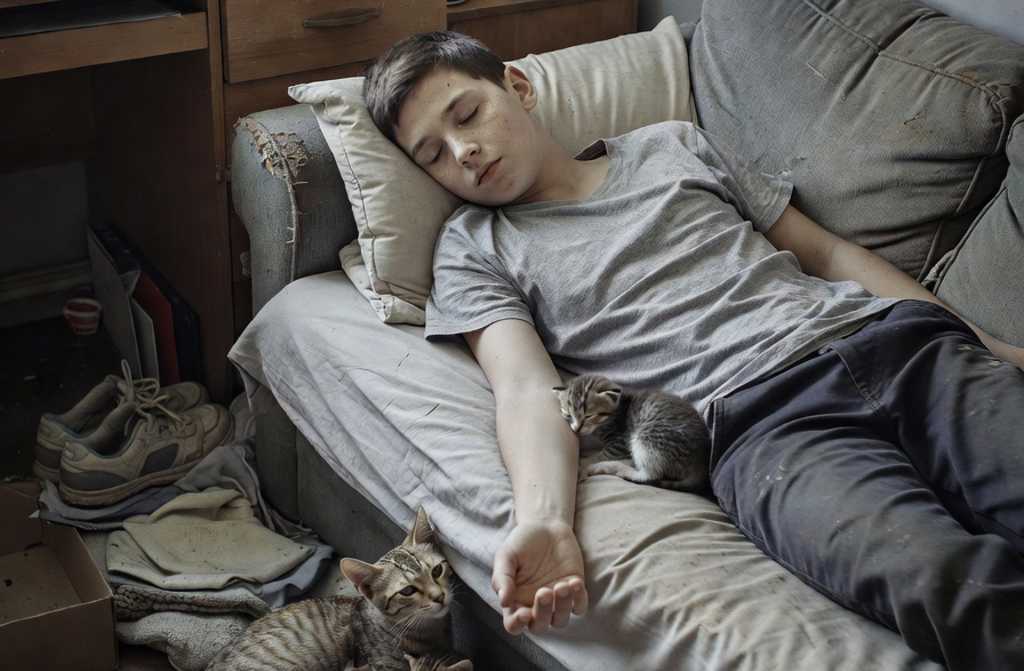
    Everything went fine, the cat gave birth to four little ones. I changed the bedding, brought fresh water and food. Once more I checked that all was in order and exhausted I lay down, closed my eyes, feeling the smallest kitten nestle into my hand. I thought that sometimes animals show more gratitude than people.

  • Heart Shattered by Hope: The Road to a New Happiness

    Heart Shattered by Hope: The Road to a New Happiness

    Grace, it’s over between us!” David declared, his tone cold and final, slicing through the tense silence. “I want a real family, with children. You can’t give me that. I’ve filed for divorce. You have three days to gather your things. When you leave, let me know. I’ll stay at my mother’s until the apartment is ready for the child and for her mother. Yes, don’t be surprised, my new girlfriend is pregnant! Three days, Grace!”

    Grace remained silent, feeling the ground crumble beneath her feet in a wave of shock and betrayal. What could she possibly say? For five years they had fought to have a child, but three pregnancies had ended in heartbreak. The doctors assured her she was healthy, but each time something went terribly wrong. Grace lived a healthy life, and during her pregnancies she was even more careful. The last time, she fainted at work, and the ambulance didn’t get there in time…

    The door slammed shut behind David, and Grace, utterly drained, collapsed onto the sofa. She had no energy left to pack anything. Where could she go? Before the marriage, she had lived with her aunt, but after her death, the apartment was sold by her cousin. Return to the village of Oakley, to her grandmother’s house? Rent somewhere? And what about her job? Questions raced through her mind while time slipped away.

    The next morning, the door opened, and her mother-in-law, Patricia Wilson, walked in.

    “Not sleeping? Good,” she said in a dry voice. “I’ve come to make sure you don’t take anything that doesn’t belong to you.”

    “I’m not taking your son’s old socks,” Grace replied, her face tightening. “Do you want to count my things?”

    “What cheek! You were so gentle before. It was me who told David after the first pregnancy that you could never give birth.”

    “Is that what you came to say? Then stay quiet and watch.”

    “Why are you taking the dinner set?” the mother-in-law said, alarmed.

    “It’s mine, from my aunt, a memory of her.”

    “It’ll be empty here without it!”

    “Not my problem. But at least you’ll have a grandchild.”

    “Take only what belongs to you!”

    “The laptop, the coffee maker, and the microwave are gifts from my colleagues. I bought the car before the wedding. Your son has his own.”

    “You have everything you need, but you can’t have children!”

    “It’s not your business. It seems that’s what God wanted.”

    “Don’t you regret it? Maybe you did it on purpose?”

    “You’re talking nonsense. I can’t even think about it without it hurting.”

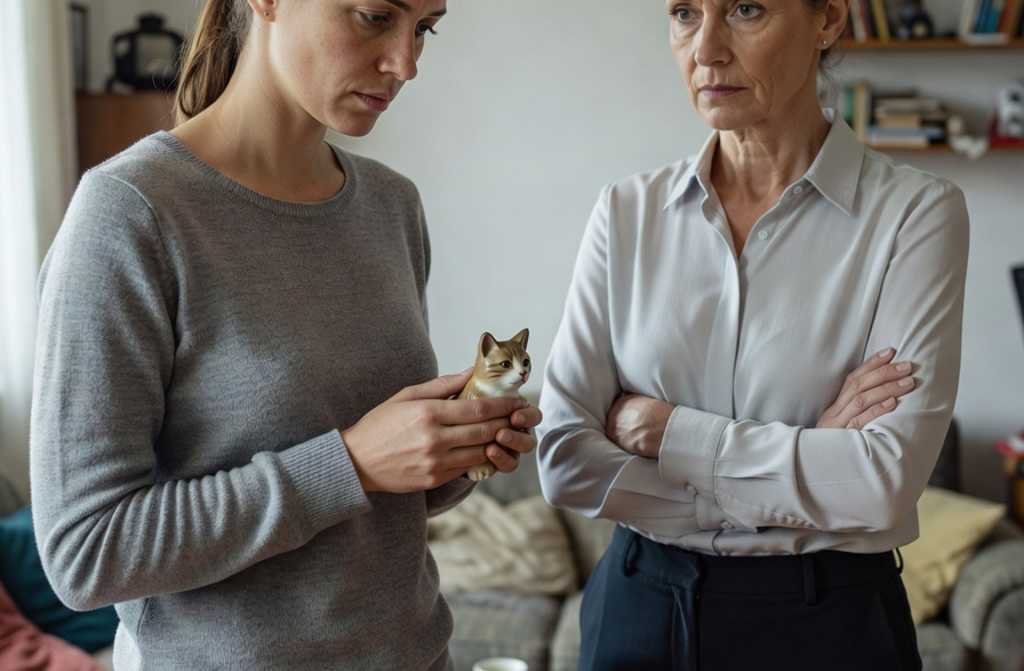
    Grace looked aroundthe things that were hers had vanished. The brush, the makeup, the slippers… She had forgotten something vital. The presence of the mother-in-law bothered her. She remembered the cat figurine, a keepsake from her grandmother. Inside was a secret compartment with earrings and a ringnot valuable, but dear to her. David had thought it a trifle. Had he thrown it away? Grace opened the balcony.

    “What are you looking for there?” the mother-in-law’s voice rang out. “Come on, take your things and leave!”

    She found the cat figurine, everything intact. Now she could go.

    “Here are the keys, goodbye. I hope we never see each other again.”

    Grace went to the office. She was on medical leave, but she requested some vacation time.

    “We’re with you,” the boss said. “But it’s hard without you. Will three weeks be enough?”

    Grace closed her eyes and felt Oliver’s hand gently squeezing hers, knowing that after so much pain, her new life was just beginning.Grace, it’s over between us!” David declared, his tone cold and final, slicing through the tense silence. “I want a real family, with children. You can’t give me that. I’ve filed for divorce. You have three days to gather your things. When you leave, let me know. I’ll stay at my mother’s until the apartment is ready for the child and for her mother. Yes, don’t be surprised, my new girlfriend is pregnant! Three days, Grace!”

    Grace remained silent, feeling the ground crumble beneath her feet in a wave of shock and betrayal. What could she possibly say? For five years they had fought to have a child, but three pregnancies had ended in heartbreak. The doctors assured her she was healthy, but each time something went terribly wrong. Grace lived a healthy life, and during her pregnancies she was even more careful. The last time, she fainted at work, and the ambulance didn’t get there in time…

    The door slammed shut behind David, and Grace, utterly drained, collapsed onto the sofa. She had no energy left to pack anything. Where could she go? Before the marriage, she had lived with her aunt, but after her death, the apartment was sold by her cousin. Return to the village of Oakley, to her grandmother’s house? Rent somewhere? And what about her job? Questions raced through her mind while time slipped away.

    The next morning, the door opened, and her mother-in-law, Patricia Wilson, walked in.

    “Not sleeping? Good,” she said in a dry voice. “I’ve come to make sure you don’t take anything that doesn’t belong to you.”

    “I’m not taking your son’s old socks,” Grace replied, her face tightening. “Do you want to count my things?”

    “What cheek! You were so gentle before. It was me who told David after the first pregnancy that you could never give birth.”

    “Is that what you came to say? Then stay quiet and watch.”

    “Why are you taking the dinner set?” the mother-in-law said, alarmed.

    “It’s mine, from my aunt, a memory of her.”

    “It’ll be empty here without it!”

    “Not my problem. But at least you’ll have a grandchild.”

    “Take only what belongs to you!”

    “The laptop, the coffee maker, and the microwave are gifts from my colleagues. I bought the car before the wedding. Your son has his own.”

    “You have everything you need, but you can’t have children!”

    “It’s not your business. It seems that’s what God wanted.”

    “Don’t you regret it? Maybe you did it on purpose?”

    “You’re talking nonsense. I can’t even think about it without it hurting.”

    Grace looked aroundthe things that were hers had vanished. The brush, the makeup, the slippers… She had forgotten something vital. The presence of the mother-in-law bothered her. She remembered the cat figurine, a keepsake from her grandmother. Inside was a secret compartment with earrings and a ringnot valuable, but dear to her. David had thought it a trifle. Had he thrown it away? Grace opened the balcony.

    “What are you looking for there?” the mother-in-law’s voice rang out. “Come on, take your things and leave!”

    She found the cat figurine, everything intact. Now she could go.

    “Here are the keys, goodbye. I hope we never see each other again.”

    Grace went to the office. She was on medical leave, but she requested some vacation time.

    “We’re with you,” the boss said. “But it’s hard without you. Will three weeks be enough?”

    Grace closed her eyes and felt Oliver’s hand gently squeezing hers, knowing that after so much pain, her new life was just beginning.

  • A Wealthy Heiress Drenched the “Penniless” Bride with Champagne — Moments Later, the Whole Bridal Shop Went Quiet

    By the time Emily Bennett walked into the bridal shop in London, her coat was soggy from a dreary drizzle, her hair was escaping its clip, and the receptionist instantly decided she didnt belong among the chic crowd.

    The place radiated money and the soft fragrance of lilies and posh perfume. Crystal chandeliers shimmered above rows of wedding dresses, each one costing more than Emilys old Vauxhall. Women clustered by a velvet settee, giggling over diamond rings and who would make the guest list.

    But Emily was only there for one dress.

    No daydreams. No pleading. She was there to assess.

    But nobody knew.

    A tall brunette, wearing a blush designer two-piece, turned from the mirror and eyed Emily like she was tracking rain into Buckingham Palace.

    Is she lost? the woman asked.

    Her name was Victoria Davenport, daughter of a hotel mogul, and quite used to people laughing at her meanness.

    Emily gave a polite smile. Ive got a ten oclock appointment.

    Victorias gaze travelled pointedly to Emilys battered black flats.

    For alterations? she sneered. Or cleaning?

    A couple of the women tittered behind their manicured hands.

    The consultant at the desk looked mortified. But an older seamstress, Mrs. Norton, quietly stepped forward and offered Emily a clean handkerchief.

    Come along, love, she whispered. No need to stand out there.

    That simple gesture had Emily fighting to keep her composure.

    But Victoria wasnt done.

    She picked up a flute of champagne from the silver tray, walked close enough for Emily to catch a whiff of her expensive scent, and said, Gowns like these arent for women like you.

    Then she tipped her glass, not in a careless spill but a slow, intentional pour all down Emilys front.

    The entire shop went deathly quiet.

    Emily looked down at the wet mark spreading over her blouse, then looked up, steady and calm in a way that made Victoria falter.

    You really should have asked who I was before you decided who I wasnt.

    From her handbag, Emily produced a sealed envelope.

    It was the receptionists face that shifted first. Then the managers.

    Because emblazoned on the front was the logo of the parent company that owned the boutique chain.

    Emily Bennett. Head of Compliance.

    Before anyone could speak, the door at the back swung wide and the Chairman himself bustled in.

    He halted when he spotted Emily.

    Then, in front of everyone in the shop, he took off his jacket and settled it gently over her shoulders.

    Ms Bennett, he said, appalled. We were expecting you for the board meeting.

    Emily flicked a glance at Victoria, who now shrank beneath the weight of her own diamonds.

    I thought it would be quite enlightening, Emily said, to see how your team behaves when they think nobody importants watching.

    Mrs. Norton squeezed Emilys hand quietly.

    And for the first time that day, Emily really smiled.

    Lets begin, she said. With the camera footage, shall we?

    For a tick, no one moved.

    The chandeliers twinkled, the lilies perfumed the air, and one woman by the velvet settee lowered her glass as if shed forgotten she was holding anything at all.

    Victoria stood frozen.

    Moments ago, shed commanded the entire room with a cold smirk and a thoughtless barb. Now she looked suddenly small, exposed by her own shadow.

    Emily didnt raise her voice.

    That somehow made it worse.

    Mrs. Norton, Emily said softly, turning to the seamstress, would you come with us, please?

    The older lady blinked in surprise. Me?

    Yes, Emily assured her, especially you.

    Mrs. Norton brushed the front of her simple grey dress, steadying herself as women do when they need to hold it together in public. Her hands were slim and unpolished, and a little silver thimble dangled from a chain around her neck.

    Victoria shifted her gaze away.

    The Chairman led them beyond the white drapes into a private fitting room, with a long oak table, warm lighting, and frothy dresses lined up along the wall.

    Emily set the envelope on the table.

    Im here today because weve had complaints, she explained. Not about the tailoring. Not about the gowns. About how certain women are made to feel the moment they walk through the door.

    The managers face drained white.

    Emily went on, calm and resolute.

    Women in tired coats. Those who arrive alone. Some with weary faces. Mums watching daughters. Widowed women starting anew. Brides without diamonds, but with hearts full of hope.

    Mrs. Norton pressed her lips together to keep from trembling.

    The room almost seemed to exhale around them.

    And then, Emily said, there was a letter.

    The old seamstress didnt meet her eyes.

    Emily softened. It was yours, wasnt it?

    Mrs. Nortons voice was barely above a whisper. I didnt sign it. I was frightened.

    The manager tried to speak, but Emily just held up a hand, gently enough to stop him.

    Mrs. Norton finally took a breath, long held.

    Ive worked here since my hands could sew straight, she said. Ive adjusted dresses for women laughing, and for those weeping because their mums couldnt see them in white.

    Her voice gained warmth, conviction.

    A bridal shop has no business making any woman feel small. It shouldnt matter what shoes shes got on, or how old her coat is. If she walks in here, shes carrying a dream in her chest. That should count.

    Emilys gaze softened in understanding.

    Victoria stared at her feet.

    Emily addressed the manager then. Mrs. Norton spoke up because she tried to protect your customers quietly. She covered your errors. She comforted women whod been humiliated by staff. She patched up gowns and hearts. And every time, you told her to keep quiet about it.

    The Chairman closed his eyes briefly, as if inwardly chastising himself.

    The manager opened his mouth again, but no words would come.

    Finally, Emily turned to Victoria.

    And you.

    Victoria met her eyes, but the venom was gone.

    You werent the reason I showed up today, Emily said, but you proved exactly why I needed to.

    A tear slid down Victorias cheek before she could stop it.

    I thought, she stammered, I thought we all knew whose feelings mattered here.

    Mrs. Norton looked at her then, not cross, just sorrowful, which somehow hurt more.

    My dear, she said softly, thats the loneliest idea in the world.

    Victoria seemed to crumple.

    No grand drama, just her shoulders sinking, and the mask shed worn slipping away.

    She turned to Emily.

    Im sorry, she managed faintly.

    Emily was silent.

    Victoria glanced at the stains on Emilys blouse, then at Mrs. Nortons shaking hands.

    Im so sorry, she said quietly to both of them. Not because I was caught. Because now I see myselfand I dont like whats staring back.

    The room settled into a new, weightier silence. One that hangs on truth finally being spoken aloud.

    Emily drew a careful breath.

    An apology is a doorway, she said. What you do once you come through it thats what counts.

    Victoria nodded, wiping her tears away.

    And the next hour changed everything.

    The manager was sent out. Staff trickled in one by one. Some wiped their eyes, others confessed to laughing or keeping quiet when they should have spoken up. A few admitted fearing for their jobs if they treated the wrong clients too kindly.

    Mrs. Norton stood by the window, worrying the thimble on her chain.

    Emily noticed.

    That thimbles special, isnt it? she asked.

    Mrs. Nortons lips twitched into a smile.

    It was my mums, she said. Shed fix dresses at our kitchen table. She always insisted, A bride might forget her gownbut never how she was made to feel while choosing it.

    Emily paused.

    My mum said nearly the same thing.

    Mrs. Norton looked over. Was she a seamstress too?

    Emily nodded a little, smile bittersweet.

    For a time. Before I was born, she worked in a tiny shop in Brixton. She loved wedding dresses. She called every stitch a promise.

    Mrs. Nortons face flickered with recognition.

    What was her name?

    Rose Bennett.

    The seamstress gasped and gently covered her mouth.

    Emily froze. You knew her?

    Mrs. Nortons eyes filled with tears. Did I? Your mother taught me my very first proper wedding hem.

    For the first time that day, Emily looked rattled.

    Mrs. Norton reached for her.

    Rose had the gentlest touch, she said. She could mend even the most delicate veil so a bride never knew it was ever torn. Shed hum while she worked. Same little tune, always.

    Emily let out a shaky laugh, tears shining in her eyes. She used to hum at home, too.

    The Chairman quietly stepped back, understanding this moment belonged to the two women whod just uncovered a hidden thread between their lives.

    Mrs. Norton squeezed Emilys hand warmly.

    Your mum would be proud of you today.

    Emily closed her eyes, letting the old, tight knot in her chest finally loosen.

    The wine stain on her blouse didnt matter any more.

    Neither did the laughter.

    Even Victoria, standing at the doorway with wet lashes, seemed smaller nownot out of defeat, but out of newfound humility.

    Later that afternoon, rain faded into a gentle mist outside. The shop doors opened again.

    A woman came in with her grown daughter.

    The daughter had on jeans, wellies, and an anxious grin. Her mums handbag was worn smooth from years of use, and she kept whispering, Are we dressed well enough for a place like this?

    Before the receptionist could answer, Victoria stepped forward.

    Everyone watched, holding their breath, to see which version of Victoria would show up.

    She looked at the mothers threadbare coat, at the daughters hopeful face.

    She smiled, gently this time.

    You look just right, she said. Come in.

    The mothers eyes filled instantly.

    Mrs. Norton appeared, draping a soft ivory gown across both arms.

    Lets find something that feels right for you, she said quietly.

    I havent a clue where to begin, the daughter confessed with a nervous laugh.

    Mrs. Norton gave her a wink. Thats exactly what Im here for, love.

    Emily, still wrapped in the Chairmans jacket, watched from near the door.

    The young woman stepped behind the curtain. Her mum, too emotional to speak, sat on the old velvet settee with her hands clasped tight.

    And then the curtain was swept aside.

    The dress was simple. No heavy beadwork, just soft fabric and gentle lines that seemed to make the young woman glow from within.

    Her mum pressed a hand to her mouth.

    Oh, darling, she managed, voice wobbly.

    Mrs. Norton fussed with one last tiny wrinkle at the waist.

    Victoria quietly handed the mother a tissue.

    And Emily felt something quiet settle inside.

    Not triumph.

    Something gentlera sense that one rotten morning had become the start of a far better one for someone else.

    Before Emily left, Mrs. Norton walked her to the door.

    The rain had stopped; outside, the pavement gleamed in the weak English sunlight as though the whole street had pressed reset.

    Mrs. Norton unclasped the thimble from her neck and pressed it into Emilys palm.

    No, I cant, Emily protested, voice soft with emotion.

    Mrs. Norton insisted. Of course you can, love. Your mum helped me start out. Today you helped this shop make a new start.

    Emily looked down at the battered, ordinary, precious thimble in her palm.

    Inside, through the window, the young bride twirled before the mirror, her mum alternating between tears and laughter.

    Victoria, no longer the loudest presence in the room, stood by quietly with the tissue box, learning how real kindness works when theres no spotlight.

    Emily slipped the thimble into her pocket.

    And then she stepped outside.

    The clouds had opened just enough to let a slant of sunshine gild the glistening pavement, the shop window, the wedding dresses glowing quietly behind the glass.

    For a moment, Emily imagined her mother beside her, humming that old familiar tune from the kitchen.

    And this time, Emily smileda proper smile, letting herself feel it fully.

    Funny how a single act of courage can change the whole room.

    And how sometimes, the most overlooked person in the crowd is there to remind everyone just what true dignity looks like.

    Ever had a moment like that, where people made assumptions before they knew your story? What did this ending bring up for you? Id love to hear your thoughts.

  • I Don’t Hate YouI Don’t Hate You

    I Don’t Hate YouI Don’t Hate You

    Nothing really had changed after all…

    Emily was anxiously twisting the edge of her sleeve, staring out the window of the cab. The streets she knew so well from childhood blurred past the same ones she’d run along with Ethan, giggling and dreaming up their future together. Seven years… A full seven years since she’d last been back home.

    “We’re here,” the driver’s voice came softly, pulling her from her thoughts.

    The cab eased to a halt outside the old block of flats. Emily checked her phone was in her bag without thinking, got out some cash, settled the fare, and climbed out. The door clicked shut, and she paused for a bit, taking in the air of her hometown. It felt different, not like the bustling London where she lived these days. Every scent and sound here seemed to wake up something buried deep inside. There was the smell of freshly cut grass from the nearby square, a hint of freshly baked bread from the little shop on the corner, and that special something you could only describe as home. The combination made her chest tighten it hurt but felt sweet too, like she was glad and scared all at once about what was coming.

    She was only staying for a few days. On the surface, it was to see her mum and help sort out some old documents that needed attention. She also fancied wandering around the familiar spots, just to see if they matched her memories. But way down, there was another reason, perhaps the biggest one. She really wanted to see Ethan! And maybe, just maybe, things in her life would turn around.

    Emily knew he lived close by. It’s not that she was checking up on him or anything she never asked about him straight out. But whenever friends met up with her or chatted on social media, they’d drop his name now and then. That’s how she picked up bits of news: he’d switched jobs and landed a great position, bought himself a flat, brought his mum to live with him… Each time, she’d picture him for a moment how he might look, what he was doing, what was on his mind. Then she’d shake it off quick, scared of letting those thoughts settle too deep in her heart…

    On the next day, Emily thought she’d take a walk through the town centre. She didn’t have any big plans just wanted to breathe in the city air, see the old places in daylight, feel the pace of the streets that used to be part of her everyday. She walked slowly, peeking into shop windows, smiling a little when something jogged her memory: the news stand where she used to buy comics, the bench where she and her mates sat after school, the cafe where she first tried a cappuccino and nearly spilled it on her new top.

    And then she spotted him.

    Ethan was walking on the other side of the street. He hadn’t seen her he was looking ahead, head slightly tilted, like he was thinking about something. Emily froze. Everything inside her flipped so fast she forgot how to breathe for a second. He hadn’t changed a bit still tall, with that easy, relaxed walk she remembered from when they were young. Same outline, same movements, even the same haircut.

    Without a second thought, she dashed across the road. The lights turned amber, a horn blared from somewhere, but she barely noticed. Her legs carried her forward on their own, her heart pounding so loud it felt like everyone could hear it.

    “Ethan!” she shouted as she caught up with him by the shop.

    Her voice shook she hadn’t realised how nervous she was. He turned around and… nothing. No joy in his eyes, no anger. Nothing at all.

    “Emily?” he said calmly, almost like he didn’t care.

    That flat tone hit her harder than she thought it would. All the feelings she’d bottled up for seven years burst out. Her eyes filled with tears, her voice trembled, and she couldn’t stop.

    “Ethan, I… I’m so sorry,” she managed, struggling to find the words. “I know I don’t have the right to even come near you, but I…” she sobbed, tried to pull herself together, but the tears kept rolling down her cheeks and she didn’t even try to wipe them. “I love you. I still love you. Forgive me. Please, forgive me!”

    She spoke fast and jumbled, afraid that if she paused she’d never finish. So much was spinning in her head excuses, explanations, pleas but only the most important words came out. The ones she’d kept locked away all those years.

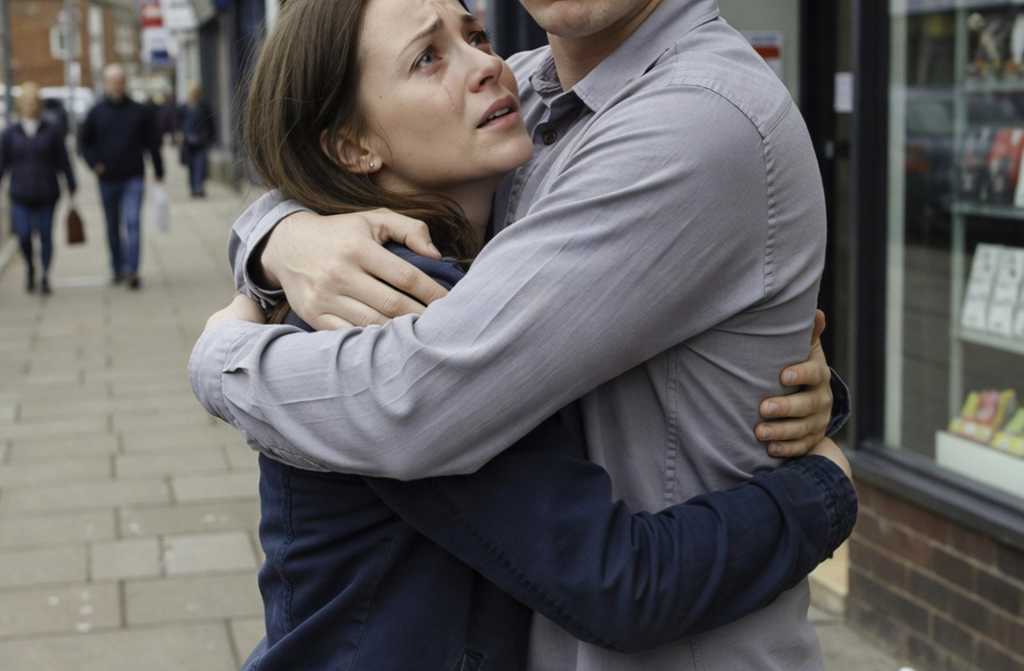
    She wrapped her arms around him, pressing close to his chest, as if that could bring back what they’d lost seven years ago. In that moment, the noisy street, the passersby, time itself none of it existed for her. Just the warmth of his body and the desperate hope that he’d hug her back.

    Ethan didn’t pull away right away. For a split second she thought he might his shoulders dropped a little, his hands lifted slightly, like he wanted to hold her too. That tiny move sparked hope in her: maybe it could still be fixed, maybe he had held onto those memories too… Maybe they still had a future!

    But the moment passed. Ethan gripped her shoulders firmly and gently but surely pushed her back. His face stayed calm, almost blank, his gaze steady and almost cold. There was no trace of the lad she’d laughed and dreamed with. In front of her was a grown man whose feelings were locked behind a strong wall.

    “Just go away,” he whispered close to her ear.

    He said it softly and without any feeling, like she meant nothing to him. Like she was just some stranger not worth his time.

    “I hate you,” he added a second later, and only then did his eyes show clear disgust.

    He turned and walked off without looking back. Emily stood there stunned. The world kept going: people hurrying about, cars honking at the crossing, kids laughing somewhere far off… A few passersby gave her odd looks, maybe wondering why she was standing in the middle of the street with that blank stare and pale face. But she didn’t notice any of it.

    Just the sound of his footsteps fading away, and her own breathing ragged, broken, helpless. Every second stretched out forever, and one thought kept looping in her head: “This is the end. For good.”

    She slowly made her way home. Her legs felt like they weren’t working right, each step was an effort, but she kept going, staring ahead without seeing. Her mind was empty no thoughts, no feelings, just the hollow echo of his words bouncing around inside.

    When Emily got to her mum’s flat, she didn’t even try to explain anything. She just walked quietly into the room, sank onto a chair, and stared out the window. Her mum saw her tear-streaked face and dull eyes but didn’t ask questions. She just sighed softly, like she’d been expecting this, and went to put the kettle on. The familiar sound of boiling water, the smell of tea brewing it all felt so normal, such a contrast to what was going on inside Emily. But that everyday stuff helped bring her back a bit.

    “He didn’t forgive me,” Emily whispered, clutching the hot cup of tea. The steam tickled her face, but she hardly noticed. Her fingers gripped tighter without thinking, like she was trying to hold onto something slipping away, while her eyes stayed fixed on the golden surface of the drink, reflecting the dim lamp light.

    Her mum sat down beside her, quietly, without a word, and patted her shoulder. It was a gentle, familiar touch the kind from when Emily was little and came home with a scraped knee or after a row with a friend. That simple gesture made her feel small and vulnerable again, like all the grown-up choices and actions of the last years had melted away.

    “You knew it would turn out this way,” her mum said softly, not scolding, more with quiet sadness.

    “I knew,” Emily nodded, finally looking up from the cup. Her voice was steady but tired, like she’d been going over this line in her head for ages, getting ready for it. “But I hoped. Silly, right?”

    “Not silly,” her mum said gently. “It’s just… you chose this path yourself. You hurt Ethan really badly, and it took him a long time to get over your breakup… He sort of turned into Kai from that old children’s story. No one could reach his heart after that.”

    Emily took a deep breath, set the cup down, and leaned back in the chair. Scenes from seven years ago popped into her mind uninvited.

    Back then everything seemed so straightforward, so clear. She was twenty-two that age when the future looks full of bright colours and every obstacle feels beatable. Ethan was there kind, dependable, the one person you could count on no matter what. He wasn’t one for fancy words or talking big about feelings, but his actions spoke louder: he was always there to help, good at listening, supported her even in little ways.

    But there was one issue or what Emily saw as a problem then. Ethan worked on building sites, studied by correspondence, dreamed of starting his own business. His plans were solid and thought out, but they needed time and she didn’t want to wait.

    She wasn’t after wealth, not really. She wanted stability, not luxury, just knowing that in a year, two, five years she’d have a job, a place to live, the chance to shape her life how she wanted. With Ethan, it all looked too uncertain: endless odd jobs, evening classes, dreams of the future that were still just dreams.

    And when her uncle from London offered her a job in his company, she said yes. No real thinking, barely any hesitation. It was an opportunity real, solid, one she couldn’t pass up.

    There was another truth one Emily tried not to think about. Around the time she moved to London and started the job, Richard came into her life. He was a well-off businessman, twice her age, with confident ways and a habit of getting what he wanted. They met by chance at a work do, where Emily showed up in a new dress, feeling a bit out of place among the smart colleagues. Richard noticed her straight away: came over, started chatting, asked about her work, plans, life.

    He didn’t hold back with the attention. First it was flowers not big bunches of roses, but neat little bouquets delivered to the office with a note: “For the most beautiful.” Then invitations to restaurants she could only have peered into from outside before. He took her to exhibitions, theatres, gave her things she’d never dared dream of: silk scarves, delicate jewellery, shoes with thin heels. Each gift came with words about how she deserved a better life, how she shouldn’t limit herself, how important it was to take what life offered.

    At first Emily pushed back she got embarrassed, refused, tried to say she didn’t need such gifts. But Richard kept on gently, saying it was just a sign of care, that he truly admired her smarts and looks. Slowly she started accepting his advances. The shiny new world pulled her in: evenings in cosy restaurants, rides in fancy cabs, the ability to walk into any shop and buy what she liked without checking the price. It all felt like a magical dream she didn’t want to wake from.

    And somewhere in those glittering moments, she started seeing Richard. Not because she was head over heels, but because his world tempted her with its ease and certainty. With him she didn’t have to worry about tomorrow, wonder if there’d be enough for rent or a new outfit for a big meeting. He just took care of everything, wrapping her in a bubble of no worries.

    And she really liked that life. So much that Emily forgot all about the lovestruck guy back home. Even more she started looking down on him, saying Ethan would never get anywhere in life.

    One day Emily went back to her hometown. Not to see Ethan, not to explain or even just say hello. She wanted something else to show him her new life, prove what she was really “worth”. Deep down a thought flickered: let him see she hadn’t made a mistake, that her choice was right, that she’d escaped the uncertainty that hung over their relationship.

    She planned the visit carefully. Picked a cafe on the main street the one Ethan sometimes popped into for coffee after work. Put on an expensive dress Richard had given her for her birthday elegant, with a slim belt that showed off her waist. On her finger sparkled a ring with a big stone another of his presents. In her hand she carried a bag from the latest collection, which she’d bought the day before after spotting it in the window.

    When Ethan walked into the cafe, Emily noticed him right away. She was sitting by the window, laughing loudly at something her companion said on purpose, and turned so Ethan would definitely see her. Their eyes met. In his she read confusion, pain, bewilderment all the things she’d been trying not to see in herself for months. But instead of getting flustered or looking away, she held his gaze without flinching.

    In that moment she felt like it was a win. She’d proven to herself and him that she’d made the right choice. That her life now was real chances, luxury and confidence, not endless talks about the future. She told herself she felt satisfied, that she’d finally got what she deserved.

    But when Ethan left the cafe and she stayed sitting at the table, her laugh faded bit by bit. She looked at the ring, the bag, her companion still chatting away, and suddenly felt a strange emptiness. All of it the pricey things, the nice gestures, the attention suddenly seemed far away and not real. And even though she kept smiling and joining in the talk, inside something whispered quietly: “Was it worth it?”

    The win turned out bitter Emily realised that not straight away, but gradually, day by day, it became clearer. At first Richard kept up the image of the generous, attentive man: invited her to restaurants, gave flowers, paid compliments. But over time his interest started to fade, like a candle running out of wax.

    It showed in small things first. Instead of warm words cool comments. Instead of surprise gifts short texts: “Pop into that shop, pick something yourself.” And then came the sharp digs. He started picking at her looks: “Maybe you should pay more attention to yourself?”, her way of talking: “Why do you laugh so loud? It’s common,” her friends she saw now and then: “Those small-town mates again? Don’t you think it’s time to find a more interesting crowd?”

    He was around less and less. He’d disappear for days, sometimes weeks, leaving her alone in the big flat he’d rented for them. Emily spent evenings by herself, listening to the clock tick or aimlessly sorting through clothes in the wardrobe. When she tried to talk to him, say she missed their time together, he’d just brush it off, not looking at her:

    “You got what you wanted. What more do you need?”

    Emily tried to make excuses for his behaviour. “He’s got a tough business,” she’d think, “probably a lot of stress.” Or: “He’s just tired, he needs time.” She convinced herself it was temporary, that things would settle soon, that she was just being too demanding. But deep down she knew: it wasn’t tiredness or work. She’d become just another pretty toy for him bright, new, eye-catching. And when the newness wore off, the interest died.

    She put up with it. Put up with his cutting words, his cold silence, his long absences. Put up with it because she was scared to admit one single but huge thing: she’d been wrong. If she admitted the flashy life was empty, she’d have to admit something else that she’d betrayed the only person who’d loved her for real. That Ethan, with his modest job and dreams of his own business, was the one who valued her just for being her, not for the shine and fitting some idea of the perfect partner.

    Over time even the outer signs of luxury stopped bringing joy. The expensive dresses she used to look at excitedly in shops now hung lifeless in the wardrobe. The jewellery that once made her heart race sat in the box like it wasn’t hers. The restaurants she loved at the start with their soft lights, fancy food and party vibe now just annoyed her to look at. The smell of pricey perfume, which used to seem like a symbol of her new life, now made her feel a bit sick.

    She caught herself more and more staring out the window, watching people go by, thinking: “What if…” But she’d cut those thoughts short, scared to let them loose. Because behind them came the question she had no answer for: “What next?”

    On those lonely evenings, when the twilight slowly gathered outside and the flat was filled with an almost ringing silence, Emily thought more and more that her dreams of stability had turned out kind of hollow. She imagined a life with certainty about tomorrow, where you didn’t have to worry about money, where everything was planned and in order. But now, sitting in the big, well-furnished flat, she suddenly saw clearly: without someone to share that stability with, none of it meant anything.

    Her thoughts kept drifting back to Ethan. She remembered his hands strong, a bit rough from work, but so warm when he took her hands in his. She remembered his smile not bright and showy, but quiet and genuine, the one that came when he was truly happy. She remembered how he talked about the future: no big words or loud promises, just shared plans, believed that they’d make it. And that belief was so real, so solid, that Emily had felt back then with him she could face anything without fear…

    On the third day of being home, Emily decided to walk in the park where they’d strolled together once. There was that same bench under the spreading maple they’d often sat there, chatting about everything, laughing at silly things. Emily remembered how Ethan, watching the falling leaves, had suddenly said: “You know, I want us to have our own house. With big windows so the morning sun comes right into the room. And there’d always be lots of light and happiness.” Back then she’d just smiled, thinking it was just dreams. Now those words sounded different like something missed, lost.

    She stopped, breathed in the cool air, trying to gather her thoughts. And right then she heard a familiar voice:

    “Emily?”

    She turned. There stood Tom their mutual friend with Ethan. He looked surprised but smiled straight away, like he was glad to see her.

    “Didn’t expect to see you here,” he said, raising his eyebrows a bit. “How are you?”

    Emily hesitated for a second, picking her words. She wanted to answer lightly, casually, but her voice wobbled a little, even though she tried to hide it.

    “Fine,” she tried to smile, and it came out not as forced as she’d feared. “Came to visit mum.”

    Tom nodded, giving her a careful look, but didn’t press for more. Instead he pointed to a bench nearby:

    “Fancy sitting down? I was just out for a walk, wondering where to go next.”

    Emily agreed, and they headed slowly to the bench. On the way Tom talked about how things were going for him, what was new in town lately. His voice was calm, friendly, and it helped Emily relax a bit. She listened, chipped in with short comments now and then, while thinking how odd it all was: she’d come back to her hometown where every corner reminded her of the past, and here she was already bumping into someone from that old life.

    Tom nodded, stayed quiet a moment, like choosing his words, then asked calmly, without pushing:

    “Seen Ethan?”

    Emily dropped her eyes without meaning to, her gaze sliding over the fallen leaves underfoot. She didn’t answer right away memories of yesterday’s meeting flashed through her mind, his cold look, those short hurtful words. Finally she said quietly:

    “Yes. Yesterday.”

    “And how did it go?” Tom asked, watching her closely.

    “He… he doesn’t want to know me,” Emily breathed out, finding it hard to say each word. Her voice was even but heavy, like she was holding back a storm of feelings. “He hates me.”

    Tom sighed, sat on the bench next to her, rested his elbows on his knees and looked off into the distance, where the park path faded into the golden autumn haze. He was silent for a few seconds, like weighing what to say, then spoke softly:

    “You know, he took a long time to get over it. You just disappeared, Emily. No call, no letter. For him it was like a punch in the back.”

    Emily clenched her fingers, feeling everything tighten inside. She knew this, understood, but hearing it confirmed by someone else was tougher than she’d expected.

    “I know,” she whispered, not looking up. “It’s my fault.”

    Tom turned his head slightly towards her but didn’t push or start lecturing. Instead he went on, just as calmly:

    “He tried to forget you. Saw other people, but nothing worked. Says he can’t love anyone the way he loved you. He was in a really bad way, you know? And after your showy visit… I thought he’d shut himself off completely!”

    Emily nodded silently. She pictured how Ethan had tried to carry on, how he’d made himself stop thinking about her, how he’d probably jump at a similar voice or a random memory. And that thought made it hurt even more not because he suffered, but because she was the cause of that pain.

    “I didn’t know it would be like this,” she said quietly, more to herself than to Tom. “I thought I was making the right choice. I wanted stability.”

    Tom didn’t argue or try to convince her otherwise. He just sat there with her, giving her time to take it in. The wind rustled in the park, leaves swirled in a slow dance, and somewhere far off kids laughed as they played by the fountain. Life went on as usual.

    Emily clenched her fists so tight her nails dug a bit into her palms. She tried to hold back the tears, but they still welled up, blurring her view. Everything inside tightened with the bitter realisation: she couldn’t fix anything, couldn’t turn back time, couldn’t undo what she’d done.

    “I’m not asking him to forgive me,” she said in a shaky voice, struggling for words. “I just wanted him to know I’m sorry! I regret what I did every single day. These thoughts won’t leave me alone! I keep remembering how it was… and how I wrecked it all.”

    Tom looked at her carefully, without judging. He didn’t rush to answer you could see he was thinking over every word.

    “Maybe he doesn’t need to know,” he said at last, quietly but firmly. “Leave him be, don’t come back, you’re only making it worse. It took him ages to get back on his feet after you left. And he’s probably learned how to cope somehow. But your showing up… it’s stirred everything up again! Yesterday he called me and… he was really drunk. I haven’t seen him like that for years, you know? Don’t mess up his life, Emily.”

    The girl bit her lip hard but stayed quiet. She understood Tom was right. Her sudden return, trying to see Ethan it had just reopened old wounds he’d been trying to heal all these years. She wanted to make up for her guilt, but maybe all she’d done was cause him fresh pain…

    In the evening Emily sat by the window in her mum’s flat. Outside the lights of the town were slowly coming on yellow, orange, white blending into a strange mosaic, twinkling and shifting, making it look like a party. But she wasn’t in the mood for the beauty of the evening streets. Thoughts kept turning in her head one after another, like scenes from an old film she couldn’t stop.

    She imagined how it might have been if she’d stayed back then. How they’d have rented their first flat together, how Ethan would have built his business, how they’d have planned their future, laughed at small troubles, celebrated little wins. She thought about how many happy moments she’d missed, how many warm words she’d never said, how many touches she’d never shared. But the past can’t be changed she understood that clearly, more than ever before.

    The next day Emily left. She packed her things slowly, without rushing, like she wanted to put off the goodbye. Her mum stood in the doorway of the room, watching her silently, and in her eyes was a quiet sadness not a telling off, just sadness that her daughter was leaving again.

    “Take care of yourself,” her mum said when Emily was already in the hall, suitcase in hand.

    Emily nodded, kissed her on the cheek, paused for a second breathing in the familiar smell of home, then stepped out onto the street.

    At the station she bought a ticket to London she wanted time to think. A couple of days on the train, with strangers around… Maybe that would help her figure out how to go on.

    The train pulled away smoothly, rocking gently on the tracks. Emily kept her eyes on the window. Outside the familiar shapes of the town slid by slowly: blocks of flats with balconies full of flowers, the playground where she’d once walked with friends, the little bakery with its bright sign. People hurried about their business someone with a bag of shopping, someone with an umbrella open even though it was clear, someone rushing to the bus stop. All of it was so ordinary, so everyday, but now it felt endlessly far away.

    Somewhere there, among those streets and houses, was the person she loved more than anything. The person whose eyes lit up when he talked about the future, whose hands could do hard work and hold her hand gently. The person she hadn’t taken the time to explain her leaving to, hadn’t given a chance to say goodbye. And now he was lost to her forever she understood that clearly, no matter how hard she tried to tell herself it wasn’t over yet…

    Six months went by. Emily kept living in London, going to work, meeting friends for coffee at weekends, answering questions about how she was and her plans. On the outside everything looked the same as before: same routine, same places, same chats. But inside something had changed for good. She no longer ran from the past, didn’t try to hide it behind new people, expensive buys or a packed schedule. Now she looked at it straight on, without fear: she accepted her mistake, admitted the pain she’d caused, and her real regret.

    She’d learned to wake up thinking that life goes on. Learned to tell herself: “I did what I did. It was wrong, but there’s no changing it now.” And in that acceptance there was a strange, quiet relief not happiness, no, but at least the chance to breathe easier, to look ahead without panicking.

    One evening, while Emily was making dinner, her phone gave a quiet ping with a new message. She wiped her hands on a towel, picked up the smartphone and saw an unknown number. Just one sentence on the screen: “I don’t hate you. But I can’t forgive you.”

    Emily froze. Her fingers tightened on the phone by themselves, and her heart seemed to stop for a second before racing faster. She slowly sank to the floor, pressing the smartphone to her chest, like she was trying to feel another heartbeat through it the one belonging to the person who’d written those words.

    She didn’t know what it meant. She didn’t understand how to read those lines whether it was a step towards her or a final “goodbye”. But for the first time in a long while it felt like there was still some kind of thread between them. Thin, fragile, ready to snap at the slightest wrong move, but still a connection. Someone out there, in another city, was thinking about her. Someone had decided to write, despite the pain and hurt. Someone hadn’t shut the door completely.

    Emily smiled through her tears. The smile was shy, unsure, but real. Maybe this wasn’t the end. Maybe one day they could talk calmly, without blame, without trying to justify themselves or the other. Maybe they’d find the words that would help them both move forward together or apart, but with a clear understanding.

    For now… for now it was enough to know that he was still thinking about her. That somewhere out there, hundreds of miles away, lived a person who remembered her not just as a mistake from the past, but as part of his story.

    And that for now was enough.Nothing really had changed after all…

    Emily was anxiously twisting the edge of her sleeve, staring out the window of the cab. The streets she knew so well from childhood blurred past the same ones she’d run along with Ethan, giggling and dreaming up their future together. Seven years… A full seven years since she’d last been back home.

    “We’re here,” the driver’s voice came softly, pulling her from her thoughts.

    The cab eased to a halt outside the old block of flats. Emily checked her phone was in her bag without thinking, got out some cash, settled the fare, and climbed out. The door clicked shut, and she paused for a bit, taking in the air of her hometown. It felt different, not like the bustling London where she lived these days. Every scent and sound here seemed to wake up something buried deep inside. There was the smell of freshly cut grass from the nearby square, a hint of freshly baked bread from the little shop on the corner, and that special something you could only describe as home. The combination made her chest tighten it hurt but felt sweet too, like she was glad and scared all at once about what was coming.

    She was only staying for a few days. On the surface, it was to see her mum and help sort out some old documents that needed attention. She also fancied wandering around the familiar spots, just to see if they matched her memories. But way down, there was another reason, perhaps the biggest one. She really wanted to see Ethan! And maybe, just maybe, things in her life would turn around.

    Emily knew he lived close by. It’s not that she was checking up on him or anything she never asked about him straight out. But whenever friends met up with her or chatted on social media, they’d drop his name now and then. That’s how she picked up bits of news: he’d switched jobs and landed a great position, bought himself a flat, brought his mum to live with him… Each time, she’d picture him for a moment how he might look, what he was doing, what was on his mind. Then she’d shake it off quick, scared of letting those thoughts settle too deep in her heart…

    On the next day, Emily thought she’d take a walk through the town centre. She didn’t have any big plans just wanted to breathe in the city air, see the old places in daylight, feel the pace of the streets that used to be part of her everyday. She walked slowly, peeking into shop windows, smiling a little when something jogged her memory: the news stand where she used to buy comics, the bench where she and her mates sat after school, the cafe where she first tried a cappuccino and nearly spilled it on her new top.

    And then she spotted him.

    Ethan was walking on the other side of the street. He hadn’t seen her he was looking ahead, head slightly tilted, like he was thinking about something. Emily froze. Everything inside her flipped so fast she forgot how to breathe for a second. He hadn’t changed a bit still tall, with that easy, relaxed walk she remembered from when they were young. Same outline, same movements, even the same haircut.

    Without a second thought, she dashed across the road. The lights turned amber, a horn blared from somewhere, but she barely noticed. Her legs carried her forward on their own, her heart pounding so loud it felt like everyone could hear it.

    “Ethan!” she shouted as she caught up with him by the shop.

    Her voice shook she hadn’t realised how nervous she was. He turned around and… nothing. No joy in his eyes, no anger. Nothing at all.

    “Emily?” he said calmly, almost like he didn’t care.

    That flat tone hit her harder than she thought it would. All the feelings she’d bottled up for seven years burst out. Her eyes filled with tears, her voice trembled, and she couldn’t stop.

    “Ethan, I… I’m so sorry,” she managed, struggling to find the words. “I know I don’t have the right to even come near you, but I…” she sobbed, tried to pull herself together, but the tears kept rolling down her cheeks and she didn’t even try to wipe them. “I love you. I still love you. Forgive me. Please, forgive me!”

    She spoke fast and jumbled, afraid that if she paused she’d never finish. So much was spinning in her head excuses, explanations, pleas but only the most important words came out. The ones she’d kept locked away all those years.

    She wrapped her arms around him, pressing close to his chest, as if that could bring back what they’d lost seven years ago. In that moment, the noisy street, the passersby, time itself none of it existed for her. Just the warmth of his body and the desperate hope that he’d hug her back.

    Ethan didn’t pull away right away. For a split second she thought he might his shoulders dropped a little, his hands lifted slightly, like he wanted to hold her too. That tiny move sparked hope in her: maybe it could still be fixed, maybe he had held onto those memories too… Maybe they still had a future!

    But the moment passed. Ethan gripped her shoulders firmly and gently but surely pushed her back. His face stayed calm, almost blank, his gaze steady and almost cold. There was no trace of the lad she’d laughed and dreamed with. In front of her was a grown man whose feelings were locked behind a strong wall.

    “Just go away,” he whispered close to her ear.

    He said it softly and without any feeling, like she meant nothing to him. Like she was just some stranger not worth his time.

    “I hate you,” he added a second later, and only then did his eyes show clear disgust.

    He turned and walked off without looking back. Emily stood there stunned. The world kept going: people hurrying about, cars honking at the crossing, kids laughing somewhere far off… A few passersby gave her odd looks, maybe wondering why she was standing in the middle of the street with that blank stare and pale face. But she didn’t notice any of it.

    Just the sound of his footsteps fading away, and her own breathing ragged, broken, helpless. Every second stretched out forever, and one thought kept looping in her head: “This is the end. For good.”

    She slowly made her way home. Her legs felt like they weren’t working right, each step was an effort, but she kept going, staring ahead without seeing. Her mind was empty no thoughts, no feelings, just the hollow echo of his words bouncing around inside.

    When Emily got to her mum’s flat, she didn’t even try to explain anything. She just walked quietly into the room, sank onto a chair, and stared out the window. Her mum saw her tear-streaked face and dull eyes but didn’t ask questions. She just sighed softly, like she’d been expecting this, and went to put the kettle on. The familiar sound of boiling water, the smell of tea brewing it all felt so normal, such a contrast to what was going on inside Emily. But that everyday stuff helped bring her back a bit.

    “He didn’t forgive me,” Emily whispered, clutching the hot cup of tea. The steam tickled her face, but she hardly noticed. Her fingers gripped tighter without thinking, like she was trying to hold onto something slipping away, while her eyes stayed fixed on the golden surface of the drink, reflecting the dim lamp light.

    Her mum sat down beside her, quietly, without a word, and patted her shoulder. It was a gentle, familiar touch the kind from when Emily was little and came home with a scraped knee or after a row with a friend. That simple gesture made her feel small and vulnerable again, like all the grown-up choices and actions of the last years had melted away.

    “You knew it would turn out this way,” her mum said softly, not scolding, more with quiet sadness.

    “I knew,” Emily nodded, finally looking up from the cup. Her voice was steady but tired, like she’d been going over this line in her head for ages, getting ready for it. “But I hoped. Silly, right?”

    “Not silly,” her mum said gently. “It’s just… you chose this path yourself. You hurt Ethan really badly, and it took him a long time to get over your breakup… He sort of turned into Kai from that old children’s story. No one could reach his heart after that.”

    Emily took a deep breath, set the cup down, and leaned back in the chair. Scenes from seven years ago popped into her mind uninvited.

    Back then everything seemed so straightforward, so clear. She was twenty-two that age when the future looks full of bright colours and every obstacle feels beatable. Ethan was there kind, dependable, the one person you could count on no matter what. He wasn’t one for fancy words or talking big about feelings, but his actions spoke louder: he was always there to help, good at listening, supported her even in little ways.

    But there was one issue or what Emily saw as a problem then. Ethan worked on building sites, studied by correspondence, dreamed of starting his own business. His plans were solid and thought out, but they needed time and she didn’t want to wait.

    She wasn’t after wealth, not really. She wanted stability, not luxury, just knowing that in a year, two, five years she’d have a job, a place to live, the chance to shape her life how she wanted. With Ethan, it all looked too uncertain: endless odd jobs, evening classes, dreams of the future that were still just dreams.

    And when her uncle from London offered her a job in his company, she said yes. No real thinking, barely any hesitation. It was an opportunity real, solid, one she couldn’t pass up.

    There was another truth one Emily tried not to think about. Around the time she moved to London and started the job, Richard came into her life. He was a well-off businessman, twice her age, with confident ways and a habit of getting what he wanted. They met by chance at a work do, where Emily showed up in a new dress, feeling a bit out of place among the smart colleagues. Richard noticed her straight away: came over, started chatting, asked about her work, plans, life.

    He didn’t hold back with the attention. First it was flowers not big bunches of roses, but neat little bouquets delivered to the office with a note: “For the most beautiful.” Then invitations to restaurants she could only have peered into from outside before. He took her to exhibitions, theatres, gave her things she’d never dared dream of: silk scarves, delicate jewellery, shoes with thin heels. Each gift came with words about how she deserved a better life, how she shouldn’t limit herself, how important it was to take what life offered.

    At first Emily pushed back she got embarrassed, refused, tried to say she didn’t need such gifts. But Richard kept on gently, saying it was just a sign of care, that he truly admired her smarts and looks. Slowly she started accepting his advances. The shiny new world pulled her in: evenings in cosy restaurants, rides in fancy cabs, the ability to walk into any shop and buy what she liked without checking the price. It all felt like a magical dream she didn’t want to wake from.

    And somewhere in those glittering moments, she started seeing Richard. Not because she was head over heels, but because his world tempted her with its ease and certainty. With him she didn’t have to worry about tomorrow, wonder if there’d be enough for rent or a new outfit for a big meeting. He just took care of everything, wrapping her in a bubble of no worries.

    And she really liked that life. So much that Emily forgot all about the lovestruck guy back home. Even more she started looking down on him, saying Ethan would never get anywhere in life.

    One day Emily went back to her hometown. Not to see Ethan, not to explain or even just say hello. She wanted something else to show him her new life, prove what she was really “worth”. Deep down a thought flickered: let him see she hadn’t made a mistake, that her choice was right, that she’d escaped the uncertainty that hung over their relationship.

    She planned the visit carefully. Picked a cafe on the main street the one Ethan sometimes popped into for coffee after work. Put on an expensive dress Richard had given her for her birthday elegant, with a slim belt that showed off her waist. On her finger sparkled a ring with a big stone another of his presents. In her hand she carried a bag from the latest collection, which she’d bought the day before after spotting it in the window.

    When Ethan walked into the cafe, Emily noticed him right away. She was sitting by the window, laughing loudly at something her companion said on purpose, and turned so Ethan would definitely see her. Their eyes met. In his she read confusion, pain, bewilderment all the things she’d been trying not to see in herself for months. But instead of getting flustered or looking away, she held his gaze without flinching.

    In that moment she felt like it was a win. She’d proven to herself and him that she’d made the right choice. That her life now was real chances, luxury and confidence, not endless talks about the future. She told herself she felt satisfied, that she’d finally got what she deserved.

    But when Ethan left the cafe and she stayed sitting at the table, her laugh faded bit by bit. She looked at the ring, the bag, her companion still chatting away, and suddenly felt a strange emptiness. All of it the pricey things, the nice gestures, the attention suddenly seemed far away and not real. And even though she kept smiling and joining in the talk, inside something whispered quietly: “Was it worth it?”

    The win turned out bitter Emily realised that not straight away, but gradually, day by day, it became clearer. At first Richard kept up the image of the generous, attentive man: invited her to restaurants, gave flowers, paid compliments. But over time his interest started to fade, like a candle running out of wax.

    It showed in small things first. Instead of warm words cool comments. Instead of surprise gifts short texts: “Pop into that shop, pick something yourself.” And then came the sharp digs. He started picking at her looks: “Maybe you should pay more attention to yourself?”, her way of talking: “Why do you laugh so loud? It’s common,” her friends she saw now and then: “Those small-town mates again? Don’t you think it’s time to find a more interesting crowd?”

    He was around less and less. He’d disappear for days, sometimes weeks, leaving her alone in the big flat he’d rented for them. Emily spent evenings by herself, listening to the clock tick or aimlessly sorting through clothes in the wardrobe. When she tried to talk to him, say she missed their time together, he’d just brush it off, not looking at her:

    “You got what you wanted. What more do you need?”

    Emily tried to make excuses for his behaviour. “He’s got a tough business,” she’d think, “probably a lot of stress.” Or: “He’s just tired, he needs time.” She convinced herself it was temporary, that things would settle soon, that she was just being too demanding. But deep down she knew: it wasn’t tiredness or work. She’d become just another pretty toy for him bright, new, eye-catching. And when the newness wore off, the interest died.

    She put up with it. Put up with his cutting words, his cold silence, his long absences. Put up with it because she was scared to admit one single but huge thing: she’d been wrong. If she admitted the flashy life was empty, she’d have to admit something else that she’d betrayed the only person who’d loved her for real. That Ethan, with his modest job and dreams of his own business, was the one who valued her just for being her, not for the shine and fitting some idea of the perfect partner.

    Over time even the outer signs of luxury stopped bringing joy. The expensive dresses she used to look at excitedly in shops now hung lifeless in the wardrobe. The jewellery that once made her heart race sat in the box like it wasn’t hers. The restaurants she loved at the start with their soft lights, fancy food and party vibe now just annoyed her to look at. The smell of pricey perfume, which used to seem like a symbol of her new life, now made her feel a bit sick.

    She caught herself more and more staring out the window, watching people go by, thinking: “What if…” But she’d cut those thoughts short, scared to let them loose. Because behind them came the question she had no answer for: “What next?”

    On those lonely evenings, when the twilight slowly gathered outside and the flat was filled with an almost ringing silence, Emily thought more and more that her dreams of stability had turned out kind of hollow. She imagined a life with certainty about tomorrow, where you didn’t have to worry about money, where everything was planned and in order. But now, sitting in the big, well-furnished flat, she suddenly saw clearly: without someone to share that stability with, none of it meant anything.

    Her thoughts kept drifting back to Ethan. She remembered his hands strong, a bit rough from work, but so warm when he took her hands in his. She remembered his smile not bright and showy, but quiet and genuine, the one that came when he was truly happy. She remembered how he talked about the future: no big words or loud promises, just shared plans, believed that they’d make it. And that belief was so real, so solid, that Emily had felt back then with him she could face anything without fear…

    On the third day of being home, Emily decided to walk in the park where they’d strolled together once. There was that same bench under the spreading maple they’d often sat there, chatting about everything, laughing at silly things. Emily remembered how Ethan, watching the falling leaves, had suddenly said: “You know, I want us to have our own house. With big windows so the morning sun comes right into the room. And there’d always be lots of light and happiness.” Back then she’d just smiled, thinking it was just dreams. Now those words sounded different like something missed, lost.

    She stopped, breathed in the cool air, trying to gather her thoughts. And right then she heard a familiar voice:

    “Emily?”

    She turned. There stood Tom their mutual friend with Ethan. He looked surprised but smiled straight away, like he was glad to see her.

    “Didn’t expect to see you here,” he said, raising his eyebrows a bit. “How are you?”

    Emily hesitated for a second, picking her words. She wanted to answer lightly, casually, but her voice wobbled a little, even though she tried to hide it.

    “Fine,” she tried to smile, and it came out not as forced as she’d feared. “Came to visit mum.”

    Tom nodded, giving her a careful look, but didn’t press for more. Instead he pointed to a bench nearby:

    “Fancy sitting down? I was just out for a walk, wondering where to go next.”

    Emily agreed, and they headed slowly to the bench. On the way Tom talked about how things were going for him, what was new in town lately. His voice was calm, friendly, and it helped Emily relax a bit. She listened, chipped in with short comments now and then, while thinking how odd it all was: she’d come back to her hometown where every corner reminded her of the past, and here she was already bumping into someone from that old life.

    Tom nodded, stayed quiet a moment, like choosing his words, then asked calmly, without pushing:

    “Seen Ethan?”

    Emily dropped her eyes without meaning to, her gaze sliding over the fallen leaves underfoot. She didn’t answer right away memories of yesterday’s meeting flashed through her mind, his cold look, those short hurtful words. Finally she said quietly:

    “Yes. Yesterday.”

    “And how did it go?” Tom asked, watching her closely.

    “He… he doesn’t want to know me,” Emily breathed out, finding it hard to say each word. Her voice was even but heavy, like she was holding back a storm of feelings. “He hates me.”

    Tom sighed, sat on the bench next to her, rested his elbows on his knees and looked off into the distance, where the park path faded into the golden autumn haze. He was silent for a few seconds, like weighing what to say, then spoke softly:

    “You know, he took a long time to get over it. You just disappeared, Emily. No call, no letter. For him it was like a punch in the back.”

    Emily clenched her fingers, feeling everything tighten inside. She knew this, understood, but hearing it confirmed by someone else was tougher than she’d expected.

    “I know,” she whispered, not looking up. “It’s my fault.”

    Tom turned his head slightly towards her but didn’t push or start lecturing. Instead he went on, just as calmly:

    “He tried to forget you. Saw other people, but nothing worked. Says he can’t love anyone the way he loved you. He was in a really bad way, you know? And after your showy visit… I thought he’d shut himself off completely!”

    Emily nodded silently. She pictured how Ethan had tried to carry on, how he’d made himself stop thinking about her, how he’d probably jump at a similar voice or a random memory. And that thought made it hurt even more not because he suffered, but because she was the cause of that pain.

    “I didn’t know it would be like this,” she said quietly, more to herself than to Tom. “I thought I was making the right choice. I wanted stability.”

    Tom didn’t argue or try to convince her otherwise. He just sat there with her, giving her time to take it in. The wind rustled in the park, leaves swirled in a slow dance, and somewhere far off kids laughed as they played by the fountain. Life went on as usual.

    Emily clenched her fists so tight her nails dug a bit into her palms. She tried to hold back the tears, but they still welled up, blurring her view. Everything inside tightened with the bitter realisation: she couldn’t fix anything, couldn’t turn back time, couldn’t undo what she’d done.

    “I’m not asking him to forgive me,” she said in a shaky voice, struggling for words. “I just wanted him to know I’m sorry! I regret what I did every single day. These thoughts won’t leave me alone! I keep remembering how it was… and how I wrecked it all.”

    Tom looked at her carefully, without judging. He didn’t rush to answer you could see he was thinking over every word.

    “Maybe he doesn’t need to know,” he said at last, quietly but firmly. “Leave him be, don’t come back, you’re only making it worse. It took him ages to get back on his feet after you left. And he’s probably learned how to cope somehow. But your showing up… it’s stirred everything up again! Yesterday he called me and… he was really drunk. I haven’t seen him like that for years, you know? Don’t mess up his life, Emily.”

    The girl bit her lip hard but stayed quiet. She understood Tom was right. Her sudden return, trying to see Ethan it had just reopened old wounds he’d been trying to heal all these years. She wanted to make up for her guilt, but maybe all she’d done was cause him fresh pain…

    In the evening Emily sat by the window in her mum’s flat. Outside the lights of the town were slowly coming on yellow, orange, white blending into a strange mosaic, twinkling and shifting, making it look like a party. But she wasn’t in the mood for the beauty of the evening streets. Thoughts kept turning in her head one after another, like scenes from an old film she couldn’t stop.

    She imagined how it might have been if she’d stayed back then. How they’d have rented their first flat together, how Ethan would have built his business, how they’d have planned their future, laughed at small troubles, celebrated little wins. She thought about how many happy moments she’d missed, how many warm words she’d never said, how many touches she’d never shared. But the past can’t be changed she understood that clearly, more than ever before.

    The next day Emily left. She packed her things slowly, without rushing, like she wanted to put off the goodbye. Her mum stood in the doorway of the room, watching her silently, and in her eyes was a quiet sadness not a telling off, just sadness that her daughter was leaving again.

    “Take care of yourself,” her mum said when Emily was already in the hall, suitcase in hand.

    Emily nodded, kissed her on the cheek, paused for a second breathing in the familiar smell of home, then stepped out onto the street.

    At the station she bought a ticket to London she wanted time to think. A couple of days on the train, with strangers around… Maybe that would help her figure out how to go on.

    The train pulled away smoothly, rocking gently on the tracks. Emily kept her eyes on the window. Outside the familiar shapes of the town slid by slowly: blocks of flats with balconies full of flowers, the playground where she’d once walked with friends, the little bakery with its bright sign. People hurried about their business someone with a bag of shopping, someone with an umbrella open even though it was clear, someone rushing to the bus stop. All of it was so ordinary, so everyday, but now it felt endlessly far away.

    Somewhere there, among those streets and houses, was the person she loved more than anything. The person whose eyes lit up when he talked about the future, whose hands could do hard work and hold her hand gently. The person she hadn’t taken the time to explain her leaving to, hadn’t given a chance to say goodbye. And now he was lost to her forever she understood that clearly, no matter how hard she tried to tell herself it wasn’t over yet…

    Six months went by. Emily kept living in London, going to work, meeting friends for coffee at weekends, answering questions about how she was and her plans. On the outside everything looked the same as before: same routine, same places, same chats. But inside something had changed for good. She no longer ran from the past, didn’t try to hide it behind new people, expensive buys or a packed schedule. Now she looked at it straight on, without fear: she accepted her mistake, admitted the pain she’d caused, and her real regret.

    She’d learned to wake up thinking that life goes on. Learned to tell herself: “I did what I did. It was wrong, but there’s no changing it now.” And in that acceptance there was a strange, quiet relief not happiness, no, but at least the chance to breathe easier, to look ahead without panicking.

    One evening, while Emily was making dinner, her phone gave a quiet ping with a new message. She wiped her hands on a towel, picked up the smartphone and saw an unknown number. Just one sentence on the screen: “I don’t hate you. But I can’t forgive you.”

    Emily froze. Her fingers tightened on the phone by themselves, and her heart seemed to stop for a second before racing faster. She slowly sank to the floor, pressing the smartphone to her chest, like she was trying to feel another heartbeat through it the one belonging to the person who’d written those words.

    She didn’t know what it meant. She didn’t understand how to read those lines whether it was a step towards her or a final “goodbye”. But for the first time in a long while it felt like there was still some kind of thread between them. Thin, fragile, ready to snap at the slightest wrong move, but still a connection. Someone out there, in another city, was thinking about her. Someone had decided to write, despite the pain and hurt. Someone hadn’t shut the door completely.

    Emily smiled through her tears. The smile was shy, unsure, but real. Maybe this wasn’t the end. Maybe one day they could talk calmly, without blame, without trying to justify themselves or the other. Maybe they’d find the words that would help them both move forward together or apart, but with a clear understanding.

    For now… for now it was enough to know that he was still thinking about her. That somewhere out there, hundreds of miles away, lived a person who remembered her not just as a mistake from the past, but as part of his story.

    And that for now was enough.
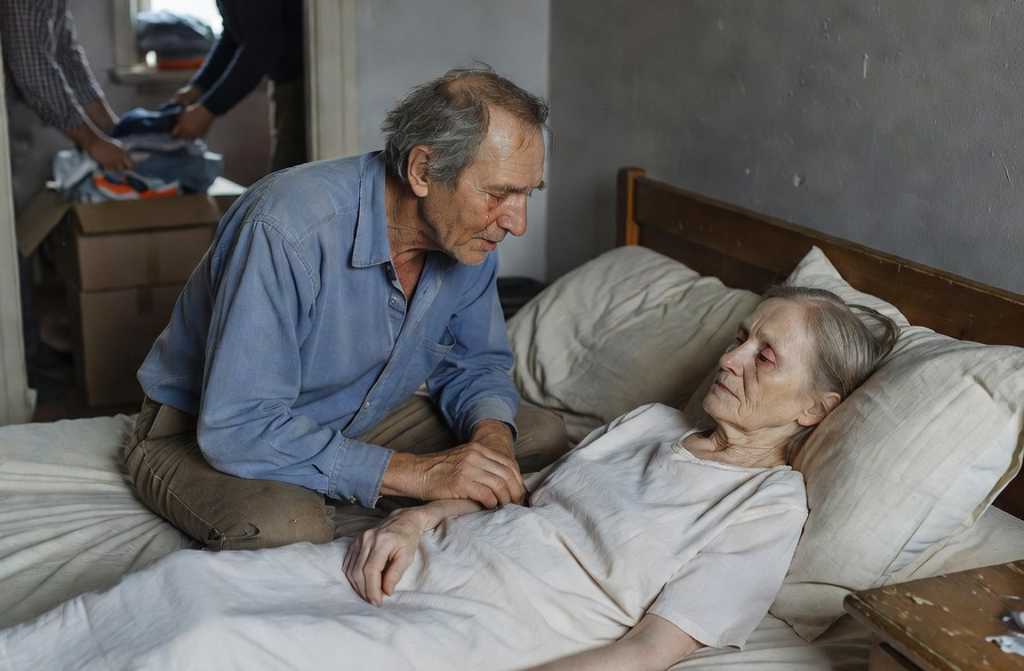
  • There Will Be No WeddingThere Will Be No Wedding

    There Will Be No WeddingThere Will Be No Wedding

    Many years have passed since those events, yet the memory still comes back clearly, as if it were only yesterday. Lily stepped into the room and stopped at the doorway. There before her stood Charlotte in her wedding dress, and she looked radiant. The gown suited her figure perfectly, and a quiet, almost weightless happiness shone in her eyes. Lily could not hold back her delight.

    “Oh my God, you look as if you’re glowing!” she exclaimed, unable to take her eyes from her friend. “I’m so happy for you! At last you’ve turned the page and opened your heart to new feelings, leaving Nathan behind. You’re really something!”

    Charlotte gave the slightest wince and her smile vanished at once. She reached quickly for the fastenings of the dress, trying not to meet Lily’s gaze.

    “I’d better take it off,” she muttered, unfastening the small hooks along the side with practiced fingers. “Only two weeks remain until the ceremony. If anything happens to this dress, we won’t find another like it.”

    Lily bit her lip. She realized at once that she had spoken out of turn. Why mention Nathan now? A good man had finally entered Charlotte’s life, and any reminder of the past was entirely out of place. Nathan had never been worth a single one of Charlotte’s tears, especially after all he had done.

    There had been a time when Charlotte truly believed he was the one. She had been certain their relationship was serious and lasting. But gradually everything began to fall apart. He started to draw away, finding reasons not to meet, then openly criticized her choices, her friends, her dreams. He persuaded her to drop a promising project at work, talked her out of an internship abroad, and finally insisted she change her career.

    Charlotte’s family could not understand what was happening to her. They watched her change and lose herself, yet they could do nothing. Attempts to talk turned into arguments. Nathan had convinced Charlotte that her relatives simply did not accept him and were trying to destroy their “perfect love.” The conflict grew until Charlotte almost stopped speaking to her parents.

    Then he disappeared. He left without explanation or even a note. All that remained was a deep wound in her heart and the child she chose to keep, no matter what.

    Now, watching her friend hurry out of the wedding dress, Lily felt a sharp stab of guilt. She had only wanted to share Charlotte’s happiness. She had never meant to awaken painful memories.

    Little Nathan had turned four. He was a lively, curious boy who asked questions about everything around him. Sometimes he wondered why the sky was blue, sometimes where the clouds went, and sometimes he examined insects with delight during walks. The staff at the nursery often remarked on his quick mind. Nathan learned new things easily, memorized rhymes without trouble, and listened with interest to long stories.

    He spent nearly all his time with his grandparents, Charlotte’s parents. They gladly took charge of their grandson and did their best to help him grow. They chose the nursery that included English lessons, took him to the swimming pool, and enrolled him in dance classes. Charlotte visited her son several times a week but never stayed longer than an hour.

    The reason was simple and painful. Little Nathan looked remarkably like his father, with the same dark curly hair, the same shaped eyes, and the same slightly teasing smile. Every time Charlotte looked at her son she seemed to return to the past, to the days when she had believed their family would be happy. She loved the boy with all her heart and felt proud of his successes, yet that love always brought a sharp, aching pain. As soon as she held him or met his eyes, tears would rise. She would turn away, pretend to adjust her clothes or search in her bag, and later cry quietly once he could not see.

    One evening Charlotte came to collect Nathan from her parents’ house. The boy sat on the carpet working on a puzzle, his brow furrowed in concentration. When he saw his mother he jumped up happily and ran to her.

    “Mom, look!” he pulled her toward the puzzle. “I’m nearly finished. There’s the house and the tree here, and over here there will be a dog!”

    Charlotte knelt beside him and tried to smile.

    “That’s lovely,” she said, patting his head. “Well done, you’re putting everything together so neatly.”

    Nathan paused, then looked up at her.

    “Mom, where’s my dad? All the other children at nursery have dads, but I don’t.”

    Charlotte froze. Everything inside her tightened, but she kept her voice calm.

    “I don’t know, love. Your dad is far away right now. But he does think about you.”

    “Why doesn’t he call?” Nathan frowned as if solving a hard problem. “I could tell him I learned to tie my own shoelaces!”

    “He’s just very busy,” Charlotte murmured, feeling a lump rise in her throat. “But I’m sure he’s proud of you.”

    The boy thought for a moment, nodded as though accepting her words, and returned to the puzzle.

    “All right. I’ll finish this house then, and Dad will see how clever I am!”

    Charlotte sat beside him, watching and swallowing her tears in silence. She wanted to say something more to comfort him, but no words came. Instead she reached out and smoothed his hair again, breathing in the scent of children’s shampoo and trying to hold on to this moment when her son was there, happy and trusting, despite all the questions she could not answer.

    Even so, Charlotte could not stop thinking about Nathan. Deep down she continued to find excuses for him. Perhaps something terrible had happened to him? Perhaps he had fallen into trouble and could not get in touch? Those thoughts helped her hold on and avoid sinking into despair.

    Her family and friends had tried more than once to speak plainly. Her mother gently hinted that she should not live in the past and should focus on her son and her own life. Friends spoke more directly: “He left you. It’s time to accept that and move on.” But Charlotte refused to listen. She argued passionately, recalling how happy they had been and the promises he had made. The discussions often ended with her withdrawing into herself while the others sighed and stepped back.

    At the same time Charlotte did not remain idle. Now and then she checked social media, rang old places where he might appear, and even posted requests for help in finding him. Nothing came of it. Yet she could not, or would not, accept that Nathan had simply walked away of his own choice and had no intention of returning.

    Then, after five long years, a man entered Charlotte’s life who managed to melt her heart. It happened almost by chance. They met at the birthday party of a mutual friend. Edward caught her attention at once. He was reliable, there was no other way to describe him. He was genuine, sincere, kind, and caring, the very best.

    From the first meetings Charlotte felt she could be herself with him. Edward did not demand a show of cheerfulness or a constant smile. If she was tired he simply suggested they go home. If she wanted silence he did not try to draw her out. He proved to be the serious, steady man she seemed to have been seeking, and above all he was truly in love with her.

    His feelings showed in small ways, in learning in advance what coffee she liked, in remembering her colleagues’ names and asking after them, in quietly taking on everyday matters. He seemed ready to do anything for her, and Charlotte, if truth be told, made full use of that devotion.

    What touched her most was how easily Edward connected with little Nathan. At their first meeting the boy watched the stranger warily, holding his mother’s hand. But Edward surprised her here too. He crouched down to Nathan’s level and asked which cartoons he liked. Within half an hour they were building with blocks together, and Nathan was excitedly showing the guest his favorite toys.

    Before long Edward became a regular visitor at Charlotte’s parents’ house where Nathan lived. He took the boy to the park, taught him to ride a bicycle, and read stories at bedtime. One day, when Charlotte found them drawing together, Edward said calmly, “I would like to be a real father to him. If you allow it, I am ready to adopt Nathan.”

    Lily rejoiced sincerely for her friend. She saw Charlotte changing gradually, a new light in her eyes, the constant shadow of worry gone from her face, her smile becoming genuine rather than forced. But today Lily had made a careless mistake by mentioning Nathan senior and touching an old wound. Now she could only hope Charlotte had not been too upset and would not sink into gloom.

    Yet Charlotte behaved surprisingly calmly.

    “I’ve grown up,” she said with a faint smile, laying the dress carefully on the bed. “And I know clearly that my feelings for Nathan belong in the past. Sometimes I even regret giving my son the same name. I was foolish and would listen to no one’s advice. How did you all bear with me?”

    Lily touched her hand gently.

    “Are you planning to take Nathan from your parents?”

    “Yes,” Charlotte answered, becoming serious at once. “Edward especially insists on it. He even suggested changing the boy’s name. He says it will be easier for me. In any case the birth certificate will need updating once the adoption is complete.”

    She paused, watching raindrops slide down the window glass.

    “You know, I used to fear that little Nathan would always remind me of the past. But now I see I was wrong. He is my son, and he deserves a full childhood with two parents who love him. His grandparents are wonderful, of course, but they cannot replace parents. And Edward understands that. He truly wants to be a father to him. You should see how attached he has become to the boy.”

    “That’s a fine idea,” Lily said brightly. “You could ask your son which name he prefers. It might help him adjust more quickly.”

    “I’m not sure. I still don’t know what to do. We have time to think it over.”

    In truth Charlotte was not being entirely open. She still loved Nathan, and that love had never faded. It had simply led to nothing good. Her parents were growing more reluctant to let her see her son because she nearly cried at every visit, frightening the child. Her friends no longer wished to hear about her troubles and privately doubted her judgment. It was time to let the past go and focus on the present, such as the wedding.

    The only trouble was that it proved terribly hard.

    Edward was undoubtedly a good man, yet he was not Nathan. Charlotte felt no deep affection for him and was simply using his attachment for her own ends.

    If Nathan returned, she would give anything to be with him.

    There will be no wedding, Charlotte declared with shining eyes, almost dancing in place. We are parting, like ships passing in the night.

    Edward stared at her in bewilderment, trying to grasp her words. Only a week remained until the wedding. They had already chosen the menu, selected the flowers, and invited the guests. Everything had seemed so real and close. And now she said there would be no wedding.

    “What do you mean there will be none?” he asked, trying to decide whether his fiancée was serious or making a poor joke. “Charlotte, what happened? Explain properly.”

    But Charlotte brushed aside his questions. She paced the room, grabbing things from shelves and tossing them into an open suitcase. Her eyes sparkled and an unfamiliar, genuine smile played on her lips.

    “Nathan is back!” she burst out, not looking at Edward. There was such real happiness in her voice that something inside him broke. “He arrived yesterday and we talked. I could hardly believe it at first!”

    She stopped at last and turned to him. There was no regret in her gaze, only delight and impatience.

    “I’m grateful for the last six months,” she continued, softening her tone a little. “It was calm and comfortable with you. You’re a good man, Edward. But I never truly loved you. Now that I have a chance at real happiness, I cannot let it slip away.”

    Edward felt a cold emptiness spreading in his chest. Nathan again. The same man Charlotte spoke of with such adoration that Edward felt like an outsider. He had known she still thought of him but had hoped time and their life together would change her feelings.

    “Have you spoken to him already?” he finally managed, his voice strained as if he lacked air. “What did he say? What excuse did he offer this time?”

    “He made no excuses,” Charlotte replied sharply. “He simply said he understood what a mistake he had made. That all this time he thought only of me!”

    She turned away once more and continued packing while Edward stood still, feeling the world around him slowly lose its color.

    “We spoke on the phone,” she went on, sorting through the desk drawer to check if anything important remained. “His parents insisted he study in London and he could not warn me he was leaving. Can you imagine? All that time he thought only of me but had no way to contact anyone. Now everything will be fine. We will be together and live a long, happy life!”

    In Charlotte’s memory rose that very conversation with Nathan, their first phone call after the long separation. His voice had sounded agitated and slightly halting.

    “Charlotte, I know it all looks terrible. But understand, my parents gave me no choice. They said either study in London or they would disown me. I tried to resist, I truly did. But they blocked all my bank cards and cut off access to the accounts. I did not even have my own phone.”

    “Why didn’t you call me even once?” Charlotte’s voice had trembled, though she tried hard not to show her hurt.

    “What could I have told you? That I had been too weak to stand up to my parents?”

    Listening to his stumbling explanations, Charlotte had felt warmth spread inside her. All the hurt and bitterness of the recent months seemed to dissolve in his voice. She realized she had been waiting for that call every day, every hour.

    “Everything will be different now,” Nathan had continued. “I have quit my studies and returned. I am not going anywhere else.”

    Those words echoed in her mind as she now stood before Edward.

    She fell silent for a moment, glancing quickly around the room as if making sure she had forgotten nothing. Only then did she notice how pale Edward had become. His face was almost white and his gaze fixed on one spot, as if he were looking straight through her.

    “Don’t worry,” Charlotte added more softly but with no doubt in her voice. “I have already told everyone the wedding is off. I explained everything and asked them not to trouble you. Of course people will feel sorry for you, but you’re strong and will manage.”

    She pulled the suitcase toward herself and adjusted the handle, as if that were the most important task now. Then she looked at Edward again, and there was no regret or hesitation in her eyes.

    “And please don’t call me, don’t send pointless messages, and don’t leave voicemails,” she said firmly, almost as an order. “My decision is final and I will not change it under any circumstances!”

    She lifted the suitcase, swayed slightly from its weight, then straightened and headed for the door, as if any delay might shake her resolve.

    Edward stood in the middle of the room, feeling everything inside him tighten with pain and confusion. He drew a deep breath, trying to steady himself. He wanted to shout and demand explanations but held back. He did not want to appear weak or desperate. He clenched his fists, then slowly relaxed them, and spoke in a calm, almost everyday tone.

    “Are you sure you’re not rushing?” he asked, watching Charlotte closely.

    She stopped at the door, holding the suitcase handle, but did not turn. Her shoulders were tense, her fingers gripping the leather handle tightly.

    “What if he doesn’t want to resume the relationship?” Edward continued, stepping nearer. “Or refuses to acknowledge his son? Or perhaps he’s already proposed to someone else?”

    Charlotte spun around. Her face flushed with excitement and irritation. She took several steps toward Edward as if to prove something and make him understand.

    “He invited me for a serious talk!” she burst out. “That’s enough! And stop trying to make him sound bad. Nathan isn’t like that!”

    Her voice faltered on the last words, but she pulled herself together at once, stood taller, and tugged the suitcase toward the door again.

    “You could at least help,” she muttered through her teeth, struggling with the heavy case.

    Edward stepped forward automatically, as if truly about to assist, then stopped. Why help someone who had trampled on his feelings? He could see clearly that mentally she was already far away, beside Nathan. Her eyes held confidence, almost elation. A new life full of happiness and love was about to begin. She was clearly picturing Nathan greeting her with a smile, saying everything would be fine, that they would finally be together.

    But reality was different. Nathan, who had invited her for a serious talk, had no intention of proposing or swearing eternal love. He only wanted to explain and close the old chapter so he could start a new one without Charlotte. Especially since he was already married.

    Carried away by her dreams, Charlotte did not see what was plain. She had waited so long for this moment that she was ready to believe anything rather than face disappointment again.

    After dragging the suitcase to the door with difficulty she paused for a second, her hand on the handle, as if about to speak. But she thought better of it, flung the door open and left without looking back.

    Edward remained in the middle of the room, staring at the closed door. A faint scent of her perfume still lingered in the air, and her last words echoed in his ears: “Nathan isn’t like that!”

    He sank slowly onto a chair, overcome by a heavy wave of tiredness. Everything had happened too quickly and too finally. Now he would have to learn to live with it, without Charlotte, without plans for the future, without illusions.

    Many years later the memory still surfaces, showing how quickly certainty can turn to loss.

    Nathan opened the door, surprised by such an early visit. On the threshold stood Charlotte with two suitcases, her face glowing with joy and her eyes bright with expectation. He froze, unable to utter a word. Only one thought turned in his head: how could she have been so mistaken?

    He had been certain everything was long over. When Charlotte began seeing Edward, Nathan had finally breathed a sigh of relief. Now he could return quietly to his hometown, live there with his wife, and not fear sudden calls, tears, or accusations. He had even felt grateful to Charlotte for finding someone else. It had solved every problem at once.

    Yes, he had phoned her and tried to explain that everything had changed, even suggesting they meet on neutral ground, but it had been nothing more than a formality.

    And now she stood at his door with her luggage, clearly expecting something more than a conversation. Nathan stepped back without thinking, trying to gather his thoughts.

    “Nathan!” Charlotte exclaimed as soon as she saw him. “I’ve decided everything. I’m here and we will finally be together!”

    Her voice sounded so certain, as if no other outcome were possible. She moved forward, but Nathan raised his hand instinctively to stop her.

    “Charlotte, wait,” he began, trying to speak as gently as possible. “You probably don’t know everything.”

    She frowned and her smile slowly faded.

    “What do you mean? We agreed to meet and discuss everything!”

    Nathan drew a deep breath, knowing the moment could not be avoided.

    “I’m married, Charlotte. For two years now. My wife and I are very happy.”

    Charlotte froze, her eyes widening in shock. She said nothing for several seconds, as if she could not believe what she had heard. Then her face twisted, a mixture of panic, hurt, and anger in her eyes.

    “What are you saying?” she whispered, shaking her head. “That cannot be. You called me and said everything had changed!”

    “I called to say a proper goodbye,” Nathan answered quietly. “I wanted to explain that time had passed and each of us now has our own life. But you seem to have understood it differently.”

    Charlotte stepped back, her hands trembling. She clenched her fists, trying to control herself, but emotion overwhelmed her.

    “You lied to me the whole time!” she cried, her voice shaking with anger. “How could you do that? I gave up everything for you!”

    Nathan felt irritation rising inside him. He had not wanted a scene or to justify himself, but Charlotte clearly would not leave without answers.

    “I never promised you anything,” he said firmly. “You decided we would be together. I simply did not want to hurt you, so I chose my words carefully. But now it is clear, isn’t it?”

    Charlotte cried out, grabbed one suitcase and hurled it to the floor with force. Things scattered across the hallway, but she paid no attention. She screamed accusations and demands, her voice growing louder and louder.

    Nathan had to guide her firmly but politely into the hallway and close the door, hoping that would end the matter. But Charlotte did not calm down. She banged on the door, shouted his name. Neighbors began to peer out from their flats, some coughing in disapproval, others complaining loudly.

    After an hour, when her shouts grew even louder and the neighbors seriously threatened to call the police, she finally left. Before going she turned, looked at Nathan’s door, and cried through her tears:

    “I’ll be back! You’ll regret this!”

    Nathan closed his eyes, feeling exhaustion wash over him. He knew this was not the end. Charlotte was stubborn, and once she had set her mind on something she would not give up easily.

    He went into the living room, sat on the sofa, and thought. He needed to act quickly. Staying in this flat was no longer possible. Charlotte might return, cause another scene, and disturb the neighbors. Nathan took out his phone and opened a property website.

    “I need to sell this place and find somewhere else,” he decided. “Preferably on the other side of the city.”

    Charlotte walked along the street without noticing anything around her. Tears blurred her eyes, fragments of thoughts spun in her head, and her heart felt heavy and empty. She still could not fully grasp what had happened. In her imagination Nathan was to have met her with open arms, saying he had been waiting for this moment, that they would finally be together. But reality had proved cruel and merciless.

    She wandered the city for a long time, trying to gather her strength. Her feet led her to Edward’s door. Charlotte stopped at the entrance, wiped her tears, and tidied her hair, wanting to appear at least somewhat composed. Taking a deep breath, she went up to the right floor and pressed the bell uncertainly.

    Edward did not open at once. When he finally appeared in the doorway his face remained cold and distant. He looked at Charlotte in silence, making no move to invite her inside.

    “Edward, please,” she began in a trembling voice. “I know what I’ve done. I understand how foolish and cruel it was. But I want to put it right.”

    She fell silent, searching for words. Fresh tears glistened in her eyes.

    “I’ll never mention Nathan’s name again,” she continued, looking him straight in the eyes. “I swear. All this was a mistake. I’ve realized I can only be happy with you. Please give me another chance.”

    Her voice sounded sincere, almost desperate. At that moment she truly believed what she said. It seemed to her that if Edward forgave her, everything would work out.

    Edward slowly shook his head. No, he was not falling for that a second time.

    “Charlotte,” he said quietly, “you’ve already decided everything. A few hours ago you stood in my flat with suitcases and said you were leaving for him. You were certain of your choice.”

    “I was wrong then!” she interrupted. “I didn’t understand what I was doing! I was upset!”

    Edward sighed and ran a hand through his hair. It was difficult, but he knew he could not let emotion rule him again.

    “You didn’t just leave me. You left for him. You made a choice and I accepted it. Now that it hasn’t worked out, you want to come back?”

    “Yes!” Charlotte exclaimed. “Because I love you. Only you.”

    He was silent for a few seconds, then gave a small smile and spoke firmly.

    “I no longer believe in the sincerity of your words. Goodbye.”

    Charlotte felt something break inside her. Edward looked at her calmly, without anger, yet there was no doubt in his eyes. He really did not believe her any longer.

    “Please,” she whispered, but her voice trembled and broke.

    “I’m sorry,” Edward said. “But this will be better for both of us.”

    He closed the door, leaving Charlotte standing in the empty corridor. She remained motionless for a few more seconds, then slowly sank onto a step, covered her face with her hands, and wept. This time the tears were not from anger or hurt but from the bitter realization that she had lost both Nathan and Edward and now had no idea how to go on.Many years have passed since those events, yet the memory still comes back clearly, as if it were only yesterday. Lily stepped into the room and stopped at the doorway. There before her stood Charlotte in her wedding dress, and she looked radiant. The gown suited her figure perfectly, and a quiet, almost weightless happiness shone in her eyes. Lily could not hold back her delight.

    “Oh my God, you look as if you’re glowing!” she exclaimed, unable to take her eyes from her friend. “I’m so happy for you! At last you’ve turned the page and opened your heart to new feelings, leaving Nathan behind. You’re really something!”

    Charlotte gave the slightest wince and her smile vanished at once. She reached quickly for the fastenings of the dress, trying not to meet Lily’s gaze.

    “I’d better take it off,” she muttered, unfastening the small hooks along the side with practiced fingers. “Only two weeks remain until the ceremony. If anything happens to this dress, we won’t find another like it.”

    Lily bit her lip. She realized at once that she had spoken out of turn. Why mention Nathan now? A good man had finally entered Charlotte’s life, and any reminder of the past was entirely out of place. Nathan had never been worth a single one of Charlotte’s tears, especially after all he had done.

    There had been a time when Charlotte truly believed he was the one. She had been certain their relationship was serious and lasting. But gradually everything began to fall apart. He started to draw away, finding reasons not to meet, then openly criticized her choices, her friends, her dreams. He persuaded her to drop a promising project at work, talked her out of an internship abroad, and finally insisted she change her career.

    Charlotte’s family could not understand what was happening to her. They watched her change and lose herself, yet they could do nothing. Attempts to talk turned into arguments. Nathan had convinced Charlotte that her relatives simply did not accept him and were trying to destroy their “perfect love.” The conflict grew until Charlotte almost stopped speaking to her parents.

    Then he disappeared. He left without explanation or even a note. All that remained was a deep wound in her heart and the child she chose to keep, no matter what.

    Now, watching her friend hurry out of the wedding dress, Lily felt a sharp stab of guilt. She had only wanted to share Charlotte’s happiness. She had never meant to awaken painful memories.

    Little Nathan had turned four. He was a lively, curious boy who asked questions about everything around him. Sometimes he wondered why the sky was blue, sometimes where the clouds went, and sometimes he examined insects with delight during walks. The staff at the nursery often remarked on his quick mind. Nathan learned new things easily, memorized rhymes without trouble, and listened with interest to long stories.

    He spent nearly all his time with his grandparents, Charlotte’s parents. They gladly took charge of their grandson and did their best to help him grow. They chose the nursery that included English lessons, took him to the swimming pool, and enrolled him in dance classes. Charlotte visited her son several times a week but never stayed longer than an hour.

    The reason was simple and painful. Little Nathan looked remarkably like his father, with the same dark curly hair, the same shaped eyes, and the same slightly teasing smile. Every time Charlotte looked at her son she seemed to return to the past, to the days when she had believed their family would be happy. She loved the boy with all her heart and felt proud of his successes, yet that love always brought a sharp, aching pain. As soon as she held him or met his eyes, tears would rise. She would turn away, pretend to adjust her clothes or search in her bag, and later cry quietly once he could not see.

    One evening Charlotte came to collect Nathan from her parents’ house. The boy sat on the carpet working on a puzzle, his brow furrowed in concentration. When he saw his mother he jumped up happily and ran to her.

    “Mom, look!” he pulled her toward the puzzle. “I’m nearly finished. There’s the house and the tree here, and over here there will be a dog!”

    Charlotte knelt beside him and tried to smile.

    “That’s lovely,” she said, patting his head. “Well done, you’re putting everything together so neatly.”

    Nathan paused, then looked up at her.

    “Mom, where’s my dad? All the other children at nursery have dads, but I don’t.”

    Charlotte froze. Everything inside her tightened, but she kept her voice calm.

    “I don’t know, love. Your dad is far away right now. But he does think about you.”

    “Why doesn’t he call?” Nathan frowned as if solving a hard problem. “I could tell him I learned to tie my own shoelaces!”

    “He’s just very busy,” Charlotte murmured, feeling a lump rise in her throat. “But I’m sure he’s proud of you.”

    The boy thought for a moment, nodded as though accepting her words, and returned to the puzzle.

    “All right. I’ll finish this house then, and Dad will see how clever I am!”

    Charlotte sat beside him, watching and swallowing her tears in silence. She wanted to say something more to comfort him, but no words came. Instead she reached out and smoothed his hair again, breathing in the scent of children’s shampoo and trying to hold on to this moment when her son was there, happy and trusting, despite all the questions she could not answer.

    Even so, Charlotte could not stop thinking about Nathan. Deep down she continued to find excuses for him. Perhaps something terrible had happened to him? Perhaps he had fallen into trouble and could not get in touch? Those thoughts helped her hold on and avoid sinking into despair.

    Her family and friends had tried more than once to speak plainly. Her mother gently hinted that she should not live in the past and should focus on her son and her own life. Friends spoke more directly: “He left you. It’s time to accept that and move on.” But Charlotte refused to listen. She argued passionately, recalling how happy they had been and the promises he had made. The discussions often ended with her withdrawing into herself while the others sighed and stepped back.

    At the same time Charlotte did not remain idle. Now and then she checked social media, rang old places where he might appear, and even posted requests for help in finding him. Nothing came of it. Yet she could not, or would not, accept that Nathan had simply walked away of his own choice and had no intention of returning.

    Then, after five long years, a man entered Charlotte’s life who managed to melt her heart. It happened almost by chance. They met at the birthday party of a mutual friend. Edward caught her attention at once. He was reliable, there was no other way to describe him. He was genuine, sincere, kind, and caring, the very best.

    From the first meetings Charlotte felt she could be herself with him. Edward did not demand a show of cheerfulness or a constant smile. If she was tired he simply suggested they go home. If she wanted silence he did not try to draw her out. He proved to be the serious, steady man she seemed to have been seeking, and above all he was truly in love with her.

    His feelings showed in small ways, in learning in advance what coffee she liked, in remembering her colleagues’ names and asking after them, in quietly taking on everyday matters. He seemed ready to do anything for her, and Charlotte, if truth be told, made full use of that devotion.

    What touched her most was how easily Edward connected with little Nathan. At their first meeting the boy watched the stranger warily, holding his mother’s hand. But Edward surprised her here too. He crouched down to Nathan’s level and asked which cartoons he liked. Within half an hour they were building with blocks together, and Nathan was excitedly showing the guest his favorite toys.

    Before long Edward became a regular visitor at Charlotte’s parents’ house where Nathan lived. He took the boy to the park, taught him to ride a bicycle, and read stories at bedtime. One day, when Charlotte found them drawing together, Edward said calmly, “I would like to be a real father to him. If you allow it, I am ready to adopt Nathan.”

    Lily rejoiced sincerely for her friend. She saw Charlotte changing gradually, a new light in her eyes, the constant shadow of worry gone from her face, her smile becoming genuine rather than forced. But today Lily had made a careless mistake by mentioning Nathan senior and touching an old wound. Now she could only hope Charlotte had not been too upset and would not sink into gloom.

    Yet Charlotte behaved surprisingly calmly.

    “I’ve grown up,” she said with a faint smile, laying the dress carefully on the bed. “And I know clearly that my feelings for Nathan belong in the past. Sometimes I even regret giving my son the same name. I was foolish and would listen to no one’s advice. How did you all bear with me?”

    Lily touched her hand gently.

    “Are you planning to take Nathan from your parents?”

    “Yes,” Charlotte answered, becoming serious at once. “Edward especially insists on it. He even suggested changing the boy’s name. He says it will be easier for me. In any case the birth certificate will need updating once the adoption is complete.”

    She paused, watching raindrops slide down the window glass.

    “You know, I used to fear that little Nathan would always remind me of the past. But now I see I was wrong. He is my son, and he deserves a full childhood with two parents who love him. His grandparents are wonderful, of course, but they cannot replace parents. And Edward understands that. He truly wants to be a father to him. You should see how attached he has become to the boy.”

    “That’s a fine idea,” Lily said brightly. “You could ask your son which name he prefers. It might help him adjust more quickly.”

    “I’m not sure. I still don’t know what to do. We have time to think it over.”

    In truth Charlotte was not being entirely open. She still loved Nathan, and that love had never faded. It had simply led to nothing good. Her parents were growing more reluctant to let her see her son because she nearly cried at every visit, frightening the child. Her friends no longer wished to hear about her troubles and privately doubted her judgment. It was time to let the past go and focus on the present, such as the wedding.

    The only trouble was that it proved terribly hard.

    Edward was undoubtedly a good man, yet he was not Nathan. Charlotte felt no deep affection for him and was simply using his attachment for her own ends.

    If Nathan returned, she would give anything to be with him.

    There will be no wedding, Charlotte declared with shining eyes, almost dancing in place. We are parting, like ships passing in the night.

    Edward stared at her in bewilderment, trying to grasp her words. Only a week remained until the wedding. They had already chosen the menu, selected the flowers, and invited the guests. Everything had seemed so real and close. And now she said there would be no wedding.

    “What do you mean there will be none?” he asked, trying to decide whether his fiancée was serious or making a poor joke. “Charlotte, what happened? Explain properly.”

    But Charlotte brushed aside his questions. She paced the room, grabbing things from shelves and tossing them into an open suitcase. Her eyes sparkled and an unfamiliar, genuine smile played on her lips.

    “Nathan is back!” she burst out, not looking at Edward. There was such real happiness in her voice that something inside him broke. “He arrived yesterday and we talked. I could hardly believe it at first!”

    She stopped at last and turned to him. There was no regret in her gaze, only delight and impatience.

    “I’m grateful for the last six months,” she continued, softening her tone a little. “It was calm and comfortable with you. You’re a good man, Edward. But I never truly loved you. Now that I have a chance at real happiness, I cannot let it slip away.”

    Edward felt a cold emptiness spreading in his chest. Nathan again. The same man Charlotte spoke of with such adoration that Edward felt like an outsider. He had known she still thought of him but had hoped time and their life together would change her feelings.

    “Have you spoken to him already?” he finally managed, his voice strained as if he lacked air. “What did he say? What excuse did he offer this time?”

    “He made no excuses,” Charlotte replied sharply. “He simply said he understood what a mistake he had made. That all this time he thought only of me!”

    She turned away once more and continued packing while Edward stood still, feeling the world around him slowly lose its color.

    “We spoke on the phone,” she went on, sorting through the desk drawer to check if anything important remained. “His parents insisted he study in London and he could not warn me he was leaving. Can you imagine? All that time he thought only of me but had no way to contact anyone. Now everything will be fine. We will be together and live a long, happy life!”

    In Charlotte’s memory rose that very conversation with Nathan, their first phone call after the long separation. His voice had sounded agitated and slightly halting.

    “Charlotte, I know it all looks terrible. But understand, my parents gave me no choice. They said either study in London or they would disown me. I tried to resist, I truly did. But they blocked all my bank cards and cut off access to the accounts. I did not even have my own phone.”

    “Why didn’t you call me even once?” Charlotte’s voice had trembled, though she tried hard not to show her hurt.

    “What could I have told you? That I had been too weak to stand up to my parents?”

    Listening to his stumbling explanations, Charlotte had felt warmth spread inside her. All the hurt and bitterness of the recent months seemed to dissolve in his voice. She realized she had been waiting for that call every day, every hour.

    “Everything will be different now,” Nathan had continued. “I have quit my studies and returned. I am not going anywhere else.”

    Those words echoed in her mind as she now stood before Edward.

    She fell silent for a moment, glancing quickly around the room as if making sure she had forgotten nothing. Only then did she notice how pale Edward had become. His face was almost white and his gaze fixed on one spot, as if he were looking straight through her.

    “Don’t worry,” Charlotte added more softly but with no doubt in her voice. “I have already told everyone the wedding is off. I explained everything and asked them not to trouble you. Of course people will feel sorry for you, but you’re strong and will manage.”

    She pulled the suitcase toward herself and adjusted the handle, as if that were the most important task now. Then she looked at Edward again, and there was no regret or hesitation in her eyes.

    “And please don’t call me, don’t send pointless messages, and don’t leave voicemails,” she said firmly, almost as an order. “My decision is final and I will not change it under any circumstances!”

    She lifted the suitcase, swayed slightly from its weight, then straightened and headed for the door, as if any delay might shake her resolve.

    Edward stood in the middle of the room, feeling everything inside him tighten with pain and confusion. He drew a deep breath, trying to steady himself. He wanted to shout and demand explanations but held back. He did not want to appear weak or desperate. He clenched his fists, then slowly relaxed them, and spoke in a calm, almost everyday tone.

    “Are you sure you’re not rushing?” he asked, watching Charlotte closely.

    She stopped at the door, holding the suitcase handle, but did not turn. Her shoulders were tense, her fingers gripping the leather handle tightly.

    “What if he doesn’t want to resume the relationship?” Edward continued, stepping nearer. “Or refuses to acknowledge his son? Or perhaps he’s already proposed to someone else?”

    Charlotte spun around. Her face flushed with excitement and irritation. She took several steps toward Edward as if to prove something and make him understand.

    “He invited me for a serious talk!” she burst out. “That’s enough! And stop trying to make him sound bad. Nathan isn’t like that!”

    Her voice faltered on the last words, but she pulled herself together at once, stood taller, and tugged the suitcase toward the door again.

    “You could at least help,” she muttered through her teeth, struggling with the heavy case.

    Edward stepped forward automatically, as if truly about to assist, then stopped. Why help someone who had trampled on his feelings? He could see clearly that mentally she was already far away, beside Nathan. Her eyes held confidence, almost elation. A new life full of happiness and love was about to begin. She was clearly picturing Nathan greeting her with a smile, saying everything would be fine, that they would finally be together.

    But reality was different. Nathan, who had invited her for a serious talk, had no intention of proposing or swearing eternal love. He only wanted to explain and close the old chapter so he could start a new one without Charlotte. Especially since he was already married.

    Carried away by her dreams, Charlotte did not see what was plain. She had waited so long for this moment that she was ready to believe anything rather than face disappointment again.

    After dragging the suitcase to the door with difficulty she paused for a second, her hand on the handle, as if about to speak. But she thought better of it, flung the door open and left without looking back.

    Edward remained in the middle of the room, staring at the closed door. A faint scent of her perfume still lingered in the air, and her last words echoed in his ears: “Nathan isn’t like that!”

    He sank slowly onto a chair, overcome by a heavy wave of tiredness. Everything had happened too quickly and too finally. Now he would have to learn to live with it, without Charlotte, without plans for the future, without illusions.

    Many years later the memory still surfaces, showing how quickly certainty can turn to loss.

    Nathan opened the door, surprised by such an early visit. On the threshold stood Charlotte with two suitcases, her face glowing with joy and her eyes bright with expectation. He froze, unable to utter a word. Only one thought turned in his head: how could she have been so mistaken?

    He had been certain everything was long over. When Charlotte began seeing Edward, Nathan had finally breathed a sigh of relief. Now he could return quietly to his hometown, live there with his wife, and not fear sudden calls, tears, or accusations. He had even felt grateful to Charlotte for finding someone else. It had solved every problem at once.

    Yes, he had phoned her and tried to explain that everything had changed, even suggesting they meet on neutral ground, but it had been nothing more than a formality.

    And now she stood at his door with her luggage, clearly expecting something more than a conversation. Nathan stepped back without thinking, trying to gather his thoughts.

    “Nathan!” Charlotte exclaimed as soon as she saw him. “I’ve decided everything. I’m here and we will finally be together!”

    Her voice sounded so certain, as if no other outcome were possible. She moved forward, but Nathan raised his hand instinctively to stop her.

    “Charlotte, wait,” he began, trying to speak as gently as possible. “You probably don’t know everything.”

    She frowned and her smile slowly faded.

    “What do you mean? We agreed to meet and discuss everything!”

    Nathan drew a deep breath, knowing the moment could not be avoided.

    “I’m married, Charlotte. For two years now. My wife and I are very happy.”

    Charlotte froze, her eyes widening in shock. She said nothing for several seconds, as if she could not believe what she had heard. Then her face twisted, a mixture of panic, hurt, and anger in her eyes.

    “What are you saying?” she whispered, shaking her head. “That cannot be. You called me and said everything had changed!”

    “I called to say a proper goodbye,” Nathan answered quietly. “I wanted to explain that time had passed and each of us now has our own life. But you seem to have understood it differently.”

    Charlotte stepped back, her hands trembling. She clenched her fists, trying to control herself, but emotion overwhelmed her.

    “You lied to me the whole time!” she cried, her voice shaking with anger. “How could you do that? I gave up everything for you!”

    Nathan felt irritation rising inside him. He had not wanted a scene or to justify himself, but Charlotte clearly would not leave without answers.

    “I never promised you anything,” he said firmly. “You decided we would be together. I simply did not want to hurt you, so I chose my words carefully. But now it is clear, isn’t it?”

    Charlotte cried out, grabbed one suitcase and hurled it to the floor with force. Things scattered across the hallway, but she paid no attention. She screamed accusations and demands, her voice growing louder and louder.

    Nathan had to guide her firmly but politely into the hallway and close the door, hoping that would end the matter. But Charlotte did not calm down. She banged on the door, shouted his name. Neighbors began to peer out from their flats, some coughing in disapproval, others complaining loudly.

    After an hour, when her shouts grew even louder and the neighbors seriously threatened to call the police, she finally left. Before going she turned, looked at Nathan’s door, and cried through her tears:

    “I’ll be back! You’ll regret this!”

    Nathan closed his eyes, feeling exhaustion wash over him. He knew this was not the end. Charlotte was stubborn, and once she had set her mind on something she would not give up easily.

    He went into the living room, sat on the sofa, and thought. He needed to act quickly. Staying in this flat was no longer possible. Charlotte might return, cause another scene, and disturb the neighbors. Nathan took out his phone and opened a property website.

    “I need to sell this place and find somewhere else,” he decided. “Preferably on the other side of the city.”

    Charlotte walked along the street without noticing anything around her. Tears blurred her eyes, fragments of thoughts spun in her head, and her heart felt heavy and empty. She still could not fully grasp what had happened. In her imagination Nathan was to have met her with open arms, saying he had been waiting for this moment, that they would finally be together. But reality had proved cruel and merciless.

    She wandered the city for a long time, trying to gather her strength. Her feet led her to Edward’s door. Charlotte stopped at the entrance, wiped her tears, and tidied her hair, wanting to appear at least somewhat composed. Taking a deep breath, she went up to the right floor and pressed the bell uncertainly.

    Edward did not open at once. When he finally appeared in the doorway his face remained cold and distant. He looked at Charlotte in silence, making no move to invite her inside.

    “Edward, please,” she began in a trembling voice. “I know what I’ve done. I understand how foolish and cruel it was. But I want to put it right.”

    She fell silent, searching for words. Fresh tears glistened in her eyes.

    “I’ll never mention Nathan’s name again,” she continued, looking him straight in the eyes. “I swear. All this was a mistake. I’ve realized I can only be happy with you. Please give me another chance.”

    Her voice sounded sincere, almost desperate. At that moment she truly believed what she said. It seemed to her that if Edward forgave her, everything would work out.

    Edward slowly shook his head. No, he was not falling for that a second time.

    “Charlotte,” he said quietly, “you’ve already decided everything. A few hours ago you stood in my flat with suitcases and said you were leaving for him. You were certain of your choice.”

    “I was wrong then!” she interrupted. “I didn’t understand what I was doing! I was upset!”

    Edward sighed and ran a hand through his hair. It was difficult, but he knew he could not let emotion rule him again.

    “You didn’t just leave me. You left for him. You made a choice and I accepted it. Now that it hasn’t worked out, you want to come back?”

    “Yes!” Charlotte exclaimed. “Because I love you. Only you.”

    He was silent for a few seconds, then gave a small smile and spoke firmly.

    “I no longer believe in the sincerity of your words. Goodbye.”

    Charlotte felt something break inside her. Edward looked at her calmly, without anger, yet there was no doubt in his eyes. He really did not believe her any longer.

    “Please,” she whispered, but her voice trembled and broke.

    “I’m sorry,” Edward said. “But this will be better for both of us.”

    He closed the door, leaving Charlotte standing in the empty corridor. She remained motionless for a few more seconds, then slowly sank onto a step, covered her face with her hands, and wept. This time the tears were not from anger or hurt but from the bitter realization that she had lost both Nathan and Edward and now had no idea how to go on.