Blog

  • Shards of FriendshipShards of Friendship

    So, Emily got back to their flat after one of those really draining days. She pushed open the door and just mechanically slipped off her shoes, the way she moved showing how worn out she felt, more from the mental side than anything physical. The hallway felt oddly still, with only the faint buzz of the telly drifting in from the kitchen. She paused there a moment, like she had to steel herself before taking another step. She needed a bit of time to shake off the outside world and settle into the home feeling, but today that switch was harder than ever.

    Eventually she headed into the kitchen. Oliver, her husband, was at the table with a bowl of soup, eating slowly and glancing at the screen now and then. As soon as she appeared he noticed and lifted his eyes.

    “You’re back earlier than usual. Everything alright?” he asked, and the concern in his voice was real.

    Emily dropped into the chair opposite without a word. She wrapped her arms around herself, like she was trying to get warm or fend off something you couldn’t see. From the way she sat and looked, Oliver knew straight away something serious had happened.

    “No, it’s not,” she answered quietly, staring off somewhere. “I just came from Hannah’s. We… we don’t seem to be friends anymore.”

    Oliver set his spoon down right then. His face turned focused and attentive. He didn’t jump in with questions, giving her room to gather her thoughts, but everything about him said he was right there listening.

    “What happened?” he asked at last, with genuine worry.

    Emily drew a deep breath, like she needed the courage to lay it out properly.

    “It’s all down to her husband,” she started. “Can you believe William cheated on her. And instead of dealing with him, she went after that poor girl, calling her every name under the sun and saying she ‘knew he was married but still went for it anyway.’” Emily’s voice wavered but she kept on. “I tried to calm her down, explain that the girl wasn’t to blame, William was, and she needed to talk to him first… But she wasn’t hearing a word. She shouted that I wasn’t supporting her, that I was on the side of that… that backstabber.”

    Oliver turned the spoon in his hands, thinking, though his appetite had gone. The question slipped out before he could stop it he needed the whole picture.

    “Did the girl actually know everything?” he asked, watching Emily.

    Emily threw her hands up like the idea was absurd.

    “No, not at all!” she said, all heated. “She had no idea William was married. He told her he’d been divorced for years and never showed his passport or anything. I kept trying to get Hannah to see it was William who lied, not the girl. You can’t blame someone for another person’s deceit!” Her voice shook again as she went on: “But she just snapped at me. Said I was ‘defending women like her’ because ‘I’m not exactly innocent myself.’”

    Oliver frowned. It bothered him to hear his wife’s friend twist things around and throw in those sly hints.

    “That’s a bit much,” he said. “What came next?”

    Emily gave a bitter little laugh, and the hurt she was holding back showed right through.

    “It got worse after that,” she said softly. “Hannah started telling all our mutual friends that I was defending the girl way too strongly. ‘Why would she do that,’ she says, ‘maybe Emily’s got something to hide herself?’ Can you imagine?” She looked at Oliver, and confusion flickered in her eyes. “I thought a friend would back you in a tough spot, but she turned it around and painted me as the guilty one with these nasty suggestions!”

    A heavy quiet settled in the kitchen. The telly kept going but neither of them was paying it any mind. Emily fiddled nervously with the tablecloth edge, like the simple movement gave her some comfort. It stung to realise someone she’d seen as close could turn on her so easily.

    “And the worst bit is I only wanted to help her,” she went on quietly, eyes still on the snowy courtyard outside. “I was trying to say the anger should go towards the one who was actually responsible. But she flipped it all upside down! Now half our friends are buying into it. They’re giving me sideways looks, whispering!” There was more bitter confusion than anger in her voice how could they swallow such a daft lie so quickly?

    Oliver stood up, came over and gently put his arms around her shoulders. His touch felt warm and steady, like a reminder that no matter what, there was someone who believed her.

    “You know the truth is on your side,” he said calmly but with real certainty.

    “I know,” Emily nodded, finally looking away from the window. “But it doesn’t make it any easier. All those years of friendship ending like this, over lies and foolishness…” She sighed and rubbed a hand over her face, as if trying to wipe away the tiredness and disappointment. “It really hurts…”

    The next few days Emily tried not to go out much. Every time she pictured bumping into someone in the courtyard or at the shops, a wave of worry would rise up. She hated catching those sideways glances from neighbours or hearing muffled whispers behind her. Sometimes people would go quiet when she appeared or switch topics, and it cut deeper than she liked to admit.

    At home she kept herself busy with chores shifting books on shelves, doing a big tidy, cooking something that needed attention. But even then her thoughts kept looping back to how fast and completely her life had shifted. She caught herself wishing she could just get away for a while, to not see those faces or hear the talk. The idea of heading somewhere else where nobody knew her or Hannah or the whole mess started feeling more and more appealing. She wanted quiet and space, a chance to breathe without worrying what others thought or assumed.

    Sometimes she’d picture climbing on a train or plane, watching the city fall away, with only the unknown and some peace ahead. But for now it stayed daydreams. She still had to live right here, where every day reminded her how a friendship that seemed unbreakable had fallen apart in a moment.

    One evening Emily and Oliver settled in the kitchen, mugs of tea steaming on the table, the soft lamp light on. It was dark outside already, and the odd snowflake swirling in the streetlight made everything feel private and still. They drank quietly, each wrapped in their own thoughts, until Oliver broke the silence.

    “You know, I’ve been thinking…” he began carefully, like he was testing the words. “Maybe we should move? Even just to the other side of London. Just to change the scene, have a breather.”

    Emily slowly raised her eyes to him. Surprise mixed with caution showed there. She hadn’t expected the suggestion, and it set her heart beating faster from nerves or maybe a faint hope.

    “Do you reckon it would help?” she asked, trying to keep her voice steady even though everything inside felt tight.

    “I’m sure it would,” Oliver replied firmly but without pressure. “You need time to get through this. Here there’s too many reminders, too many people who believe the gossip,” he paused, choosing his words. “You run into it every day and it won’t give you any rest. If we go, you can breathe out, look around, work out how to carry on.”

    Emily stared into her mug thoughtfully. The thought of moving felt scary and tempting at once. On one side, they’d have to leave the life they’d settled into the flat they’d made theirs over years together, the friends who hadn’t turned away in all this. She imagined explaining a sudden move to colleagues, hunting for somewhere new, getting used to unfamiliar streets and faces. Those ideas made her uneasy.

    On the other side, different pictures popped up straight away: a quiet spot where nobody knew her name or whispered behind her back, mornings without anxious thoughts about what someone had said yesterday. A chance to start fresh, leave this painful mess behind that seemed to cling like sticky cobwebs.

    She turned the pros and cons over in her head, weighing them, trying to picture what life would look like there. Fear of the unknown fought with the urge to break out of the closed loop.

    “Alright,” Emily said finally, and determination came through her voice even if it shook a little. “Let’s try.”

    Oliver smiled, restrained but clearly relieved. He knew the decision hadn’t come easy and valued her readiness to keep going despite the doubts.

    “Brilliant,” he said, giving her hand a light squeeze. “We’ll start looking for a good place. Maybe something cosy near some green, where we can walk and get some fresh air.”

    Emily nodded, feeling a small warm spark of hope start to grow inside. Maybe this really was a chance to begin again not running from problems, but just giving herself a break so she could come back stronger later.

    They got stuck into finding a flat in another part of town. At first it seemed like it would be simple, but it turned out trickier. Every day Emily and Oliver checked listings, rang agents, went to viewings. Sometimes a place looked perfect in the photos but felt cramped or unwelcoming in real life. Other times the area didn’t match what they hoped for too much road noise, not enough greenery, or awkward transport.

    The process moved slowly, but both knew not to hurry. They wanted exactly the right spot where they’d feel comfortable, where they could truly rest and recharge. Oliver took on most of the organising the calls, the paperwork while Emily looked closely at every option, imagining if she could see herself living there.

    In the gaps between searches Emily thought more and more about Hannah. The hurt still sat inside, sharp and unpleasant, but now mixed with something else a sad understanding that their friendship hadn’t been as solid as she’d always thought. She remembered sharing the deepest things, supporting each other through hard times, celebrating wins together. Now, looking back, she tried to work out when something had gone wrong, where the turning point had been after which it all collapsed.

    One day, deciding to take a break from the flat hunt, Emily started sorting through old photos. She carefully moved shots from one album to another, recalling events, faces, feelings. Suddenly she came across one of her and Hannah laughing on a beach. The sun was bright, wind playing with their hair, genuine joy and carefree looks on their faces. Back then they were happy, chatting about the future, making plans, dreaming of trips. Now it all seemed like a distant dream, almost unreal. Emily looked at the photo for a long time, and a longing for those simpler times spread through her chest.

    “Maybe I should try talking to her again?” the thought flashed up. She pictured ringing Hannah, suggesting they meet and discuss everything calmly, without shouting or blame. But straight away the scenes from their last meeting came back, Hannah’s words, her cutting tone, the groundless accusations… No, it would be pointless. Emily sighed and tucked the photo away in a far corner of the box. Clearly some paths really do lead nowhere, and you can’t go back.

    A month later they finally found a suitable flat. Small but very bright, with big windows letting in plenty of light. The area turned out quiet and green, with cosy courtyards and a park nearby. The agent letting it mentioned straight away that the owners valued peace and decent tenants, which only made the place more appealing.

    The move took several days. They shifted things in small batches so they wouldn’t get too tired, unpacked boxes together, arranged the furniture. Oliver joked that now they knew the contents of every box off by heart, and Emily laughed, saying at least they wouldn’t have to hunt for things for ages afterwards.

    When the last boxes were unpacked and the flat started to feel lived in, Emily walked slowly through the rooms. She stopped at a window, looking at the trees in the courtyard, the playground, people strolling along the pavement. In that moment she felt a strange relief light, almost weightless, but clear. Everything here was new, clean, free from old hurts and unpleasant memories. This was a place where she could start gathering herself back together bit by bit, where there wouldn’t be sideways looks or whispers behind her back.

    Emily breathed in deeply, feeling the clenched springs of tension inside gradually loosen. Maybe this was exactly the chance not to run from problems, but simply to give herself time to come back to herself and work out how to live next.

    Before they left the old place Emily did something she thought about for a long time afterwards. She couldn’t say exactly what pushed her to it whether it was wanting to set things right or a last attempt to draw a line under the whole tangled mess. Either way she rang William, Hannah’s husband, and suggested they meet.

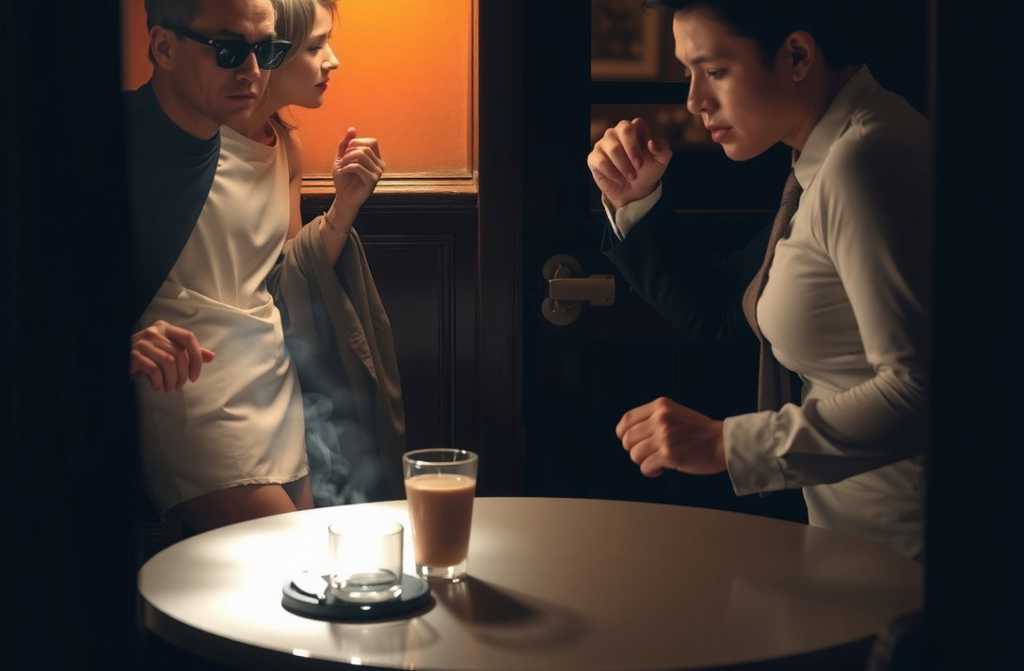
    They arranged to meet at a small cafe on the edge of town a spot where mutual friends were unlikely to see them. Emily arrived a little early, ordered tea and sat there, nervously watching the door. When William finally showed up she noticed how on edge he looked: adjusting his shirt collar, running a hand through his hair.

    “Hi,” he greeted her a bit stiffly as he sat down. “To be honest, I’m surprised you wanted to meet.”

    Emily took a sip of tea, pulling her thoughts together. She’d planned what to say, but now looking at his face she suddenly doubted if this was the right move. Still, there was no backing out now.

    “I know you’re planning to file for divorce,” she said directly, meeting his eyes. “And I know Hannah’s putting together ‘proof’ of your cheating. She’s going to make it look like you’re the only one at fault in the marriage falling apart. But she’s got her own mistakes too. Like that business with the trip to Manchester…”

    William froze, his fingers tightening around his cup. He clearly hadn’t expected this turn. For a few seconds he just stared at Emily, trying to work out if she was serious.

    “You want…” he began, but didn’t finish, as if afraid to say what he was guessing.

    “I want you to have a fair chance,” Emily interrupted, trying to sound firm. “So the court sees the full picture. Hannah’s shouting about your cheating, but she’s not without fault herself. And if it comes to court, it would be honest for both sides to face it without any cover-ups.”

    She pulled an envelope from her bag and set it on the table between them. Inside were a few photos and printouts nothing truly damning, but enough to cast doubt on the perfect image Hannah planned to present in court.

    William slowly reached out, took the envelope, and looked inside carefully. His face stayed unreadable, but Emily saw his fingers tremble when he saw what was there.

    “Thanks,” he said quietly at last. “I didn’t think you’d… that you’d go for something like this.”

    “Me neither,” Emily replied shortly, turning her gaze to the window. “I’m just tired of the lies. Of how everything gets twisted. If we’re sorting this, let’s do it properly. And this might help you get to the truth, at least give you a direction.”

    Outside people walked past, some laughing, some hurrying on their way, while at their table a heavy silence hung. Emily felt conflicting feelings mixing inside: relief at finally saying what she thought, and at the same time a light sadness from knowing this cut off her past with Hannah for good.

    William tucked the envelope into an inside jacket pocket.

    “I don’t know if I’ll use it,” he said after a pause. “But thanks for giving me the choice.”

    Emily just nodded. She didn’t want to explain or discuss anything more. Everything had been said. She finished her cooled tea, stood up, said a quick “goodbye” and left the cafe.

    It was cool outside, the wind playing with her hair, but she didn’t notice. Walking to the bus stop, Emily went over the conversation in her mind, trying to work out if she’d done the right thing. But deep down she knew it wasn’t really about Hannah or William, it was about her. About wanting to leave behind a world where truth gets swapped for lies, and friendship turns into betrayal…

    After that meeting with William Emily thought over her action for a long time, turning it around in her head again and again. In the end she came to a simple decision: she needed to close this chapter for good. First thing she deleted Hannah’s number from her phone pressed the button without hesitation, though with a small inner sigh. Then she went onto social media, unfollowed her old friend, turned off notifications. It only took a few minutes, but felt like a big step like she’d neatly put an old, battered book on a high shelf and closed the cupboard door.

    In the new flat life gradually started to settle. The space, which had seemed just empty at first, slowly filled with warmth and comfort. Emily and Oliver took their time arranging things, choosing curtains, hanging photos not the ones that brought back the past, but fresh ones taken after the move.

    Emily soon found remote work: her experience and skills were in demand, and the flexible hours let her ease into the new rhythm. Oliver switched to a different office too the journey to work got a bit longer, but he didn’t complain, noting the new team seemed friendly and the tasks interesting.

    They enjoyed exploring the new area: strolling quiet streets, popping into small cafes, getting to know neighbours. At first it felt odd striking up new conversations, sharing quick smiles and polite chat but over time those meetings brought real joy. Emily noticed nobody here gave her sideways looks, whispered behind her back, or tried to guess “what really happened.”

    Slowly the flat turned into a proper home a place where she could relax, where she didn’t have to stay on guard all the time, waiting for the next blow to her confidence. Emily caught herself thinking that for the first time in ages she was breathing freely without the weight of old hurts, without having to justify herself to people who didn’t want to hear the truth.

    One evening, as the sun dipped towards the horizon, colouring the sky in soft orange tones, Emily settled on the balcony with a cup of nice tea. The air felt fresh but not cold, and somewhere in the distance came the sound of kids laughing and a dog barking. She sat with her legs tucked under her, watching the day slowly give way to evening.

    Oliver came out onto the balcony, brought his own mug of something warm, and sat beside her. They stayed quiet for a while, just enjoying the stillness and each other’s company. Then Emily spoke softly:

    “You know, sometimes I think it was the only right way. Not just the move, but what I told William too.”

    Her voice sounded calm, no strain, no need to defend herself. It was just a thought said out loud not asking for support, more like drawing a line.

    Oliver gently put an arm around her shoulders and pulled her a little closer. His touch was warm and steady.

    “You did what you thought was right,” he replied in an even, confident tone. “And that’s what counts.”

    He didn’t start debating whether it was correct or analysing the consequences. What mattered to him was that Emily knew he was there, supporting her decision, whatever it was.

    Emily nodded, gazing thoughtfully at the sunset. The sky over the city shifted through soft shades of pink and orange, long shadows from the buildings gradually dissolving into the coming dusk. Somewhere back in the past was Hannah with her grudges and gossip all that now seemed distant and almost unreal. Here, in this new place, another life was beginning. A life without lies, without endless accusations, without the exhausting need to prove her rightness to people who didn’t want to hear it.

    Six months later Emily stood by the window of their new flat watching the first sun rays turn the rooftops golden. The morning was clear, light making odd patterns on the floor. She held a cup of her favourite tea with bergamot, the one that always helped her wake up. Behind her she could hear Oliver’s sleepy mumbling he always woke a few minutes after her, rolled over and enjoyed another couple of minutes in bed.

    Life really had sorted itself out. Work was going well: the remote setup let Emily plan her day flexibly, without wasting time on travel, while staying productive. She’d learned to manage tasks properly, set aside time for rest, and even find slots for small hobbies.

    One of those was art classes she’d wanted to try for ages but always put off for lack of time. Now she went twice a week with real pleasure, learning watercolours and pastels, trying different techniques. It didn’t all come easily at first, but the process itself brought joy a way to express what had built up inside through colour and shape.

    One evening Emily settled in a comfy chair with a cup of hot chocolate. Outside it was slowly getting dark, the room lit softly by the lamp, and she had her tablet on her lap. She scrolled through social media at a leisurely pace, checking friends’ updates, pausing on interesting posts now and then.

    Suddenly a notification popped up a message from an old acquaintance, Rachel, who she’d worked with once. Emily was a bit surprised: over the last six months they’d barely spoken, only occasionally liking each other’s posts. She opened the chat and read:

    “Emily, hi! Do you know how the thing with Hannah ended? I ran into her neighbour by chance, and she told me…”

    Emily paused, feeling something shift inside. Her fingers tightened around the cup and her eyes fixed on the message lines. She’d deliberately avoided news about Hannah after the move she tried not to dig up the past, to give herself space to move forward. But now curiosity won out, and she quickly read the rest.

    “…Hannah wanted to get the most out of the divorce. She hired an expensive lawyer, gathered ‘proof’ of William’s cheating, made herself out to be the innocent victim. But William wasn’t daft. He presented arguments in court that made her perfect wife image fall apart. Especially the printouts of her chats with that colleague from Manchester it was clearly more than just work. In the end the court sided with the husband, and Hannah lost almost everything. The business was in William’s name, same as the flat. She only got the car.”

    Emily set the phone down slowly. The tea in her cup was cooling but she didn’t notice. A strange feeling spread through her chest not glee, no, more like a bitter sort of satisfaction. Not because Hannah had lost, but because the truth had come out after all.

    “What are you thinking about?” came Oliver’s familiar voice from behind.

    He’d come up quietly, wrapped his arms around her, and pressed his cheek lightly to her hair. His touch always calmed her so much warmth and steadiness in it.

    “Just…” Emily turned to him with a small smile. “Heard how Hannah’s story wrapped up.”

    “And?” Oliver raised an eyebrow slightly, waiting.

    “She was aiming for everything but got almost nothing,” Emily explained, looking him in the eyes. “The court saw she wasn’t such an innocent victim after all.”

    Oliver nodded without saying a word. He understood this wasn’t revenge for Emily. It was justice finally showing up, even if late. He knew how hard the break with her friend had been, how painful it was to realise someone she’d trusted had believed the lies so easily and turned away.

    Emily leaned against him, feeling the tension gradually leave. Outside rain was still falling, drops tapping rhythmically on the windowsill, and the kitchen smelled of tea and fresh bread Oliver had stopped at the bakery that morning and picked up some croissants.

    Oliver kissed the top of her head and reached for the teapot to pour himself a cup.

    “So, shall we have tea with croissants?” he asked with a light smile. “And tomorrow, maybe we can head to that new park they opened nearby? They say it’s really nice.”

    Emily nodded, feeling things get lighter inside. The Hannah story was in the past now she could just live, enjoy each day, and build her future without looking back at old hurts.

    That evening Emily decided to go for a walk she’d wanted for a while to just wander without a plan, no hurry, no list of things to do. She left the flat when the streetlights were already on. The air was cool with a light autumn freshness, and every breath seemed to clear her thoughts, carrying away the last bits of tension.

    Emily walked at a steady pace, noticing the now-familiar details of the area: neatly trimmed bushes by the entrances, glowing windows where people were getting ready for dinner, a couple of cats warming themselves by a pipe. She thought about how much her life had changed over the past months. There were no more whispers behind her back, no need to watch her words in case they got twisted, no having to explain herself to people who’d already decided she was wrong. This calm felt almost unfamiliar she’d got so used to being on guard.

    She reached the park and sat on an empty bench. Around her was a gentle, cosy bustle: kids running along the paths, laughing and calling to each other, soft music coming from a cafe somewhere, and in the distance the lights of a new housing development twinkling bright, modern, promising someone a fresh start. It all felt so… ordinary. No dramas, no shocks just a quiet evening in a normal city. And that everyday quality had its own special appeal: no need to wait for the other shoe to drop, no need to stay alert. She could just sit, watch, listen, and feel a quiet, steady peace growing inside.

    “I’m not the same Emily who was scared of being judged,” she thought, watching parents call their kids home. “I’m someone who’s learned to stand up for my own boundaries. And that, I reckon, is the most important thing.”

    The thought came easily, without any fuss, just a simple statement of fact not something to boast about, just the realisation that she’d managed to change, without breaking or turning bitter, but becoming stronger.

    The next day Emily picked up the phone and rang Rachel. She answered almost straight away, as if she’d been waiting for the call.

    “Thanks for letting me know,” Emily said sincerely, looking out at the falling leaves. “Not that I was waiting for the news, but… now I can definitely close this chapter.”

    “I understand,” Rachel replied. There was no hint of judgment or curiosity in her voice, just warm sympathy. “You know, a lot of people didn’t believe you were right back then. But now everything’s come out, they’re starting to rethink.”

    “Let them,” Emily smiled, and there was no spite or need to prove anything in that smile. “It doesn’t matter to me anymore. The main thing is I’m living how I want.”

    The call ended easily, without long goodbyes. Emily put the phone down and felt even freer inside like the last piece of the past had finally let go.

    That evening, when Oliver got home, Emily met him with a smile. She didn’t launch straight into telling him about the call with Rachel she just hugged him, breathed in the familiar smell of his jacket, felt the day’s tension start to fade.

    “You know, I finally feel like everything’s fallen into place,” she said, pulling back but not letting go of his hand.

    “I’m glad,” Oliver answered, kissing her on the forehead. His voice was calm, no fuss, but full of warmth that made Emily realise again how important it was to have someone who just believes in you. “You deserve this peace.”

    They sat down to dinner, chatting about weekend plans: maybe a trip out of town while the weather still allowed, or just stay in, watch a film, cook something special. Outside light snow was starting to fall, covering the city in a white blanket, like wiping away the last traces of the past.

    Emily looked at the fire in the fireplace they’d bought a small electric one recently to add some cosiness on winter evenings. The flames flickered, casting warm glows on the walls, and in that light everything seemed just right. She knew she didn’t want to go back. In the old life there had been hurts, things left unsaid, and disappointment. Here, in the new one peace, honesty, and the chance to just be herself.

    And that was the most valuable thing.So, Emily got back to their flat after one of those really draining days. She pushed open the door and just mechanically slipped off her shoes, the way she moved showing how worn out she felt, more from the mental side than anything physical. The hallway felt oddly still, with only the faint buzz of the telly drifting in from the kitchen. She paused there a moment, like she had to steel herself before taking another step. She needed a bit of time to shake off the outside world and settle into the home feeling, but today that switch was harder than ever.

    Eventually she headed into the kitchen. Oliver, her husband, was at the table with a bowl of soup, eating slowly and glancing at the screen now and then. As soon as she appeared he noticed and lifted his eyes.

    “You’re back earlier than usual. Everything alright?” he asked, and the concern in his voice was real.

    Emily dropped into the chair opposite without a word. She wrapped her arms around herself, like she was trying to get warm or fend off something you couldn’t see. From the way she sat and looked, Oliver knew straight away something serious had happened.

    “No, it’s not,” she answered quietly, staring off somewhere. “I just came from Hannah’s. We… we don’t seem to be friends anymore.”

    Oliver set his spoon down right then. His face turned focused and attentive. He didn’t jump in with questions, giving her room to gather her thoughts, but everything about him said he was right there listening.

    “What happened?” he asked at last, with genuine worry.

    Emily drew a deep breath, like she needed the courage to lay it out properly.

    “It’s all down to her husband,” she started. “Can you believe William cheated on her. And instead of dealing with him, she went after that poor girl, calling her every name under the sun and saying she ‘knew he was married but still went for it anyway.’” Emily’s voice wavered but she kept on. “I tried to calm her down, explain that the girl wasn’t to blame, William was, and she needed to talk to him first… But she wasn’t hearing a word. She shouted that I wasn’t supporting her, that I was on the side of that… that backstabber.”

    Oliver turned the spoon in his hands, thinking, though his appetite had gone. The question slipped out before he could stop it he needed the whole picture.

    “Did the girl actually know everything?” he asked, watching Emily.

    Emily threw her hands up like the idea was absurd.

    “No, not at all!” she said, all heated. “She had no idea William was married. He told her he’d been divorced for years and never showed his passport or anything. I kept trying to get Hannah to see it was William who lied, not the girl. You can’t blame someone for another person’s deceit!” Her voice shook again as she went on: “But she just snapped at me. Said I was ‘defending women like her’ because ‘I’m not exactly innocent myself.’”

    Oliver frowned. It bothered him to hear his wife’s friend twist things around and throw in those sly hints.

    “That’s a bit much,” he said. “What came next?”

    Emily gave a bitter little laugh, and the hurt she was holding back showed right through.

    “It got worse after that,” she said softly. “Hannah started telling all our mutual friends that I was defending the girl way too strongly. ‘Why would she do that,’ she says, ‘maybe Emily’s got something to hide herself?’ Can you imagine?” She looked at Oliver, and confusion flickered in her eyes. “I thought a friend would back you in a tough spot, but she turned it around and painted me as the guilty one with these nasty suggestions!”

    A heavy quiet settled in the kitchen. The telly kept going but neither of them was paying it any mind. Emily fiddled nervously with the tablecloth edge, like the simple movement gave her some comfort. It stung to realise someone she’d seen as close could turn on her so easily.

    “And the worst bit is I only wanted to help her,” she went on quietly, eyes still on the snowy courtyard outside. “I was trying to say the anger should go towards the one who was actually responsible. But she flipped it all upside down! Now half our friends are buying into it. They’re giving me sideways looks, whispering!” There was more bitter confusion than anger in her voice how could they swallow such a daft lie so quickly?

    Oliver stood up, came over and gently put his arms around her shoulders. His touch felt warm and steady, like a reminder that no matter what, there was someone who believed her.

    “You know the truth is on your side,” he said calmly but with real certainty.

    “I know,” Emily nodded, finally looking away from the window. “But it doesn’t make it any easier. All those years of friendship ending like this, over lies and foolishness…” She sighed and rubbed a hand over her face, as if trying to wipe away the tiredness and disappointment. “It really hurts…”

    The next few days Emily tried not to go out much. Every time she pictured bumping into someone in the courtyard or at the shops, a wave of worry would rise up. She hated catching those sideways glances from neighbours or hearing muffled whispers behind her. Sometimes people would go quiet when she appeared or switch topics, and it cut deeper than she liked to admit.

    At home she kept herself busy with chores shifting books on shelves, doing a big tidy, cooking something that needed attention. But even then her thoughts kept looping back to how fast and completely her life had shifted. She caught herself wishing she could just get away for a while, to not see those faces or hear the talk. The idea of heading somewhere else where nobody knew her or Hannah or the whole mess started feeling more and more appealing. She wanted quiet and space, a chance to breathe without worrying what others thought or assumed.

    Sometimes she’d picture climbing on a train or plane, watching the city fall away, with only the unknown and some peace ahead. But for now it stayed daydreams. She still had to live right here, where every day reminded her how a friendship that seemed unbreakable had fallen apart in a moment.

    One evening Emily and Oliver settled in the kitchen, mugs of tea steaming on the table, the soft lamp light on. It was dark outside already, and the odd snowflake swirling in the streetlight made everything feel private and still. They drank quietly, each wrapped in their own thoughts, until Oliver broke the silence.

    “You know, I’ve been thinking…” he began carefully, like he was testing the words. “Maybe we should move? Even just to the other side of London. Just to change the scene, have a breather.”

    Emily slowly raised her eyes to him. Surprise mixed with caution showed there. She hadn’t expected the suggestion, and it set her heart beating faster from nerves or maybe a faint hope.

    “Do you reckon it would help?” she asked, trying to keep her voice steady even though everything inside felt tight.

    “I’m sure it would,” Oliver replied firmly but without pressure. “You need time to get through this. Here there’s too many reminders, too many people who believe the gossip,” he paused, choosing his words. “You run into it every day and it won’t give you any rest. If we go, you can breathe out, look around, work out how to carry on.”

    Emily stared into her mug thoughtfully. The thought of moving felt scary and tempting at once. On one side, they’d have to leave the life they’d settled into the flat they’d made theirs over years together, the friends who hadn’t turned away in all this. She imagined explaining a sudden move to colleagues, hunting for somewhere new, getting used to unfamiliar streets and faces. Those ideas made her uneasy.

    On the other side, different pictures popped up straight away: a quiet spot where nobody knew her name or whispered behind her back, mornings without anxious thoughts about what someone had said yesterday. A chance to start fresh, leave this painful mess behind that seemed to cling like sticky cobwebs.

    She turned the pros and cons over in her head, weighing them, trying to picture what life would look like there. Fear of the unknown fought with the urge to break out of the closed loop.

    “Alright,” Emily said finally, and determination came through her voice even if it shook a little. “Let’s try.”

    Oliver smiled, restrained but clearly relieved. He knew the decision hadn’t come easy and valued her readiness to keep going despite the doubts.

    “Brilliant,” he said, giving her hand a light squeeze. “We’ll start looking for a good place. Maybe something cosy near some green, where we can walk and get some fresh air.”

    Emily nodded, feeling a small warm spark of hope start to grow inside. Maybe this really was a chance to begin again not running from problems, but just giving herself a break so she could come back stronger later.

    They got stuck into finding a flat in another part of town. At first it seemed like it would be simple, but it turned out trickier. Every day Emily and Oliver checked listings, rang agents, went to viewings. Sometimes a place looked perfect in the photos but felt cramped or unwelcoming in real life. Other times the area didn’t match what they hoped for too much road noise, not enough greenery, or awkward transport.

    The process moved slowly, but both knew not to hurry. They wanted exactly the right spot where they’d feel comfortable, where they could truly rest and recharge. Oliver took on most of the organising the calls, the paperwork while Emily looked closely at every option, imagining if she could see herself living there.

    In the gaps between searches Emily thought more and more about Hannah. The hurt still sat inside, sharp and unpleasant, but now mixed with something else a sad understanding that their friendship hadn’t been as solid as she’d always thought. She remembered sharing the deepest things, supporting each other through hard times, celebrating wins together. Now, looking back, she tried to work out when something had gone wrong, where the turning point had been after which it all collapsed.

    One day, deciding to take a break from the flat hunt, Emily started sorting through old photos. She carefully moved shots from one album to another, recalling events, faces, feelings. Suddenly she came across one of her and Hannah laughing on a beach. The sun was bright, wind playing with their hair, genuine joy and carefree looks on their faces. Back then they were happy, chatting about the future, making plans, dreaming of trips. Now it all seemed like a distant dream, almost unreal. Emily looked at the photo for a long time, and a longing for those simpler times spread through her chest.

    “Maybe I should try talking to her again?” the thought flashed up. She pictured ringing Hannah, suggesting they meet and discuss everything calmly, without shouting or blame. But straight away the scenes from their last meeting came back, Hannah’s words, her cutting tone, the groundless accusations… No, it would be pointless. Emily sighed and tucked the photo away in a far corner of the box. Clearly some paths really do lead nowhere, and you can’t go back.

    A month later they finally found a suitable flat. Small but very bright, with big windows letting in plenty of light. The area turned out quiet and green, with cosy courtyards and a park nearby. The agent letting it mentioned straight away that the owners valued peace and decent tenants, which only made the place more appealing.

    The move took several days. They shifted things in small batches so they wouldn’t get too tired, unpacked boxes together, arranged the furniture. Oliver joked that now they knew the contents of every box off by heart, and Emily laughed, saying at least they wouldn’t have to hunt for things for ages afterwards.

    When the last boxes were unpacked and the flat started to feel lived in, Emily walked slowly through the rooms. She stopped at a window, looking at the trees in the courtyard, the playground, people strolling along the pavement. In that moment she felt a strange relief light, almost weightless, but clear. Everything here was new, clean, free from old hurts and unpleasant memories. This was a place where she could start gathering herself back together bit by bit, where there wouldn’t be sideways looks or whispers behind her back.

    Emily breathed in deeply, feeling the clenched springs of tension inside gradually loosen. Maybe this was exactly the chance not to run from problems, but simply to give herself time to come back to herself and work out how to live next.

    Before they left the old place Emily did something she thought about for a long time afterwards. She couldn’t say exactly what pushed her to it whether it was wanting to set things right or a last attempt to draw a line under the whole tangled mess. Either way she rang William, Hannah’s husband, and suggested they meet.

    They arranged to meet at a small cafe on the edge of town a spot where mutual friends were unlikely to see them. Emily arrived a little early, ordered tea and sat there, nervously watching the door. When William finally showed up she noticed how on edge he looked: adjusting his shirt collar, running a hand through his hair.

    “Hi,” he greeted her a bit stiffly as he sat down. “To be honest, I’m surprised you wanted to meet.”

    Emily took a sip of tea, pulling her thoughts together. She’d planned what to say, but now looking at his face she suddenly doubted if this was the right move. Still, there was no backing out now.

    “I know you’re planning to file for divorce,” she said directly, meeting his eyes. “And I know Hannah’s putting together ‘proof’ of your cheating. She’s going to make it look like you’re the only one at fault in the marriage falling apart. But she’s got her own mistakes too. Like that business with the trip to Manchester…”

    William froze, his fingers tightening around his cup. He clearly hadn’t expected this turn. For a few seconds he just stared at Emily, trying to work out if she was serious.

    “You want…” he began, but didn’t finish, as if afraid to say what he was guessing.

    “I want you to have a fair chance,” Emily interrupted, trying to sound firm. “So the court sees the full picture. Hannah’s shouting about your cheating, but she’s not without fault herself. And if it comes to court, it would be honest for both sides to face it without any cover-ups.”

    She pulled an envelope from her bag and set it on the table between them. Inside were a few photos and printouts nothing truly damning, but enough to cast doubt on the perfect image Hannah planned to present in court.

    William slowly reached out, took the envelope, and looked inside carefully. His face stayed unreadable, but Emily saw his fingers tremble when he saw what was there.

    “Thanks,” he said quietly at last. “I didn’t think you’d… that you’d go for something like this.”

    “Me neither,” Emily replied shortly, turning her gaze to the window. “I’m just tired of the lies. Of how everything gets twisted. If we’re sorting this, let’s do it properly. And this might help you get to the truth, at least give you a direction.”

    Outside people walked past, some laughing, some hurrying on their way, while at their table a heavy silence hung. Emily felt conflicting feelings mixing inside: relief at finally saying what she thought, and at the same time a light sadness from knowing this cut off her past with Hannah for good.

    William tucked the envelope into an inside jacket pocket.

    “I don’t know if I’ll use it,” he said after a pause. “But thanks for giving me the choice.”

    Emily just nodded. She didn’t want to explain or discuss anything more. Everything had been said. She finished her cooled tea, stood up, said a quick “goodbye” and left the cafe.

    It was cool outside, the wind playing with her hair, but she didn’t notice. Walking to the bus stop, Emily went over the conversation in her mind, trying to work out if she’d done the right thing. But deep down she knew it wasn’t really about Hannah or William, it was about her. About wanting to leave behind a world where truth gets swapped for lies, and friendship turns into betrayal…

    After that meeting with William Emily thought over her action for a long time, turning it around in her head again and again. In the end she came to a simple decision: she needed to close this chapter for good. First thing she deleted Hannah’s number from her phone pressed the button without hesitation, though with a small inner sigh. Then she went onto social media, unfollowed her old friend, turned off notifications. It only took a few minutes, but felt like a big step like she’d neatly put an old, battered book on a high shelf and closed the cupboard door.

    In the new flat life gradually started to settle. The space, which had seemed just empty at first, slowly filled with warmth and comfort. Emily and Oliver took their time arranging things, choosing curtains, hanging photos not the ones that brought back the past, but fresh ones taken after the move.

    Emily soon found remote work: her experience and skills were in demand, and the flexible hours let her ease into the new rhythm. Oliver switched to a different office too the journey to work got a bit longer, but he didn’t complain, noting the new team seemed friendly and the tasks interesting.

    They enjoyed exploring the new area: strolling quiet streets, popping into small cafes, getting to know neighbours. At first it felt odd striking up new conversations, sharing quick smiles and polite chat but over time those meetings brought real joy. Emily noticed nobody here gave her sideways looks, whispered behind her back, or tried to guess “what really happened.”

    Slowly the flat turned into a proper home a place where she could relax, where she didn’t have to stay on guard all the time, waiting for the next blow to her confidence. Emily caught herself thinking that for the first time in ages she was breathing freely without the weight of old hurts, without having to justify herself to people who didn’t want to hear the truth.

    One evening, as the sun dipped towards the horizon, colouring the sky in soft orange tones, Emily settled on the balcony with a cup of nice tea. The air felt fresh but not cold, and somewhere in the distance came the sound of kids laughing and a dog barking. She sat with her legs tucked under her, watching the day slowly give way to evening.

    Oliver came out onto the balcony, brought his own mug of something warm, and sat beside her. They stayed quiet for a while, just enjoying the stillness and each other’s company. Then Emily spoke softly:

    “You know, sometimes I think it was the only right way. Not just the move, but what I told William too.”

    Her voice sounded calm, no strain, no need to defend herself. It was just a thought said out loud not asking for support, more like drawing a line.

    Oliver gently put an arm around her shoulders and pulled her a little closer. His touch was warm and steady.

    “You did what you thought was right,” he replied in an even, confident tone. “And that’s what counts.”

    He didn’t start debating whether it was correct or analysing the consequences. What mattered to him was that Emily knew he was there, supporting her decision, whatever it was.

    Emily nodded, gazing thoughtfully at the sunset. The sky over the city shifted through soft shades of pink and orange, long shadows from the buildings gradually dissolving into the coming dusk. Somewhere back in the past was Hannah with her grudges and gossip all that now seemed distant and almost unreal. Here, in this new place, another life was beginning. A life without lies, without endless accusations, without the exhausting need to prove her rightness to people who didn’t want to hear it.

    Six months later Emily stood by the window of their new flat watching the first sun rays turn the rooftops golden. The morning was clear, light making odd patterns on the floor. She held a cup of her favourite tea with bergamot, the one that always helped her wake up. Behind her she could hear Oliver’s sleepy mumbling he always woke a few minutes after her, rolled over and enjoyed another couple of minutes in bed.

    Life really had sorted itself out. Work was going well: the remote setup let Emily plan her day flexibly, without wasting time on travel, while staying productive. She’d learned to manage tasks properly, set aside time for rest, and even find slots for small hobbies.

    One of those was art classes she’d wanted to try for ages but always put off for lack of time. Now she went twice a week with real pleasure, learning watercolours and pastels, trying different techniques. It didn’t all come easily at first, but the process itself brought joy a way to express what had built up inside through colour and shape.

    One evening Emily settled in a comfy chair with a cup of hot chocolate. Outside it was slowly getting dark, the room lit softly by the lamp, and she had her tablet on her lap. She scrolled through social media at a leisurely pace, checking friends’ updates, pausing on interesting posts now and then.

    Suddenly a notification popped up a message from an old acquaintance, Rachel, who she’d worked with once. Emily was a bit surprised: over the last six months they’d barely spoken, only occasionally liking each other’s posts. She opened the chat and read:

    “Emily, hi! Do you know how the thing with Hannah ended? I ran into her neighbour by chance, and she told me…”

    Emily paused, feeling something shift inside. Her fingers tightened around the cup and her eyes fixed on the message lines. She’d deliberately avoided news about Hannah after the move she tried not to dig up the past, to give herself space to move forward. But now curiosity won out, and she quickly read the rest.

    “…Hannah wanted to get the most out of the divorce. She hired an expensive lawyer, gathered ‘proof’ of William’s cheating, made herself out to be the innocent victim. But William wasn’t daft. He presented arguments in court that made her perfect wife image fall apart. Especially the printouts of her chats with that colleague from Manchester it was clearly more than just work. In the end the court sided with the husband, and Hannah lost almost everything. The business was in William’s name, same as the flat. She only got the car.”

    Emily set the phone down slowly. The tea in her cup was cooling but she didn’t notice. A strange feeling spread through her chest not glee, no, more like a bitter sort of satisfaction. Not because Hannah had lost, but because the truth had come out after all.

    “What are you thinking about?” came Oliver’s familiar voice from behind.

    He’d come up quietly, wrapped his arms around her, and pressed his cheek lightly to her hair. His touch always calmed her so much warmth and steadiness in it.

    “Just…” Emily turned to him with a small smile. “Heard how Hannah’s story wrapped up.”

    “And?” Oliver raised an eyebrow slightly, waiting.

    “She was aiming for everything but got almost nothing,” Emily explained, looking him in the eyes. “The court saw she wasn’t such an innocent victim after all.”

    Oliver nodded without saying a word. He understood this wasn’t revenge for Emily. It was justice finally showing up, even if late. He knew how hard the break with her friend had been, how painful it was to realise someone she’d trusted had believed the lies so easily and turned away.

    Emily leaned against him, feeling the tension gradually leave. Outside rain was still falling, drops tapping rhythmically on the windowsill, and the kitchen smelled of tea and fresh bread Oliver had stopped at the bakery that morning and picked up some croissants.

    Oliver kissed the top of her head and reached for the teapot to pour himself a cup.

    “So, shall we have tea with croissants?” he asked with a light smile. “And tomorrow, maybe we can head to that new park they opened nearby? They say it’s really nice.”

    Emily nodded, feeling things get lighter inside. The Hannah story was in the past now she could just live, enjoy each day, and build her future without looking back at old hurts.

    That evening Emily decided to go for a walk she’d wanted for a while to just wander without a plan, no hurry, no list of things to do. She left the flat when the streetlights were already on. The air was cool with a light autumn freshness, and every breath seemed to clear her thoughts, carrying away the last bits of tension.

    Emily walked at a steady pace, noticing the now-familiar details of the area: neatly trimmed bushes by the entrances, glowing windows where people were getting ready for dinner, a couple of cats warming themselves by a pipe. She thought about how much her life had changed over the past months. There were no more whispers behind her back, no need to watch her words in case they got twisted, no having to explain herself to people who’d already decided she was wrong. This calm felt almost unfamiliar she’d got so used to being on guard.

    She reached the park and sat on an empty bench. Around her was a gentle, cosy bustle: kids running along the paths, laughing and calling to each other, soft music coming from a cafe somewhere, and in the distance the lights of a new housing development twinkling bright, modern, promising someone a fresh start. It all felt so… ordinary. No dramas, no shocks just a quiet evening in a normal city. And that everyday quality had its own special appeal: no need to wait for the other shoe to drop, no need to stay alert. She could just sit, watch, listen, and feel a quiet, steady peace growing inside.

    “I’m not the same Emily who was scared of being judged,” she thought, watching parents call their kids home. “I’m someone who’s learned to stand up for my own boundaries. And that, I reckon, is the most important thing.”

    The thought came easily, without any fuss, just a simple statement of fact not something to boast about, just the realisation that she’d managed to change, without breaking or turning bitter, but becoming stronger.

    The next day Emily picked up the phone and rang Rachel. She answered almost straight away, as if she’d been waiting for the call.

    “Thanks for letting me know,” Emily said sincerely, looking out at the falling leaves. “Not that I was waiting for the news, but… now I can definitely close this chapter.”

    “I understand,” Rachel replied. There was no hint of judgment or curiosity in her voice, just warm sympathy. “You know, a lot of people didn’t believe you were right back then. But now everything’s come out, they’re starting to rethink.”

    “Let them,” Emily smiled, and there was no spite or need to prove anything in that smile. “It doesn’t matter to me anymore. The main thing is I’m living how I want.”

    The call ended easily, without long goodbyes. Emily put the phone down and felt even freer inside like the last piece of the past had finally let go.

    That evening, when Oliver got home, Emily met him with a smile. She didn’t launch straight into telling him about the call with Rachel she just hugged him, breathed in the familiar smell of his jacket, felt the day’s tension start to fade.

    “You know, I finally feel like everything’s fallen into place,” she said, pulling back but not letting go of his hand.

    “I’m glad,” Oliver answered, kissing her on the forehead. His voice was calm, no fuss, but full of warmth that made Emily realise again how important it was to have someone who just believes in you. “You deserve this peace.”

    They sat down to dinner, chatting about weekend plans: maybe a trip out of town while the weather still allowed, or just stay in, watch a film, cook something special. Outside light snow was starting to fall, covering the city in a white blanket, like wiping away the last traces of the past.

    Emily looked at the fire in the fireplace they’d bought a small electric one recently to add some cosiness on winter evenings. The flames flickered, casting warm glows on the walls, and in that light everything seemed just right. She knew she didn’t want to go back. In the old life there had been hurts, things left unsaid, and disappointment. Here, in the new one peace, honesty, and the chance to just be herself.

    And that was the most valuable thing.
  • Fate Repeats ItselfFate Repeats Itself

    A winter evening settled over the city far sooner than usual, the sky turning inky by late afternoon while the street lamps flickered on with their steady amber glow. Inside Andrews flat it felt snug and sheltered, the floor lamp casting a gentle honeyed light that softened the edges of the sofa and chairs and sent peculiar shadows drifting along the walls. On the low table, next to a small plate of biscuits, two mugs of tea sent up thin curls of steam that carried the scent of mint and honey through the room. Beyond the window large snowflakes turned slowly, now and then brushing the glass before settling on the sill where a soft white layer was already gathering.

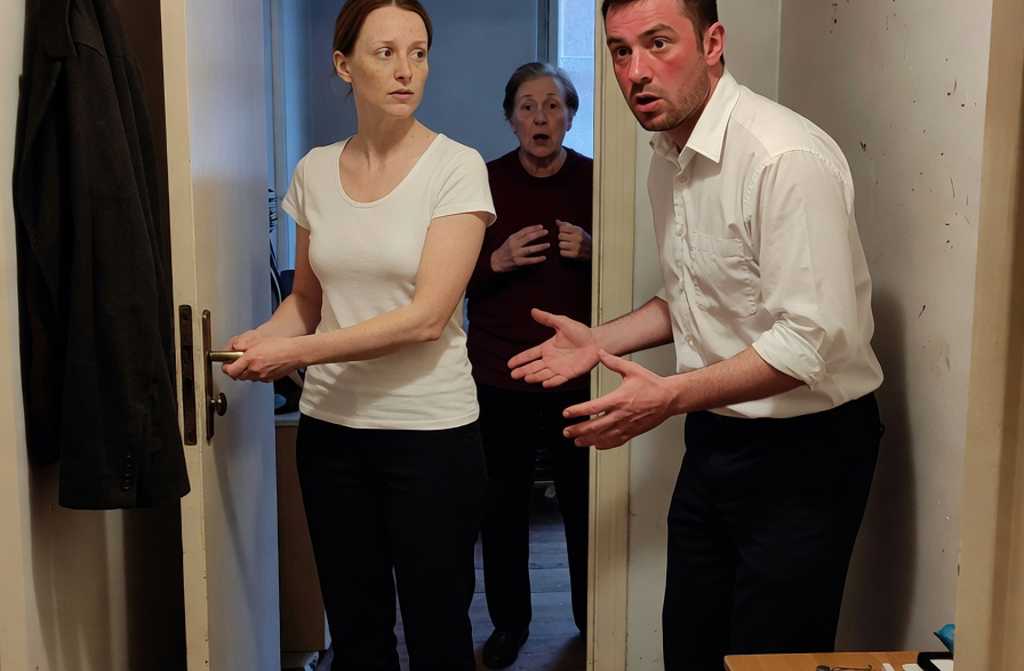
    Andrew had just finished setting things out, choosing the mugs he liked best, arranging the biscuits, even lighting a small scented candle so the air would feel especially welcoming. The bell rang. He hurried to the door and found Anthony on the step, hair tousled and cheeks flushed from the cold.

    Frozen right through, Anthony muttered, stepping inside and shaking snow from his coat. The collar was dusted white and tiny flakes still melted on his eyebrows. Weather like this is only fit for staying indoors, no question.

    And thats exactly what were doing, Andrew answered with a warm smile, taking the coat. Come through, Emma and I were just about to have tea. You look as if you could use some too.

    They moved into the living room. Anthony headed straight for the table, eager for warmth. He sank into the armchair, reached for a mug and wrapped both hands around it, eyes half-closed as the heat crept back into his fingers. The rising steam wrapped his face for a moment.

    Whats so urgent that youve come round on a Friday night? Anthony asked, a faint smile playing at his mouth. Werent you meant to be taking Sophie and Ethan over to her mothers this evening? He took a careful sip and nodded, satisfied.

    Meant to, but didnt go, Andrew replied with a crooked grin, sipping again.

    Right. How are Sophie and Ethan doing?

    Anthony went still for a second, as though turning something over. Then he gave a small shrug, as if brushing the thought aside.

    Everythings fine, really, he said, trying to sound light, yet the words carried a faint weight that made Andrew pause.

    Anthony sat turning the empty mug in his hands, pressing his fingers against the smooth sides, then letting it roll a little, then gripping it again, the small motion seeming to steady him. His eyes wandered the room, resting on the bookshelf, sliding across a picture on the wall, never quite meeting Andrews.

    At last he drew a long breath and spoke quietly but clearly.

    Ive asked for a divorce.

    Andrews own mug trembled just enough to send a ripple across the surface of his tea. He stared at his friend, surprise plain on his face.

    Seriously? With Sophie? he asked, voice lifting a little.

    Anthony nodded without looking away from the window, as though trying to find something beyond the drifting snow.

    Yes, he said after a moment. I met someone Olivia. With her I feel as though Im actually living for the first time. Shes like a light in the window, if that makes sense.

    Youre sure this isnt just something that will pass? Andrew asked, keeping his tone even though irritation crept in. You have a child! Ethans only two. What happens to him without his father? Think about how you grew up.

    Anthony lifted his head sharply. A steadiness appeared in his eyes that Andrew had not seen before, as though he had rehearsed this answer many times.

    Im sure, he said firmly. Ive thought about it for a long time. I cant keep waking up every morning playing a part that isnt mine. Thats not living, Andrew, its just drifting along. With Olivia everything feels different. I actually want to get up in the mornings. I have things I want to do. And Ethan Im not leaving him the way my father left us.

    Andrew fell silent, memories rising unbidden. He saw a school playground on a cool autumn morning, the two of them sitting on a bench during break. Anthony, still a boy with bright eyes, had spoken with fierce certainty that he would never become like his own father. He just walked away without even trying to fix anything, the younger Anthony had said. I wont do that. If I ever marry, Ill fight for my family right to the end.

    Those old words now echoed oddly in the present. Andrew looked at the man across from him and asked, almost under his breath, Do you remember what you used to say at school about never repeating his mistake?

    Anthonys hands tightened on his knees. He lifted his chin a fraction.

    Of course I remember. So what?

    So now youre doing exactly the same thing, Andrew said calmly. Leaving your wife and child behind.

    Anthony sprang to his feet as if something had propelled him. He took two steps, turned, and the fire in his eyes was half anger, half desperation.

    Its not the same at all! he burst out, then lowered his voice. My father simply disappeared. He never explained anything. Im telling Sophie how I feel. Weve talked it through. Im not running away, Im trying to do the right thing even though it hurts. And Ill still see Ethan. Ill pick him up at weekends. Its completely different, dont you see? Im not like him.

    Andrew stayed seated, running a hand slowly along the edge of the table before looking up.

    You really mean that? he asked, voice quiet but steady. You think Ethan will find it easier because you were honest when you left? What matters to a child isnt explanations. Its whether his dad still comes home, still reads stories at bedtime, still plays with toy cars. Are you certain your honesty will outweigh that?

    Anthony stood motionless, gaze fixed on the carpet as though the pattern might offer an answer. In his mind images flickered, sharp and painful. He saw himself at seven, sitting on a cold bench outside school, waiting for his mother who was late again, the wind cutting through his coat while he stayed put, afraid she would pass without noticing. Then at thirteen, standing at the classroom window with his back to classmates who taunted him about his missing father. At sixteen, in his bedroom, hurling the cheap guitar his father had given him against the wall so the wood cracked.

    His friends childhood had been nothing like that. Andrews father had been steady, present, taking him fishing, mending bikes, attending every parents evening. Anthony had once watched them building a model plane and said quietly, Your dads like a superhero.

    Andrew had simply smiled and answered, My dad just loves me.

    The words had stayed with Anthony for years before he truly understood them.

    Now, across from his friend, Anthony felt old feelings rising like a tide. Andrews voice pulled him back.

    You dont understand, Anthony said, his voice unsteady. Im not like him. Im not running or abandoning anyone. Im building something new instead of escaping.

    Andrew studied him, calm but searching.

    Did you truly try to save what you had? he asked softly. Really try? Or did you decide it was simpler to start fresh?

    Anthony went pale, fingers curling into fists.

    I tried, he said, lifting his eyes. Year after year. We talked, we tried to change things, but it always slipped back to the same place. Like we were both trapped in a loop with no room for anything better.

    Andrew leaned forward slightly.

    What did you actually do? he asked, not unkindly. When was the last time you bought Sophie flowers for no reason at all? Or took her out somewhere just because? Or simply told her something kind?

    Enough! Anthonys voice rose louder than he intended. Your life has always been perfect, perfect family, perfect father. Its easy for you to judge.

    There was no real anger in the words, only a long-held hurt. He unclenched his hands.

    Andrew did not move. He drew a slow breath and passed a hand across his face.

    This isnt about perfection, he said gently but firmly. Its about choosing not to repeat someone elses mistakes.

    Anthony spun toward the door, face tight with strain.

    What does any of that have to do with it? he snapped. You cant know what its like to grow up feeling you dont matter to your own father!

    And because of that youre making your own son feel the same? Andrew answered quietly. You say youre not like your father, yet youre acting exactly like him.

    Anthony paused in the doorway, hand on the handle, then turned. The anger had drained away, leaving only confusion and something close to fear.

    You just wont understand, he said, voice low and tired.

    Understand what? That youre leaving your wife and small child because someone else came along? Andrew shook his head. Youre right. I cant.

    Keep your lectures to yourself, Anthony said over his shoulder, and walked out, the door slamming behind him.

    The sound rolled through the flat and left a heavy stillness. Andrew remained where he was, looking at the empty chair. He waited a moment, half expecting the door to open again, but nothing happened. He sat down on the sofa, rubbing his face, eyes closed, thoughts scattering like water on glass.

    After a while Emma came in, wearing a dressing gown with a towel over her shoulders, fresh from the bath. She looked concerned, glancing at the open door and then at Andrew.

    What happened? I heard shouting, she asked quietly, sitting beside him.

    Andrew sighed. Anthonys leaving Sophie. Says he met someone else and wants a divorce.

    Emma drew in a sharp breath, hand to her chest.

    But they have a little boy! And they always seemed so happy together. We saw them at birthdays and parties

    Exactly, Andrew said bitterly. And now hes doing what his father did, without even realising it. The same story, only now hes the one walking away.

    Emma was quiet for a moment, thinking.

    Maybe hes just lost, she suggested. Sometimes people cant see what they really want. Perhaps he thinks this is the only way to change things.

    Andrew shook his head.

    People get lost, he agreed. But he isnt even trying to find his way back. Hes repeating the very thing he always said he hated.

    Outside the snow kept falling, covering the streets in white. The flat was quiet except for the soft ticking of the clock.

    A week later Andrew and Emma stood at Sophies door. The wind was sharp, stirring the drifts. Emma carried a pie in a neat box tied with ribbon, not showy but enough to give a reason for the visit.

    Andrew straightened his jacket, glanced at her, and rang the bell. A gentle chime sounded inside. After a moment the door opened a little. Sophie looked out, clearly surprised.

    Andrew? Emma? What are you she began.

    We just wanted to see how you are, Emma said gently, holding out the box. May we come in?

    Sophie hesitated, then stepped back.

    Of course. Please.

    They followed her to the kitchen. The flat was unusually still. Sophie switched on the kettle and set out cups, her movements precise but distant, as if she were moving through a routine to keep steady.

    Sit down, she said.

    Emma placed the pie on the table and untied the ribbon. Sophie poured tea but left her own cup mostly untouched, turning it slowly between her palms.

    How are you managing? Andrew asked carefully.

    Sophie lifted one shoulder. Im getting by. Work helps. It leaves less time to think.

    She paused, then added, Ethan doesnt fully understand yet. He asks where his dad is. I tell him Daddys working. I dont know if he believes it, but at least he doesnt cry.

    Her voice caught on the last word. She smiled quickly, as if to show it wasnt so bad.

    Emma reached over and touched Sophies hand, a quiet, steady gesture. Sophie squeezed her fingers in thanks, then looked down again.

    If you need help with Ethan or anything else, just say, Emma said firmly but kindly. Were here.

    Sophie raised her eyes. Tears welled and one slipped down her cheek, but she let it fall.

    Thank you, she whispered. I didnt know who to turn to. Everything came at once and it felt like there was no one.

    She took a breath. I used to think I had plenty of friends, but when I needed someone it turned out there was no one to ask.

    Andrew leaned forward a little.

    Come to us, he said. Any time. You dont even have to ask.

    Sophie nodded, no longer trying to hold back the tears. They were tears of relief now, as if a heavy weight had finally found somewhere to rest.

    Emma gave her hand a gentle squeeze, then reached for the pie.

    Lets have some tea before it goes cold. And try the pie. I made it for you. I may have left it in the oven a bit long, but it still tastes all right.

    The ordinary words helped Sophie steady herself. She wiped her face, managed a small smile, and picked up a spoon.

    Three years later a sunny afternoon in the park felt almost unreal in its brightness. Five-year-old Ethan raced across the vivid grass, kicking a red ball, his laughter carrying along the paths. Emma sat on a bench, rocking a pram where their baby daughter slept, the breeze stirring the lace on her bonnet. Andrew sat beside her, watching the boy with quiet affection.

    Hes grown so much, Emma said, glancing away from the pram for a moment. And so lively. Never still for a second.

    Yes, Andrew nodded, following Ethan as he dodged an invisible opponent and cheered at an imaginary goal. Sophies doing well with him. You can see how much she puts into it.

    Emma sighed. She is, but its hard. Especially when Anthony misses another birthday or cancels at the last minute. Yesterday he was meant to collect Ethan but sent a message at six in the morning saying something had come up at work.

    Andrews expression darkened. Over the years the pattern had become familiar: Anthony would appear suddenly with expensive gifts bought in haste, or promise an outing and then cancel, or turn up unannounced mid-week for a brief serious talk before glancing at his watch and leaving again.

    I tried speaking to him, Andrew admitted. Told him Ethan isnt a toy you can pick up and put down. That a child needs presence, not just presents. He just says I dont understand, that things are complicated right now.

    Complicated for three years, Emma said quietly, sadly rather than angrily. Ethans old enough to notice. Yesterday he asked Sophie if his dad had stopped loving him. She could barely keep from crying.

    Andrews hands tightened briefly on the bench.

    Sometimes it feels as though Anthony refuses to see whats really happening. He used to swear hed never be like his father, that he knew what it was like to have a dad who turned up once in a while with sweets and then vanished. And now

    Now hes exactly the same, Emma finished gently. And he justifies it by saying hes finding himself or trying to sort his life out, when really hes just avoiding what matters.

    Ethan ran up, flushed and breathless, hair messy.

    Uncle Andrew, look what I can do! he shouted, showing a new trick with the ball, then dashed off again without waiting.

    Emma watched him with warm fondness.

    Its good he has you. At least one adult is always there. He feels it. To him youre the one who doesnt disappear or forget.

    Andrew nodded, eyes still on the boy. A quiet resolve settled in him. If Anthony would not be a father, then he would make sure Ethan never felt abandoned. The old pattern would not repeat itself here.

    The sun continued to shine, Ethan laughed, the pram rocked gently, and Andrew felt the certainty grow stronger: he would do whatever it took so the boy grew up knowing there were people who stayed. Children need not a perfect past, but a present where someone remains.A winter evening settled over the city far sooner than usual, the sky turning inky by late afternoon while the street lamps flickered on with their steady amber glow. Inside Andrews flat it felt snug and sheltered, the floor lamp casting a gentle honeyed light that softened the edges of the sofa and chairs and sent peculiar shadows drifting along the walls. On the low table, next to a small plate of biscuits, two mugs of tea sent up thin curls of steam that carried the scent of mint and honey through the room. Beyond the window large snowflakes turned slowly, now and then brushing the glass before settling on the sill where a soft white layer was already gathering.

    Andrew had just finished setting things out, choosing the mugs he liked best, arranging the biscuits, even lighting a small scented candle so the air would feel especially welcoming. The bell rang. He hurried to the door and found Anthony on the step, hair tousled and cheeks flushed from the cold.

    Frozen right through, Anthony muttered, stepping inside and shaking snow from his coat. The collar was dusted white and tiny flakes still melted on his eyebrows. Weather like this is only fit for staying indoors, no question.

    And thats exactly what were doing, Andrew answered with a warm smile, taking the coat. Come through, Emma and I were just about to have tea. You look as if you could use some too.

    They moved into the living room. Anthony headed straight for the table, eager for warmth. He sank into the armchair, reached for a mug and wrapped both hands around it, eyes half-closed as the heat crept back into his fingers. The rising steam wrapped his face for a moment.

    Whats so urgent that youve come round on a Friday night? Anthony asked, a faint smile playing at his mouth. Werent you meant to be taking Sophie and Ethan over to her mothers this evening? He took a careful sip and nodded, satisfied.

    Meant to, but didnt go, Andrew replied with a crooked grin, sipping again.

    Right. How are Sophie and Ethan doing?

    Anthony went still for a second, as though turning something over. Then he gave a small shrug, as if brushing the thought aside.

    Everythings fine, really, he said, trying to sound light, yet the words carried a faint weight that made Andrew pause.

    Anthony sat turning the empty mug in his hands, pressing his fingers against the smooth sides, then letting it roll a little, then gripping it again, the small motion seeming to steady him. His eyes wandered the room, resting on the bookshelf, sliding across a picture on the wall, never quite meeting Andrews.

    At last he drew a long breath and spoke quietly but clearly.

    Ive asked for a divorce.

    Andrews own mug trembled just enough to send a ripple across the surface of his tea. He stared at his friend, surprise plain on his face.

    Seriously? With Sophie? he asked, voice lifting a little.

    Anthony nodded without looking away from the window, as though trying to find something beyond the drifting snow.

    Yes, he said after a moment. I met someone Olivia. With her I feel as though Im actually living for the first time. Shes like a light in the window, if that makes sense.

    Youre sure this isnt just something that will pass? Andrew asked, keeping his tone even though irritation crept in. You have a child! Ethans only two. What happens to him without his father? Think about how you grew up.

    Anthony lifted his head sharply. A steadiness appeared in his eyes that Andrew had not seen before, as though he had rehearsed this answer many times.

    Im sure, he said firmly. Ive thought about it for a long time. I cant keep waking up every morning playing a part that isnt mine. Thats not living, Andrew, its just drifting along. With Olivia everything feels different. I actually want to get up in the mornings. I have things I want to do. And Ethan Im not leaving him the way my father left us.

    Andrew fell silent, memories rising unbidden. He saw a school playground on a cool autumn morning, the two of them sitting on a bench during break. Anthony, still a boy with bright eyes, had spoken with fierce certainty that he would never become like his own father. He just walked away without even trying to fix anything, the younger Anthony had said. I wont do that. If I ever marry, Ill fight for my family right to the end.

    Those old words now echoed oddly in the present. Andrew looked at the man across from him and asked, almost under his breath, Do you remember what you used to say at school about never repeating his mistake?

    Anthonys hands tightened on his knees. He lifted his chin a fraction.

    Of course I remember. So what?

    So now youre doing exactly the same thing, Andrew said calmly. Leaving your wife and child behind.

    Anthony sprang to his feet as if something had propelled him. He took two steps, turned, and the fire in his eyes was half anger, half desperation.

    Its not the same at all! he burst out, then lowered his voice. My father simply disappeared. He never explained anything. Im telling Sophie how I feel. Weve talked it through. Im not running away, Im trying to do the right thing even though it hurts. And Ill still see Ethan. Ill pick him up at weekends. Its completely different, dont you see? Im not like him.

    Andrew stayed seated, running a hand slowly along the edge of the table before looking up.

    You really mean that? he asked, voice quiet but steady. You think Ethan will find it easier because you were honest when you left? What matters to a child isnt explanations. Its whether his dad still comes home, still reads stories at bedtime, still plays with toy cars. Are you certain your honesty will outweigh that?

    Anthony stood motionless, gaze fixed on the carpet as though the pattern might offer an answer. In his mind images flickered, sharp and painful. He saw himself at seven, sitting on a cold bench outside school, waiting for his mother who was late again, the wind cutting through his coat while he stayed put, afraid she would pass without noticing. Then at thirteen, standing at the classroom window with his back to classmates who taunted him about his missing father. At sixteen, in his bedroom, hurling the cheap guitar his father had given him against the wall so the wood cracked.

    His friends childhood had been nothing like that. Andrews father had been steady, present, taking him fishing, mending bikes, attending every parents evening. Anthony had once watched them building a model plane and said quietly, Your dads like a superhero.

    Andrew had simply smiled and answered, My dad just loves me.

    The words had stayed with Anthony for years before he truly understood them.

    Now, across from his friend, Anthony felt old feelings rising like a tide. Andrews voice pulled him back.

    You dont understand, Anthony said, his voice unsteady. Im not like him. Im not running or abandoning anyone. Im building something new instead of escaping.

    Andrew studied him, calm but searching.

    Did you truly try to save what you had? he asked softly. Really try? Or did you decide it was simpler to start fresh?

    Anthony went pale, fingers curling into fists.

    I tried, he said, lifting his eyes. Year after year. We talked, we tried to change things, but it always slipped back to the same place. Like we were both trapped in a loop with no room for anything better.

    Andrew leaned forward slightly.

    What did you actually do? he asked, not unkindly. When was the last time you bought Sophie flowers for no reason at all? Or took her out somewhere just because? Or simply told her something kind?

    Enough! Anthonys voice rose louder than he intended. Your life has always been perfect, perfect family, perfect father. Its easy for you to judge.

    There was no real anger in the words, only a long-held hurt. He unclenched his hands.

    Andrew did not move. He drew a slow breath and passed a hand across his face.

    This isnt about perfection, he said gently but firmly. Its about choosing not to repeat someone elses mistakes.

    Anthony spun toward the door, face tight with strain.

    What does any of that have to do with it? he snapped. You cant know what its like to grow up feeling you dont matter to your own father!

    And because of that youre making your own son feel the same? Andrew answered quietly. You say youre not like your father, yet youre acting exactly like him.

    Anthony paused in the doorway, hand on the handle, then turned. The anger had drained away, leaving only confusion and something close to fear.

    You just wont understand, he said, voice low and tired.

    Understand what? That youre leaving your wife and small child because someone else came along? Andrew shook his head. Youre right. I cant.

    Keep your lectures to yourself, Anthony said over his shoulder, and walked out, the door slamming behind him.

    The sound rolled through the flat and left a heavy stillness. Andrew remained where he was, looking at the empty chair. He waited a moment, half expecting the door to open again, but nothing happened. He sat down on the sofa, rubbing his face, eyes closed, thoughts scattering like water on glass.

    After a while Emma came in, wearing a dressing gown with a towel over her shoulders, fresh from the bath. She looked concerned, glancing at the open door and then at Andrew.

    What happened? I heard shouting, she asked quietly, sitting beside him.

    Andrew sighed. Anthonys leaving Sophie. Says he met someone else and wants a divorce.

    Emma drew in a sharp breath, hand to her chest.

    But they have a little boy! And they always seemed so happy together. We saw them at birthdays and parties

    Exactly, Andrew said bitterly. And now hes doing what his father did, without even realising it. The same story, only now hes the one walking away.

    Emma was quiet for a moment, thinking.

    Maybe hes just lost, she suggested. Sometimes people cant see what they really want. Perhaps he thinks this is the only way to change things.

    Andrew shook his head.

    People get lost, he agreed. But he isnt even trying to find his way back. Hes repeating the very thing he always said he hated.

    Outside the snow kept falling, covering the streets in white. The flat was quiet except for the soft ticking of the clock.

    A week later Andrew and Emma stood at Sophies door. The wind was sharp, stirring the drifts. Emma carried a pie in a neat box tied with ribbon, not showy but enough to give a reason for the visit.

    Andrew straightened his jacket, glanced at her, and rang the bell. A gentle chime sounded inside. After a moment the door opened a little. Sophie looked out, clearly surprised.

    Andrew? Emma? What are you she began.

    We just wanted to see how you are, Emma said gently, holding out the box. May we come in?

    Sophie hesitated, then stepped back.

    Of course. Please.

    They followed her to the kitchen. The flat was unusually still. Sophie switched on the kettle and set out cups, her movements precise but distant, as if she were moving through a routine to keep steady.

    Sit down, she said.

    Emma placed the pie on the table and untied the ribbon. Sophie poured tea but left her own cup mostly untouched, turning it slowly between her palms.

    How are you managing? Andrew asked carefully.

    Sophie lifted one shoulder. Im getting by. Work helps. It leaves less time to think.

    She paused, then added, Ethan doesnt fully understand yet. He asks where his dad is. I tell him Daddys working. I dont know if he believes it, but at least he doesnt cry.

    Her voice caught on the last word. She smiled quickly, as if to show it wasnt so bad.

    Emma reached over and touched Sophies hand, a quiet, steady gesture. Sophie squeezed her fingers in thanks, then looked down again.

    If you need help with Ethan or anything else, just say, Emma said firmly but kindly. Were here.

    Sophie raised her eyes. Tears welled and one slipped down her cheek, but she let it fall.

    Thank you, she whispered. I didnt know who to turn to. Everything came at once and it felt like there was no one.

    She took a breath. I used to think I had plenty of friends, but when I needed someone it turned out there was no one to ask.

    Andrew leaned forward a little.

    Come to us, he said. Any time. You dont even have to ask.

    Sophie nodded, no longer trying to hold back the tears. They were tears of relief now, as if a heavy weight had finally found somewhere to rest.

    Emma gave her hand a gentle squeeze, then reached for the pie.

    Lets have some tea before it goes cold. And try the pie. I made it for you. I may have left it in the oven a bit long, but it still tastes all right.

    The ordinary words helped Sophie steady herself. She wiped her face, managed a small smile, and picked up a spoon.

    Three years later a sunny afternoon in the park felt almost unreal in its brightness. Five-year-old Ethan raced across the vivid grass, kicking a red ball, his laughter carrying along the paths. Emma sat on a bench, rocking a pram where their baby daughter slept, the breeze stirring the lace on her bonnet. Andrew sat beside her, watching the boy with quiet affection.

    Hes grown so much, Emma said, glancing away from the pram for a moment. And so lively. Never still for a second.

    Yes, Andrew nodded, following Ethan as he dodged an invisible opponent and cheered at an imaginary goal. Sophies doing well with him. You can see how much she puts into it.

    Emma sighed. She is, but its hard. Especially when Anthony misses another birthday or cancels at the last minute. Yesterday he was meant to collect Ethan but sent a message at six in the morning saying something had come up at work.

    Andrews expression darkened. Over the years the pattern had become familiar: Anthony would appear suddenly with expensive gifts bought in haste, or promise an outing and then cancel, or turn up unannounced mid-week for a brief serious talk before glancing at his watch and leaving again.

    I tried speaking to him, Andrew admitted. Told him Ethan isnt a toy you can pick up and put down. That a child needs presence, not just presents. He just says I dont understand, that things are complicated right now.

    Complicated for three years, Emma said quietly, sadly rather than angrily. Ethans old enough to notice. Yesterday he asked Sophie if his dad had stopped loving him. She could barely keep from crying.

    Andrews hands tightened briefly on the bench.

    Sometimes it feels as though Anthony refuses to see whats really happening. He used to swear hed never be like his father, that he knew what it was like to have a dad who turned up once in a while with sweets and then vanished. And now

    Now hes exactly the same, Emma finished gently. And he justifies it by saying hes finding himself or trying to sort his life out, when really hes just avoiding what matters.

    Ethan ran up, flushed and breathless, hair messy.

    Uncle Andrew, look what I can do! he shouted, showing a new trick with the ball, then dashed off again without waiting.

    Emma watched him with warm fondness.

    Its good he has you. At least one adult is always there. He feels it. To him youre the one who doesnt disappear or forget.

    Andrew nodded, eyes still on the boy. A quiet resolve settled in him. If Anthony would not be a father, then he would make sure Ethan never felt abandoned. The old pattern would not repeat itself here.

    The sun continued to shine, Ethan laughed, the pram rocked gently, and Andrew felt the certainty grow stronger: he would do whatever it took so the boy grew up knowing there were people who stayed. Children need not a perfect past, but a present where someone remains.

  • She Was Denied a Room at the Exclusive Five-Star Resort…

    The hotel manager’s hands shook so much he nearly dropped the paperwork he was holding.

    “Mr. Thompson,” he stuttered, glancing fretfully between Edward and me, “theres been an unfortunate mistake.”

    Edward didnt reply.

    His silence seemed heavier than if hed shouted.

    Through the glass doors of the Brighton Seaview, I could spot commotion in the lobby. Staff scurrying, guests murmuring, and Abigail pacing back and forth near reception with her arms crossed dramatically, while my mother sat stiffly, wearing that serene expression she always put on when everything was falling apart.

    Edward methodically adjusted his cufflinks.

    “Lets step inside,” he said.

    The lobby froze the moment we entered.

    The gentle music by the lounge pianist ground to a halt.

    Abigail’s self-assured smile melted in an instant.

    “Uncle Edward!” she gushed, just a bit too loudly. “We had no idea you were visiting tonight.”

    “You didnt ask,” he replied, his voice level.

    That stung more than any raised voice.

    My mother finally rose from her seat.

    Her face was unusually pale beneath her immaculate make-up.

    “Edward,” she said, carefully. “This whole business has become unnecessarily dramatic”

    “Dramatic?” he interrupted, quietly.

    He turned to the receptionist.

    “Tell me exactly what happened.”

    The young woman behind the desk swallowed hard.

    “She well, she instructed us to cancel Miss Emily Thompsons reservation this morning,” she confessed in a frail voice, glancing nervously at Abigail. “She said Emily wasnt family for this holiday anymore.”

    A ripple of whispers spread among the onlookers.

    Abigails cheeks turned scarlet.

    “Oh, honestly,” she snapped, “this was meant to be a family break. Emily always makes things so awkward.”

    Edward looked at her steadily.

    “You mean my niece who visited after my operation every single Sunday while the rest of you sent cards?” he asked softly.

    Abigail stopped dead.

    The air turned thick with tension.

    Edward faced my mother next.

    “And you went along with this?”

    My mother’s lips trembled faintly.

    “Shes always been distant,” she mumbled. “You know what shes like.”

    I almost laughed at that.

    As if being lonely was simply my nature, rather than the result of being pushed aside year after year.

    Edward breathed deeply and turned toward me.

    “Do you know why your father asked me to look after our family affairs?” he said gently.

    I shook my head.

    “Because before he passed away,” Edward explained, “he said this to me: Look out for Emily. Shes the only one who still sees when someones in pain.”

    My throat tightened at once.

    I hadnt heard those words from my father since his funeral.

    My mothers gaze dropped. She wasnt furious now.

    She was ashamed.

    Edward continued, still calm:

    “The top suite has always been reserved for Emily. Every single year.”

    I stared at him in disbelief.

    “Pardon?”

    He smiled quietly.

    “Your father requested it before he died. He wanted you to always have a place here.”

    Suddenly, years worth of sadness drained away.

    All those birthdays and Easters feeling unwanted, shut out.

    And all the while, someone had made sure there was room for me.

    Tears threatened, unbidden.

    Abigail looked stunned nownot for being caught out.

    Because, for the first time, she realised shed never really known who kept this family together.

    Not status.

    Not show.

    Just kindness.

    Edward turned to the manager.

    “My niece shall have the sea view suite,” he said, steady as ever. “And put some chocolate-dipped strawberries in her room. Her father always did that for her.”

    The manager nodded hastily.

    My mother moved toward me.

    “Emily” she whispered.

    I looked at her, really looking for once.

    She seemed smaller than before.

    Less intimidating.

    Simply weary.

    “I didnt realise how cold wed become,” she said, her voice barely above a whisper.

    I could hear she meant it.

    No one spoke for a moment.

    Then Edward squeezed my shoulder.

    “Families break quietly,” he said. “But sometimes they mend quietly too.”

    That evening, I stood alone on the suites balcony, wrapped in a thick white dressing gown, listening to the sea crashing below.

    A plate of strawberries sat next to a pot of tea.

    The English Channel shimmered under the moonlight.

    For the first time in years, I didnt feel like someone begging for a place to belong.

    I already belonged.

    Not because anyone finally allowed it.

    But because Id learned my worth wasnt tied to their acceptance.

    A gentle knock came at the door.

    When I opened up, my mother stood there with two mugs of tea.

    No speeches.

    No apologies.

    Just tea.

    And that simple act meant more than any luxury around us.

    Have you ever been made to feel unwanted by those who should care the most? And do you think families can mend after years of drifting apart? Id love to hear your stories below.

    If theres one thing I took from this day, its that real kindness is never wasted. And real family starts with the small things.

  • If you argue, my son will throw you out onto the street,” the mother-in-law warned, forgetting whose apartment this was.”If you argue, my son will throw you out onto the street,” the mother-in-law warned, forgetting whose apartment this was.

    If you argue, my son will throw you out onto the street,” the mother-in-law warned, forgetting whose apartment this was.”If you argue, my son will throw you out onto the street,” the mother-in-law warned, forgetting whose apartment this was.

    Sophie, bake a cabbage pie for dinner tomorrow, Margaret declared, marching into the kitchen and plonking herself down at the table. I havent had a proper bit of pastry in ages; youre always making these peculiar dishes these days.

    Sophie turned from the stove, where she was frying some cutlets for that evenings meal. Her mother-in-law sat there with her usual grumpy look, fiddling with her trusty burgundy jumper.

    Im allergic to cabbage, Margaret, Sophie replied evenly, turning a cutlet over. Im not making it.

    What do you mean, youre not? Margarets voice went up a notch. Ive asked you nicely, and youre refusing? Who do you think you are to answer back like that? In my day, daughters-in-law knew better than to talk to their elders that way!

    This isnt about respect, Sophie said, shifting the pan to another ring. If I make cabbage, Ill end up with an allergic reaction. If you want it so badly, you can make it yourself.

    Make it myself? Margaret leapt from her chair. Im not your housekeeper! Youre the one in charge of the home, so youll do as I say! And that allergy of yours is just a handy excuse. Youre simply too lazy to bother with the pastry!

    Margaret, whats laziness got to do with it? Sophie faced her mother-in-law. I cook every single day, clean the place, do the washing. But I wont bake a cabbage pie because I cant not without getting ill!

    Cant or wont? Margaret stepped nearer, eyes narrowing. You think just because my son married you, you can tell me what to do? Well see whos really running things around here!

    Keys rattled in the hallway Michael had arrived home. Margarets face quickly morphed into one of long-suffering.

    Mike, love, she hurried over to him. Thank goodness youre back. Your wifes become quite the cheeky one! I asked her to bake a pie, and shes being downright rude, refusing me flat out!

    Michael slipped off his jacket and gave his wife a weary glance; she stood by the stove looking tense.

    Sophie, whats all this about? he asked, hanging his jacket in the cupboard. Why are you saying no to your mother?

    Im allergic to cabbage, Mike, Sophie said softly. Ive already explained that to Margaret.

    Allergy? What allergy? Michael waved it off. Dont worry, Mum. Sophie will bake the pie tomorrow. Wont you, dear?

    Sophie looked silently at her husband, then at her mother-in-law, who was now smiling in triumph. Her heart gave a painful squeeze from the hurt of it all.

    No, I wont bake it, she said firmly, untying her apron and heading for the door. You two can sort dinner out yourselves.

    Sophie went to the bedroom and shut the door behind her. Muffled voices drifted through the wall Michael and his mother were calmly eating dinner, chatting about this and that. Meanwhile, she lay face down on the pillow, tears trickling down her cheeks.

    From behind the wall came the steady hum of conversation Michael was telling his mother about work, and she was nodding along sympathetically. As if nothing was amiss. As if his wife hadnt stormed off upset, but had simply vanished into the ether.

    In the morning, Sophie rose earlier than usual. Margaret was still asleep the house was strangely quiet. Michael sat at the kitchen table with a cup of coffee, scrolling through the news on his phone.

    Mike, I need to have a word with you, Sophie sat across from him, folding her hands. A serious chat.

    He glanced up from the screen, looking puzzled.

    About what?

    About your mother, Sophie took a deep breath. Im fed up with the constant criticism. Margaret finds fault with everything how I cook, how I clean, what I wear. Im tired of having to follow her orders in my own in our home.

    Sophie, what are you on about? Michael set down his phone. Mums fine. She just has her ways.

    Her ways? Sophies voice sharpened. Is that what you call ordering adults around? Mike, perhaps its time we found your mother a place of her own? Let her live separately? Were still young we need our own space.

    Michael slammed his cup down on the saucer.

    Are you suggesting we throw my mother out? There was an edge to his voice. She wanted to live with us, and now you want to boot her out?

    Im not saying that, Sophie reached for him, but he pulled back. Just somewhere separate. We could help with the rent

    Look, I dont like the sound of this, Michael stood up and started getting ready for work. Mum doesnt bother anyone. Quite the opposite she improves our life, cooking and helping out around the flat.

    When does she cook? Sophie stood up too. Mike, open your eyes! I work all day, come home, make dinner, clean, do the laundry. And your mother just sits there criticising!

    Enough, Michael cut her off, pulling on his jacket. I dont want to hear another word about it. Mum stays with us. Thats final.

    The door shut behind him with a loud click. Sophie was left alone in the kitchen, staring at her husbands half-drunk coffee. The bitterness from their chat spread inside her like that cold drink. She slowly picked up the cup, washed it, and put it on the drainer.

    Sophie was annoyed by the unfairness of it all. Her mother-in-law had given her own flat to her daughter. And then insisted on moving in with them. And Michael saw nothing odd in that! Sophie was worn out from living under his mothers constant supervision.

    Half an hour later, Margaret appeared in the kitchen. Her hair was neatly combed, her dressing gown fastened up to the top button. Her face showed clear displeasure.

    Well, what a fuss you caused last night, the mother-in-law began without so much as a hello. So rude! You really thought my son would take your side?

    Sophie quietly poured herself some tea, trying not to rise to the bait.

    See? Margaret went on, sitting at the table. My son backed me up! That means he knows whos in charge here. And since thats the case, youll have to do as I say!

    Sophie set the kettle down a tad more firmly than intended.

    Today youll clean the whole flat until its spotless, Margaret continued in a scolding tone. Wash the windows, mop every floor in each room, make the bathroom gleam. Otherwise, you swan around here like lady of the manor, but the place is a mess!

    The flat isnt dirty, Sophie quietly pointed out.

    Not dirty? Margarets voice rose. I spotted dust on the sideboard in the living room yesterday! And the mirror in the hall is all smudged! If you argue, Ill have a word with my son and let him know youre not listening to me!

    Something inside Sophie snapped. Like a rubber band stretched too far. She turned sharply to her mother-in-law.

    No! Her voice was tight with strain. I wont do it! Ive done as youve said for far too long! Ive lost myself in all this! I cook what you demand, clean when you order, keep quiet when you shout! Thats it enough!

    Margaret jumped up. Her face turned red with outrage. She yelled:

    How dare you? How dare you talk back to me?

    Sophie raised her voice as well.

    I dare! Im a real person, not your maid! And I wont put up with your nitpicking any longer!

    If you answer back, my son will chuck you out! shouted the mother-in-law, shaking her fist.

    And then something inside Sophie seemed to let go. Years of holding her tongue, months of being put down. It all came pouring out in one big wave. She stood tall. Her voice came out so firm that Margaret took an involuntary step back.

    Youve forgotten whose flat this is! Youve forgotten who let you stay here! Who allowed you to live here without paying a penny for rent, bills, or food nothing at all! Let me remind you this is my flat! Mine, bought before the wedding. Bought before I even knew your son or your family!

    Margaret froze with her mouth agape. She clearly hadnt seen this coming.

    But Sophie wasnt finished.

    And from now on, you wont be telling me what to do! Or it wont be me ending up on the street itll be you! Got it?

    For a few seconds, the mother-in-law stood there like a statue, then slowly came round. Her face flushed, her eyes narrowed.

    How dare you speak to me like that? she shrieked. You have no right! Im your husbands mother! Im older than you! You ought to respect me!

    Respect is earned, not handed out just because of age! Sophie didnt back down. And in the time youve been here, you havent earned so much as a crumb of it!

    How dare you Margaret gasped in indignation. Who do you think you are? Im Mikes mother! And youre just a temporary fixture! Hell always pick me!

    Then you two can clear out together! Sophie cut in. And Ill stay in my flat! The one I pay for, keep clean, and cook in! While youre only good for giving orders!

    I Ill tell my son! the mother-in-law stammered. Hell hear all about how youve treated me!

    Go right ahead! Sophie crossed her arms. Just dont forget to mention that youre living here rent-free!

    Margaret turned on her heel in a huff and, stomping loudly, marched to her room. The door slammed so hard the windows shook.

    A few minutes later, an agitated voice came from the room. The mother-in-law was obviously on the phone to her son. Sophie caught bits: Completely out of line insults me threatens to kick me out

    Sophie calmly finished her tea and started getting ready for work. Let Margaret complain away today shed finally spoken her mind after too long.

    In the evening, Michael came home looking almost furious. His face was red, his eyes burning with anger. Barely through the door, he turned on his wife:

    What on earth do you think youre playing at? he shouted. Mums told me everything! How could you insult her like that? Threaten to throw her out of the house?

    Out of my house, Sophie corrected calmly, untying her apron. And I didnt threaten. I gave a warning.

    Out of yours? Michaels voice got louder. Were husband and wife! Whats yours is mine!

    No, dear, Sophie turned to him. This flat was bought by me before we got married. And Im not putting up with your mothers rudeness any more.

    Mum didnt do anything wrong! Michael yelled. She only asked for a bit of help around the house!

    She gave orders, Sophie countered. And insulted me. And you backed her up.

    Of course I backed her! Shes my mother!

    Then live with her, Sophie headed for the front door and flung it open wide. But not here. Pack your things and go.

    Youre kidding? Michael looked at his wife in disbelief.

    Not in the slightest, Sophie pointed to the door. Youve taken advantage of me enough, lived off me long enough. Now you can decide where and how you want to live. And Im choosing to be happy. Without you!

    Margaret burst out of her room at the sound of the raised voices.

    Whats happening? she asked, but seeing the open door, she got the picture.

    Pack up, Sophie repeated. Youve got half an hour.

    Relief washed over Sophie like a warm bath after a chilly day. She had taken the hardest step.Sophie, bake a cabbage pie for dinner tomorrow, Margaret declared, marching into the kitchen and plonking herself down at the table. I havent had a proper bit of pastry in ages; youre always making these peculiar dishes these days.

    Sophie turned from the stove, where she was frying some cutlets for that evenings meal. Her mother-in-law sat there with her usual grumpy look, fiddling with her trusty burgundy jumper.

    Im allergic to cabbage, Margaret, Sophie replied evenly, turning a cutlet over. Im not making it.

    What do you mean, youre not? Margarets voice went up a notch. Ive asked you nicely, and youre refusing? Who do you think you are to answer back like that? In my day, daughters-in-law knew better than to talk to their elders that way!

    This isnt about respect, Sophie said, shifting the pan to another ring. If I make cabbage, Ill end up with an allergic reaction. If you want it so badly, you can make it yourself.

    Make it myself? Margaret leapt from her chair. Im not your housekeeper! Youre the one in charge of the home, so youll do as I say! And that allergy of yours is just a handy excuse. Youre simply too lazy to bother with the pastry!

    Margaret, whats laziness got to do with it? Sophie faced her mother-in-law. I cook every single day, clean the place, do the washing. But I wont bake a cabbage pie because I cant not without getting ill!

    Cant or wont? Margaret stepped nearer, eyes narrowing. You think just because my son married you, you can tell me what to do? Well see whos really running things around here!

    Keys rattled in the hallway Michael had arrived home. Margarets face quickly morphed into one of long-suffering.

    Mike, love, she hurried over to him. Thank goodness youre back. Your wifes become quite the cheeky one! I asked her to bake a pie, and shes being downright rude, refusing me flat out!

    Michael slipped off his jacket and gave his wife a weary glance; she stood by the stove looking tense.

    Sophie, whats all this about? he asked, hanging his jacket in the cupboard. Why are you saying no to your mother?

    Im allergic to cabbage, Mike, Sophie said softly. Ive already explained that to Margaret.

    Allergy? What allergy? Michael waved it off. Dont worry, Mum. Sophie will bake the pie tomorrow. Wont you, dear?

    Sophie looked silently at her husband, then at her mother-in-law, who was now smiling in triumph. Her heart gave a painful squeeze from the hurt of it all.

    No, I wont bake it, she said firmly, untying her apron and heading for the door. You two can sort dinner out yourselves.

    Sophie went to the bedroom and shut the door behind her. Muffled voices drifted through the wall Michael and his mother were calmly eating dinner, chatting about this and that. Meanwhile, she lay face down on the pillow, tears trickling down her cheeks.

    From behind the wall came the steady hum of conversation Michael was telling his mother about work, and she was nodding along sympathetically. As if nothing was amiss. As if his wife hadnt stormed off upset, but had simply vanished into the ether.

    In the morning, Sophie rose earlier than usual. Margaret was still asleep the house was strangely quiet. Michael sat at the kitchen table with a cup of coffee, scrolling through the news on his phone.

    Mike, I need to have a word with you, Sophie sat across from him, folding her hands. A serious chat.

    He glanced up from the screen, looking puzzled.

    About what?

    About your mother, Sophie took a deep breath. Im fed up with the constant criticism. Margaret finds fault with everything how I cook, how I clean, what I wear. Im tired of having to follow her orders in my own in our home.

    Sophie, what are you on about? Michael set down his phone. Mums fine. She just has her ways.

    Her ways? Sophies voice sharpened. Is that what you call ordering adults around? Mike, perhaps its time we found your mother a place of her own? Let her live separately? Were still young we need our own space.

    Michael slammed his cup down on the saucer.

    Are you suggesting we throw my mother out? There was an edge to his voice. She wanted to live with us, and now you want to boot her out?

    Im not saying that, Sophie reached for him, but he pulled back. Just somewhere separate. We could help with the rent

    Look, I dont like the sound of this, Michael stood up and started getting ready for work. Mum doesnt bother anyone. Quite the opposite she improves our life, cooking and helping out around the flat.

    When does she cook? Sophie stood up too. Mike, open your eyes! I work all day, come home, make dinner, clean, do the laundry. And your mother just sits there criticising!

    Enough, Michael cut her off, pulling on his jacket. I dont want to hear another word about it. Mum stays with us. Thats final.

    The door shut behind him with a loud click. Sophie was left alone in the kitchen, staring at her husbands half-drunk coffee. The bitterness from their chat spread inside her like that cold drink. She slowly picked up the cup, washed it, and put it on the drainer.

    Sophie was annoyed by the unfairness of it all. Her mother-in-law had given her own flat to her daughter. And then insisted on moving in with them. And Michael saw nothing odd in that! Sophie was worn out from living under his mothers constant supervision.

    Half an hour later, Margaret appeared in the kitchen. Her hair was neatly combed, her dressing gown fastened up to the top button. Her face showed clear displeasure.

    Well, what a fuss you caused last night, the mother-in-law began without so much as a hello. So rude! You really thought my son would take your side?

    Sophie quietly poured herself some tea, trying not to rise to the bait.

    See? Margaret went on, sitting at the table. My son backed me up! That means he knows whos in charge here. And since thats the case, youll have to do as I say!

    Sophie set the kettle down a tad more firmly than intended.

    Today youll clean the whole flat until its spotless, Margaret continued in a scolding tone. Wash the windows, mop every floor in each room, make the bathroom gleam. Otherwise, you swan around here like lady of the manor, but the place is a mess!

    The flat isnt dirty, Sophie quietly pointed out.

    Not dirty? Margarets voice rose. I spotted dust on the sideboard in the living room yesterday! And the mirror in the hall is all smudged! If you argue, Ill have a word with my son and let him know youre not listening to me!

    Something inside Sophie snapped. Like a rubber band stretched too far. She turned sharply to her mother-in-law.

    No! Her voice was tight with strain. I wont do it! Ive done as youve said for far too long! Ive lost myself in all this! I cook what you demand, clean when you order, keep quiet when you shout! Thats it enough!

    Margaret jumped up. Her face turned red with outrage. She yelled:

    How dare you? How dare you talk back to me?

    Sophie raised her voice as well.

    I dare! Im a real person, not your maid! And I wont put up with your nitpicking any longer!

    If you answer back, my son will chuck you out! shouted the mother-in-law, shaking her fist.

    And then something inside Sophie seemed to let go. Years of holding her tongue, months of being put down. It all came pouring out in one big wave. She stood tall. Her voice came out so firm that Margaret took an involuntary step back.

    Youve forgotten whose flat this is! Youve forgotten who let you stay here! Who allowed you to live here without paying a penny for rent, bills, or food nothing at all! Let me remind you this is my flat! Mine, bought before the wedding. Bought before I even knew your son or your family!

    Margaret froze with her mouth agape. She clearly hadnt seen this coming.

    But Sophie wasnt finished.

    And from now on, you wont be telling me what to do! Or it wont be me ending up on the street itll be you! Got it?

    For a few seconds, the mother-in-law stood there like a statue, then slowly came round. Her face flushed, her eyes narrowed.

    How dare you speak to me like that? she shrieked. You have no right! Im your husbands mother! Im older than you! You ought to respect me!

    Respect is earned, not handed out just because of age! Sophie didnt back down. And in the time youve been here, you havent earned so much as a crumb of it!

    How dare you Margaret gasped in indignation. Who do you think you are? Im Mikes mother! And youre just a temporary fixture! Hell always pick me!

    Then you two can clear out together! Sophie cut in. And Ill stay in my flat! The one I pay for, keep clean, and cook in! While youre only good for giving orders!

    I Ill tell my son! the mother-in-law stammered. Hell hear all about how youve treated me!

    Go right ahead! Sophie crossed her arms. Just dont forget to mention that youre living here rent-free!

    Margaret turned on her heel in a huff and, stomping loudly, marched to her room. The door slammed so hard the windows shook.

    A few minutes later, an agitated voice came from the room. The mother-in-law was obviously on the phone to her son. Sophie caught bits: Completely out of line insults me threatens to kick me out

    Sophie calmly finished her tea and started getting ready for work. Let Margaret complain away today shed finally spoken her mind after too long.

    In the evening, Michael came home looking almost furious. His face was red, his eyes burning with anger. Barely through the door, he turned on his wife:

    What on earth do you think youre playing at? he shouted. Mums told me everything! How could you insult her like that? Threaten to throw her out of the house?

    Out of my house, Sophie corrected calmly, untying her apron. And I didnt threaten. I gave a warning.

    Out of yours? Michaels voice got louder. Were husband and wife! Whats yours is mine!

    No, dear, Sophie turned to him. This flat was bought by me before we got married. And Im not putting up with your mothers rudeness any more.

    Mum didnt do anything wrong! Michael yelled. She only asked for a bit of help around the house!

    She gave orders, Sophie countered. And insulted me. And you backed her up.

    Of course I backed her! Shes my mother!

    Then live with her, Sophie headed for the front door and flung it open wide. But not here. Pack your things and go.

    Youre kidding? Michael looked at his wife in disbelief.

    Not in the slightest, Sophie pointed to the door. Youve taken advantage of me enough, lived off me long enough. Now you can decide where and how you want to live. And Im choosing to be happy. Without you!

    Margaret burst out of her room at the sound of the raised voices.

    Whats happening? she asked, but seeing the open door, she got the picture.

    Pack up, Sophie repeated. Youve got half an hour.

    Relief washed over Sophie like a warm bath after a chilly day. She had taken the hardest step.

  • The husband’s lover was flawless—she’d have chosen a man like herself, if she’d been born male.

    The husband’s lover was flawless—she’d have chosen a man like herself, if she’d been born male.

    The memory of Margarets husbands lover has lingered in my mind for many years, as if it were a faded portrait hanging in the hallway of an old English house. If the lover had been a man, Thomas would have chosen her without hesitation. You know how some women understand their own worth: they walk upright in modest attire, meet the gaze directly, listen to the end of a story. They are unhurried, their movements calm, never feeling the need to flash their shoulders or push their chest forward to be noticed; instead they preserve a regal composure that never lets them lose their footing.

    Sheperhaps because she was the very opposite of Margaretwas drawn to Thomas. Margaret herself was a whirlwind. She was always rushing, raising her voice at the children and at her husband, dropping things from her hands, never managing to gather herself. At work she was perpetually behind schedule, her superiors constantly displeased. She wore trousers and shirts or sweaters because who had the patience to fuss with a dress or a blouse? She could no longer recall the last time she pressed a frill or a lace trim; the modern tumbledryer had saved her from the chore of ironing.

    The lover, however, was immaculate. Her silhouette, her gait, her long legs, her glossy hair, clear eyes, beautiful faceone could hardly keep ones hands steady in her presence. From the moment Thomas first laid eyes on her, his breath never returned to its former calm. It all began after a work trip to a farther district of London. Exhausted and famished, he wandered into a café by chance. The place was packed; only a corner table was free. He sat, lifted his eyes from the menu, and there she wasfamiliar yet foreign. He recognised the man behind her, and he saw her too.

    He clasped his hands together, lingering on her fingertips as though the scent of basil rose from them. It seemed a scene painted on a canvas: his fingers hovering, his eyes scanning the room. Yet he knew the woman was something else entirely.

    A strange feeling washed over him, like the warning before a burnseeing red marks on skin and knowing pain will follow, yet living in the pause before the sting, trying desperately to soothe the wound before the hurt arrives.

    It ought to have hurt, but inside there was only emptiness. Nothing more.

    Thomas returned home on time, as was his habit. He was usually eventempered and balanced. Margaret, by contrast, flared at the slightest provocation, swift and impulsive. He was a moderate sanguine, with a pleasant sense of humour, fundamentally the opposite of his wife.

    How fitting it would have been for his humour to soften the tension! Yet Margarets own humor was illsuited to the moment.

    All evening she wanted to confront him directly, with a neutral tone: Well, whats the story with the lover? I saw you yesterday at The Green Tea; she was quite lovely. I understand, I might have acted the same. She imagined him sweating, his forehead beading, his cheeks flushing, struggling to keep his composure.

    She might have asked, So, what now? Should the children meet her? Should she move into a flat of her own, or shall we take her into our home? He offered no answer. As usual, he embraced her and fell asleep beside her quickly.

    Perhaps they had not yet reached the bedroom; he drifted to his side of the bed, laughing in his thoughts. He thought of a woman who, even when she sees betrayal with her own eyes, insists she saw nothing amiss.

    Maybe they were only at the beginning, the stage of lingering glances and hearts beating in unison. He knew how to hide, to betray neither glance nor movement.

    He tossed restlessly, waking in fragments, dreaming of colourful flowers and strangers in scarlet dresses.

    In the morning he rose with a heavy head, moved slower than usual, and calmly prepared the children for school.

    All day he wondered what a woman should do when she catches her husband with another. Search Google? The internet gave no answer. She had no plan, no notion of how to carry on.

    She didnt need to try. Life went on as before: the same routine, the same husband arriving home on the hour, no foreign scent on his shirt, laughing, noisy children, Sunday trips to the cinema. The same twohour affairs each week, sometimes a third if she paid attention to the details.

    Had she erred in that café? No. She called him at noon; he didnt answer. She took a cab back to the same café, gave the driver a brief excuse about awaiting an important parcel for work. Thomass car was parked opposite. She saw them both alight and climb into the vehicle together.

    Her face turned pale; she asked the driver for a bottle of water, pretended to make a phone call, and shouted theatrically into the silent handset: Shame on you both! Im done, Im off to work! Even then she cared little about the drivers opinion.

    When you discover a lover, the world tilts. Divorce? Perhaps. But how to live differently? To endure? For what, for whom?

    She recalled a pair of friends whose husband also kept a lover. He hid, lied, but his wife eventually uncovered the truthmessages on his phone, accusations of being hacked, jealous rivals. Her husband had declared firmly: I would never lie. It would be absurd to deny it. If you do something, you must own it. Choose either to cut off the lover and stay with the family, or leave and care for your own.

    She found that admirable. What a serious man you have by your side! she thought. It is easy to give counsel from the sidelines, not being directly involved. Yet when life thrusts you into the centre, when others look to you for decisions and balance, courage and steadiness can vanish in an instant.

    She entered that very same café and sat at their table. The lover lifted her surprised eyes. Thomas stiffened, then began to fidget his hands beneath the table. Silence hung heavy. It was curious to watch him. The lover understood instantly who she wasperhaps she already knew.

    Thomas tried to speak, but she raised a hand and stopped him: Its not as if I didnt notice, is it? she said softly. Theres nothing abnormal here. It happens. But please, think of the children, the flat you share, the elderly parents. Youre mature people; you can manage. She rose, her freshly pressed dress fitting her wella dress she hadnt worn in ages.

    Sometimes bravery means speaking the truth, and still moving forward with dignity, however hard it may be. A womans dignity does not come from shoes or pressed gowns, but from the quiet strength that lets her, in the end, gather her resolve and continue her life.

  • For years, I was a silent shadow among the shelves of the great public library. No one really saw me, and that was fine… or at least that’s what I thought. My name is Sarah

    I often find myself reflecting on the hardships we endured in that library, and how far we’ve come. The head librarian, Mr. Wilkins, was a man with a stern face and a measured voice. He looked me up and down and spoke in a distant tone:

    “You can start tomorrow but there must be no children making noise. Ensure they are not seen.”

    I had no choice, so I accepted without questioning, though it left me feeling quite powerless.

    The library had a neglected corner beside the old archives, where a small room held a dusty bed and a fused light bulb. There, Emily and I made our home. All through the nights, as the world outside slept, I dusted the endless shelves, polished the long tables, and cleared bins overflowing with papers and wrappers. Nobody would meet my eyes; I was merely “the cleaning lady.”

    Yet Emily she truly saw me. She watched with the wonder of discovering an entirely new universe. Every night she would whisper:

    “Mum, one day I’m going to write stories that everyone will want to read.”

    I smiled at her, even as it pained me inside to realize her world was restricted to those gloomy corners. I taught her to read from old children’s books we salvaged from the discard piles. She sat on the floor, clutching a tattered volume, immersing herself in distant realms while the dim light cast shadows on her shoulders.

    When she reached twelve, I mustered the courage to ask Mr. Wilkins for something that felt monumental to me:

    “Please, sir, allow my daughter to use the main reading room. She adores books. I’ll put in more hours and cover it with my savings.”

    His answer came as a cold laugh.

    “The main reading room is for the users, not for the children of the staff.”

    We continued just the same. She read in silence among the archives, without a single complaint.

    By sixteen, Emily was penning tales and verses that started earning local prizes. A university professor spotted her ability and said to me:

    “This girl has a real gift. She might just be the voice for so many.”

    He assisted us in obtaining scholarships, leading to Emily’s acceptance in a writing program in the United States.

    When I informed Mr. Wilkins, I noticed his face change.

    “Wait the girl who was always in the archives is she your daughter?”

    I nodded in response.

    “Yes. The same one who grew up as I cleaned this library.”

    Emily departed, and I persisted with the cleaning. Unseen. Until fate intervened one day.

    The library faced a crisis. The local council reduced the funds, attendance dropped, and there were discussions of shutting it down permanently. “It appears no one cares any longer,” the authorities remarked.

    Then came a message from the United States:

    “My name is Dr. Emily Bennett. I am an author and academic. I can help. And I am quite familiar with the town library.”

    When she arrived, standing tall and confident, nobody knew who she was. She approached Mr. Wilkins and declared:

    “Once you told me the main room was not for the staff’s children. Today, this library’s future lies with one of them.”

    The man crumbled, tears flowing down his cheeks.

    “I’m sorry I had no idea.”

    “I did,” she answered softly. “And I forgive you, because my mother taught me that words have the power to change the world, even when nobody hears them.”

    Within months, Emily revitalized the library: she introduced fresh books, set up writing workshops for the young, established cultural events, and refused to take even a penny for her efforts. She simply left a note on my table:

    “This library once viewed me as a shadow. Today I hold my head high, not from arrogance, but for every mother who cleans so her children can craft their own story.”

    As time passed, she had a light-filled house built for me, complete with my own small library. She took me on journeys to see the sea and experience the wind in spots I had only imagined from the worn books she read as a girl.

    Now, as I write these words, I sit in the renewed main hall, observing children reading aloud beneath the windows she arranged to restore. Each time I catch “Dr. Emily Bennett” mentioned in the news or printed on a cover, I smile. For I was once merely the woman who cleaned.

    Today, I am the mother of the woman who returned the stories to our town.I often find myself reflecting on the hardships we endured in that library, and how far we’ve come. The head librarian, Mr. Wilkins, was a man with a stern face and a measured voice. He looked me up and down and spoke in a distant tone:

    “You can start tomorrow but there must be no children making noise. Ensure they are not seen.”

    I had no choice, so I accepted without questioning, though it left me feeling quite powerless.

    The library had a neglected corner beside the old archives, where a small room held a dusty bed and a fused light bulb. There, Emily and I made our home. All through the nights, as the world outside slept, I dusted the endless shelves, polished the long tables, and cleared bins overflowing with papers and wrappers. Nobody would meet my eyes; I was merely “the cleaning lady.”

    Yet Emily she truly saw me. She watched with the wonder of discovering an entirely new universe. Every night she would whisper:

    “Mum, one day I’m going to write stories that everyone will want to read.”

    I smiled at her, even as it pained me inside to realize her world was restricted to those gloomy corners. I taught her to read from old children’s books we salvaged from the discard piles. She sat on the floor, clutching a tattered volume, immersing herself in distant realms while the dim light cast shadows on her shoulders.

    When she reached twelve, I mustered the courage to ask Mr. Wilkins for something that felt monumental to me:

    “Please, sir, allow my daughter to use the main reading room. She adores books. I’ll put in more hours and cover it with my savings.”

    His answer came as a cold laugh.

    “The main reading room is for the users, not for the children of the staff.”

    We continued just the same. She read in silence among the archives, without a single complaint.

    By sixteen, Emily was penning tales and verses that started earning local prizes. A university professor spotted her ability and said to me:

    “This girl has a real gift. She might just be the voice for so many.”

    He assisted us in obtaining scholarships, leading to Emily’s acceptance in a writing program in the United States.

    When I informed Mr. Wilkins, I noticed his face change.

    “Wait the girl who was always in the archives is she your daughter?”

    I nodded in response.

    “Yes. The same one who grew up as I cleaned this library.”

    Emily departed, and I persisted with the cleaning. Unseen. Until fate intervened one day.

    The library faced a crisis. The local council reduced the funds, attendance dropped, and there were discussions of shutting it down permanently. “It appears no one cares any longer,” the authorities remarked.

    Then came a message from the United States:

    “My name is Dr. Emily Bennett. I am an author and academic. I can help. And I am quite familiar with the town library.”

    When she arrived, standing tall and confident, nobody knew who she was. She approached Mr. Wilkins and declared:

    “Once you told me the main room was not for the staff’s children. Today, this library’s future lies with one of them.”

    The man crumbled, tears flowing down his cheeks.

    “I’m sorry I had no idea.”

    “I did,” she answered softly. “And I forgive you, because my mother taught me that words have the power to change the world, even when nobody hears them.”

    Within months, Emily revitalized the library: she introduced fresh books, set up writing workshops for the young, established cultural events, and refused to take even a penny for her efforts. She simply left a note on my table:

    “This library once viewed me as a shadow. Today I hold my head high, not from arrogance, but for every mother who cleans so her children can craft their own story.”

    As time passed, she had a light-filled house built for me, complete with my own small library. She took me on journeys to see the sea and experience the wind in spots I had only imagined from the worn books she read as a girl.

    Now, as I write these words, I sit in the renewed main hall, observing children reading aloud beneath the windows she arranged to restore. Each time I catch “Dr. Emily Bennett” mentioned in the news or printed on a cover, I smile. For I was once merely the woman who cleaned.

    Today, I am the mother of the woman who returned the stories to our town.

  • Her Father Married Her Off to a Beggar Because She Was Born Blind — But What Happened Next Left Everyone Gobsmacked.

    Her Father Married Her Off to a Beggar Because She Was Born Blind — But What Happened Next Left Everyone Gobsmacked.

    I never saw the world with my own eyes, yet I always felt its heavy presence with each breath I took. As I sit here writing in my diary, I remember how I was born blind into a family that quietly prized good looks and proper behavior above everything else. I often felt like I didn’t belong, like an odd piece that didn’t fit into their perfect picture. My sisters, Olivia and Sophia, received all the attention for their lovely faces and graceful ways. People would praise the shine in their eyes and how they carried themselves with such elegance, but I was left in the shadows, hardly acknowledged by anyone.

    My mother was the only one who offered me any real warmth. However, she died when I was only five, and our home became a different place. My father, who had once been kind with his words, turned cold and closed off. He never spoke my name again. Instead, he would refer to me in vague terms, as if admitting I existed was already too uncomfortable for him.

    I didn’t join the family at meals. I stayed in a tiny back room where I learned to get around using my hands and ears. Books written in raised letters became my way to escape. I would spend hours running my fingers over the bumps, discovering stories that took me to places far outside my little room. My imagination turned into my most loyal friend during those lonely times.

    On the day I turned twenty-one, rather than any kind of party, my father came into my room carrying a folded cloth and said in a harsh tone, “You are to be married tomorrow.”

    I stood still in shock. “To whom?” I asked in a soft voice.

    “It’s a man who sleeps in front of the village church,” he answered. “Since you are blind and he is poor, it seems fitting.”

    I wasn’t given any choice in the matter. The following morning, there was a rushed ceremony without any feeling. No one bothered to describe my new husband to me. My father simply pushed me toward him and said, “She belongs to you now.”

    My husband, whose name is Thomas, guided me to a simple horse cart. We traveled quietly for quite a while until we arrived at a small cottage next to the river, well away from the busy village.

    “It’s nothing special,” Thomas said while helping me step down. “But it’s safe here, and you will always be treated with kindness and respect.”

    The cottage was built from wood and stone and was quite basic, yet it felt much more welcoming than any room I had ever known before. On our first night, Thomas prepared some tea for me, offered me his own blanket, and made a place for himself to sleep by the door. He never spoke loudly or treated me with pity. He simply sat down and asked, “What kind of stories do you enjoy listening to?”

    I was surprised because no one had ever asked me anything like that. “What foods do you find make you happy? What sounds bring a smile to your face?”

    As the days went by, I started to feel alive again inside. Every morning, Thomas would take me to the edge of the river and describe the sunrise in beautiful words. One time he said, “The sky looks as if it’s turning red, almost like it’s just heard a wonderful secret.”

    He would tell me about the singing of the birds, the sound of the leaves moving in the wind, and the smell of the wildflowers growing nearby. Most of all, he really listened to what I had to say. In that little cottage, living simply, I discovered something new: true happiness.

    I found myself laughing once more. My heart, which had been shut tight for so long, began to open up slowly. Thomas would sing the tunes I liked best, tell me stories about far-off lands, or just sit quietly holding my hand.

    One afternoon while we sat under an old tree, I asked him, “Thomas, were you always someone who begged for a living?”

    He didn’t speak right away, and then he replied, “No, but I decided to live this way for a particular reason.”

    He didn’t explain further, and I didn’t ask more at the time. Still, I began to wonder about it.

    A few weeks after that, I decided to go to the village market by myself. Thomas had taken me there before, showing me the way with great care. I was walking with a calm confidence when I heard a voice I recognized: “The blind girl, still acting like a wife to that beggar?”

    It was my sister Sophia.

    I pulled myself up straight. “I am happy,” I told her.

    Sophia made a mocking sound. “He isn’t even a beggar. You don’t know the truth at all, do you?”

    When I got back to the cottage, I felt troubled and waited for Thomas. As soon as he came in, I asked him in a steady voice, “Who are you really?”

    Thomas got down on his knees next to me and held my hands in his. “I didn’t want you to find out in this manner, but you deserve to know the real story.”

    He took a long breath. “I am the son of a wealthy landowner who has a large estate.”

    I couldn’t move or speak for a moment. “What do you mean?”

    “I left that kind of life because I was tired of people only caring about my family name and position. I wanted someone to love me just for who I am inside. When I learned about a blind girl who was ignored and pushed aside by everyone, I knew I had to come and meet you. I arrived without anyone knowing who I was, hoping you would accept me without thinking about money or status.”

    I stayed quiet as I thought about all the kind things he had done for me since we met. “What happens now?” I finally asked.

    “Now, you will come with me to the estate to live as my wife.”

    The next day, a fine carriage came for us. The servants bowed their heads as we went by. I held tightly to Thomas’s hand and felt both scared and amazed at the same time.

    When we reached the big manor house, members of the family and the household staff all came together, looking curious. The landowner’s wife walked up to us. Thomas spoke clearly, “This is my wife. She was able to see who I truly was when no one else could. She is more honest and real than anyone I have ever known.”

    The woman watched me for a moment and then gave me a gentle hug. “You are welcome here, my dear daughter.”

    During the weeks that followed, I began to learn how things were done at the estate. I set up a special library with books for people who could not see and invited artists and workers who had disabilities to show their creations. I became someone that everyone looked up to, representing strength and caring for others.

    However, not all the people there were kind about it. Some would whisper among themselves, “She is blind. How is she supposed to represent our family?” Thomas heard these unkind comments.

    At one important gathering, he stood up in front of everyone and said, “I will only continue in my position if my wife is treated with full honor and respect. If she is not accepted by all, then I will leave this place with her.”

    The room fell into a surprised silence. After that, the landowner’s wife spoke up, “It should be understood starting today that Emma is now a full part of this family. Anyone who makes her seem less is making the whole family seem less.”

    There was another period of quiet, and then everyone began to clap loudly.

    On that same night, I stood out on the balcony of our room and listened to the wind bringing the sound of music through the estate grounds. In the past, my life had been full of silence. Now, I had become a voice that people wanted to hear.

    Even though I could not see the stars above, I could feel their light deep in my heart. It was a heart that had finally found where it belonged. I had spent so much time living in the shadows, but from now on, I would shine brightly.I never saw the world with my own eyes, yet I always felt its heavy presence with each breath I took. As I sit here writing in my diary, I remember how I was born blind into a family that quietly prized good looks and proper behavior above everything else. I often felt like I didn’t belong, like an odd piece that didn’t fit into their perfect picture. My sisters, Olivia and Sophia, received all the attention for their lovely faces and graceful ways. People would praise the shine in their eyes and how they carried themselves with such elegance, but I was left in the shadows, hardly acknowledged by anyone.

    My mother was the only one who offered me any real warmth. However, she died when I was only five, and our home became a different place. My father, who had once been kind with his words, turned cold and closed off. He never spoke my name again. Instead, he would refer to me in vague terms, as if admitting I existed was already too uncomfortable for him.

    I didn’t join the family at meals. I stayed in a tiny back room where I learned to get around using my hands and ears. Books written in raised letters became my way to escape. I would spend hours running my fingers over the bumps, discovering stories that took me to places far outside my little room. My imagination turned into my most loyal friend during those lonely times.

    On the day I turned twenty-one, rather than any kind of party, my father came into my room carrying a folded cloth and said in a harsh tone, “You are to be married tomorrow.”

    I stood still in shock. “To whom?” I asked in a soft voice.

    “It’s a man who sleeps in front of the village church,” he answered. “Since you are blind and he is poor, it seems fitting.”

    I wasn’t given any choice in the matter. The following morning, there was a rushed ceremony without any feeling. No one bothered to describe my new husband to me. My father simply pushed me toward him and said, “She belongs to you now.”

    My husband, whose name is Thomas, guided me to a simple horse cart. We traveled quietly for quite a while until we arrived at a small cottage next to the river, well away from the busy village.

    “It’s nothing special,” Thomas said while helping me step down. “But it’s safe here, and you will always be treated with kindness and respect.”

    The cottage was built from wood and stone and was quite basic, yet it felt much more welcoming than any room I had ever known before. On our first night, Thomas prepared some tea for me, offered me his own blanket, and made a place for himself to sleep by the door. He never spoke loudly or treated me with pity. He simply sat down and asked, “What kind of stories do you enjoy listening to?”

    I was surprised because no one had ever asked me anything like that. “What foods do you find make you happy? What sounds bring a smile to your face?”

    As the days went by, I started to feel alive again inside. Every morning, Thomas would take me to the edge of the river and describe the sunrise in beautiful words. One time he said, “The sky looks as if it’s turning red, almost like it’s just heard a wonderful secret.”

    He would tell me about the singing of the birds, the sound of the leaves moving in the wind, and the smell of the wildflowers growing nearby. Most of all, he really listened to what I had to say. In that little cottage, living simply, I discovered something new: true happiness.

    I found myself laughing once more. My heart, which had been shut tight for so long, began to open up slowly. Thomas would sing the tunes I liked best, tell me stories about far-off lands, or just sit quietly holding my hand.

    One afternoon while we sat under an old tree, I asked him, “Thomas, were you always someone who begged for a living?”

    He didn’t speak right away, and then he replied, “No, but I decided to live this way for a particular reason.”

    He didn’t explain further, and I didn’t ask more at the time. Still, I began to wonder about it.

    A few weeks after that, I decided to go to the village market by myself. Thomas had taken me there before, showing me the way with great care. I was walking with a calm confidence when I heard a voice I recognized: “The blind girl, still acting like a wife to that beggar?”

    It was my sister Sophia.

    I pulled myself up straight. “I am happy,” I told her.

    Sophia made a mocking sound. “He isn’t even a beggar. You don’t know the truth at all, do you?”

    When I got back to the cottage, I felt troubled and waited for Thomas. As soon as he came in, I asked him in a steady voice, “Who are you really?”

    Thomas got down on his knees next to me and held my hands in his. “I didn’t want you to find out in this manner, but you deserve to know the real story.”

    He took a long breath. “I am the son of a wealthy landowner who has a large estate.”

    I couldn’t move or speak for a moment. “What do you mean?”

    “I left that kind of life because I was tired of people only caring about my family name and position. I wanted someone to love me just for who I am inside. When I learned about a blind girl who was ignored and pushed aside by everyone, I knew I had to come and meet you. I arrived without anyone knowing who I was, hoping you would accept me without thinking about money or status.”

    I stayed quiet as I thought about all the kind things he had done for me since we met. “What happens now?” I finally asked.

    “Now, you will come with me to the estate to live as my wife.”

    The next day, a fine carriage came for us. The servants bowed their heads as we went by. I held tightly to Thomas’s hand and felt both scared and amazed at the same time.

    When we reached the big manor house, members of the family and the household staff all came together, looking curious. The landowner’s wife walked up to us. Thomas spoke clearly, “This is my wife. She was able to see who I truly was when no one else could. She is more honest and real than anyone I have ever known.”

    The woman watched me for a moment and then gave me a gentle hug. “You are welcome here, my dear daughter.”

    During the weeks that followed, I began to learn how things were done at the estate. I set up a special library with books for people who could not see and invited artists and workers who had disabilities to show their creations. I became someone that everyone looked up to, representing strength and caring for others.

    However, not all the people there were kind about it. Some would whisper among themselves, “She is blind. How is she supposed to represent our family?” Thomas heard these unkind comments.

    At one important gathering, he stood up in front of everyone and said, “I will only continue in my position if my wife is treated with full honor and respect. If she is not accepted by all, then I will leave this place with her.”

    The room fell into a surprised silence. After that, the landowner’s wife spoke up, “It should be understood starting today that Emma is now a full part of this family. Anyone who makes her seem less is making the whole family seem less.”

    There was another period of quiet, and then everyone began to clap loudly.

    On that same night, I stood out on the balcony of our room and listened to the wind bringing the sound of music through the estate grounds. In the past, my life had been full of silence. Now, I had become a voice that people wanted to hear.

    Even though I could not see the stars above, I could feel their light deep in my heart. It was a heart that had finally found where it belonged. I had spent so much time living in the shadows, but from now on, I would shine brightly.

  • Between Two Fires

    Between Two Fires

    Dear Diary,
    As I sit here with these pages open years later, I keep turning over in my mind how our family unravelled and what it cost us all. The memories still sting, yet they also remind me how we fought for some kind of peace. It began on an ordinary evening when Matthew and I were climbing the stairs in our block of flats. Mums voice suddenly cut through the hallway: Whats wrong with you this time?! How much longer must this go on?! Im completely fed up!

    We stopped dead, as though we had walked into an invisible wall. Our eyes met for a brief moment, and without a single word we both understood it was wiser to leave. We exhaled together and turned away from the building. Going back to the flat that night was out of the question.

    No teenager wants to spend an evening trapped in endless parental rows. We walked straight to the neighbouring block where Grandma Elizabeth lived. Her flat had become our refuge over the past months. Weekend visits had quietly turned into almost nightly stays.

    The tension at home had grown impossible to bear. Mum and Dad seemed to have forgotten the rest of the world, shouting at each other without pause. Worst of all, they kept trying to pull us into the middle of it. I remember Mum spinning toward me and demanding, Tell me Im right. You agree with me, dont you? Dad would immediately turn to Matthew and insist, No, Im the one whos right here. Confirm it!

    We said nothing. Neither of us wanted to choose sides or become part of their endless battle. All we longed for was silence, calm, and warmththe very things we found at Grandmas. These outbursts happened daily, like a broken record no one dared to stop. We had learned to read the warning signs: the sharp tone, the sudden movements, the way they glanced at each other. Any child would dread living in that constant strain, where an ordinary chat could explode without warning.

    We never quite grasped what had set off the disaster. Our family was never the perfect picture from adverts, but Mum and Dad used to know how to compromise. Small disagreements happened, yet they ended in quiet talks over tea rather than raised voices. Then, roughly two years earlier, everything shifted after their holiday together. It felt as though someone had replaced our parents with versions who found fault in the tiniest thingsa mug left on the table, a shirt on the wrong hook, a spoon forgotten in the sink.

    One evening at Grandmas I sat stirring my tea, watching the amber circles form, and finally asked with a heavy heart, Grandma, how did it all go so wrong? Everything changed after their holiday. What actually happened?

    She paused, set her cup down, and gently rested her hand on mine. I could tell she had her own suspicions and they brought her no comfort. Grown-ups will work it out, she answered softly, keeping her voice steady. Sometimes people need time to decide whats best.

    I nodded, though doubt stayed in my eyes. I sensed she was holding something back, yet I didnt push. As long as she still saw us as children, she wouldnt share anything truly serious.

    We cant stand the shouting any longer! Matthew burst out. We cant finish homework or read in peace. I cant even remember the last time we all ate together as a family. If being together is this hard for them, they should just divorceit would be easier on everyone!

    The words came straight from the exhaustion of those months. He spoke for both of us. Grandma set aside her knitting and looked at him carefully, shaking her head. Have you thought about what happens if they split up? You two would be separated. Are you ready to live apart from Emily?

    Well live with you! I said at once, meeting her eyes. Were already here most of the time. You wouldnt mind, would you?

    Grandma stayed still. She understood how worn down we were and how much we needed a quiet place to study and feel safe. She loved us deeply and was ready to surround us with care. At the same time, she worried about our parentshow to explain that we no longer wanted to live at home, whether they would agree, and what it might do to their relationship with us. Could this choice create an even wider rift?

    Lets not rush into anything, she said with a deep breath. You know Im always glad to have you here. But first lets try speaking with your mum and dad. Perhaps together we can find a way to mend things.

    Dont worry, well talk to them ourselves, I replied, smiling because it felt like she was nearly agreeing. Just please dont turn us down. We truly cant stay there anymore. It would be better for them to live apart toootherwise they might actually hurt each other one day. I saw Dad raise his hand toward Mum yesterday He didnt strike her, I swear, but he came very close.

    I fell silent, replaying that frightening instant. I had stepped into the kitchen for water and frozen: Dad half-turned, his arm jerking upward while Mum instinctively flinched. A second later he lowered it, yet that single second had stretched into something endless for me.

    Grandma, please say yes, Matthew urged, taking her hand as though she might still refuse. Well help with everything around the house. Just dont send us back. They hardly notice us at all. Yesterday I told Dad about parents evening. Know what he said? Ask your mum. So I did. Guess what she told me?

    Ask your dad? Grandma asked quietly.

    Exactly, Matthew answered with a bitter smile. Then they spent another two hours arguing over who should go. They sat in separate rooms shouting down the hallway while I just stood there listening.

    I asked them to sign the permission form for the museum trip, I added, eyes on the floor as I twisted my sleeve. Now Im the only one in my class who cant go. Neither of them signed it. Instead they started rowing againMum insisting it was Dads job, Dad claiming Mum should handle school matters.

    Grandma watched us and saw the deep weariness in our facesnot ordinary tiredness, but the kind that builds after months of constant strain replacing any family warmth.

    Its always the same, Matthew sighed, letting his shoulders drop. Every request we make becomes another argument. We dont even want to come home anymore. A few nights ago we got back at eleven and they didnt even scold us. They simply sent us to bed without asking where wed been. Later they spent ages blaming each other for bad parenting.

    We both sighed at the same moment. Lately we had begun to think divorce might be the only escape. Yet the prospect of being split apart terrified usone of us with Mum, one with Dad, our closeness reduced to occasional weekends. We whispered about possibilities in our room. Once Matthew joked about running away, grabbing our bags and disappearing. He smiled to ease the mood, but for a moment I took the idea seriously. What if we really left, even for a couple of days? In that instant we both realised how unbearable things had become.

    Then the thought struck us at once: Grandma. Why not ask to live with her? I said it first. Lets ask Grandma if we can move in. She wont shout or argue. We wont have to listen to those fights anymore Matthew agreed at once. Yes! Shes kind and always backs us. Her flat is big enough.

    We began picturing quiet breakfasts, homework done in peace, evenings playing board games with Grandma. No shouting, no accusations, no need to hide. For the first time in a long while hope flickered inside us.

    When we finally gathered the courage, we stood before our parents in the living room. Mum, Dad, we need to talk seriously, we said together. We had waited for an evening when both were home. I gripped Matthews hand for steadiness. But first promise youll hear us out completely before you answer.

    Dad looked up from his phone, startled. Mum, sorting laundry on the sofa, straightened with an expression of disbelief. This is all your influence! she snapped, folding her arms. The children are already giving us ultimatums! As though we owe them explanations!

    And look whos talking! Dad shot back, setting his phone aside. Im out working every day to keep this family afloat. Youve been with them all along! What exactly have you taught them that they now think they can order us around?

    We glanced at each other. We had expected the usual blame game, yet we couldnt retreat. Thats enough! I cried, my voice cracking. I stepped forward, forcing myself to speak steadily even though I trembled inside. Matthew and I have decided you should get a divorce.

    Silence fell. Mums mouth stayed open; Dad rose slowly from the sofa. Well, thats a surprise, she said in a dangerous tone. Emily, youre far too young to lecture adults on how to live. And what else have you two decided? Perhaps youd like to divide the flat for us as well?

    If you dont divorce, well contact social services, Matthew said, tightening his grip on my hand. Then, Dad, you could lose your job. Your company doesnt tolerate scandals, does it? Youve said yourself that reputation matters most.

    And you, Mum, I went on, meeting her gaze, the neighbours will lose all respect for you. They wont even speak to you once we add what really goes on here.

    Theyre threatening uslook at them! Mum exclaimed, turning from one of us to the other. These are our children! How can you speak to us this way?

    Were not threatening, Matthew answered quietly but steadily. We simply want you to see that this cannot continue. Were exhaustedtired of the shouting, of being ignored, of every small request turning into a row.

    Youll divorce and move apart, and well live with Grandma, we finished together. It will be better for everyone: calm for us, an end to constant conflict for you. We refuse to stay caught between you any longer.

    Our parents stood frozen. For once they had no immediate reply. Normally they would have started interrupting and accusing each other, yet now both seemed unable to speak. Their thirteen-year-old twins were behaving with unexpected maturity, standing side by side, holding hands, and discussing matters the adults themselves avoided.

    They had considered divorce before but always stopped at the question of where we would live. Splitting twins felt unthinkable. The idea of us staying with Grandma had never occurred to them until that moment. Now they wondered whether it might be the answer. Grandma adored us, her flat was spacious, and she was always pleased to see us.

    Ill ring Mum, Dad muttered at last. If she agrees

    He never finished. Mum cut in, her voice thick with a weariness that seemed to surprise even her. Then we can finally stop tormenting each other. Call her. Ill be glad not to see your face every single day.

    Her words lingered. She hadnt meant to sound so sharp, yet years of hurt had pushed them out. And Ill be equally relieved, Dad answered, hiding his pain behind a wry tone. There was no real anger left, only a bitter recognition of what their marriage had become. He dialled Grandmas number while they avoided each others eyes. They sensed that something irreversible might already have happened.

    That day our family reached a turning point. It started with a long conversation between Dad and Grandma. She listened without interrupting, asking only a few careful questions. When he finished, she sighed and said, If you both believe this is best for the children, then I agree. Theyll be safe here and Ill look after them.

    By evening Mum and Dad sat in the kitchen for the first time in ages without raised voices. They discussed practical steps until they agreed that divorce was the only reasonable path. We would move in with Grandma, and they would send her money each month for our support. Both promised to keep seeing uson alternate weekends so they could avoid each other. Dad would collect us on Saturday mornings for outings; Mum would come on Sundays. Their aim was to reduce contact and prevent fresh arguments. They promised never to criticise one another in front of us or try to win us over.

    We remain their parents, Dad said. That doesnt change just because were no longer married.

    Time proved the choice was the right one. We finally relaxed and began living like ordinary teenagers. I joined an art club I had wanted for years but never had the peace of mind to pursue. Matthew started football and made new friends. We walked through town together, went to the cinema, and talked about school without dreading an explosion at any moment.

    Our studies steadied. We had a quiet space to work without constant interruptions, and our marks improved. Teachers remarked on how focused we had become. Life settled into a calmer, more predictable pattern. We stopped hiding in our room or flinching at loud voices. We simply lived.

    Five years on, things in the Harrington family moved at a steady, quiet pace. Matthew and I had grown accustomed to the routineschool, clubs, friends, gentle evenings with Grandma. Our parents still visited on their separate days, bringing small gifts and attention but no old complaints. Over time they had learned to speak politely and keep old anger in check.

    Their first real meeting after the divorce happened at our school prom. Both attended the formal evening. At first they kept their distance, sitting at opposite sides of the hall, but gradually the awkwardness eased. When the dancing began, Dad walked over and asked Mum if she would dance with him to remember old times. She hesitated, then agreed.

    Afterwards they sat for a long while in the school grounds, watching the other students celebrate by the fountain. Talk came naturally, first about us and then about their shared past. They spoke of happier moments from their marriage and behaved with dignity, focusing on what had once been good between them. From a distance we watched, hearts lifting a little. It had hurt to see the two people we loved most treat each other like strangers.

    The very next day they invited us to a café. Over tea they took each others hands and Dad announced with a broad smile that they had decided to marry again. They had realised their feelings had never truly disappeared and wanted to give the family another chance. Mum looked radiant, clearly expecting joy from us.

    Matthew and I exchanged glances, our faces darkening. Doubt rose in me at once; he clenched his fists beneath the table. Not the same mistakes all over again. Could they really live together without the old conflicts? Are you serious? was all I could manage.

    Completely, Dad answered. Weve both changed. Weve learned to listen. We want to try again.

    We stayed silent. Conflicting feelings churned inside ushope that they truly had changed, yet fear of repeating the old pain. We offered no argument against the idea and made no comment at all, which clearly wounded them. Mum looked bewildered. Arent you pleased? We thought you would be happy for us.

    We simply glanced at each other and shrugged. What could we have said without sounding cruel or false? The rest of the meeting felt strained. They tried to share their plans while we nodded politely, our thoughts elsewhere. On the way home I murmured to Matthew, I hope they understand what theyre doing. He only sighed.

    They went ahead with a modest ceremony at the register office and a small dinner with close family and friends. In the photographs they appeared genuinely content, holding hands and exchanging soft looks. It seemed as though past hurts had been set aside and the time apart had helped. We wondered whether this time might truly be different.

    It was not. The first weeks after the wedding passed peacefully enough. They made an effort to be considerate and avoided petty criticisms. Within a month, however, the old patterns returned. Raised voices reappeared, beginning with quiet but cutting remarks about undone chores or forgotten messages. Soon open arguments broke out over trivial matterswet towels, missing groceries, the television volume. Voices grew louder and the gaps between rows shorter.

    Two months later, exactly as Matthew had predicted, matters reached a breaking point. One evening an argument over who should shop for food escalated. Dad, losing control, hurled a cup against the wall; it shattered loudly. Mum seized a plate and smashed it on the floor. The sound of breaking crockery rang through the flat.

    After every such scene they would telephone us. The calls always began the same wayone of them, still breathless, would unload their grievances. Mum would weep to me that Dad refused to understand her; Dad would tell Matthew that Mum seemed determined to find fault.

    We had learned to cut these conversations short with calm firmness. We no longer allowed ourselves to be drawn into long debates about who was right. My replies stayed brief: Mum, Im in a lecture, Ill ring later. Matthew would say he had urgent work and suggest discussing it at the weekend. Those postponements became permanent. We invented excusesstudies, part-time jobs, friendsand gradually the calls grew rarer. We felt no guilt; we were simply guarding our own peace, knowing we could not fix what lay between them.

    By then we truly possessed lives of our ownbusy, purposeful, and distant from parental storms. Each day consisted of our own plans and interests rather than waiting for the next explosion. I immersed myself in psychology, fascinated by how minds work and how people might be helped through difficulty. In my third year I began volunteering at a centre for teenagers from troubled homes, leading groups and helping them voice their feelings. I recognised echoes of my own past in them and tried to offer the attention and support I had once needed.

    Matthew discovered his place in IT. Programming captivated himthe logic, the creation of functioning systems, the solving of intricate problems. He spent hours coding, learned new languages, and took part in student hackathons. In his fourth year his team placed third in a regional competition for mobile applications, which gave him confidence. He found part-time work at a small company where he proved reliable and quick to learn.

    We began planning our futures without reference to our parents rows. I dreamed of my own practice helping families communicate. Matthew considered starting his own business. We sketched ideas over tea in cafés and filled notebooks with possibilities. In those moments we felt anchored and free.

    When Mum and Dad once again tried to draw us into their troublesringing in tears to describe how badly everything was goingwe answered with the calm resolve we had agreed upon beforehand. Thats enough, I told them firmly. You have your life; we have ours.

    But youre our children! Mum sobbed. You ought to support us.

    If you behaved like adults instead of children, we would, Matthew replied at once. You chose to remarry and you continue to torment each other. If you cannot share the same space, why keep hurting one another? Divorce and separate already.

    The words may have sounded harsh, yet my brother and I simply wanted to live without being pulled back into their storm.

  • A tense atmosphere gripped the business class. The passengers shot hostile glances at the elderly woman as she settled into her seat. Yet the airplane captain still turned to her at the end of the flight.

    A tense atmosphere gripped the business class. The passengers shot hostile glances at the elderly woman as she settled into her seat. Yet the airplane captain still turned to her at the end of the flight.

    The atmosphere in business class was as tense as a last-minute boarding call, with passengers firing disapproving glances at the elderly woman as she eased into her seat, their faces suggesting she might have wandered in from the wrong gate entirely. Yet the plane’s captain would turn out to have a special word for her by the end of the journey. Margaret settled in with a flutter of nerves and excitement. Right away, a fuss kicked off.

    “I’m not sitting next to her!” a man in his forties shouted, his piercing stare locked on her plain dress as he turned to the flight attendant.

    The chap was Victor Thompson, and he made no secret of his lofty contempt.

    “Terribly sorry, but this passenger has a ticket for that exact seat. We can’t rearrange things,” the stewardess replied calmly, though Victor kept glaring at Margaret as if she might spoil the leather.

    “These seats cost a fortune, far too rich for the likes of her,” he sneered, glancing around for backup like someone expecting a round of applause at a village fete.

    Margaret stayed quiet, though her insides were in knots. She wore her best dress, simple but spotless, the only one that felt right for such an important day.

    A few passengers swapped looks, and a couple nodded along with Victor, as if this mix-up was the scandal of the decade.

    Before long, the old lady couldn’t take it. She raised a hand gently and spoke up.

    “It’s all right… If there’s room in economy, I’ll move down there. I’ve saved up my whole life for this flight and don’t want to be a bother to anyone.”

    Margaret was eighty-five. This was her very first flight. The trip from Manchester to London had been full of hurdles: corridors stretching for miles, terminals buzzing like a market on market day, and waits that dragged on forever. An airport worker had even tagged along so she wouldn’t get lost in the crowd.

    Now, with her dream just hours away, she had to face this instead.

    The stewardess stood firm.

    “I’m sorry, love, but you’ve paid for this ticket and you’ve every right to be here. Don’t let anyone take that away.”

    She gave Victor a stern look, then added coolly, “If you don’t stop, I’ll call security.”

    Victor fell silent at that, muttering under his breath.

    The plane lifted off. In her excitement, Margaret dropped her bag, and to everyone’s surprise, Victor silently bent to help gather the things.

    As he handed it back, his eye caught on a pendant with a deep red stone.

    “Lovely locket,” he said. “A ruby, perhaps? I know a bit about old bits and bobs. A piece like that isn’t cheap.”

    Margaret smiled.

    “I don’t know what it’s worth these days… My father gave it to my mother before he went off to war. He never came back. She passed it to me on my tenth birthday.”

    She opened the locket, showing two faded photos: one of a young couple, the other of a little boy smiling up at the world.

    “Those were my parents…” she said softly. “And this is my son.”

    “Are you flying to see him?” Victor asked carefully.

    “No,” Margaret replied, eyes down. “I left him at an orphanage when he was just a baby. No husband or steady job then, so I couldn’t give him a proper life. I only tracked him down recently with a DNA test. I wrote to him, but he replied that he didn’t want to meet. It’s his birthday today. I just wanted to be near him, even if only for a moment.”

    Victor looked surprised.

    “Then why take the flight?”

    The old woman smiled faintly, a trace of sadness in her eyes.

    “He’s the captain of this plane. It’s the only way to be close to him. At least for a glimpse.”

    Victor said nothing. Shame washed over him, and he looked away.

    The stewardess, who had heard it all, slipped quietly off to the cockpit.

    A few minutes later, the captain’s voice came over the speakers.

    “Dear passengers, we’ll soon begin our descent to Heathrow. But first, a word for a special lady on board. Mum, please stay after we land. I’d like to see you.”

    Margaret froze. Tears ran down her face. The cabin went quiet, then someone started clapping, and others joined in, smiling through misty eyes.

    Once the plane landed, the captain broke the rules. He dashed from the cockpit, tears in his eyes, and hurried straight to Margaret. He hugged her tightly, as if trying to make up for all the lost years in one go.

    “Thank you, Mum, for everything you did for me,” he whispered, holding her close.

    Margaret sobbed as she clung to him.

    “There’s nothing to forgive. I’ve always loved you.”

    Victor stepped aside, head bowed. He felt a proper fool. It struck him that behind the simple dress and wrinkles lay a story of real sacrifice and love.

    This hadn’t been just a flight. It was two hearts finding each other again after years apart.The atmosphere in business class was as tense as a last-minute boarding call, with passengers firing disapproving glances at the elderly woman as she eased into her seat, their faces suggesting she might have wandered in from the wrong gate entirely. Yet the plane’s captain would turn out to have a special word for her by the end of the journey. Margaret settled in with a flutter of nerves and excitement. Right away, a fuss kicked off.

    “I’m not sitting next to her!” a man in his forties shouted, his piercing stare locked on her plain dress as he turned to the flight attendant.

    The chap was Victor Thompson, and he made no secret of his lofty contempt.

    “Terribly sorry, but this passenger has a ticket for that exact seat. We can’t rearrange things,” the stewardess replied calmly, though Victor kept glaring at Margaret as if she might spoil the leather.

    “These seats cost a fortune, far too rich for the likes of her,” he sneered, glancing around for backup like someone expecting a round of applause at a village fete.

    Margaret stayed quiet, though her insides were in knots. She wore her best dress, simple but spotless, the only one that felt right for such an important day.

    A few passengers swapped looks, and a couple nodded along with Victor, as if this mix-up was the scandal of the decade.

    Before long, the old lady couldn’t take it. She raised a hand gently and spoke up.

    “It’s all right… If there’s room in economy, I’ll move down there. I’ve saved up my whole life for this flight and don’t want to be a bother to anyone.”

    Margaret was eighty-five. This was her very first flight. The trip from Manchester to London had been full of hurdles: corridors stretching for miles, terminals buzzing like a market on market day, and waits that dragged on forever. An airport worker had even tagged along so she wouldn’t get lost in the crowd.

    Now, with her dream just hours away, she had to face this instead.

    The stewardess stood firm.

    “I’m sorry, love, but you’ve paid for this ticket and you’ve every right to be here. Don’t let anyone take that away.”

    She gave Victor a stern look, then added coolly, “If you don’t stop, I’ll call security.”

    Victor fell silent at that, muttering under his breath.

    The plane lifted off. In her excitement, Margaret dropped her bag, and to everyone’s surprise, Victor silently bent to help gather the things.

    As he handed it back, his eye caught on a pendant with a deep red stone.

    “Lovely locket,” he said. “A ruby, perhaps? I know a bit about old bits and bobs. A piece like that isn’t cheap.”

    Margaret smiled.

    “I don’t know what it’s worth these days… My father gave it to my mother before he went off to war. He never came back. She passed it to me on my tenth birthday.”

    She opened the locket, showing two faded photos: one of a young couple, the other of a little boy smiling up at the world.

    “Those were my parents…” she said softly. “And this is my son.”

    “Are you flying to see him?” Victor asked carefully.

    “No,” Margaret replied, eyes down. “I left him at an orphanage when he was just a baby. No husband or steady job then, so I couldn’t give him a proper life. I only tracked him down recently with a DNA test. I wrote to him, but he replied that he didn’t want to meet. It’s his birthday today. I just wanted to be near him, even if only for a moment.”

    Victor looked surprised.

    “Then why take the flight?”

    The old woman smiled faintly, a trace of sadness in her eyes.

    “He’s the captain of this plane. It’s the only way to be close to him. At least for a glimpse.”

    Victor said nothing. Shame washed over him, and he looked away.

    The stewardess, who had heard it all, slipped quietly off to the cockpit.

    A few minutes later, the captain’s voice came over the speakers.

    “Dear passengers, we’ll soon begin our descent to Heathrow. But first, a word for a special lady on board. Mum, please stay after we land. I’d like to see you.”

    Margaret froze. Tears ran down her face. The cabin went quiet, then someone started clapping, and others joined in, smiling through misty eyes.

    Once the plane landed, the captain broke the rules. He dashed from the cockpit, tears in his eyes, and hurried straight to Margaret. He hugged her tightly, as if trying to make up for all the lost years in one go.

    “Thank you, Mum, for everything you did for me,” he whispered, holding her close.

    Margaret sobbed as she clung to him.

    “There’s nothing to forgive. I’ve always loved you.”

    Victor stepped aside, head bowed. He felt a proper fool. It struck him that behind the simple dress and wrinkles lay a story of real sacrifice and love.

    This hadn’t been just a flight. It was two hearts finding each other again after years apart.

  • No Means NoNo Means No

    Many years ago, on a Monday morning, the office of a large company in London was filled with the usual work bustle. From the very start of the workday, employees hurried to their places, chatting lively as they went. In the corridors, greetings and short conversations about the weekend could be heard now and then. Someone shared impressions from a trip to the cinema, someone told about meeting friends, and someone simply exchanged routine phrases, rushing to their desk.

    Emma sat in a spacious office that she shared with three other colleagues. She was a short woman with short light brown hair that neatly framed her face. Her brown eyes, always attentive and concentrated, were now fixed on the documents she was methodically laying out on the table.

    While she was busy sorting papers, David a manager from the next department walked up to her desk. Leaning on the edge of the table, he smiled widely and said cheerfully:

    “Hi, Emma! How did the weekend go?”

    Emma looked up, a slight polite smile appearing on her face. Being a non-confrontational person, she tried to maintain good relations with all colleagues without exception.

    “Fine, thanks. I was busy with household chores,” she replied calmly, tilting her head a bit. “And you?”

    “Oh, it was brilliant!” David perked up, his voice sounding enthusiastic, and a spark of excitement lit in his eyes. He leaned a little closer, as if wanting to share a secret. “I went to the countryside with friends, we had a barbecue and sang songs with a guitar. You really should come with us sometime. You’re on your own now, right? You got divorced quite recently?”

    Emma froze for a moment but quickly composed herself. She nodded reservedly, trying not to show the irritation that had crept into her soul. She didn’t like it much when colleagues touched on her personal life, but she was used to answering politely, not giving cause for extra talk.

    “Yes, I’m divorced. And thanks for the offer, but I’m not planning to go anywhere right now, especially with unfamiliar company,” she said in an even voice, lowering her gaze back to the documents.

    “Why ‘not planning’ right away?” David didn’t give up, his smile becoming a bit more insistent. He clearly wasn’t going to back off and continued to push his idea. “After a divorce, it’s just the time for new experiences. I’m thinking, maybe we could go somewhere together? This Friday, for example?”

    Emma carefully stacked the papers into a neat pile, aligning the edges of the sheets with almost ritual care. She looked David straight in the eye, trying to keep her voice calm and steady, without a hint of the irritation that was already rising in her throat.

    “David, I appreciate your attention, but I’m not looking for new relationships right now. Let’s just work without extra suggestions,” she said clearly, hoping the direct hint would get through to him.

    David just waved his hand, as if brushing off her words as insignificant. A light, slightly mocking smile played on his face; the man was confident in his own irresistibility.

    “Come on,” he said casually. “Why are you being like this? You’re attractive, I’m attractive why not?”

    Emma felt a wave of irritation rising inside, but she held back. She didn’t want to argue, didn’t want to turn the workday into a series of scandals. Instead, she looked at him firmly, without a trace of a smile.

    “I’m serious, David. I’m not interested. Let’s stick to work matters,” she repeated, this time a bit more firmly, making it clear she wasn’t going to return to the topic.

    “Alright, as you say,” David finally conceded, slightly spreading his hands as if showing he was backing off. “But think about it, will you? I mean it from the heart.”

    He turned and headed for the exit, but Emma managed to notice how he paused for a moment to look at her before turning away.

    The following few weeks the situation didn’t improve. David seemed not to hear her refusals or didn’t want to. He kept finding reasons to come to her desk, each time coming up with a new pretext. Sometimes it was an “important work question” that somehow couldn’t be discussed by email. Other times he offered to help with a report, although Emma had never asked him for that. And sometimes he just came over to ask how she was feeling, with such a look as if he genuinely cared about her well-being.

    Each time he was near, the conversation inevitably turned to what Emma tried to avoid. David subtly but persistently returned to the topic of a possible date, as if her previous refusals were not a final “no”, but only part of a game. He said it with a smile, as if joking, but determination showed in his eyes he wasn’t going to give up.

    Emma tried to react calmly. She answered politely but firmly, each time reminding him that her position hadn’t changed. She didn’t get openly angry, didn’t raise her voice, but inside this persistence irritated her more and more. She wanted David to finally understand: her “no” was really “no”, and not an invitation to continue the conversation.

    Nevertheless, he continued to glance her way, sometimes holding his look a bit longer than work relations required. Emma noticed this, but pretended not to pay attention, focusing on her tasks. She hoped that sooner or later he would understand her position and stop trying to start conversations on personal topics.

    That evening the office was almost empty most employees had gone home several hours earlier. Only in the far corner, by the window, was the light on: Emma had stayed to finish an urgent project. She worked concentratedly, occasionally adjusting her glasses and making notes in a notebook. Next to her on the table stood an already cooled cup of coffee, and the clock on the wall showed almost nine in the evening.

    The silence was broken by the sound of the door opening. Emma looked up and saw David, who confidently walked to her desk. He looked relaxed, holding car keys in his hands, with his usual half-smile on his face.

    “Wow, you’re still here?” he said, casually sitting on the edge of the desk. His posture clearly showed nonchalance, as if he didn’t notice how Emma froze for a moment, looking up from the screen. “Work isn’t going anywhere. Maybe we could go somewhere, relax? I know a great cafe nearby. They’ve got live music there tonight.”

    Emma slowly closed her laptop, carefully moving it aside. She turned to David, looking straight into his eyes calmly but firmly. There was no irritation in her look, only tired determination to explain the obvious again.

    “David, I’ve said many times that I don’t want anything like that. Please respect my boundaries,” she said in an even voice, trying to make sure there was no irritation or offense in it.

    David’s face suddenly changed. The light smile disappeared, his brows furrowed, and his voice unexpectedly became louder than usual.

    “What’s wrong with you?” he asked sharply, leaning forward a bit. “You’re single! After a divorce any woman in your place would be happy! I’m not suggesting anything bad, just a date. What, do you think I’m not worthy?”

    Emma took a deep breath, mentally counting seconds to not give in to the growing irritation. She didn’t rush to answer first she evened her breathing, then slightly raised her chin, looking at her interlocutor without challenge, but with unwavering confidence.

    “It’s not about you or your ‘worthiness’,” she said, carefully choosing words. “It’s about me. I don’t want to date anyone right now. This is my decision, and it won’t change. I think I’ve explained it clearly enough.”

    The man straightened up abruptly, pushing off from the desk. His face flushed, and his fingers clenched into fists, but he immediately unclenched them, as if catching himself showing his emotions.

    “Fine then!” he snapped, taking a step back. “Just don’t be surprised later if you end up alone. People like you are always like that they turn up their noses at first, and then regret it.”

    Without waiting for an answer, he sharply turned and headed for the door of the meeting room, which was nearby. The door slammed loudly, the echo spreading through the empty office, making Emma flinch slightly.

    She remained sitting in her place, looking at the closed door. His last words still rang in her ears, but she tried not to give them importance. Inside, two feelings mixed: relief that this conversation had finally ended, and a slight annoyance not because of the words themselves, but because she had to defend her boundaries again.

    Emma looked at the clock, then at the unfinished report. She knew that this was probably not the end. David was unlikely to drop his attempts right away he was known for his particular persistence in any matter. And if in work this was useful, then in such situations simply unacceptable. Why couldn’t he leave her alone? She had explained everything clearly and plainly…

    The next day in the office everything looked as usual. Employees came to work, turned on computers, exchanged greetings. David acted as if he didn’t remember yesterday’s sharp conversation. He kept appearing near Emma’s workplace sometimes “accidentally” passing by, sometimes approaching with some minor question. Each time he smiled, tried to joke, as if there had been no tension between them.

    Emma answered him briefly, trying to keep the conversation strictly within work frames. She wasn’t rude, didn’t show irritation she just clearly limited communication to work questions only. She deliberately didn’t support light jokes or attempts to steer the conversation to unrelated topics.

    David, however, didn’t give up. He seemed not to notice her restraint or pretended not to. He would ask if she wanted to look at a new report together, or offer to help with tables, or suddenly recall some common project and start animatedly discussing its details and in such a way as if it was the most natural reason for conversation.

    On Thursday morning Emma went to the kitchen area to get herself some coffee. It was still quite early most colleagues were only trickling into the office. The room smelled of freshly brewed coffee and toast from the neighboring machine. David was standing at the coffee machine. He was stirring sugar in a mug, looking out the window, but hearing footsteps, he immediately turned around and smiled.

    “Hi again,” he said, and although the smile stayed in place, a barely noticeable tension slipped into his voice. “Listen, I’ve been thinking… Maybe we just misunderstood each other? I really just want to chat, without any of that… well, you know.”

    Emma silently poured herself coffee from the machine. She tried not to look at David, focusing on not spilling the hot drink. Her movements were measured, as if she was performing a habitual morning routine that didn’t require special attention.

    “David, I’ve said it all. Let’s not go back to that,” she replied calmly, taking the mug in her hands.

    “Why not?!” his voice suddenly became sharper, and his hand jerked involuntarily, causing coffee to splash on the countertop. He didn’t even notice it, staring at Emma. “What’s wrong with that? I’m not asking you to marry me! Just a date, just to talk! What, are you scared?”

    Emma placed the mug on the table, carefully, without sudden movements. Then she turned to him and spoke quietly but firmly, clearly pronouncing each word:

    “I’m not scared. I just don’t want to. And I don’t like that you don’t accept my refusal. It’s simply unacceptable.”

    Emma left the kitchen, leaving David standing at the counter with a confused expression. He watched her go, as if he couldn’t believe the conversation had ended that way. His fingers still gripped the mug, and a puddle of spilled coffee slowly spread on the countertop but he paid no attention. Thoughts swirled in his head, mixed and contradictory: on one hand, he didn’t understand why Emma was so categorical, on the other he felt irritation growing inside from his own helplessness.

    In the evening, already at home, Emma still couldn’t calm down. Thoughts kept returning to the morning conversation. She went over every word in her head, analyzing if she could have said something differently to avoid tension. But each time she came to the same conclusion: she had spoken clearly and directly, and David simply didn’t want to hear her.

    She took out her phone and opened the voice recorder app. There was a recording of the last conversation with David the one where he persistently offered to meet, ignoring her refusals. Emma looked at the file for a long time, thinking. Her fingers trembled slightly as she hovered the cursor over the play button, but in the end she didn’t play it. Instead, she opened the page for David’s wife and, after thinking a bit, clicked on “messages”.

    “Hello,” she typed the text, carefully choosing words. “Sorry to bother you, but I think you should know how your husband is behaving at work. I’ve attached a recording of our conversation.”

    She read the message several times, checking how it sounded. It was all written reservedly, without extra emotions just facts. Then she attached the file and pressed “Send”.

    The next morning Emma came to the office with a heavy feeling. She didn’t know if she had done the right thing, but she saw no other way to stop David. All night she had thought about the consequences, but hadn’t found another solution. She had thought a lot about how exactly the woman would perceive her message, and whether the situation would get worse. But she pushed these thoughts away, reminding herself that she had acted out of necessity to protect her interests.

    As soon as she sat at her desk, turned on the computer and started sorting through email, an enraged David rushed up to her. He didn’t even bother to hide his state: his face was red, his eyes burned with anger, and his voice trembled with restrained fury.

    “What have you done?!” he hissed, looming over her desk so that Emma involuntarily leaned back. “You sent this to my wife?!”

    Emma raised a calm look at him. As she had thought, the colleague had had a difficult conversation at home, apparently. But… he deserved it!

    “Yes. I warned you that I didn’t want to communicate with you on any matters not related to work. You didn’t listen. So I took measures.”

    “You set me up!” David clenched his fists, barely holding back from hitting the desk. “We were communicating normally, and you…”

    “Normally?” Emma allowed herself to raise her voice for the first time; there was no longer any need to hold back. “Is this, in your opinion, normal communication? When you said I should be glad for your attention only because I’m divorced? When time after time you didn’t hear my refusals and only became more persistent? No, David, this is completely not normal!”

    Around them, colleagues began to turn. Some did it discreetly, out of the corner of their eye, others openly turned in their direction, pausing work. A tense silence hung in the office, broken only by the occasional tapping of keyboards and rustling of papers. David noticed the attention of those around and sharply lowered his volume, although his voice still rang with restrained anger.

    “You’ve ruined everything,” he hissed, leaning toward Emma. “Now I have problems at home, and you… you… I just liked you! But I’m married, so you decided to destroy my marriage this way!”

    “Seriously? You think I like you?” the woman allowed herself a smirk. “What arrogance! I said time after time that you’re not my type! Time after time I asked you to leave me alone!” Emma stood up, leaning on the desk. She really wanted to see the man’s eyes, to know if it had gotten through to him. “But you just ignored my words and only became more persistent! Now reap the fruits of your efforts.”

    David froze for a second, his face tensed, his lips pressed into a thin line. He sharply turned and walked away, deliberately loudly stomping his heels on the floor.

    Emma sank into her chair. Only now did she feel how her hands were shaking. She clenched them into fists, then slowly unclenched them, trying to stop the slight tremble. She took a deep breath, exhaled and looked around. Surprised by her outburst, colleagues instantly pretended to be very busy.

    The following days passed in a tense atmosphere. David no longer approached her desk he didn’t contact her at all. He didn’t even look in her direction, but Emma felt his anger almost physically. It hung in the air, thickened around him, like an invisible cloud. When they accidentally crossed in the corridor or at meetings, an invisible wall seemed to arise between them dense, prickly, noticeable even to others.

    Colleagues whispered, cast sideways glances, but no one dared to talk to Emma about it. Some pretended nothing was happening, some smiled awkwardly when meeting, but everyone seemed to have agreed to stay silent. The office lived by new unspoken rules: avoid sharp corners, don’t ask unnecessary questions, don’t interfere in other people’s affairs.

    Two days after sending the message, David was called to the boss’s office. Emma was sitting at her desk when she heard the office door slam, and then muffled voices could be heard. She couldn’t make out the words, but the intonations spoke for themselves: the boss was speaking strictly, and David was responding haltingly, sometimes raising, sometimes lowering his voice.

    When David came out, his face was pale, and his gaze distant, as if he was somewhere far away. He passed by Emma’s desk without even looking in her direction. At that moment he looked not like a self-confident manager, but like a person who had just received a serious reprimand.

    By lunchtime, rumors began to circulate in the office. Someone said that David’s wife had come to the office with a loud scandal, causing a scene right at the reception. Someone claimed that management had given David a strict warning and cautioned about possible consequences. Some whispered that the matter could lead to disciplinary action. Emma neither confirmed nor denied anything she just continued working, trying not to attract extra attention. She answered emails, checked reports, participated in briefings, pretending everything was going as usual.

    The next day, Sophie, a manager from the marketing department, approached her desk. She clearly felt awkward: fidgeting with the edge of her blouse, glancing around as if checking if anyone could hear their conversation. Her movements were fidgety, and her voice quiet, almost a whisper.

    “Emma, can I have a minute?” she asked quietly, stopping at the edge of the desk.

    “Of course,” Emma leaned back in her chair, gesturing for Sophie to sit on the empty chair nearby. “What’s happened?”

    Sophie looked around, made sure no one was nearby, and spoke faster, as if afraid she would be interrupted:

    “I just… wanted to say thank you. I’ve long noticed that David is too pushy, but I was afraid to say anything. But you… you managed it.”

    Emma raised her eyebrows in surprise. She hadn’t expected such an admission and was taken aback for a moment.

    “You had problems with him too?” she asked, trying to speak calmly.

    “Yes,” Sophie sighed, lowering her eyes. “A month ago he suggested we ‘have dinner and discuss work matters’. I refused, but he didn’t stop. He sent messages, waited by the lift… I didn’t know how to behave. I was afraid that if I complained, it would all turn against me.”

    She fell silent, nervously adjusting a strand of hair. In her eyes was a mixture of relief and anxiety as if she had finally been able to say what she had long held inside, but was still not sure if she had done the right thing.

    “Now he seems to understand that you can’t do that,” Emma noted reservedly, slightly tilting her head. There was no triumph or gloating in her voice only a calm awareness that her actions had led to the necessary consequences.

    “I hope so,” Sophie nodded, and a shy smile flashed on her face. She relaxed a bit, seeing that Emma took her words without tension. “Thanks again. You… you’re great.”

    A week later, at a scheduled meeting held in a spacious conference hall, the company director Mr. Henry Whitaker unexpectedly touched on the topic of corporate ethics. The hall was almost completely filled employees sat at a long table, laying out notebooks, setting up laptops, in general, preparing to work actively.

    Mr. Henry Whitaker stood up, slightly adjusting his glasses, and spoke in a calm but firm voice:

    “Colleagues, recently we have faced a situation that requires attention. At work we are first and foremost professionals! Personal sympathies and antipathies should not affect the work process! We are obliged to respect each other’s personal boundaries and build professional relationships based on mutual trust and correctness.”

    The director looked around at those present. Most listened attentively, some nodded in agreement. David sat at the far end of the table, looking down. His fingers nervously tapped a pen on the notebook once, twice, three times as if he was trying to drown out inner anxiety with mechanical movement. He didn’t raise his eyes, avoiding meeting colleagues’ gazes.

    “If anyone has similar problems,” continued Mr. Henry Whitaker, slightly raising his voice to attract the attention of those who were distracted, “please contact me personally. We will definitely sort it out. No one should feel uncomfortable at the workplace. This is not just a rule it’s the foundation of our corporate culture.”

    He made a small pause, letting the words sink into the employees’ minds, then smiled a bit warmer:

    “And now let’s return to the planned issues. We have a lot of work, and I’m sure that together we will cope with all the tasks.”

    After the meeting, the atmosphere in the office became a bit lighter. Work conversations sounded more natural, laughter in the corridors more sincere. People again felt themselves in a familiar work environment, where boundaries were clear, and rules precise.

    David no longer approached Emma, didn’t try to start a conversation. He kept his distance, performed his duties, answered colleagues’ questions, but didn’t start unnecessary conversations with anyone. Sometimes Emma noticed his look cold, full of resentment when he passed by her desk or met her in the corridor. But now he kept his distance, fearing fines and loss of bonuses.

    A month later, Emma accidentally ran into David in the lift. The morning was ordinary: employees were hurrying to work, in the hall greetings and the sound of heels on the tiles could be heard. Emma entered the lift on the ground floor, David followed they didn’t even look at each other, just stood in opposite corners of the cabin.

    The lift was quiet, only the numbers on the display clicked monotonously, marking the ascent. Both looked at them, as if enchanted by this rhythmic flickering. Emma tried not to think about the past, focusing on plans for the day: she had to discuss a new project with the team and prepare a report for management. David, judging by his tense posture, clearly felt awkward he kept adjusting the sleeve of his jacket and avoided meeting Emma’s gaze.

    When the lift stopped at Emma’s floor, she stepped toward the exit. The doors had already begun to close, but suddenly she heard his voice quiet, unusually restrained:

    “Emma…” he paused, as if choosing words. “I… wanted to apologize. I probably really overstepped.”

    She stopped, turned to him. In his eyes there was no anger, as before, but rather embarrassment and a sincere desire to fix the situation. Emma tried to stay calm not out of pride, but because she really wanted to close this chapter.

    “Thank you for recognizing that,” she replied in an even voice, without a trace of reproach.

    “It’s just…” he stumbled, looking somewhere to the side, as if it was difficult for him to formulate the thought. “I thought I was doing something good. I thought you were just shy to admit that you were interested too.”

    “That’s not the case,” she answered softly but firmly. “But it’s important that you understood your mistake.”

    David nodded, not raising his eyes. His shoulders slightly dropped, as if he had finally shed a burden he had carried for a long time. The lift doors smoothly closed, cutting him off from Emma, and she slowly headed to her workplace. For the first time in a long while, she felt at peace inside.

    In the following weeks David began to behave differently. He still kept his distance, but no longer looked at her with anger or resentment. Sometimes they crossed in the corridor or at meetings exchanged short polite phrases like “Good morning” or “How’s the project going?” and that was enough. No hints, no attempts to start a personal conversation. Everything became simpler, as if a silent agreement had been established between them: we are colleagues, and that’s enough.

    One evening, when the office was almost empty, Emma was packing her things before leaving. She put documents in her bag, turned off the computer, checked her purse and suddenly noticed a small card on the edge of the desk. It lay so neatly that it immediately caught the eye, although it definitely hadn’t been there in the morning.

    Emma took the card in her hands. On the front a neutral drawing: abstract lines in calm tones, no inscriptions or hints. She carefully opened it and read a short phrase written in neat handwriting:

    “Thank you for showing me how not to. I hope you find someone who will respect your boundaries from the first word.”

    There was no signature on the card, but Emma immediately understood from whom it was. She stood for a few seconds, holding the paper in her hands, then carefully closed the card and put it in the pocket of her jacket. Her heart felt warm finally everything had fallen into place. She turned off the light, closed the office and went out into the empty corridor, feeling that a calm and clear evening awaited her ahead.

    Life in the office gradually returned to its usual course. Work tasks again took center stage: morning briefings, document coordination, discussions with the team. Emma immersed herself in the process with that special pleasure that comes when nothing distracts, presses, or forces one to be on guard.

    After work she sometimes met with friends in a cozy cafe nearby or just walked around the city, talking about everything: about new films, about vacation plans, about funny cases at work. These meetings brought lightness, reminding her that the world didn’t boil down to one difficult episode.

    Gradually Emma got used to the idea that divorce was not the end, but the beginning of something new. Not a failure, not a defeat, but simply another chapter. She stopped mentally returning to past mistakes, to words that could have been said differently, to decisions that could no longer be replayed. Instead, she learned to notice small joys: the aroma of freshly brewed coffee in the mornings, the warm light of autumn sun on the office windowsill, the genuine laughter of friends.

    Passing by a mirror in the hall, she sometimes noticed how she smiled to herself not forced, not out of politeness, but naturally, as if a quiet, steady light had lit up inside. She no longer felt any guilt, fear, or need to justify herself to someone or to herself. Only a calm confidence that she had done the right thing and that this “right” didn’t require proof.

    And one day at a company event an informal evening with colleagues from different departments Emma met Oliver. He worked in a neighboring division, dealt with analytics, and before that they had only occasionally crossed paths in the corridors.

    Oliver didn’t give the impression of a “romance hero”: he didn’t shower her with loud compliments, didn’t try to impress with wit, didn’t insist on dates. Instead, he simply asked how she had spent the weekend, and listened to her answers with genuine interest without being distracted by his phone, without glancing around, without trying to steer the conversation to himself.

    He never interrupted, didn’t impose his opinion, didn’t try to turn the conversation into a personal one if he saw that Emma wasn’t in the mood. His attention was unobtrusive but tangible like a warm blanket on a cool evening: it doesn’t constrain, doesn’t press, but simply creates a feeling of comfort.

    One day, seeing her off after a joint lunch, he stopped at the entrance to the underground station and said calmly:

    “It’s easy with you. I’d like to continue communicating if you don’t mind.”

    Emma thought for a second, feeling an unfamiliar feeling spreading inside not tension, not anxiety, but a soft, warm confidence. She looked him in the eyes and smiled:

    “I don’t mind.”

    They began meeting once a week sometimes in a cozy cafe near the office, sometimes at an exhibition, sometimes just walking around the city. Oliver didn’t rush things, didn’t ask uncomfortable questions about the past, didn’t try to fill all her space. He was simply there calm, reliable, respectful.

    With him there was no need to build defensive barriers, no need to prepare for defense, no need to weigh every word so as not to give false hope. With Oliver everything was… natural. Conversations flowed easily, pauses didn’t seem awkward, and silence didn’t cause anxiety.

    After several months Emma caught herself thinking: she was feeling for the first time in a long time not like “a woman going through a divorce”, but simply like herself alive, interesting, worthy of care and respect. And this feeling was not the result of struggle, but a natural consequence of the fact that a person had appeared nearby who could see her real self without masks, without roles, without the need to prove something.

    One day in autumn, when the days had become shorter and the air fresher, Emma and Oliver were walking in the park. The trees had already partially shed their leaves, and fallen leaves rustled underfoot yellow, crimson, brown. The sun broke through rare clouds, casting dappled shadows on the ground.

    They walked unhurriedly, talking about trifles: about a new exhibition at the city museum, about weekend plans, about what books they had read lately. Suddenly Oliver stopped at an old bench, on which the wind had thrown a whole handful of maple leaves. He looked ahead, as if gathering his thoughts, and said quietly:

    “You know, I thought for a long time whether to say this now. But it seems important to me: I value how you know how to stand up for your boundaries. This is a rare quality. And it makes you truly strong.”

    Emma turned to him, slightly raising her eyebrows. There was no pathos in his voice, no desire to make an impression only sincere confidence in what he was saying. She hadn’t expected such an open compliment and was at a loss for a second.

    “You can’t even imagine how long I had to learn this,” she replied, smiling a little. There was no bitterness in her voice, but rather a calm recognition of the path traveled.

    “But now you can. And it’s wonderful,” Oliver simply said, looking her in the eyes.

    Emma didn’t find what to answer. Instead of words she silently took his hand. Their fingers intertwined easily, without tension. In this touch there was no anxiety, no attempt to prove something only warmth and trust that didn’t need to be explained in words.

    Over time Emma began to notice that changes affected not only her personal life, but also work. Before, she sometimes hesitated before expressing her opinion at a meeting, fearing that her idea would seem uninteresting or inappropriate. Now she spoke confidently, not afraid that she would be interrupted or not appreciated. She began to participate more actively in discussions, offer non-standard solutions, and if she disagreed with something calmly but firmly explained her position.

    Colleagues noticed this too. They turned to her for advice more and more often sometimes on work issues, sometimes just to discuss a difficult case. People felt that with Emma one could speak openly: she would listen, wouldn’t mock or devalue someone else’s opinion, but also wouldn’t go along if she thought it was wrong.

    Management also began to treat her differently. Mr. Henry Whitaker, who previously saw her as a reliable performer, now saw in her an initiative employee ready to take responsibility.

    One day after a briefing he detained her at the door:

    “Emma, I want to offer you to lead a new project. I understand that the workload will increase, but I’m sure you can handle it. This is a serious task, but you’re exactly the person who can pull it off.”

    Emma thought for a second, assessing the scale of the proposal. But inside there was no fear or doubt only calm confidence that she was really ready.

    “Thank you for the trust,” she smiled. “I agree.”

    In the evening she told Oliver about it. They sat in a cozy cafe, it was already getting dark outside, and warm lamp light glowed in the hall. Oliver listened attentively, and then sincerely, without a shadow of envy or formality, rejoiced:

    “That’s great! You deserve it. I’m happy for you.”

    Emma looked at him and felt a calm, warm feeling spreading inside not euphoria, not delight, but a quiet, confident joy. She understood: the changes that had seemed so complicated had led her where she wanted to be. And most importantly she was no longer afraid to go further.

    A year and a half passed. During this time a lot of important things happened in Emma’s and Oliver’s life, but the most significant event was their wedding. They didn’t strive for a lavish celebration both valued coziness and sincerity more than ostentatious luxury. Therefore the holiday turned out quiet and heartfelt: a small restaurant with warm lighting, a table decorated with modest bouquets of autumn flowers, and the closest people around.

    Emma was in a simple but elegant dress of a light shade. She didn’t wear heavy jewelry only thin earrings and a wedding ring that Oliver had chosen with special care. Her hair was styled in a casual hairstyle, several loose strands softly framed her face.

    Among the guests Emma noticed David with surprise. He came not alone his wife was next to him. Later Emma learned that after all the events David had managed to mend relations in the family. He had worked on it for a long time: attended counseling, tried to be more attentive, learned to listen. And although the path was not easy, they managed to find common ground and save the marriage.

    Before the start of the celebration David approached Emma. He looked calm, there was no trace of his former pushiness or resentment in his look.

    “Congratulations. You look happy,” he said sincerely, without a hint of falseness.

    “Thank you,” Emma nodded, meeting his gaze without tension. “And thank you for the card. It meant a lot to me.”

    David smiled slightly, as if remembering the moment when he decided to write it.

    “I’m glad everything turned out well. Really glad.”

    He didn’t stay long nodded as a farewell and went over to his wife, who was waiting for him nearby. Emma watched as they laughed together about something, and felt a light, warm gratitude. Not for herself, not for the past, but for the fact that people are capable of changing, admitting mistakes and moving on.

    When the evening came to an end, the guests began to leave. Emma stood by a large window in the restaurant, watching as people went out into the street, said goodbye, got into cars. The evening was cool but clear the first stars were already lighting up in the sky. A few people remained in the hall, music played softly, and waiters carefully cleared the tables.

    Oliver approached from behind, quietly hugged her shoulders. His touch was so familiar that Emma involuntarily relaxed, leaned against him.

    “What are you thinking about?” he asked softly, leaning slightly toward her ear.

    “About how sometimes the most difficult decisions lead to the most correct consequences,” she replied, turning to him. Her voice sounded calm, without a trace of regret. “And that I don’t regret anything.”

    She pressed against his chest, feeling the even beating of his heart, the warmth of his hands, the familiar scent of his cologne. At that moment everything seemed in its place not perfectly, not flawlessly, but truly.

    Oliver kissed the top of her head, squeezed the embrace a bit tighter.

    “Me too,” he whispered.

    They stood like that for a few more minutes, until it was completely dark outside and the hall was almost empty. Then they took each other’s hands and went to the exit together, calmly, confidently, toward what awaited them ahead.Many years ago, on a Monday morning, the office of a large company in London was filled with the usual work bustle. From the very start of the workday, employees hurried to their places, chatting lively as they went. In the corridors, greetings and short conversations about the weekend could be heard now and then. Someone shared impressions from a trip to the cinema, someone told about meeting friends, and someone simply exchanged routine phrases, rushing to their desk.

    Emma sat in a spacious office that she shared with three other colleagues. She was a short woman with short light brown hair that neatly framed her face. Her brown eyes, always attentive and concentrated, were now fixed on the documents she was methodically laying out on the table.

    While she was busy sorting papers, David a manager from the next department walked up to her desk. Leaning on the edge of the table, he smiled widely and said cheerfully:

    “Hi, Emma! How did the weekend go?”

    Emma looked up, a slight polite smile appearing on her face. Being a non-confrontational person, she tried to maintain good relations with all colleagues without exception.

    “Fine, thanks. I was busy with household chores,” she replied calmly, tilting her head a bit. “And you?”

    “Oh, it was brilliant!” David perked up, his voice sounding enthusiastic, and a spark of excitement lit in his eyes. He leaned a little closer, as if wanting to share a secret. “I went to the countryside with friends, we had a barbecue and sang songs with a guitar. You really should come with us sometime. You’re on your own now, right? You got divorced quite recently?”

    Emma froze for a moment but quickly composed herself. She nodded reservedly, trying not to show the irritation that had crept into her soul. She didn’t like it much when colleagues touched on her personal life, but she was used to answering politely, not giving cause for extra talk.

    “Yes, I’m divorced. And thanks for the offer, but I’m not planning to go anywhere right now, especially with unfamiliar company,” she said in an even voice, lowering her gaze back to the documents.

    “Why ‘not planning’ right away?” David didn’t give up, his smile becoming a bit more insistent. He clearly wasn’t going to back off and continued to push his idea. “After a divorce, it’s just the time for new experiences. I’m thinking, maybe we could go somewhere together? This Friday, for example?”

    Emma carefully stacked the papers into a neat pile, aligning the edges of the sheets with almost ritual care. She looked David straight in the eye, trying to keep her voice calm and steady, without a hint of the irritation that was already rising in her throat.

    “David, I appreciate your attention, but I’m not looking for new relationships right now. Let’s just work without extra suggestions,” she said clearly, hoping the direct hint would get through to him.

    David just waved his hand, as if brushing off her words as insignificant. A light, slightly mocking smile played on his face; the man was confident in his own irresistibility.

    “Come on,” he said casually. “Why are you being like this? You’re attractive, I’m attractive why not?”

    Emma felt a wave of irritation rising inside, but she held back. She didn’t want to argue, didn’t want to turn the workday into a series of scandals. Instead, she looked at him firmly, without a trace of a smile.

    “I’m serious, David. I’m not interested. Let’s stick to work matters,” she repeated, this time a bit more firmly, making it clear she wasn’t going to return to the topic.

    “Alright, as you say,” David finally conceded, slightly spreading his hands as if showing he was backing off. “But think about it, will you? I mean it from the heart.”

    He turned and headed for the exit, but Emma managed to notice how he paused for a moment to look at her before turning away.

    The following few weeks the situation didn’t improve. David seemed not to hear her refusals or didn’t want to. He kept finding reasons to come to her desk, each time coming up with a new pretext. Sometimes it was an “important work question” that somehow couldn’t be discussed by email. Other times he offered to help with a report, although Emma had never asked him for that. And sometimes he just came over to ask how she was feeling, with such a look as if he genuinely cared about her well-being.

    Each time he was near, the conversation inevitably turned to what Emma tried to avoid. David subtly but persistently returned to the topic of a possible date, as if her previous refusals were not a final “no”, but only part of a game. He said it with a smile, as if joking, but determination showed in his eyes he wasn’t going to give up.

    Emma tried to react calmly. She answered politely but firmly, each time reminding him that her position hadn’t changed. She didn’t get openly angry, didn’t raise her voice, but inside this persistence irritated her more and more. She wanted David to finally understand: her “no” was really “no”, and not an invitation to continue the conversation.

    Nevertheless, he continued to glance her way, sometimes holding his look a bit longer than work relations required. Emma noticed this, but pretended not to pay attention, focusing on her tasks. She hoped that sooner or later he would understand her position and stop trying to start conversations on personal topics.

    That evening the office was almost empty most employees had gone home several hours earlier. Only in the far corner, by the window, was the light on: Emma had stayed to finish an urgent project. She worked concentratedly, occasionally adjusting her glasses and making notes in a notebook. Next to her on the table stood an already cooled cup of coffee, and the clock on the wall showed almost nine in the evening.

    The silence was broken by the sound of the door opening. Emma looked up and saw David, who confidently walked to her desk. He looked relaxed, holding car keys in his hands, with his usual half-smile on his face.

    “Wow, you’re still here?” he said, casually sitting on the edge of the desk. His posture clearly showed nonchalance, as if he didn’t notice how Emma froze for a moment, looking up from the screen. “Work isn’t going anywhere. Maybe we could go somewhere, relax? I know a great cafe nearby. They’ve got live music there tonight.”

    Emma slowly closed her laptop, carefully moving it aside. She turned to David, looking straight into his eyes calmly but firmly. There was no irritation in her look, only tired determination to explain the obvious again.

    “David, I’ve said many times that I don’t want anything like that. Please respect my boundaries,” she said in an even voice, trying to make sure there was no irritation or offense in it.

    David’s face suddenly changed. The light smile disappeared, his brows furrowed, and his voice unexpectedly became louder than usual.

    “What’s wrong with you?” he asked sharply, leaning forward a bit. “You’re single! After a divorce any woman in your place would be happy! I’m not suggesting anything bad, just a date. What, do you think I’m not worthy?”

    Emma took a deep breath, mentally counting seconds to not give in to the growing irritation. She didn’t rush to answer first she evened her breathing, then slightly raised her chin, looking at her interlocutor without challenge, but with unwavering confidence.

    “It’s not about you or your ‘worthiness’,” she said, carefully choosing words. “It’s about me. I don’t want to date anyone right now. This is my decision, and it won’t change. I think I’ve explained it clearly enough.”

    The man straightened up abruptly, pushing off from the desk. His face flushed, and his fingers clenched into fists, but he immediately unclenched them, as if catching himself showing his emotions.

    “Fine then!” he snapped, taking a step back. “Just don’t be surprised later if you end up alone. People like you are always like that they turn up their noses at first, and then regret it.”

    Without waiting for an answer, he sharply turned and headed for the door of the meeting room, which was nearby. The door slammed loudly, the echo spreading through the empty office, making Emma flinch slightly.

    She remained sitting in her place, looking at the closed door. His last words still rang in her ears, but she tried not to give them importance. Inside, two feelings mixed: relief that this conversation had finally ended, and a slight annoyance not because of the words themselves, but because she had to defend her boundaries again.

    Emma looked at the clock, then at the unfinished report. She knew that this was probably not the end. David was unlikely to drop his attempts right away he was known for his particular persistence in any matter. And if in work this was useful, then in such situations simply unacceptable. Why couldn’t he leave her alone? She had explained everything clearly and plainly…

    The next day in the office everything looked as usual. Employees came to work, turned on computers, exchanged greetings. David acted as if he didn’t remember yesterday’s sharp conversation. He kept appearing near Emma’s workplace sometimes “accidentally” passing by, sometimes approaching with some minor question. Each time he smiled, tried to joke, as if there had been no tension between them.

    Emma answered him briefly, trying to keep the conversation strictly within work frames. She wasn’t rude, didn’t show irritation she just clearly limited communication to work questions only. She deliberately didn’t support light jokes or attempts to steer the conversation to unrelated topics.

    David, however, didn’t give up. He seemed not to notice her restraint or pretended not to. He would ask if she wanted to look at a new report together, or offer to help with tables, or suddenly recall some common project and start animatedly discussing its details and in such a way as if it was the most natural reason for conversation.

    On Thursday morning Emma went to the kitchen area to get herself some coffee. It was still quite early most colleagues were only trickling into the office. The room smelled of freshly brewed coffee and toast from the neighboring machine. David was standing at the coffee machine. He was stirring sugar in a mug, looking out the window, but hearing footsteps, he immediately turned around and smiled.

    “Hi again,” he said, and although the smile stayed in place, a barely noticeable tension slipped into his voice. “Listen, I’ve been thinking… Maybe we just misunderstood each other? I really just want to chat, without any of that… well, you know.”

    Emma silently poured herself coffee from the machine. She tried not to look at David, focusing on not spilling the hot drink. Her movements were measured, as if she was performing a habitual morning routine that didn’t require special attention.

    “David, I’ve said it all. Let’s not go back to that,” she replied calmly, taking the mug in her hands.

    “Why not?!” his voice suddenly became sharper, and his hand jerked involuntarily, causing coffee to splash on the countertop. He didn’t even notice it, staring at Emma. “What’s wrong with that? I’m not asking you to marry me! Just a date, just to talk! What, are you scared?”

    Emma placed the mug on the table, carefully, without sudden movements. Then she turned to him and spoke quietly but firmly, clearly pronouncing each word:

    “I’m not scared. I just don’t want to. And I don’t like that you don’t accept my refusal. It’s simply unacceptable.”

    Emma left the kitchen, leaving David standing at the counter with a confused expression. He watched her go, as if he couldn’t believe the conversation had ended that way. His fingers still gripped the mug, and a puddle of spilled coffee slowly spread on the countertop but he paid no attention. Thoughts swirled in his head, mixed and contradictory: on one hand, he didn’t understand why Emma was so categorical, on the other he felt irritation growing inside from his own helplessness.

    In the evening, already at home, Emma still couldn’t calm down. Thoughts kept returning to the morning conversation. She went over every word in her head, analyzing if she could have said something differently to avoid tension. But each time she came to the same conclusion: she had spoken clearly and directly, and David simply didn’t want to hear her.

    She took out her phone and opened the voice recorder app. There was a recording of the last conversation with David the one where he persistently offered to meet, ignoring her refusals. Emma looked at the file for a long time, thinking. Her fingers trembled slightly as she hovered the cursor over the play button, but in the end she didn’t play it. Instead, she opened the page for David’s wife and, after thinking a bit, clicked on “messages”.

    “Hello,” she typed the text, carefully choosing words. “Sorry to bother you, but I think you should know how your husband is behaving at work. I’ve attached a recording of our conversation.”

    She read the message several times, checking how it sounded. It was all written reservedly, without extra emotions just facts. Then she attached the file and pressed “Send”.

    The next morning Emma came to the office with a heavy feeling. She didn’t know if she had done the right thing, but she saw no other way to stop David. All night she had thought about the consequences, but hadn’t found another solution. She had thought a lot about how exactly the woman would perceive her message, and whether the situation would get worse. But she pushed these thoughts away, reminding herself that she had acted out of necessity to protect her interests.

    As soon as she sat at her desk, turned on the computer and started sorting through email, an enraged David rushed up to her. He didn’t even bother to hide his state: his face was red, his eyes burned with anger, and his voice trembled with restrained fury.

    “What have you done?!” he hissed, looming over her desk so that Emma involuntarily leaned back. “You sent this to my wife?!”

    Emma raised a calm look at him. As she had thought, the colleague had had a difficult conversation at home, apparently. But… he deserved it!

    “Yes. I warned you that I didn’t want to communicate with you on any matters not related to work. You didn’t listen. So I took measures.”

    “You set me up!” David clenched his fists, barely holding back from hitting the desk. “We were communicating normally, and you…”

    “Normally?” Emma allowed herself to raise her voice for the first time; there was no longer any need to hold back. “Is this, in your opinion, normal communication? When you said I should be glad for your attention only because I’m divorced? When time after time you didn’t hear my refusals and only became more persistent? No, David, this is completely not normal!”

    Around them, colleagues began to turn. Some did it discreetly, out of the corner of their eye, others openly turned in their direction, pausing work. A tense silence hung in the office, broken only by the occasional tapping of keyboards and rustling of papers. David noticed the attention of those around and sharply lowered his volume, although his voice still rang with restrained anger.

    “You’ve ruined everything,” he hissed, leaning toward Emma. “Now I have problems at home, and you… you… I just liked you! But I’m married, so you decided to destroy my marriage this way!”

    “Seriously? You think I like you?” the woman allowed herself a smirk. “What arrogance! I said time after time that you’re not my type! Time after time I asked you to leave me alone!” Emma stood up, leaning on the desk. She really wanted to see the man’s eyes, to know if it had gotten through to him. “But you just ignored my words and only became more persistent! Now reap the fruits of your efforts.”

    David froze for a second, his face tensed, his lips pressed into a thin line. He sharply turned and walked away, deliberately loudly stomping his heels on the floor.

    Emma sank into her chair. Only now did she feel how her hands were shaking. She clenched them into fists, then slowly unclenched them, trying to stop the slight tremble. She took a deep breath, exhaled and looked around. Surprised by her outburst, colleagues instantly pretended to be very busy.

    The following days passed in a tense atmosphere. David no longer approached her desk he didn’t contact her at all. He didn’t even look in her direction, but Emma felt his anger almost physically. It hung in the air, thickened around him, like an invisible cloud. When they accidentally crossed in the corridor or at meetings, an invisible wall seemed to arise between them dense, prickly, noticeable even to others.

    Colleagues whispered, cast sideways glances, but no one dared to talk to Emma about it. Some pretended nothing was happening, some smiled awkwardly when meeting, but everyone seemed to have agreed to stay silent. The office lived by new unspoken rules: avoid sharp corners, don’t ask unnecessary questions, don’t interfere in other people’s affairs.

    Two days after sending the message, David was called to the boss’s office. Emma was sitting at her desk when she heard the office door slam, and then muffled voices could be heard. She couldn’t make out the words, but the intonations spoke for themselves: the boss was speaking strictly, and David was responding haltingly, sometimes raising, sometimes lowering his voice.

    When David came out, his face was pale, and his gaze distant, as if he was somewhere far away. He passed by Emma’s desk without even looking in her direction. At that moment he looked not like a self-confident manager, but like a person who had just received a serious reprimand.

    By lunchtime, rumors began to circulate in the office. Someone said that David’s wife had come to the office with a loud scandal, causing a scene right at the reception. Someone claimed that management had given David a strict warning and cautioned about possible consequences. Some whispered that the matter could lead to disciplinary action. Emma neither confirmed nor denied anything she just continued working, trying not to attract extra attention. She answered emails, checked reports, participated in briefings, pretending everything was going as usual.

    The next day, Sophie, a manager from the marketing department, approached her desk. She clearly felt awkward: fidgeting with the edge of her blouse, glancing around as if checking if anyone could hear their conversation. Her movements were fidgety, and her voice quiet, almost a whisper.

    “Emma, can I have a minute?” she asked quietly, stopping at the edge of the desk.

    “Of course,” Emma leaned back in her chair, gesturing for Sophie to sit on the empty chair nearby. “What’s happened?”

    Sophie looked around, made sure no one was nearby, and spoke faster, as if afraid she would be interrupted:

    “I just… wanted to say thank you. I’ve long noticed that David is too pushy, but I was afraid to say anything. But you… you managed it.”

    Emma raised her eyebrows in surprise. She hadn’t expected such an admission and was taken aback for a moment.

    “You had problems with him too?” she asked, trying to speak calmly.

    “Yes,” Sophie sighed, lowering her eyes. “A month ago he suggested we ‘have dinner and discuss work matters’. I refused, but he didn’t stop. He sent messages, waited by the lift… I didn’t know how to behave. I was afraid that if I complained, it would all turn against me.”

    She fell silent, nervously adjusting a strand of hair. In her eyes was a mixture of relief and anxiety as if she had finally been able to say what she had long held inside, but was still not sure if she had done the right thing.

    “Now he seems to understand that you can’t do that,” Emma noted reservedly, slightly tilting her head. There was no triumph or gloating in her voice only a calm awareness that her actions had led to the necessary consequences.

    “I hope so,” Sophie nodded, and a shy smile flashed on her face. She relaxed a bit, seeing that Emma took her words without tension. “Thanks again. You… you’re great.”

    A week later, at a scheduled meeting held in a spacious conference hall, the company director Mr. Henry Whitaker unexpectedly touched on the topic of corporate ethics. The hall was almost completely filled employees sat at a long table, laying out notebooks, setting up laptops, in general, preparing to work actively.

    Mr. Henry Whitaker stood up, slightly adjusting his glasses, and spoke in a calm but firm voice:

    “Colleagues, recently we have faced a situation that requires attention. At work we are first and foremost professionals! Personal sympathies and antipathies should not affect the work process! We are obliged to respect each other’s personal boundaries and build professional relationships based on mutual trust and correctness.”

    The director looked around at those present. Most listened attentively, some nodded in agreement. David sat at the far end of the table, looking down. His fingers nervously tapped a pen on the notebook once, twice, three times as if he was trying to drown out inner anxiety with mechanical movement. He didn’t raise his eyes, avoiding meeting colleagues’ gazes.

    “If anyone has similar problems,” continued Mr. Henry Whitaker, slightly raising his voice to attract the attention of those who were distracted, “please contact me personally. We will definitely sort it out. No one should feel uncomfortable at the workplace. This is not just a rule it’s the foundation of our corporate culture.”

    He made a small pause, letting the words sink into the employees’ minds, then smiled a bit warmer:

    “And now let’s return to the planned issues. We have a lot of work, and I’m sure that together we will cope with all the tasks.”

    After the meeting, the atmosphere in the office became a bit lighter. Work conversations sounded more natural, laughter in the corridors more sincere. People again felt themselves in a familiar work environment, where boundaries were clear, and rules precise.

    David no longer approached Emma, didn’t try to start a conversation. He kept his distance, performed his duties, answered colleagues’ questions, but didn’t start unnecessary conversations with anyone. Sometimes Emma noticed his look cold, full of resentment when he passed by her desk or met her in the corridor. But now he kept his distance, fearing fines and loss of bonuses.

    A month later, Emma accidentally ran into David in the lift. The morning was ordinary: employees were hurrying to work, in the hall greetings and the sound of heels on the tiles could be heard. Emma entered the lift on the ground floor, David followed they didn’t even look at each other, just stood in opposite corners of the cabin.

    The lift was quiet, only the numbers on the display clicked monotonously, marking the ascent. Both looked at them, as if enchanted by this rhythmic flickering. Emma tried not to think about the past, focusing on plans for the day: she had to discuss a new project with the team and prepare a report for management. David, judging by his tense posture, clearly felt awkward he kept adjusting the sleeve of his jacket and avoided meeting Emma’s gaze.

    When the lift stopped at Emma’s floor, she stepped toward the exit. The doors had already begun to close, but suddenly she heard his voice quiet, unusually restrained:

    “Emma…” he paused, as if choosing words. “I… wanted to apologize. I probably really overstepped.”

    She stopped, turned to him. In his eyes there was no anger, as before, but rather embarrassment and a sincere desire to fix the situation. Emma tried to stay calm not out of pride, but because she really wanted to close this chapter.

    “Thank you for recognizing that,” she replied in an even voice, without a trace of reproach.

    “It’s just…” he stumbled, looking somewhere to the side, as if it was difficult for him to formulate the thought. “I thought I was doing something good. I thought you were just shy to admit that you were interested too.”

    “That’s not the case,” she answered softly but firmly. “But it’s important that you understood your mistake.”

    David nodded, not raising his eyes. His shoulders slightly dropped, as if he had finally shed a burden he had carried for a long time. The lift doors smoothly closed, cutting him off from Emma, and she slowly headed to her workplace. For the first time in a long while, she felt at peace inside.

    In the following weeks David began to behave differently. He still kept his distance, but no longer looked at her with anger or resentment. Sometimes they crossed in the corridor or at meetings exchanged short polite phrases like “Good morning” or “How’s the project going?” and that was enough. No hints, no attempts to start a personal conversation. Everything became simpler, as if a silent agreement had been established between them: we are colleagues, and that’s enough.

    One evening, when the office was almost empty, Emma was packing her things before leaving. She put documents in her bag, turned off the computer, checked her purse and suddenly noticed a small card on the edge of the desk. It lay so neatly that it immediately caught the eye, although it definitely hadn’t been there in the morning.

    Emma took the card in her hands. On the front a neutral drawing: abstract lines in calm tones, no inscriptions or hints. She carefully opened it and read a short phrase written in neat handwriting:

    “Thank you for showing me how not to. I hope you find someone who will respect your boundaries from the first word.”

    There was no signature on the card, but Emma immediately understood from whom it was. She stood for a few seconds, holding the paper in her hands, then carefully closed the card and put it in the pocket of her jacket. Her heart felt warm finally everything had fallen into place. She turned off the light, closed the office and went out into the empty corridor, feeling that a calm and clear evening awaited her ahead.

    Life in the office gradually returned to its usual course. Work tasks again took center stage: morning briefings, document coordination, discussions with the team. Emma immersed herself in the process with that special pleasure that comes when nothing distracts, presses, or forces one to be on guard.

    After work she sometimes met with friends in a cozy cafe nearby or just walked around the city, talking about everything: about new films, about vacation plans, about funny cases at work. These meetings brought lightness, reminding her that the world didn’t boil down to one difficult episode.

    Gradually Emma got used to the idea that divorce was not the end, but the beginning of something new. Not a failure, not a defeat, but simply another chapter. She stopped mentally returning to past mistakes, to words that could have been said differently, to decisions that could no longer be replayed. Instead, she learned to notice small joys: the aroma of freshly brewed coffee in the mornings, the warm light of autumn sun on the office windowsill, the genuine laughter of friends.

    Passing by a mirror in the hall, she sometimes noticed how she smiled to herself not forced, not out of politeness, but naturally, as if a quiet, steady light had lit up inside. She no longer felt any guilt, fear, or need to justify herself to someone or to herself. Only a calm confidence that she had done the right thing and that this “right” didn’t require proof.

    And one day at a company event an informal evening with colleagues from different departments Emma met Oliver. He worked in a neighboring division, dealt with analytics, and before that they had only occasionally crossed paths in the corridors.

    Oliver didn’t give the impression of a “romance hero”: he didn’t shower her with loud compliments, didn’t try to impress with wit, didn’t insist on dates. Instead, he simply asked how she had spent the weekend, and listened to her answers with genuine interest without being distracted by his phone, without glancing around, without trying to steer the conversation to himself.

    He never interrupted, didn’t impose his opinion, didn’t try to turn the conversation into a personal one if he saw that Emma wasn’t in the mood. His attention was unobtrusive but tangible like a warm blanket on a cool evening: it doesn’t constrain, doesn’t press, but simply creates a feeling of comfort.

    One day, seeing her off after a joint lunch, he stopped at the entrance to the underground station and said calmly:

    “It’s easy with you. I’d like to continue communicating if you don’t mind.”

    Emma thought for a second, feeling an unfamiliar feeling spreading inside not tension, not anxiety, but a soft, warm confidence. She looked him in the eyes and smiled:

    “I don’t mind.”

    They began meeting once a week sometimes in a cozy cafe near the office, sometimes at an exhibition, sometimes just walking around the city. Oliver didn’t rush things, didn’t ask uncomfortable questions about the past, didn’t try to fill all her space. He was simply there calm, reliable, respectful.

    With him there was no need to build defensive barriers, no need to prepare for defense, no need to weigh every word so as not to give false hope. With Oliver everything was… natural. Conversations flowed easily, pauses didn’t seem awkward, and silence didn’t cause anxiety.

    After several months Emma caught herself thinking: she was feeling for the first time in a long time not like “a woman going through a divorce”, but simply like herself alive, interesting, worthy of care and respect. And this feeling was not the result of struggle, but a natural consequence of the fact that a person had appeared nearby who could see her real self without masks, without roles, without the need to prove something.

    One day in autumn, when the days had become shorter and the air fresher, Emma and Oliver were walking in the park. The trees had already partially shed their leaves, and fallen leaves rustled underfoot yellow, crimson, brown. The sun broke through rare clouds, casting dappled shadows on the ground.

    They walked unhurriedly, talking about trifles: about a new exhibition at the city museum, about weekend plans, about what books they had read lately. Suddenly Oliver stopped at an old bench, on which the wind had thrown a whole handful of maple leaves. He looked ahead, as if gathering his thoughts, and said quietly:

    “You know, I thought for a long time whether to say this now. But it seems important to me: I value how you know how to stand up for your boundaries. This is a rare quality. And it makes you truly strong.”

    Emma turned to him, slightly raising her eyebrows. There was no pathos in his voice, no desire to make an impression only sincere confidence in what he was saying. She hadn’t expected such an open compliment and was at a loss for a second.

    “You can’t even imagine how long I had to learn this,” she replied, smiling a little. There was no bitterness in her voice, but rather a calm recognition of the path traveled.

    “But now you can. And it’s wonderful,” Oliver simply said, looking her in the eyes.

    Emma didn’t find what to answer. Instead of words she silently took his hand. Their fingers intertwined easily, without tension. In this touch there was no anxiety, no attempt to prove something only warmth and trust that didn’t need to be explained in words.

    Over time Emma began to notice that changes affected not only her personal life, but also work. Before, she sometimes hesitated before expressing her opinion at a meeting, fearing that her idea would seem uninteresting or inappropriate. Now she spoke confidently, not afraid that she would be interrupted or not appreciated. She began to participate more actively in discussions, offer non-standard solutions, and if she disagreed with something calmly but firmly explained her position.

    Colleagues noticed this too. They turned to her for advice more and more often sometimes on work issues, sometimes just to discuss a difficult case. People felt that with Emma one could speak openly: she would listen, wouldn’t mock or devalue someone else’s opinion, but also wouldn’t go along if she thought it was wrong.

    Management also began to treat her differently. Mr. Henry Whitaker, who previously saw her as a reliable performer, now saw in her an initiative employee ready to take responsibility.

    One day after a briefing he detained her at the door:

    “Emma, I want to offer you to lead a new project. I understand that the workload will increase, but I’m sure you can handle it. This is a serious task, but you’re exactly the person who can pull it off.”

    Emma thought for a second, assessing the scale of the proposal. But inside there was no fear or doubt only calm confidence that she was really ready.

    “Thank you for the trust,” she smiled. “I agree.”

    In the evening she told Oliver about it. They sat in a cozy cafe, it was already getting dark outside, and warm lamp light glowed in the hall. Oliver listened attentively, and then sincerely, without a shadow of envy or formality, rejoiced:

    “That’s great! You deserve it. I’m happy for you.”

    Emma looked at him and felt a calm, warm feeling spreading inside not euphoria, not delight, but a quiet, confident joy. She understood: the changes that had seemed so complicated had led her where she wanted to be. And most importantly she was no longer afraid to go further.

    A year and a half passed. During this time a lot of important things happened in Emma’s and Oliver’s life, but the most significant event was their wedding. They didn’t strive for a lavish celebration both valued coziness and sincerity more than ostentatious luxury. Therefore the holiday turned out quiet and heartfelt: a small restaurant with warm lighting, a table decorated with modest bouquets of autumn flowers, and the closest people around.

    Emma was in a simple but elegant dress of a light shade. She didn’t wear heavy jewelry only thin earrings and a wedding ring that Oliver had chosen with special care. Her hair was styled in a casual hairstyle, several loose strands softly framed her face.

    Among the guests Emma noticed David with surprise. He came not alone his wife was next to him. Later Emma learned that after all the events David had managed to mend relations in the family. He had worked on it for a long time: attended counseling, tried to be more attentive, learned to listen. And although the path was not easy, they managed to find common ground and save the marriage.

    Before the start of the celebration David approached Emma. He looked calm, there was no trace of his former pushiness or resentment in his look.

    “Congratulations. You look happy,” he said sincerely, without a hint of falseness.

    “Thank you,” Emma nodded, meeting his gaze without tension. “And thank you for the card. It meant a lot to me.”

    David smiled slightly, as if remembering the moment when he decided to write it.

    “I’m glad everything turned out well. Really glad.”

    He didn’t stay long nodded as a farewell and went over to his wife, who was waiting for him nearby. Emma watched as they laughed together about something, and felt a light, warm gratitude. Not for herself, not for the past, but for the fact that people are capable of changing, admitting mistakes and moving on.

    When the evening came to an end, the guests began to leave. Emma stood by a large window in the restaurant, watching as people went out into the street, said goodbye, got into cars. The evening was cool but clear the first stars were already lighting up in the sky. A few people remained in the hall, music played softly, and waiters carefully cleared the tables.

    Oliver approached from behind, quietly hugged her shoulders. His touch was so familiar that Emma involuntarily relaxed, leaned against him.

    “What are you thinking about?” he asked softly, leaning slightly toward her ear.

    “About how sometimes the most difficult decisions lead to the most correct consequences,” she replied, turning to him. Her voice sounded calm, without a trace of regret. “And that I don’t regret anything.”

    She pressed against his chest, feeling the even beating of his heart, the warmth of his hands, the familiar scent of his cologne. At that moment everything seemed in its place not perfectly, not flawlessly, but truly.

    Oliver kissed the top of her head, squeezed the embrace a bit tighter.

    “Me too,” he whispered.

    They stood like that for a few more minutes, until it was completely dark outside and the hall was almost empty. Then they took each other’s hands and went to the exit together, calmly, confidently, toward what awaited them ahead.