Blog

  • A Lesson in ConfidenceA Lesson in Confidence

    A Lesson in ConfidenceA Lesson in Confidence

    Sophie! I desperately need your help! Emily blurted into the phone the moment her friend picked up. Her voice shook so badly that she hardly recognized it herself. A dull pounding filled her ears, like someone banging a drum, almost drowning out her own words. It’s a matter of life and death! In two months I need to turn from a plain Jane into a real beauty! And not just any beauty, but one that nobody can stop staring at.

    There was a long silence on the other end. Emily closed her eyes and pictured Sophie raising an eyebrow, tilting her head, and staring at the phone in clear confusion. In her mind her friend even shook her head a little, as if trying to make sense of what she had just heard.

    That’s quite a bold claim! Sophie finally answered. Genuine surprise filled her voice. In that amount of time it’s possible in principle, but you’ll have to work hard. What happened over there?

    Emily nervously ran her hand through her long but dull hair with split ends that had needed a trim for ages. She smiled wryly at the irony of it all. For five years Sophie had kept bringing up the beauty salon and the gym, suggesting they sign up for yoga or morning runs together, but Emily had always brushed it off with a dozen excuses. And now she was the one calling her friend with a desperate request, the one asking for help, the one ready to do the very things she had rejected so often.

    Remember that guy I was chatting with on the dating site? Emily began, trying to speak calmly and evenly, but the anxiety still crept into her voice and made it slightly uneven. She took a small breath to steady herself and went on. We messaged for quite a while and everything was going well. Then he suggested meeting in person.

    Which one? Sophie chuckled, and Emily could picture her friend’s wry smile. Sophie always teased her about the endless attempts to find the perfect man online. She never hid her skepticism toward internet dating and often joked about whether Emily was planning to open her own prince-finding agency. Emily’s profile picture had been heavily edited with Photoshop, which Sophie knew perfectly well, and she occasionally dropped gentle hints that the truth would come out eventually. Emily had always waved it off: Oh come on, it’s not like we’ll ever actually meet.

    Ethan, the tall blond with blue eyes! Emily explained quickly. I remember you liked him too. You even said he had a nice smile and an intelligent look.

    Ah, that one, Sophie’s voice sounded odd, a bit muffled, as if she had turned the phone away. But Emily, caught up in her worry and her own racing thoughts, paid no attention. I remember. So what?

    He promised to come over for the Christmas break! Emily exclaimed, and the words poured out in a rush as if she had been holding them in and could no longer stop. In two months! Can you believe it? We talked so much, covered so many things. I don’t want to see disappointment in his eyes when he actually sees me. On the photo I look, well, a bit different. My figure isn’t the same, my hair isn’t as shiny, and everything else.

    Emily could almost feel the seconds stretching endlessly, and every moment without an answer only increased her anxiety. She wished Sophie would immediately say Don’t worry, everything will be fine! but her friend stayed silent, and that silence made her heart beat faster.

    Why did you agree to the meeting? Sophie finally asked with a skeptical tone. She never hid her negative view of online dating. Who knows what sort of person is hiding behind the photo?

    He was so insistent, Emily admitted quietly, looking down even though Sophie could not see her. Honestly, she felt embarrassed that she had agreed so easily without thinking about the consequences. We had been messaging for a long time, he was so attentive and asked so many questions. Then suddenly he wrote that he really wanted to meet face to face, that he liked me a lot, and he wanted to find out if something serious could happen between us. I thought about it for several days, weighing everything, but in the end I simply could not refuse.

    She fell silent, nervously biting her lip. Ethan had written that he had been looking for exactly that kind of conversation partner, that it was easy and interesting with her. And the longer they chatted, the more Emily caught herself thinking: what if they really were meant for each other?

    Well then, get ready, her friend sighed, and in that sigh Emily heard a mix of determination and slight worry. Sophie was always the one who took charge of a situation, even when it seemed nearly impossible. It won’t be easy! Two months is a short time, but we’ll try to pull it off. You’ll just have to take a couple of weeks off work. Your muscles will ache badly at first after the intense training.

    Training? Emily repeated, feeling a wave of mild panic rising inside. You mean the gym?

    The gym, healthy eating, and looking after yourself, Sophie listed calmly, as if she were reading off a shopping list. Without a full approach nothing will work. You don’t want him to see the same old Emily, just with a touch of makeup, do you?

    Emily stayed silent, taking it all in. The thought of the gym brought mixed feelings. On one hand she understood it was necessary; on the other she pictured endless hours on the treadmill and heavy weights, and it made her uneasy.

    What if I can’t manage it? she asked quietly, surprised at how helpless the words sounded.

    You will, Sophie replied firmly. I’ll help you. But you have to be ready to work. Really work! There’s no magic, Emily. Nothing happens with a snap of the fingers. You always have to put in the effort.

    Emily took a deep breath, clenched her fists, and told herself: Okay. I’ll try. At least so I don’t let him down.

    The first weeks were tough for Emily, so tough that sometimes she felt she would not last and would give up the very next day. Every morning started the same way: the alarm went off at seven, and the first thing Emily felt was a strong reluctance to get up. She lay there staring at the ceiling, persuading herself to rise at least five minutes earlier than the day before.

    At first the warm-up lasted only five minutes: simple bends, arm swings, light squats. Emily did the exercises in front of the mirror, hardly recognizing herself. Her face was still sleepy, her hair was messy, and her movements were sluggish. But Sophie kept strict watch over the schedule: Tomorrow, ten minutes. We’ll increase the load gradually.

    It was not easy. Her body ached after every session, her muscles burned, especially the next day. Sometimes when she climbed the stairs her legs shook and her arms refused to lift even a cup of tea. But Sophie would not let her slack off. She was always there, either on the phone or in person, and her voice was firm, without a trace of doubt.

    You can do more, she repeated, watching as Emily, dripping with sweat, tried to finish another exercise. Just do one more set. We still have a whole month left. We’ll get everything we need done.

    Emily gritted her teeth, took a deep breath, and forced herself to continue. Sometimes she wanted to quit everything and go back to her old routine: lie in bed longer, eat something tasty, forget about the endless exercises. But she remembered the messages from Ethan, his warm words, his promise to come for the Christmas break, and that kept her from breaking down.

    Her diet also had to be completely overhauled. Before, breakfast had been a warm pastry with coffee or a chocolate bar if she was short on time. Now the table held salads with olive oil, grilled chicken breast, buckwheat, and green smoothies that Emily could barely swallow at first. In the early days she kept reaching for the biscuit cupboard, her hand going automatically for the familiar packet, but each time she stopped herself. Ethan’s blue eyes, his smile in the photo, his words Really looking forward to our meeting flashed before her.

    It’s only for two months, she told herself, washing down another salad with still water. Just two months.

    Gradually the new habits began to stick. Emily learned to cook simple but healthy meals and found several smoothie recipes that did not turn her stomach. She noticed it became easier to get up in the mornings and that the usual tiredness did not hit by midday. Sometimes, looking in the mirror, she saw how her skin had tightened a little and how a light blush had appeared, not from nerves but from regular exercise.

    Sophie continued to oversee everything, but now there was more approval in her voice.

    See, it’s working. You’re not the same person you were a month ago. A bit more and you’ll be in great shape.

    Emily nodded, but the anxiety still lived inside her. Would these changes be enough? Would it be sufficient so Ethan would not be disappointed? She did not know the answer, but she kept moving forward, step by step, day by day.

    Alongside the training and the diet changes came careful work on her appearance. Sophie, acting as tireless supervisor, had planned ahead and booked Emily into a good beauty salon, not flashy but with experienced stylists who knew how to work with different looks.

    On the first visit Emily received a haircut, the shape chosen carefully to suit her facial features and hair texture. The stylist worked the scissors skillfully, stepping back now and then to check the result and gently adjusting the lines. The split ends vanished without a trace. The hairdresser added volume at the roots and lightly feathered the ends, so the hair immediately looked livelier. Then came a gentle color treatment: instead of a sharp contrast they used a soft gradient technique that made the color deeper and richer while keeping it natural.

    Next the manicurist tidied her nails, carefully treating the cuticles, evening the shape, and coating them with a soft beige polish. Emily could not help admiring the result. Her hands looked well-groomed but without any over-the-top flashiness.

    The makeup artist, recommended by Sophie’s acquaintances, began with a detailed look at Emily’s type. He studied her features, assessed her skin tone and eye color, then showed how to highlight her strengths with makeup. Everything was done delicately: light foundation, slightly defined brows, subtle mascara, and natural blush. The specialist patiently explained which products worked best and in what order to apply them, occasionally asking Emily to try the techniques herself.

    Look how beautiful you are! Sophie said admiringly, examining her friend after another transformation. Her voice held genuine pleasure, as if she was proud not only of the result but of having inspired Emily to make the changes.

    Emily slowly approached the large mirror in the salon and froze. She stared at her reflection for a long time, trying to accept that it was really her. In front of her stood a woman she barely recognized: the neat hairstyle gave her face more expression, the light makeup brought out her eyes and fresh skin, and the outfit Sophie had chosen, simple but stylish, flattered her figure. This was not the Emily who for years had preferred baggy sweatshirts and trainers, hidden behind loose shapes, and tried not to draw extra attention.

    Gradually the new looks became routine. Emily learned to choose clothes that fitted her figure without restricting movement and mastered basic skin care along with simple daily makeup. She noticed people smiled at her more often on the street and colleagues could not help glancing when she walked into the office.

    But the hardest part was not the physical change; it was the inner adjustment. Emily took a long time to get used to people looking at her differently. Before, she had deliberately avoided others’ gazes, lowered her eyes when talking, and slouched, trying to seem smaller. Now she had to learn to stand straight, look people in the eye, and respond to attention with a light, confident smile.

    At first it was difficult. In the early days after changing her image Emily caught herself trying to hide, pulling her sleeve down to cover the neat manicure, adjusting her hair as if to shield her face, or quickly stepping aside if someone looked at her too long. But Sophie patiently reminded her:

    You look great. Don’t hide. People are just noticing your beauty, and that’s normal.

    Over time Emily began to feel more confident. She noticed even her voice sounded different, a bit firmer, without the old timid uncertainty. Although pockets of doubt still remained inside, she tried to focus on what was working: the compliments from colleagues, the warm looks from passersby, how easy it now was to pick clothes and take care of herself.

    You have to believe in yourself, Sophie kept saying. You are beautiful and people see that. We still have enough time for you to get used to the new image.

    One morning, as Emily walked down the corridor toward her desk, Rachel from accounting called out to her. She smiled widely and spoke with genuine delight.

    Emily, you look fantastic! Something about you has changed. I can’t even say exactly what, but it looks incredible!

    Emily blushed slightly and hurried to answer.

    Oh, nothing special, just updated my wardrobe a bit.

    But Rachel did not let her finish.

    No, it’s not only the clothes! You seem somehow fresher. Your eyes are sparkling, your walk is different. It really suits you!

    That same day Ben from the sales department approached her. He was always good at mixing compliments with a light joke, so when he met Emily by the coffee machine he smiled and winked.

    What’s this wonder? You look like you’re glowing from the inside. Share the secret. Maybe the rest of us should change something too.

    Emily smiled shyly, feeling her cheeks warm. She was pleased to hear the kind words, although she still was not used to such attention. Before, colleagues barely noticed her presence, but now they often stopped to chat or just smile.

    She began to notice other changes as well. In the nearby cafe the waiters started greeting her by name, and strangers passing by threw interested glances and smiled. Emily caught these fleeting signs of attention and each time wondered silently whether this could really be happening to her.

    Especially active was Michael from the neighboring department. Before, they barely exchanged greetings, but now he constantly found reasons to talk to her. He would ask about a new project, inquire how she had spent the weekend, or suggest having lunch together.

    One day during a break he came to her desk with a cup of coffee and asked casually:

    You have great taste. Where do you get things like this? That jacket looks very stylish.

    Emily unconsciously ran her hand over the soft fabric, remembering how Sophie had helped her choose the outfit. She smiled and replied:

    Actually I haven’t worn it in a long time. I just decided to give it another chance.

    Michael nodded but did not hurry away.

    You know, you look completely different now. More confident, somehow. That’s great.

    Emily thanked him for the compliment, but thoughts of Ethan still circled in her head. She pictured how he would arrive, see her, and not be able to look away. In these fantasies he smiled, said something warm, and noted how much she had changed. The thought supported her in the hardest moments, for example when her body ached from fatigue after a tough workout or when she wanted to break the diet and eat something forbidden.

    Sometimes, lying in bed in the evening, Emily wondered what would happen if Ethan did not appreciate all her efforts. But she immediately pushed the doubts away. The main thing was that she had already felt her attitude toward herself changing. And even though there was still a lot of work ahead, she was no longer the girl who hid behind shapeless clothes and avoided glances. Now she was learning to accept attention, respond to smiles, and believe that all these changes were not just for someone else but for herself first and foremost.

    Sophie watched her friend with a slight smile, unconsciously noting every change in Emily. She saw how Emily began standing straight, how confidently she entered a room, how calmly she looked people in the eye. There was a lightness in Emily’s movements, firmness in her voice, and that sparkle in her eyes that had not been there before.

    Every time she met her friend, Sophie could not help comparing her to the image from a couple of months earlier. Back then Emily had been like someone hidden inside her own shell: she slouched, spoke quietly, and avoided attention. Now she seemed to have spread her wings, and this transformation delighted Sophie to the core.

    She happily noticed how Emily more often chose bright colors in her clothes, how skillfully she picked accessories, and how naturally she kept up conversations with colleagues. Especially touching was how her friend gradually learned to accept compliments. At first she brushed them off awkwardly, then smiled gratefully, and now she could easily reply with a joke or a warm word.

    Deep down Sophie had mixed feelings. On one hand she was filled with pride, because she had put in a lot of effort to push Emily toward change. She remembered all their conversations, all the coaxing, all the joint trips to shops and salons. Seeing the result of her work was incredibly satisfying.

    On the other hand a slight unease would not leave her. After all, the whole story with Ethan had been her idea from the start. Moreover, Ethan did not even exist; Sophie herself had been chatting with Emily all this time! Sophie simply could not stand watching her friend waste her life, so she had decided on this not entirely honest move. What if the fact that Ethan would not show up for the meeting destroyed all the progress and Emily retreated back into her shell?

    But no, that could not happen. Sophie would make sure of it.

    A week before the supposed meeting with Ethan, Emily stood in front of the mirror in her room and carefully examined her reflection. She studied each feature for a long time, trying to see what Sophie had been telling her without end. No, Emily still did not consider herself a beauty; in her mind the ideal was far more unattainable. But now, looking at herself, she saw a woman who was not ashamed to appear in public.

    She ran her hand over her shoulder, adjusted the collar of her blouse, and turned slightly to look at herself from the side. The thought ran through her head: Is this really me?

    At that moment Sophie entered the room. She stopped in the doorway, smiling as she watched her friend, and then said confidently:

    You’re ready. He’ll be thrilled. You had two whole months to get used to the new you, and you did it.

    Emily nodded, but she thought she heard a strange note in her friend’s voice, barely noticeable, as if Sophie wanted to add something but held back. Emily had already opened her mouth to ask what was wrong, but she did not have time. The phone in her pocket vibrated.

    She took out her smartphone, unlocked the screen, and saw a message from Ethan. She read it once, then again, as if hoping the meaning would change. But the text remained the same: Sorry, but I won’t be able to come. Circumstances have changed. We’ll meet up sometime later.

    Emily read it several times, trying to comprehend. How could this be? She had put in so much effort for this meeting and it was all for nothing?

    What happened? Sophie asked alertly, noticing the change in her friend’s face.

    He won’t come, Emily replied quietly, showing the phone screen. He says we’ll meet sometime later.

    Her friend froze for a second, as if trying to find the right words. Then she took a deep breath and sat down next to her, gently placing a hand on Emily’s shoulder. Something unreadable flashed in her eyes, regret or perhaps relief, but she quickly composed herself.

    You know, Sophie said softly, almost in a whisper, maybe it’s for the best.

    For the best? Emily looked up at her in surprise, a mix of bewilderment and confusion in her gaze. Why do you say that?

    Because in these two months you’ve become completely different, Sophie smiled, and there was genuine pride in her voice. You’ve gained confidence, learned to take care of yourself, brought out your beauty. You no longer hide, no longer doubt every step, and no longer fear looking people in the eye. You’ve learned to value yourself.

    She paused briefly to give Emily time to absorb the words, then continued.

    And you know what? Now you know for sure: you deserve the very best. Not some Ethan from the internet, but real happiness. The kind that doesn’t disappear one day because of circumstances. You deserve someone who will truly value you, not vanish without explanation.

    Emily listened silently, processing what she had heard. A new picture was gradually forming in her head: yes, Ethan would not come; yes, their communication had ended as suddenly as it had begun. But in these two months something bigger had happened. She herself had changed. Changed a lot!

    Sophie gently squeezed her shoulder and added:

    Let’s not go anywhere today. Let’s order pizza, put on your favorite series, and just relax. Tomorrow we’ll start a new chapter. You’ll be fine, I know.

    Emily nodded slowly.

    You know, she said, turning to her friend, and there was an unusual firmness in her voice, I think I’ll go to the theatre with Michael. He’s been asking me for a while.

    Sophie laughed lightly and joyfully, as if she had heard exactly what she was waiting for. She stepped forward and hugged Emily tightly, pulling her close.

    That’s my girl! she exclaimed, pulling back and looking at her friend with pride. I knew you could do it. And you know what? I’m sure this is just the beginning.

    Emily nodded, feeling a light anticipation growing inside. She did not know what tomorrow would bring, but for the first time in a long while she was ready to find out.

    In the evening Emily stood in front of the theatre in a new dress bought especially for the occasion. She adjusted a strand of hair, mechanically checked that her makeup was in order, and felt excitement growing inside.

    At that moment Michael approached her. In his hands he held a beautiful bouquet of red roses.

    You look amazing.

    She smiled back, and this time the smile came naturally, without any tension. Emily suddenly realized that for the first time in a long while she felt truly beautiful, not because someone had said so, not because of someone else’s gaze, but because she had decided so herself. She saw her reflection in the glass doors of the theatre, noticed how the light fell softly on her dress, how neatly her hair was styled, and understood: this was her choice, her style, her confidence.

    The performance was wonderful, dynamic, with subtle humor and unexpected plot twists. Emily and Michael sat next to each other, occasionally exchanging short remarks, laughing at the same moments, and afterward discussed the production, sharing their impressions. They talked about how the actors performed, which scenes made the biggest impression, and even argued a bit about the interpretation of the ending. The conversation flowed easily, without awkwardness, and Emily felt that she enjoyed listening to Michael, enjoyed responding to him, and enjoyed simply being near him.

    When the play ended, Michael suggested continuing the walk. He looked at her with a slight smile and asked:

    Want to take a stroll? It’s such a nice evening.

    Emily agreed without hesitation. They went outside, where the lights had already come on and the air was filled with coolness and the quiet noise of the city at night. They walked leisurely, not rushing anywhere, just enjoying the moment.

    As they moved deeper into the cozy streets, Emily felt a new sensation being born inside, a sense of freedom. She was no longer the girl who hid from the world behind baggy clothes and a lowered gaze. Now she could walk down the street without fearing others’ looks, could smile at strangers, and could allow herself to enjoy the moment without looking back at the past. She was herself, real, alive, confident.

    They stopped at a small square where a few visitors still sat on benches and the air smelled of freshness and distant notes of autumn leaves. Emily turned to Michael and, to her own surprise, said:

    Thank you.

    For what? he asked in surprise, slightly raising his eyebrows.

    For a wonderful evening and great company, she simply replied, smiling softly. I haven’t enjoyed myself like this in a long time.

    Sophie watched this scene from a distance. She stood in the shadow of the trees, a bit away, and did not rush to approach. She just wanted to see how Emily felt at that moment, to make sure everything was going well. When she noticed how her friend smiled at Michael, how relaxed she looked, and how her face lit up, Sophie quietly smiled and slipped away unnoticed.

    On the way home she stopped at a small coffee shop. Settling by the window, she ordered a cappuccino and took out her phone. The gallery held several photos of Emily, before and after. The first ones showed that same old Emily: dull hair, shapeless clothes, lowered gaze, as if trying to become invisible. The second ones showed someone confident and radiant, with a slight smile and direct gaze, proud posture, and sparkle in her eyes.

    Sophie scrolled through the photos, pausing on the last one where Emily stood in front of the theatre in the new dress and Michael stood beside her with the bouquet. She looked at this photo for a long time, and one simple thought kept running through her head: She really has blossomed.

    And at that moment Sophie realized she did not need to explain anything. She did not need to confess that Ethan was her invention. Because the result was more important than the original plan. Emily was different now. She had learned to value herself, to believe in her strength, and to enjoy the little things. And that was the most important thing.

    Three months passed. During this time Emily’s life had changed noticeably, and these changes had become part of her daily routine rather than a temporary experiment. She and Michael were now seriously dating, not just going on occasional outings but building a relationship, getting to know each other, sharing habits and small joys.

    They often went to the cinema, choosing either art films or light comedies depending on their mood. After the show they usually walked around the city, leisurely discussing the plot, the acting, or simply sharing impressions of what they had seen. Sometimes they stopped in cozy cafes where they drank tea with desserts and talked about everything: childhood, work, dreams, and plans.

    On weekends they often cooked together. Emily loved experimenting with recipes, and Michael was happy to help. The kitchen was always noisy and fun. They laughed at small mishaps like burnt toast or an oversalted sauce, sang along to music from the radio, and enjoyed the process. The finished dishes were eaten at a small table by the window while they discussed the day that had passed and made plans for the future.

    Michael turned out to be exactly the person Emily had been missing for a long time. He was attentive, noticed the slightest changes in her mood, and knew how to support her with a kind word or simply be there silently when needed. He was kind, never sarcastic, never tried to hurt her, and even in jokes he kept things delicate. He was simply there, and that was enough for Emily to feel comfortable and safe.

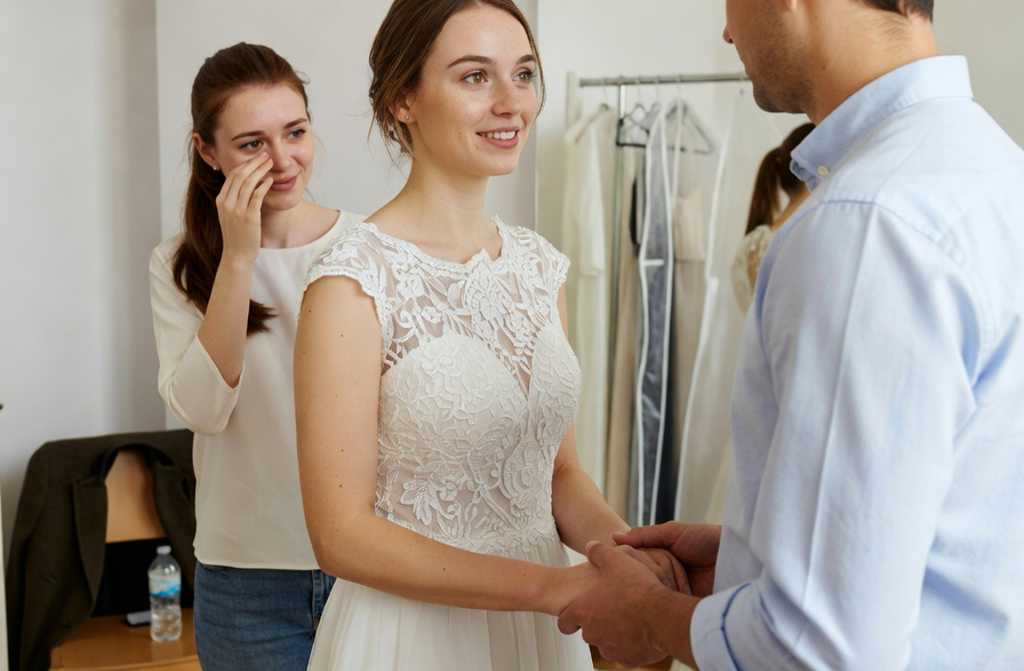
    A year later Emily stood in front of a large mirror in a bright fitting room, carefully examining her reflection in the wedding dress. The dress was exactly as she had dreamed: delicate lace inserts, a neat silhouette, and a light flowing skirt. It accentuated her figure without restricting movement, and the soft pastel shade perfectly harmonized with her skin tone.

    Sophie was bustling nearby. She had arrived early to help with the final preparations. Her friend carefully adjusted the veil, made sure all the pins were in place, and stepped back to assess the overall look again. A warm smile bloomed on her face.

    You look stunning, she whispered, and there was genuine sincerity in her voice. Simply incredible.

    Emily slowly turned to her friend. Quiet joy mixed with slight excitement shone in her eyes. She took a deep breath, trying to calm the fluttering in her chest, and replied:

    Thank you. For everything.

    These two words held much more than simple gratitude for the compliment. They carried appreciation for months of support, for patience, for those moments when Sophie found the right words to encourage her, and for always being there even when Emily doubted herself.

    At that moment Michael appeared in the doorway of the fitting room. He froze for a second on the threshold, as if afraid to disturb this quiet, light-filled scene. His gaze slid over Emily, lingered on her face, and a smile appeared on his lips, warm and sincere, the kind that always took Emily’s breath away.

    You are the most beautiful woman in the world, he said, stepping closer. There was no trace of pretense in his voice, only pure admiration and tenderness.

    Emily felt her heart fill with warmth. She extended her hand, and Michael immediately took her palm in his, strong and reliable. His touch calmed her and carried away the last bits of anxiety.

    Emily gently squeezed Michael’s fingers, feeling a calm, deep happiness spreading inside. She knew that she was loved, not for her appearance, not for the changes that had happened over the last year, but for who she really was. For her laughter, for her dreams, for her ability to be there, for her sincerity and kindness.

    Sophie quietly stepped aside, watching the couple with a slight smile. She did not interfere with their moment, only discreetly wiped away a tear, happy for her friend. Everything had turned out exactly as it was meant to.Sophie! I desperately need your help! Emily blurted into the phone the moment her friend picked up. Her voice shook so badly that she hardly recognized it herself. A dull pounding filled her ears, like someone banging a drum, almost drowning out her own words. It’s a matter of life and death! In two months I need to turn from a plain Jane into a real beauty! And not just any beauty, but one that nobody can stop staring at.

    There was a long silence on the other end. Emily closed her eyes and pictured Sophie raising an eyebrow, tilting her head, and staring at the phone in clear confusion. In her mind her friend even shook her head a little, as if trying to make sense of what she had just heard.

    That’s quite a bold claim! Sophie finally answered. Genuine surprise filled her voice. In that amount of time it’s possible in principle, but you’ll have to work hard. What happened over there?

    Emily nervously ran her hand through her long but dull hair with split ends that had needed a trim for ages. She smiled wryly at the irony of it all. For five years Sophie had kept bringing up the beauty salon and the gym, suggesting they sign up for yoga or morning runs together, but Emily had always brushed it off with a dozen excuses. And now she was the one calling her friend with a desperate request, the one asking for help, the one ready to do the very things she had rejected so often.

    Remember that guy I was chatting with on the dating site? Emily began, trying to speak calmly and evenly, but the anxiety still crept into her voice and made it slightly uneven. She took a small breath to steady herself and went on. We messaged for quite a while and everything was going well. Then he suggested meeting in person.

    Which one? Sophie chuckled, and Emily could picture her friend’s wry smile. Sophie always teased her about the endless attempts to find the perfect man online. She never hid her skepticism toward internet dating and often joked about whether Emily was planning to open her own prince-finding agency. Emily’s profile picture had been heavily edited with Photoshop, which Sophie knew perfectly well, and she occasionally dropped gentle hints that the truth would come out eventually. Emily had always waved it off: Oh come on, it’s not like we’ll ever actually meet.

    Ethan, the tall blond with blue eyes! Emily explained quickly. I remember you liked him too. You even said he had a nice smile and an intelligent look.

    Ah, that one, Sophie’s voice sounded odd, a bit muffled, as if she had turned the phone away. But Emily, caught up in her worry and her own racing thoughts, paid no attention. I remember. So what?

    He promised to come over for the Christmas break! Emily exclaimed, and the words poured out in a rush as if she had been holding them in and could no longer stop. In two months! Can you believe it? We talked so much, covered so many things. I don’t want to see disappointment in his eyes when he actually sees me. On the photo I look, well, a bit different. My figure isn’t the same, my hair isn’t as shiny, and everything else.

    Emily could almost feel the seconds stretching endlessly, and every moment without an answer only increased her anxiety. She wished Sophie would immediately say Don’t worry, everything will be fine! but her friend stayed silent, and that silence made her heart beat faster.

    Why did you agree to the meeting? Sophie finally asked with a skeptical tone. She never hid her negative view of online dating. Who knows what sort of person is hiding behind the photo?

    He was so insistent, Emily admitted quietly, looking down even though Sophie could not see her. Honestly, she felt embarrassed that she had agreed so easily without thinking about the consequences. We had been messaging for a long time, he was so attentive and asked so many questions. Then suddenly he wrote that he really wanted to meet face to face, that he liked me a lot, and he wanted to find out if something serious could happen between us. I thought about it for several days, weighing everything, but in the end I simply could not refuse.

    She fell silent, nervously biting her lip. Ethan had written that he had been looking for exactly that kind of conversation partner, that it was easy and interesting with her. And the longer they chatted, the more Emily caught herself thinking: what if they really were meant for each other?

    Well then, get ready, her friend sighed, and in that sigh Emily heard a mix of determination and slight worry. Sophie was always the one who took charge of a situation, even when it seemed nearly impossible. It won’t be easy! Two months is a short time, but we’ll try to pull it off. You’ll just have to take a couple of weeks off work. Your muscles will ache badly at first after the intense training.

    Training? Emily repeated, feeling a wave of mild panic rising inside. You mean the gym?

    The gym, healthy eating, and looking after yourself, Sophie listed calmly, as if she were reading off a shopping list. Without a full approach nothing will work. You don’t want him to see the same old Emily, just with a touch of makeup, do you?

    Emily stayed silent, taking it all in. The thought of the gym brought mixed feelings. On one hand she understood it was necessary; on the other she pictured endless hours on the treadmill and heavy weights, and it made her uneasy.

    What if I can’t manage it? she asked quietly, surprised at how helpless the words sounded.

    You will, Sophie replied firmly. I’ll help you. But you have to be ready to work. Really work! There’s no magic, Emily. Nothing happens with a snap of the fingers. You always have to put in the effort.

    Emily took a deep breath, clenched her fists, and told herself: Okay. I’ll try. At least so I don’t let him down.

    The first weeks were tough for Emily, so tough that sometimes she felt she would not last and would give up the very next day. Every morning started the same way: the alarm went off at seven, and the first thing Emily felt was a strong reluctance to get up. She lay there staring at the ceiling, persuading herself to rise at least five minutes earlier than the day before.

    At first the warm-up lasted only five minutes: simple bends, arm swings, light squats. Emily did the exercises in front of the mirror, hardly recognizing herself. Her face was still sleepy, her hair was messy, and her movements were sluggish. But Sophie kept strict watch over the schedule: Tomorrow, ten minutes. We’ll increase the load gradually.

    It was not easy. Her body ached after every session, her muscles burned, especially the next day. Sometimes when she climbed the stairs her legs shook and her arms refused to lift even a cup of tea. But Sophie would not let her slack off. She was always there, either on the phone or in person, and her voice was firm, without a trace of doubt.

    You can do more, she repeated, watching as Emily, dripping with sweat, tried to finish another exercise. Just do one more set. We still have a whole month left. We’ll get everything we need done.

    Emily gritted her teeth, took a deep breath, and forced herself to continue. Sometimes she wanted to quit everything and go back to her old routine: lie in bed longer, eat something tasty, forget about the endless exercises. But she remembered the messages from Ethan, his warm words, his promise to come for the Christmas break, and that kept her from breaking down.

    Her diet also had to be completely overhauled. Before, breakfast had been a warm pastry with coffee or a chocolate bar if she was short on time. Now the table held salads with olive oil, grilled chicken breast, buckwheat, and green smoothies that Emily could barely swallow at first. In the early days she kept reaching for the biscuit cupboard, her hand going automatically for the familiar packet, but each time she stopped herself. Ethan’s blue eyes, his smile in the photo, his words Really looking forward to our meeting flashed before her.

    It’s only for two months, she told herself, washing down another salad with still water. Just two months.

    Gradually the new habits began to stick. Emily learned to cook simple but healthy meals and found several smoothie recipes that did not turn her stomach. She noticed it became easier to get up in the mornings and that the usual tiredness did not hit by midday. Sometimes, looking in the mirror, she saw how her skin had tightened a little and how a light blush had appeared, not from nerves but from regular exercise.

    Sophie continued to oversee everything, but now there was more approval in her voice.

    See, it’s working. You’re not the same person you were a month ago. A bit more and you’ll be in great shape.

    Emily nodded, but the anxiety still lived inside her. Would these changes be enough? Would it be sufficient so Ethan would not be disappointed? She did not know the answer, but she kept moving forward, step by step, day by day.

    Alongside the training and the diet changes came careful work on her appearance. Sophie, acting as tireless supervisor, had planned ahead and booked Emily into a good beauty salon, not flashy but with experienced stylists who knew how to work with different looks.

    On the first visit Emily received a haircut, the shape chosen carefully to suit her facial features and hair texture. The stylist worked the scissors skillfully, stepping back now and then to check the result and gently adjusting the lines. The split ends vanished without a trace. The hairdresser added volume at the roots and lightly feathered the ends, so the hair immediately looked livelier. Then came a gentle color treatment: instead of a sharp contrast they used a soft gradient technique that made the color deeper and richer while keeping it natural.

    Next the manicurist tidied her nails, carefully treating the cuticles, evening the shape, and coating them with a soft beige polish. Emily could not help admiring the result. Her hands looked well-groomed but without any over-the-top flashiness.

    The makeup artist, recommended by Sophie’s acquaintances, began with a detailed look at Emily’s type. He studied her features, assessed her skin tone and eye color, then showed how to highlight her strengths with makeup. Everything was done delicately: light foundation, slightly defined brows, subtle mascara, and natural blush. The specialist patiently explained which products worked best and in what order to apply them, occasionally asking Emily to try the techniques herself.

    Look how beautiful you are! Sophie said admiringly, examining her friend after another transformation. Her voice held genuine pleasure, as if she was proud not only of the result but of having inspired Emily to make the changes.

    Emily slowly approached the large mirror in the salon and froze. She stared at her reflection for a long time, trying to accept that it was really her. In front of her stood a woman she barely recognized: the neat hairstyle gave her face more expression, the light makeup brought out her eyes and fresh skin, and the outfit Sophie had chosen, simple but stylish, flattered her figure. This was not the Emily who for years had preferred baggy sweatshirts and trainers, hidden behind loose shapes, and tried not to draw extra attention.

    Gradually the new looks became routine. Emily learned to choose clothes that fitted her figure without restricting movement and mastered basic skin care along with simple daily makeup. She noticed people smiled at her more often on the street and colleagues could not help glancing when she walked into the office.

    But the hardest part was not the physical change; it was the inner adjustment. Emily took a long time to get used to people looking at her differently. Before, she had deliberately avoided others’ gazes, lowered her eyes when talking, and slouched, trying to seem smaller. Now she had to learn to stand straight, look people in the eye, and respond to attention with a light, confident smile.

    At first it was difficult. In the early days after changing her image Emily caught herself trying to hide, pulling her sleeve down to cover the neat manicure, adjusting her hair as if to shield her face, or quickly stepping aside if someone looked at her too long. But Sophie patiently reminded her:

    You look great. Don’t hide. People are just noticing your beauty, and that’s normal.

    Over time Emily began to feel more confident. She noticed even her voice sounded different, a bit firmer, without the old timid uncertainty. Although pockets of doubt still remained inside, she tried to focus on what was working: the compliments from colleagues, the warm looks from passersby, how easy it now was to pick clothes and take care of herself.

    You have to believe in yourself, Sophie kept saying. You are beautiful and people see that. We still have enough time for you to get used to the new image.

    One morning, as Emily walked down the corridor toward her desk, Rachel from accounting called out to her. She smiled widely and spoke with genuine delight.

    Emily, you look fantastic! Something about you has changed. I can’t even say exactly what, but it looks incredible!

    Emily blushed slightly and hurried to answer.

    Oh, nothing special, just updated my wardrobe a bit.

    But Rachel did not let her finish.

    No, it’s not only the clothes! You seem somehow fresher. Your eyes are sparkling, your walk is different. It really suits you!

    That same day Ben from the sales department approached her. He was always good at mixing compliments with a light joke, so when he met Emily by the coffee machine he smiled and winked.

    What’s this wonder? You look like you’re glowing from the inside. Share the secret. Maybe the rest of us should change something too.

    Emily smiled shyly, feeling her cheeks warm. She was pleased to hear the kind words, although she still was not used to such attention. Before, colleagues barely noticed her presence, but now they often stopped to chat or just smile.

    She began to notice other changes as well. In the nearby cafe the waiters started greeting her by name, and strangers passing by threw interested glances and smiled. Emily caught these fleeting signs of attention and each time wondered silently whether this could really be happening to her.

    Especially active was Michael from the neighboring department. Before, they barely exchanged greetings, but now he constantly found reasons to talk to her. He would ask about a new project, inquire how she had spent the weekend, or suggest having lunch together.

    One day during a break he came to her desk with a cup of coffee and asked casually:

    You have great taste. Where do you get things like this? That jacket looks very stylish.

    Emily unconsciously ran her hand over the soft fabric, remembering how Sophie had helped her choose the outfit. She smiled and replied:

    Actually I haven’t worn it in a long time. I just decided to give it another chance.

    Michael nodded but did not hurry away.

    You know, you look completely different now. More confident, somehow. That’s great.

    Emily thanked him for the compliment, but thoughts of Ethan still circled in her head. She pictured how he would arrive, see her, and not be able to look away. In these fantasies he smiled, said something warm, and noted how much she had changed. The thought supported her in the hardest moments, for example when her body ached from fatigue after a tough workout or when she wanted to break the diet and eat something forbidden.

    Sometimes, lying in bed in the evening, Emily wondered what would happen if Ethan did not appreciate all her efforts. But she immediately pushed the doubts away. The main thing was that she had already felt her attitude toward herself changing. And even though there was still a lot of work ahead, she was no longer the girl who hid behind shapeless clothes and avoided glances. Now she was learning to accept attention, respond to smiles, and believe that all these changes were not just for someone else but for herself first and foremost.

    Sophie watched her friend with a slight smile, unconsciously noting every change in Emily. She saw how Emily began standing straight, how confidently she entered a room, how calmly she looked people in the eye. There was a lightness in Emily’s movements, firmness in her voice, and that sparkle in her eyes that had not been there before.

    Every time she met her friend, Sophie could not help comparing her to the image from a couple of months earlier. Back then Emily had been like someone hidden inside her own shell: she slouched, spoke quietly, and avoided attention. Now she seemed to have spread her wings, and this transformation delighted Sophie to the core.

    She happily noticed how Emily more often chose bright colors in her clothes, how skillfully she picked accessories, and how naturally she kept up conversations with colleagues. Especially touching was how her friend gradually learned to accept compliments. At first she brushed them off awkwardly, then smiled gratefully, and now she could easily reply with a joke or a warm word.

    Deep down Sophie had mixed feelings. On one hand she was filled with pride, because she had put in a lot of effort to push Emily toward change. She remembered all their conversations, all the coaxing, all the joint trips to shops and salons. Seeing the result of her work was incredibly satisfying.

    On the other hand a slight unease would not leave her. After all, the whole story with Ethan had been her idea from the start. Moreover, Ethan did not even exist; Sophie herself had been chatting with Emily all this time! Sophie simply could not stand watching her friend waste her life, so she had decided on this not entirely honest move. What if the fact that Ethan would not show up for the meeting destroyed all the progress and Emily retreated back into her shell?

    But no, that could not happen. Sophie would make sure of it.

    A week before the supposed meeting with Ethan, Emily stood in front of the mirror in her room and carefully examined her reflection. She studied each feature for a long time, trying to see what Sophie had been telling her without end. No, Emily still did not consider herself a beauty; in her mind the ideal was far more unattainable. But now, looking at herself, she saw a woman who was not ashamed to appear in public.

    She ran her hand over her shoulder, adjusted the collar of her blouse, and turned slightly to look at herself from the side. The thought ran through her head: Is this really me?

    At that moment Sophie entered the room. She stopped in the doorway, smiling as she watched her friend, and then said confidently:

    You’re ready. He’ll be thrilled. You had two whole months to get used to the new you, and you did it.

    Emily nodded, but she thought she heard a strange note in her friend’s voice, barely noticeable, as if Sophie wanted to add something but held back. Emily had already opened her mouth to ask what was wrong, but she did not have time. The phone in her pocket vibrated.

    She took out her smartphone, unlocked the screen, and saw a message from Ethan. She read it once, then again, as if hoping the meaning would change. But the text remained the same: Sorry, but I won’t be able to come. Circumstances have changed. We’ll meet up sometime later.

    Emily read it several times, trying to comprehend. How could this be? She had put in so much effort for this meeting and it was all for nothing?

    What happened? Sophie asked alertly, noticing the change in her friend’s face.

    He won’t come, Emily replied quietly, showing the phone screen. He says we’ll meet sometime later.

    Her friend froze for a second, as if trying to find the right words. Then she took a deep breath and sat down next to her, gently placing a hand on Emily’s shoulder. Something unreadable flashed in her eyes, regret or perhaps relief, but she quickly composed herself.

    You know, Sophie said softly, almost in a whisper, maybe it’s for the best.

    For the best? Emily looked up at her in surprise, a mix of bewilderment and confusion in her gaze. Why do you say that?

    Because in these two months you’ve become completely different, Sophie smiled, and there was genuine pride in her voice. You’ve gained confidence, learned to take care of yourself, brought out your beauty. You no longer hide, no longer doubt every step, and no longer fear looking people in the eye. You’ve learned to value yourself.

    She paused briefly to give Emily time to absorb the words, then continued.

    And you know what? Now you know for sure: you deserve the very best. Not some Ethan from the internet, but real happiness. The kind that doesn’t disappear one day because of circumstances. You deserve someone who will truly value you, not vanish without explanation.

    Emily listened silently, processing what she had heard. A new picture was gradually forming in her head: yes, Ethan would not come; yes, their communication had ended as suddenly as it had begun. But in these two months something bigger had happened. She herself had changed. Changed a lot!

    Sophie gently squeezed her shoulder and added:

    Let’s not go anywhere today. Let’s order pizza, put on your favorite series, and just relax. Tomorrow we’ll start a new chapter. You’ll be fine, I know.

    Emily nodded slowly.

    You know, she said, turning to her friend, and there was an unusual firmness in her voice, I think I’ll go to the theatre with Michael. He’s been asking me for a while.

    Sophie laughed lightly and joyfully, as if she had heard exactly what she was waiting for. She stepped forward and hugged Emily tightly, pulling her close.

    That’s my girl! she exclaimed, pulling back and looking at her friend with pride. I knew you could do it. And you know what? I’m sure this is just the beginning.

    Emily nodded, feeling a light anticipation growing inside. She did not know what tomorrow would bring, but for the first time in a long while she was ready to find out.

    In the evening Emily stood in front of the theatre in a new dress bought especially for the occasion. She adjusted a strand of hair, mechanically checked that her makeup was in order, and felt excitement growing inside.

    At that moment Michael approached her. In his hands he held a beautiful bouquet of red roses.

    You look amazing.

    She smiled back, and this time the smile came naturally, without any tension. Emily suddenly realized that for the first time in a long while she felt truly beautiful, not because someone had said so, not because of someone else’s gaze, but because she had decided so herself. She saw her reflection in the glass doors of the theatre, noticed how the light fell softly on her dress, how neatly her hair was styled, and understood: this was her choice, her style, her confidence.

    The performance was wonderful, dynamic, with subtle humor and unexpected plot twists. Emily and Michael sat next to each other, occasionally exchanging short remarks, laughing at the same moments, and afterward discussed the production, sharing their impressions. They talked about how the actors performed, which scenes made the biggest impression, and even argued a bit about the interpretation of the ending. The conversation flowed easily, without awkwardness, and Emily felt that she enjoyed listening to Michael, enjoyed responding to him, and enjoyed simply being near him.

    When the play ended, Michael suggested continuing the walk. He looked at her with a slight smile and asked:

    Want to take a stroll? It’s such a nice evening.

    Emily agreed without hesitation. They went outside, where the lights had already come on and the air was filled with coolness and the quiet noise of the city at night. They walked leisurely, not rushing anywhere, just enjoying the moment.

    As they moved deeper into the cozy streets, Emily felt a new sensation being born inside, a sense of freedom. She was no longer the girl who hid from the world behind baggy clothes and a lowered gaze. Now she could walk down the street without fearing others’ looks, could smile at strangers, and could allow herself to enjoy the moment without looking back at the past. She was herself, real, alive, confident.

    They stopped at a small square where a few visitors still sat on benches and the air smelled of freshness and distant notes of autumn leaves. Emily turned to Michael and, to her own surprise, said:

    Thank you.

    For what? he asked in surprise, slightly raising his eyebrows.

    For a wonderful evening and great company, she simply replied, smiling softly. I haven’t enjoyed myself like this in a long time.

    Sophie watched this scene from a distance. She stood in the shadow of the trees, a bit away, and did not rush to approach. She just wanted to see how Emily felt at that moment, to make sure everything was going well. When she noticed how her friend smiled at Michael, how relaxed she looked, and how her face lit up, Sophie quietly smiled and slipped away unnoticed.

    On the way home she stopped at a small coffee shop. Settling by the window, she ordered a cappuccino and took out her phone. The gallery held several photos of Emily, before and after. The first ones showed that same old Emily: dull hair, shapeless clothes, lowered gaze, as if trying to become invisible. The second ones showed someone confident and radiant, with a slight smile and direct gaze, proud posture, and sparkle in her eyes.

    Sophie scrolled through the photos, pausing on the last one where Emily stood in front of the theatre in the new dress and Michael stood beside her with the bouquet. She looked at this photo for a long time, and one simple thought kept running through her head: She really has blossomed.

    And at that moment Sophie realized she did not need to explain anything. She did not need to confess that Ethan was her invention. Because the result was more important than the original plan. Emily was different now. She had learned to value herself, to believe in her strength, and to enjoy the little things. And that was the most important thing.

    Three months passed. During this time Emily’s life had changed noticeably, and these changes had become part of her daily routine rather than a temporary experiment. She and Michael were now seriously dating, not just going on occasional outings but building a relationship, getting to know each other, sharing habits and small joys.

    They often went to the cinema, choosing either art films or light comedies depending on their mood. After the show they usually walked around the city, leisurely discussing the plot, the acting, or simply sharing impressions of what they had seen. Sometimes they stopped in cozy cafes where they drank tea with desserts and talked about everything: childhood, work, dreams, and plans.

    On weekends they often cooked together. Emily loved experimenting with recipes, and Michael was happy to help. The kitchen was always noisy and fun. They laughed at small mishaps like burnt toast or an oversalted sauce, sang along to music from the radio, and enjoyed the process. The finished dishes were eaten at a small table by the window while they discussed the day that had passed and made plans for the future.

    Michael turned out to be exactly the person Emily had been missing for a long time. He was attentive, noticed the slightest changes in her mood, and knew how to support her with a kind word or simply be there silently when needed. He was kind, never sarcastic, never tried to hurt her, and even in jokes he kept things delicate. He was simply there, and that was enough for Emily to feel comfortable and safe.

    A year later Emily stood in front of a large mirror in a bright fitting room, carefully examining her reflection in the wedding dress. The dress was exactly as she had dreamed: delicate lace inserts, a neat silhouette, and a light flowing skirt. It accentuated her figure without restricting movement, and the soft pastel shade perfectly harmonized with her skin tone.

    Sophie was bustling nearby. She had arrived early to help with the final preparations. Her friend carefully adjusted the veil, made sure all the pins were in place, and stepped back to assess the overall look again. A warm smile bloomed on her face.

    You look stunning, she whispered, and there was genuine sincerity in her voice. Simply incredible.

    Emily slowly turned to her friend. Quiet joy mixed with slight excitement shone in her eyes. She took a deep breath, trying to calm the fluttering in her chest, and replied:

    Thank you. For everything.

    These two words held much more than simple gratitude for the compliment. They carried appreciation for months of support, for patience, for those moments when Sophie found the right words to encourage her, and for always being there even when Emily doubted herself.

    At that moment Michael appeared in the doorway of the fitting room. He froze for a second on the threshold, as if afraid to disturb this quiet, light-filled scene. His gaze slid over Emily, lingered on her face, and a smile appeared on his lips, warm and sincere, the kind that always took Emily’s breath away.

    You are the most beautiful woman in the world, he said, stepping closer. There was no trace of pretense in his voice, only pure admiration and tenderness.

    Emily felt her heart fill with warmth. She extended her hand, and Michael immediately took her palm in his, strong and reliable. His touch calmed her and carried away the last bits of anxiety.

    Emily gently squeezed Michael’s fingers, feeling a calm, deep happiness spreading inside. She knew that she was loved, not for her appearance, not for the changes that had happened over the last year, but for who she really was. For her laughter, for her dreams, for her ability to be there, for her sincerity and kindness.

    Sophie quietly stepped aside, watching the couple with a slight smile. She did not interfere with their moment, only discreetly wiped away a tear, happy for her friend. Everything had turned out exactly as it was meant to.
  • Happiness on the DoorstepHappiness on the Doorstep

    Happiness on the DoorstepHappiness on the Doorstep

    Emily stands at the cooker, leisurely stirring the soup in the saucepan. She has only just got back from her shift. The thirteen-hour day proved especially draining endless emergencies, tense moments by patients’ bedsides, a constant rush against the clock. Her legs throb with tiredness, her back aches, and scraps of talks with patients and colleagues keep spinning in her mind. Right now she longs for just one thing to eat supper quickly and tumble into bed, to forget about everything for a few hours.

    At that exact moment the doorbell rings sharply. The sound cuts through the cosy quiet, making Emily flinch and pause for a second with the spatula still in her hand. She lets out a heavy sigh, running through possible visitors in her head. At this time of night only one person would disturb her Mrs. Margaret Thompson, the neighbour from the flat below.

    Emily sets the spatula down slowly, wipes her hands on her apron and walks to the door. When she opens it she sees the elderly woman on the step, one hand pressed to her chest. Pale, with worry in her eyes… Everything about the old lady shows how poorly she feels.

    Emily forces the warmest smile she can manage, though irritation simmers inside. Why did she, several months ago at the residents’ meeting, admit she works as a doctor? She could have said manager, accountant or librarian. Then nobody would turn up at her door with health worries. But she told the truth, and now it returns in the shape of these late-night calls.

    “Hello, Mrs. Thompson,” Emily says, keeping her voice steady and calm. “Heart troubles again?”

    “Oh Emily dear, I’m sorry to bother you,” the old lady tilts her head slightly and continues with completely honest eyes: “but I feel dreadful! And the ambulance will soon stop coming out for me.”

    Emily closes her eyes for a moment, swallowing a sigh. She knows full well this is untrue the ambulance service must attend every call, no matter how frequent. But arguing serves no purpose now.

    “They won’t refuse, they have no right,” she murmurs, stepping aside and waving the neighbour in. “Come through, make yourself at home. Of course at home I can’t do very much…” she trails off without finishing, yet both women know what the words imply no equipment, no medicines, no chance of a proper check-up here.

    “At least take my blood pressure,” Mrs. Thompson pleads softly, pressing her palm lightly to her chest. Her voice carries such genuine need that Emily swallows again to hold back another sigh. “My old machine might be giving wrong readings.”

    “You should have bought a new one ages ago,” Emily remarks calmly yet with a hint of reproach. She takes the blood pressure monitor from the cupboard carefully, trying not to let her annoyance show. “Tell your grandson, he’ll bring you the latest model tomorrow.”

    “Oliver already got me one,” the old lady waves a hand, and a warm glow of pride lights her eyes at once. “My grandson is pure gold! He rings every single day, asks how I’m getting on. Brings fresh food, the tastiest things. He picks it all himself, won’t trust anyone else.”

    “And what happened to the blood pressure monitor?” Emily cuts in, not entirely politely. Mrs. Thompson could go on about Oliver forever, but Emily needs to sort the present problem. “The one your grandson brought?”

    “It broke,” the old lady shrugs, dropping her gaze a little. “I dropped it and felt too awkward to say. He’ll think I’ve gone completely to pieces in my old age. I don’t want to worry him over nothing.”

    Emily slips the cuff onto the neighbour’s arm in silence and presses the button on the machine. She needs to finish fast before the supper on the cooker cools any more. The reading will be near perfect anyway. As always, really. Everyone should have health like Mrs. Thompson’s.

    “So I can be dragged away from my evening every time?” the thought crosses Emily’s mind. But she only smiles politely, watching the numbers appear on the screen.

    “One hundred twenty over eighty! You could run a marathon right now,” she says with gentle irony, trying to lighten the mood.

    “Don’t be silly,” the old lady chuckles, a shy smile spreading across her face. “So everything is all right?”

    “Go to the surgery,” Emily advises wearily, removing the cuff and putting the monitor away. “Have a full check-up, for your own peace of mind.”

    “And for mine as well,” she adds silently, doing her best not to reveal how exhausted she feels.

    “I’ll ask Oliver,” Mrs. Thompson nods as if reaching a firm decision. “He’s such a good lad! Some girl will be lucky to have him,” and she gives Emily a crafty look, as though hinting at something.

    Emily smiles awkwardly, keeping her expression friendly. She understands exactly where the old lady is heading, yet she has no wish to meet the “golden” grandson. In her mind she already pictures how it would go: polite chats about nothing, forced smiles, hunting for shared topics… No, she wants none of that. Emily simply wants to live her own life quietly work, rest, spend time however she pleases, without extra ties or clumsy introductions…

    Meanwhile Oliver drives his grandmother to the surgery. The car glides smoothly along the streets, headlights picking out road signs and occasional trees lining the pavements. Oliver grips the wheel tightly, watching the road carefully.

    “Emily is such a lovely girl,” Mrs. Thompson tells her grandson enthusiastically, gazing out of the window but clearly thinking of something far away. “She always helps, always gives advice. I feel so bad disturbing her, truly I do! Anyone else in her place would have sent me packing long ago!”

    Oliver nods without taking his eyes from the road. He has heard about this Emily more than once, yet he has not paid much attention to his grandmother’s stories so far.

    “That would be rude,” he replies calmly. “You have to respect older people. And anyway, move in with me. I worry about you! What if you feel poorly and there’s no one nearby?”

    “What joy for a young man to live with his grandmother!” the old lady refuses firmly, waving a hand energetically. “You need to sort out your own life instead of looking after an old ruin like me. And don’t argue!” she cuts him off, raising a finger as if ending the discussion. “I want to live until your wedding and rock great-grandchildren on my knee. You’ll see, they’ll still be in my arms!”

    Oliver smiles despite himself, though worry lingers in his eyes. He glances at his grandmother she looks tired yet still spirited.

    “Gran, don’t talk about yourself like that, you’re still full of life!” he says with warm concern. “You’ll see, the doctors will say you’re fine. You just need to watch your health and get checked regularly everything will be all right.”

    “They’ll say what suits them,” the old lady sighs heavily, shoulders drooping. “Doctors don’t care much about old folk. They just want to finish one appointment and move to the next. But Emily… she’s different. She always listens, explains everything, never hurries.”

    Oliver rolls his eyes slightly. His grandmother is at it again! Who is this Emily exactly? He cannot understand why she praises the neighbour so insistently. Perhaps a lonely elderly woman has simply found a kindred spirit next door? Or is there truly something special about Emily? Oliver does not know, and he is not especially keen to find out his own life is busy enough without extra acquaintances adding more bother…

    The following day Emily starts another shift. The morning begins as usual a quick ward round, discussing patients with colleagues, making plans for the day. But by lunchtime the stream of people grows so heavy there is no time even to sit down. Patients arrive one after another, each needing attention, careful examination and quick decisions.

    Emily moves along the hospital corridors as if in a fog, going through familiar actions automatically. She manages everything asking questions, filling in notes, ordering treatment, calming anxious relatives. Yet by the end of the shift she feels completely drained. Her legs throb from constant walking, her back aches from the strain, and a veil of tiredness clouds her eyes. Even the usual hospital smells antiseptics and medicines seem unbearably sharp.

    Leaving the hospital, Emily pauses for a moment, breathing in the cool evening air. The sun is already sinking, painting the sky in soft orange hues. She hails a taxi, repeating the same thought get home, eat and sleep. No visitors, no surprises just quiet and rest.

    But dreams of a peaceful evening shatter against another demanding ring at the door. Emily groans with disappointment. If this is Mrs. Thompson again with some “urgent” health question, she will have to leave empty-handed today Emily has no strength left for neighbourly concerns.

    She opens the door and stops short. A man stands on the threshold tall, with neatly trimmed dark hair and attentive brown eyes. Completely unfamiliar. At least not a patient Emily realises that straight away. His look holds no pain or worry, only mild confusion and embarrassment.

    “Did you want something?” the girl breaks the lengthening pause. She can barely stay on her feet and has no time for formalities. “If not, go back where you came from. Sorry, but I’m very tired today and I’m not giving any consultations.”

    “Sorry, I was lost in thought,” the visitor coughs awkwardly, adjusting his shirt collar slightly. “Are you Emily?”

    “Emily,” the girl nods, leaning against the wall for support. Tiredness makes itself known, and even standing straight grows difficult. “How can I help?”

    “My name is Oliver, I’m your neighbour’s grandson from downstairs…”

    “Ah, the ‘golden’ boy Oliver,” Emily says with a teasing drawl, raising an eyebrow a little. Memories of Mrs. Thompson’s endless tales about her wonderful grandson surface at once. “How did I not guess straight away? I’ve heard so much about you.”

    “And I’ve heard just as much about you!” the man blurts out, unexpectedly blushing. His embarrassment looks so genuine that Emily smiles without meaning to. “Every time I see Gran she only talks about what a good girl Emily is, always helping.”

    “Come in,” the girl laughs, moving aside and gesturing for the guest to enter. Tiredness suddenly fades into the background, replaced by curiosity. “I can see we have things to talk about.”

    Oliver steps into the flat, glancing around awkwardly. He does not quite understand why he came. He had not planned to, yet he still went up a floor and pressed the bell. Some sort of magic…

    “Have a seat. I’ll sort something quick to eat, I’ve only just got in from work.”

    She moves to the fridge, automatically checking the shelves. Tiredness still makes itself felt, but the guest’s presence unexpectedly gives her energy.

    “Can I help?” Oliver offers, following her. He feels awkward and wants to repay the hospitality somehow.

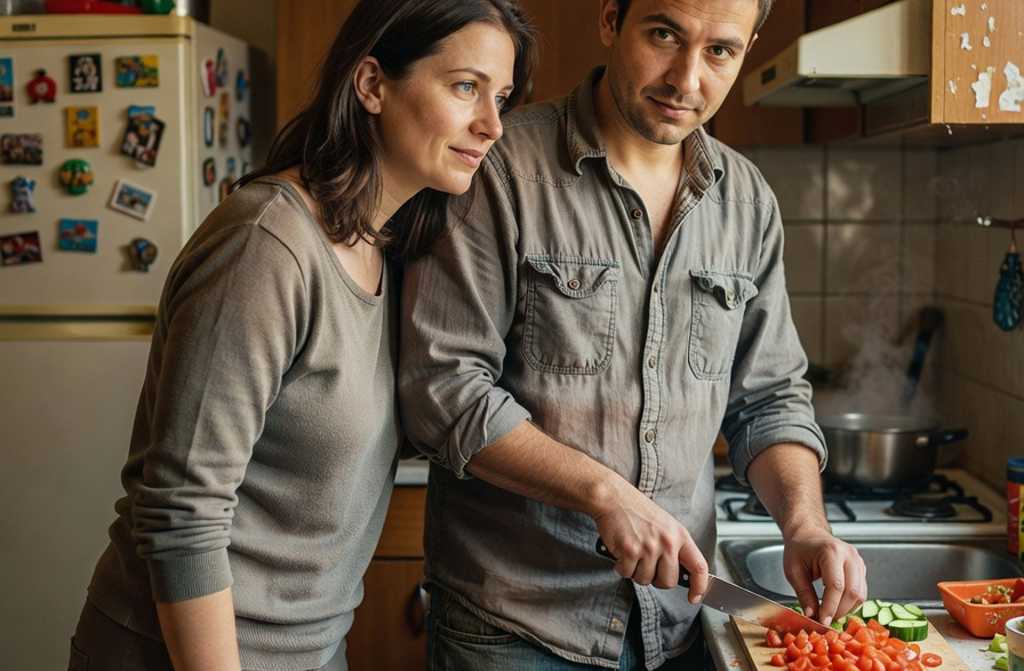
    “If you like, you can chop vegetables for the salad,” Emily nods, taking a chopping board and knife from the cupboard. “Cucumbers and tomatoes are here.”

    Oliver sets to work willingly. He washes the vegetables carefully, cuts them into even pieces, trying not to look too clumsy. Emily watches him from the corner of her eye and notes to herself that he manages well movements confident, without unnecessary fuss.

    While they prepare the food they chat easily. Oliver talks about his job at a construction company, how he oversees the building of housing developments, checks deadlines and material quality. He does not boast, simply shares what interests him. Then he moves on to travel stories: how he hiked in the Lake District, how he visited Windermere, how he dreams of going to Europe one day. He does not forget to mention his grandmother how he regularly brings her food, rings every day to make sure she is all right, tries to visit at least three or four times a week.

    Emily listens with interest, occasionally adding short comments or asking questions. In return she shares amusing cases from her medical work not the serious diagnoses or difficult operations, but smaller, almost everyday tales. For instance, how one patient insisted he had an allergy to water, or how another tried to convince her he could cure illnesses with the power of thought. She also talks about her own interests how she enjoys reading detective stories, sometimes paints in watercolours and dreams of learning to play the guitar.

    “You know,” she admits, dishing the salad into a bowl and setting it on the table, “I used to get cross with Mrs. Thompson for always disturbing me. She’d come round, ring the bell, ask for her blood pressure checked even though everything was fine. But then I realised she just lacks attention. She’s lonely, and I’m nearby so she turns to me.”

    “She’s my only relative,” Oliver smiles warmly, sitting at the table. “After my parents died she became everything to me. She brought me up and supported me in everything. I simply can’t leave her without care.”

    They eat supper, continuing their easy conversation. Emily notices that with this unfamiliar man (stories from the neighbour do not count!) she feels surprisingly comfortable and at ease. He does not try to seem better than he is, does not boast about achievements, simply is himself calm, attentive, with a light sense of humour. Oliver, for his part, senses that Emily is not playing the role of welcoming hostess but is genuinely interested in the chat.

    When supper ends, Oliver stands up from the table and begins to thank her:

    “Thanks for the meal and the talk. It was really nice.”

    He heads for the door, but Emily surprises herself by saying:

    “Come round again. Not just because of Gran.”

    The words come out without thinking, yet she realises at once that she means them. She wants to see this person again, talk to him, get to know him better.

    “With pleasure,” he smiles, pausing at the threshold. “Maybe we could go somewhere at the weekend? The theatre, for example? I’ve been wanting to see the new production at the local theatre.”

    “I love the theatre,” Emily nods, feeling a pleasant warmth spread inside. “Let’s do it.”

    Oliver thanks her once more, promises to ring and leaves. Emily closes the door, leans her back against it and stands still for a second. Thoughts whirl about how unexpectedly and simply everything has turned out. She had made no plans, expected no miracles yet here it is, this small miracle, happening by itself…

    Since then Oliver has visited Emily several times more. Each of his arrivals becomes a small celebration: he always appears with a bunch of lilies the flowers Emily loves most. She always greets him with a warm smile, then spends a long time finding the right vase to put the flowers in a prominent place.

    The pair quickly find common ground and begin spending a lot of time together. They visit exhibitions, lingering over paintings and discussing every detail. They go to plays, afterwards spending an hour sharing impressions, arguing about characters’ motives and the director’s choices. But most often they simply walk through the city unhurried, without a fixed plan.

    They can wander for hours in parks, watching how the light changes with the time of day. In summer they seek shady paths, in autumn they gather fallen leaves, in winter they admire snow-covered trees. During walks conversations flow freely they discuss books, films, share childhood memories, talk about their dreams and plans. Sometimes they simply stay silent, enjoying each other’s company, or laugh over some trivial thing for example, a funny dog running past or a ridiculous shop sign.

    One day they go into a small café with cosy tables by the window. After ordering coffee and cakes they sit watching passers-by. Oliver stirs his coffee thoughtfully with a spoon, then lifts his eyes to Emily and says:

    “You know, I never believed in love at first sight. I always thought it was just a pretty invention from novels. But now I understand this is exactly what happened to me. When I first came to see you, not even knowing what sort of person you are, I already felt something special.”

    Emily blushes slightly, lowering her gaze to her cup. She finds the words pleasant, though she feels a little embarrassed. Then she lifts her eyes and replies:

    “I never believed in all that either. I thought feelings grew gradually, over years of knowing someone. But with you it’s different! From the very start it felt as though we’d known each other for ages, as though we could talk about anything…”

    Mrs. Thompson, watching their relationship develop, rubs her hands with delight. She often rings her grandson, unable to contain her excitement:

    “Oliver, if only you knew how lovely you two are together! Emily is so caring, so attentive. Yesterday she popped in, brought medicines I’d forgotten to buy, and even baked a pie. I’m so happy for you both! Marry her soon!”

    “Gran, we haven’t even talked about marriage yet,” Oliver laughs, listening to her enthusiastic words. “Let’s not get ahead of ourselves.”

    “Well what of it? Everything’s still ahead!” the old lady answers confidently, showing no sign of slowing down. “You two are so well matched. All that’s left is to wait for great-grandchildren. And plenty of them! I already dream of looking after them.”

    Oliver only shakes his head, yet deep down he understands that his grandmother may not be far from the truth. With Emily he feels easy and calm, and he thinks more and more about what their future might hold.

    One autumn evening Oliver comes to see Emily. He seems a little nervous noticeable from how he keeps adjusting his shirt collar but he tries to act naturally.

    “Shall we go somewhere for the weekend?” he finally says, looking her in the eyes. “I want to show you a special place.”

    Emily raises her eyebrows slightly in surprise, yet smiles at once. After several months of knowing each other she has grown used to his unexpected suggestions Oliver loves arranging small surprises.

    “Of course,” she agrees without hesitation. “Where are we going?”

    “It’s a secret,” he smiles mysteriously, playful sparks dancing in his eyes. “Trust me.”

    On Saturday morning they set off on a short trip. Emily glances curiously out of the car window, trying to guess where they are headed. Oliver only smiles and stays quiet, enjoying her impatience. The journey takes about two hours. Gradually the city views give way to woods and fields, and the air grows fresher and cleaner.

    At last Oliver turns onto a narrow country lane, and a few minutes later they stop at a picturesque spot on the shore of a lake. Nearby stands a cosy wooden cottage, surrounded by tall oaks and maples.

    “This is my parents’ cottage,” Oliver explains, turning off the engine. “I haven’t been here for a long time. After they moved to another part of the country it stood empty. I thought you might like it.”

    Emily gets out of the car and stands still, charmed by the scene. The air is filled with the scent of pine and wild flowers. She takes a deep breath, feeling the tension of recent weeks slip away.

    They spend a wonderful weekend. In the morning they walk through the woods, gathering mushrooms and berries. In the afternoon they grill food on the open veranda, laughing at how Oliver struggles at first to light the barbecue. In the evening they sit by the fire, drink hot tea and listen to the crackle of logs.

    One evening rain begins outside. Large drops patter against the glass, creating a cosy, almost meditative rhythm. Warm light glows in the room, and pleasant heat spreads from the fire. Emily sits in a soft armchair wrapped in a blanket, while Oliver settles beside her on the sofa.

    He suddenly stands, walks over to her and gently takes her hand. Emily looks up at him, noticing that he seems slightly anxious.

    “I’ve thought a lot about the future,” Oliver begins, looking straight into her eyes. His voice sounds quiet yet firm. “And I’ve realised I don’t want to picture it without you.”

    He falls silent, as though gathering his courage. Emily feels her heart beat faster. The room is quiet, only the rain keeps its unhurried rhythm outside, providing the perfect backdrop for this moment.

    “I know this might seem too quick,” Oliver finally says, squeezing her hand lightly. “But I’ve never been so sure of anything as I am that I want to be with you. Emily, will you be my wife?”

    “Where’s the ring?” the girl asks quietly, smiling a little to hide her nervousness.

    Oliver laughs, clearly sensing the ice has broken.

    “The ring will come, I promise. But it was important to hear your answer first.”

    Emily takes a deep breath. Memories race through her mind: how he met her from work with flowers, how he supported her on difficult days, how he could make her laugh even in the bleakest situations. She realises she has never once doubted him during all this time, never felt anxiety or uncertainty.

    “Yes,” she says at last, her voice carrying a firmness she had not expected from herself. “I will be your wife.”

    Oliver hugs her, and Emily feels all doubts and fears finally leave her. Rain continues outside, but in this cottage, in this moment, there is only warmth, happiness and certainty about tomorrow…

    The next morning they return to the city. The rain that fell the previous evening has stopped, and the sky has cleared. Freshness fills the air, and sunbeams break through scattered clouds, promising a warm day.

    Emily rings work, letting them know she will be late for the day. She rarely allows herself such breaks from routine work has always been serious for her, almost sacred. But today is a special case, and she decides she deserves a little rest after the busy weekend.

    Oliver drives her home but does not hurry to leave. He stands in the hallway, fingering the edge of his jacket, as if seeking a reason to stay a little longer.

    “Maybe we could go somewhere this evening?” he suggests, looking at Emily with a warm smile. “Celebrate our decision. I’d like to mark the day in a special way.”

    “With pleasure,” Emily agrees, feeling pleasant excitement spread inside. “But first let me rest a bit. Yesterday’s day completely wore me out. So many impressions…”

    “Of course,” Oliver nods, understanding her state. “I’ll pick you up at seven. Will that give you enough time to recover?”

    “Absolutely,” she smiles. “See you at seven.”

    When he leaves, Emily closes the door and sinks slowly onto the sofa. She hugs a cushion to her chest and closes her eyes, trying to take in what is happening. Thoughts whirl: “Is this real? Is this happening to me?” She still feels a light tingle in her fingers from his touch, remembers the warmth of his hands when he held hers by the fire.

    Gradually her gaze falls on her hands. She lifts her right one, studying the ring finger carefully, as though expecting to see a ring there though it is not yet there. Emily recalls how only a few months ago she grew irritated by Mrs. Thompson’s constant visits, muttering to herself that the neighbour took advantage of her kindness. And now, thanks to her, she has met someone who has changed her life. The thought brings a small smile to her face.

    Time until evening passes slowly. Emily showers, makes a light lunch, lies down with a book for a while, yet cannot focus on reading. Her thoughts keep returning to Oliver, to his proposal, to their shared future.

    At seven in the evening Oliver appears at the door with his usual bunch of lilies and a small box in his hand. He looks a little nervous yet happy.

    “Here,” he holds out the box to her, slightly embarrassed. “Now with the ring. As I promised.”

    Emily takes the box, opens it carefully. Inside lies an elegant gold ring with a pretty diamond. The stone glimmers softly in the lamp light, as though winking at her. She silently takes the ring, slips it onto her finger, looks at Oliver and smiles.

    “Perfect,” she says, turning her hand to see the jewellery better. “It feels as though it was made for me.”

    Oliver breathes out in relief, as though until this moment he still doubted his choice.

    They head to a restaurant Oliver has booked in advance. The room is cosy, with soft lighting and live music in the background. They sit at a table by the window overlooking the evening city.

    The evening passes in conversation and laughter. They recall the funniest moments from their shared walks, discuss future plans, share dreams. Emily describes how she imagined her wedding as a child, while Oliver shares thoughts about what he would like their home to be like.

    Waiters cast warm glances their way, and random customers smile without meaning to at the sight of the couple’s shining eyes. There is no pretence or show in their talk only sincerity, ease and joy that they are together…

    The next day Emily decides to visit Mrs. Thompson. She wants to share her happiness with the woman who unwittingly became the link between her and Oliver.

    The old lady greets her with her usual smile, immediately bustling about and offering tea and home-made pies.

    “Emily dear, how are you?” she asks, looking at her guest attentively. “Tired from work again? You look a bit… odd.”

    “Not because of work this time,” Emily laughs, feeling warmth fill her heart. “I have good news. Oliver and I have decided to get married.”

    Mrs. Thompson gasps, instinctively clutching her chest, but this time not from pain but from overwhelming joy. Her eyes fill at once with warm, happy tears, and such a wide smile blooms on her face that kind wrinkles spread around her eyes.

    “At last!” she exclaims, throwing up her hands. “I’m so happy for you both! So happy! You can’t imagine how thrilled I am to hear this!”

    Emily, watching the old lady’s genuine reaction, smiles without meaning to. She steps closer and gently takes Mrs. Thompson’s hand.

    “You helped make this happen, in a way,” she winks with a touch of irony in her voice. “Without your constant stories about Oliver I probably wouldn’t have paid him any attention.”

    “Oh, don’t be silly,” the old lady waves her hands, slightly embarrassed by the praise. “I just pointed you in the right direction for happiness. The rest is your doing. You found each other, you realised you need each other. That’s what matters most.”

    “Thank you,” Emily says sincerely, looking at the elderly woman with warmth. “Without you none of this would have happened. You became the bridge that connected us.”

    Mrs. Thompson nods, touched, then suddenly perks up and with her usual energy begins giving advice:

    “Now the main thing don’t delay the wedding! Arrange everything nicely, properly. And don’t delay the great-grandchildren either. I still want to look after them! Imagine how beautiful they’ll be.”

    Emily laughs, her laughter sounding light and carefree, as it has not for a long time.

    “We’ll see how things go,” she replies, shaking her head slightly. “Everything should happen in its own time. But I promise you’ll be the first to know about all events.”

    “That’s right!” the old lady says happily. “I’m always ready to help. With advice or with action. Just call!”

    Back home, Emily does not set about chores straight away. She goes into the room, sits by the window with her legs tucked under her and gazes thoughtfully at the street. Outside people pass slowly, cars drive by, and trees rustle their leaves gently in a light breeze.

    Thoughts of the future turn in her head. She pictures wedding preparations how she will choose a dress, how she and Oliver will make the guest list together, how they will say the most important words to each other. Then thoughts flow smoothly to their life together how they will furnish the flat, spend evenings together, travel at weekends.

    She mentally draws a picture of their future home cosy, filled with laughter, smells of fresh baking and sounds of favourite tunes. She imagines how they will welcome guests, hold small family celebrations, solve everyday tasks together.

    And for the first time in a long while Emily feels not just tiredness or irritation, not a fleeting joy from a successfully completed task, but real, deep happiness. It spreads inside her like a soft, warm light, filling every part of her body with calm and confidence. It is a steady, solid feeling that everything is going right, that she is in her place, beside the person she wants to be with.

    Oliver rings in the evening, when Emily has already returned home and rested a little after her busy day. Darkness fell outside long ago, lights twinkle in neighbours’ windows, and Emily’s flat feels cosy and quiet. The phone rings just as she pours herself a cup of tea.

    “How was your day?” Oliver asks, genuine interest in his voice.

    “Excellent,” Emily replies, sitting on a kitchen chair and wrapping her hands around the warm cup. “I went to see Mrs. Thompson. She’s thrilled. Started planning our wedding straight away and dreaming about great-grandchildren.”

    Oliver laughs his laugh sounds light and joyful:

    “That’s good. So now we have her blessing. Though honestly, I never doubted she’d be pleased. Gran has always been on our side.”

    “And not only hers,” Emily adds, smiling without meaning to. “We have us. And that’s what matters most.”

    The conversation flows naturally. They talk about everything how best to organise the wedding, where to hold the celebration, whom to invite. They discuss where they will go for their honeymoon, which places they want to visit together. Emily describes which details seem important to her for example, having fresh flowers on the tables and Oliver shares his ideas: he wants live music at the party, even if just a small group.

    They recall funny moments from their meetings, share dreams about their future home, discuss how they will spend weekends, which traditions they will start. Sometimes they fall silent for a few seconds, simply enjoying the quiet and the sense of closeness, even at a distance.

    And every time Emily hears his voice, she understands this is exactly what she has always wanted, even if she did not realise it before. In his tone, in the way he listens attentively, asks questions, laughs genuinely at her jokes, there is something incredibly familiar and comforting. She feels that beside him she can be herself, without pretending or adjusting.

    Time flies unnoticed. They talk so long that Emily does not even notice she has finished her tea and moved to the sofa, wrapped in a soft blanket. Oliver’s voice soothes her, gives a sense of safety, and her thoughts grow calmer, filled with anticipation of the future.

    When the conversation ends, Emily sits for several more minutes, gazing out of the window and smiling at her thoughts. Images turn in her head: their wedding, evenings together by the fire, trips, long talks until dawn. All of it seems so real, so close.

    Thus begins a new chapter in their lives a chapter filled with love, care and hope for a happy future. It does not promise to be without clouds, but it holds the main thing two people who want to walk together, support each other and enjoy each day. And that is enough to feel truly happy.Emily stands at the cooker, leisurely stirring the soup in the saucepan. She has only just got back from her shift. The thirteen-hour day proved especially draining endless emergencies, tense moments by patients’ bedsides, a constant rush against the clock. Her legs throb with tiredness, her back aches, and scraps of talks with patients and colleagues keep spinning in her mind. Right now she longs for just one thing to eat supper quickly and tumble into bed, to forget about everything for a few hours.

    At that exact moment the doorbell rings sharply. The sound cuts through the cosy quiet, making Emily flinch and pause for a second with the spatula still in her hand. She lets out a heavy sigh, running through possible visitors in her head. At this time of night only one person would disturb her Mrs. Margaret Thompson, the neighbour from the flat below.

    Emily sets the spatula down slowly, wipes her hands on her apron and walks to the door. When she opens it she sees the elderly woman on the step, one hand pressed to her chest. Pale, with worry in her eyes… Everything about the old lady shows how poorly she feels.

    Emily forces the warmest smile she can manage, though irritation simmers inside. Why did she, several months ago at the residents’ meeting, admit she works as a doctor? She could have said manager, accountant or librarian. Then nobody would turn up at her door with health worries. But she told the truth, and now it returns in the shape of these late-night calls.

    “Hello, Mrs. Thompson,” Emily says, keeping her voice steady and calm. “Heart troubles again?”

    “Oh Emily dear, I’m sorry to bother you,” the old lady tilts her head slightly and continues with completely honest eyes: “but I feel dreadful! And the ambulance will soon stop coming out for me.”

    Emily closes her eyes for a moment, swallowing a sigh. She knows full well this is untrue the ambulance service must attend every call, no matter how frequent. But arguing serves no purpose now.

    “They won’t refuse, they have no right,” she murmurs, stepping aside and waving the neighbour in. “Come through, make yourself at home. Of course at home I can’t do very much…” she trails off without finishing, yet both women know what the words imply no equipment, no medicines, no chance of a proper check-up here.

    “At least take my blood pressure,” Mrs. Thompson pleads softly, pressing her palm lightly to her chest. Her voice carries such genuine need that Emily swallows again to hold back another sigh. “My old machine might be giving wrong readings.”

    “You should have bought a new one ages ago,” Emily remarks calmly yet with a hint of reproach. She takes the blood pressure monitor from the cupboard carefully, trying not to let her annoyance show. “Tell your grandson, he’ll bring you the latest model tomorrow.”

    “Oliver already got me one,” the old lady waves a hand, and a warm glow of pride lights her eyes at once. “My grandson is pure gold! He rings every single day, asks how I’m getting on. Brings fresh food, the tastiest things. He picks it all himself, won’t trust anyone else.”

    “And what happened to the blood pressure monitor?” Emily cuts in, not entirely politely. Mrs. Thompson could go on about Oliver forever, but Emily needs to sort the present problem. “The one your grandson brought?”

    “It broke,” the old lady shrugs, dropping her gaze a little. “I dropped it and felt too awkward to say. He’ll think I’ve gone completely to pieces in my old age. I don’t want to worry him over nothing.”

    Emily slips the cuff onto the neighbour’s arm in silence and presses the button on the machine. She needs to finish fast before the supper on the cooker cools any more. The reading will be near perfect anyway. As always, really. Everyone should have health like Mrs. Thompson’s.

    “So I can be dragged away from my evening every time?” the thought crosses Emily’s mind. But she only smiles politely, watching the numbers appear on the screen.

    “One hundred twenty over eighty! You could run a marathon right now,” she says with gentle irony, trying to lighten the mood.

    “Don’t be silly,” the old lady chuckles, a shy smile spreading across her face. “So everything is all right?”

    “Go to the surgery,” Emily advises wearily, removing the cuff and putting the monitor away. “Have a full check-up, for your own peace of mind.”

    “And for mine as well,” she adds silently, doing her best not to reveal how exhausted she feels.

    “I’ll ask Oliver,” Mrs. Thompson nods as if reaching a firm decision. “He’s such a good lad! Some girl will be lucky to have him,” and she gives Emily a crafty look, as though hinting at something.

    Emily smiles awkwardly, keeping her expression friendly. She understands exactly where the old lady is heading, yet she has no wish to meet the “golden” grandson. In her mind she already pictures how it would go: polite chats about nothing, forced smiles, hunting for shared topics… No, she wants none of that. Emily simply wants to live her own life quietly work, rest, spend time however she pleases, without extra ties or clumsy introductions…

    Meanwhile Oliver drives his grandmother to the surgery. The car glides smoothly along the streets, headlights picking out road signs and occasional trees lining the pavements. Oliver grips the wheel tightly, watching the road carefully.

    “Emily is such a lovely girl,” Mrs. Thompson tells her grandson enthusiastically, gazing out of the window but clearly thinking of something far away. “She always helps, always gives advice. I feel so bad disturbing her, truly I do! Anyone else in her place would have sent me packing long ago!”

    Oliver nods without taking his eyes from the road. He has heard about this Emily more than once, yet he has not paid much attention to his grandmother’s stories so far.

    “That would be rude,” he replies calmly. “You have to respect older people. And anyway, move in with me. I worry about you! What if you feel poorly and there’s no one nearby?”

    “What joy for a young man to live with his grandmother!” the old lady refuses firmly, waving a hand energetically. “You need to sort out your own life instead of looking after an old ruin like me. And don’t argue!” she cuts him off, raising a finger as if ending the discussion. “I want to live until your wedding and rock great-grandchildren on my knee. You’ll see, they’ll still be in my arms!”

    Oliver smiles despite himself, though worry lingers in his eyes. He glances at his grandmother she looks tired yet still spirited.

    “Gran, don’t talk about yourself like that, you’re still full of life!” he says with warm concern. “You’ll see, the doctors will say you’re fine. You just need to watch your health and get checked regularly everything will be all right.”

    “They’ll say what suits them,” the old lady sighs heavily, shoulders drooping. “Doctors don’t care much about old folk. They just want to finish one appointment and move to the next. But Emily… she’s different. She always listens, explains everything, never hurries.”

    Oliver rolls his eyes slightly. His grandmother is at it again! Who is this Emily exactly? He cannot understand why she praises the neighbour so insistently. Perhaps a lonely elderly woman has simply found a kindred spirit next door? Or is there truly something special about Emily? Oliver does not know, and he is not especially keen to find out his own life is busy enough without extra acquaintances adding more bother…

    The following day Emily starts another shift. The morning begins as usual a quick ward round, discussing patients with colleagues, making plans for the day. But by lunchtime the stream of people grows so heavy there is no time even to sit down. Patients arrive one after another, each needing attention, careful examination and quick decisions.

    Emily moves along the hospital corridors as if in a fog, going through familiar actions automatically. She manages everything asking questions, filling in notes, ordering treatment, calming anxious relatives. Yet by the end of the shift she feels completely drained. Her legs throb from constant walking, her back aches from the strain, and a veil of tiredness clouds her eyes. Even the usual hospital smells antiseptics and medicines seem unbearably sharp.

    Leaving the hospital, Emily pauses for a moment, breathing in the cool evening air. The sun is already sinking, painting the sky in soft orange hues. She hails a taxi, repeating the same thought get home, eat and sleep. No visitors, no surprises just quiet and rest.

    But dreams of a peaceful evening shatter against another demanding ring at the door. Emily groans with disappointment. If this is Mrs. Thompson again with some “urgent” health question, she will have to leave empty-handed today Emily has no strength left for neighbourly concerns.

    She opens the door and stops short. A man stands on the threshold tall, with neatly trimmed dark hair and attentive brown eyes. Completely unfamiliar. At least not a patient Emily realises that straight away. His look holds no pain or worry, only mild confusion and embarrassment.

    “Did you want something?” the girl breaks the lengthening pause. She can barely stay on her feet and has no time for formalities. “If not, go back where you came from. Sorry, but I’m very tired today and I’m not giving any consultations.”

    “Sorry, I was lost in thought,” the visitor coughs awkwardly, adjusting his shirt collar slightly. “Are you Emily?”

    “Emily,” the girl nods, leaning against the wall for support. Tiredness makes itself known, and even standing straight grows difficult. “How can I help?”

    “My name is Oliver, I’m your neighbour’s grandson from downstairs…”

    “Ah, the ‘golden’ boy Oliver,” Emily says with a teasing drawl, raising an eyebrow a little. Memories of Mrs. Thompson’s endless tales about her wonderful grandson surface at once. “How did I not guess straight away? I’ve heard so much about you.”

    “And I’ve heard just as much about you!” the man blurts out, unexpectedly blushing. His embarrassment looks so genuine that Emily smiles without meaning to. “Every time I see Gran she only talks about what a good girl Emily is, always helping.”

    “Come in,” the girl laughs, moving aside and gesturing for the guest to enter. Tiredness suddenly fades into the background, replaced by curiosity. “I can see we have things to talk about.”

    Oliver steps into the flat, glancing around awkwardly. He does not quite understand why he came. He had not planned to, yet he still went up a floor and pressed the bell. Some sort of magic…

    “Have a seat. I’ll sort something quick to eat, I’ve only just got in from work.”

    She moves to the fridge, automatically checking the shelves. Tiredness still makes itself felt, but the guest’s presence unexpectedly gives her energy.

    “Can I help?” Oliver offers, following her. He feels awkward and wants to repay the hospitality somehow.

    “If you like, you can chop vegetables for the salad,” Emily nods, taking a chopping board and knife from the cupboard. “Cucumbers and tomatoes are here.”

    Oliver sets to work willingly. He washes the vegetables carefully, cuts them into even pieces, trying not to look too clumsy. Emily watches him from the corner of her eye and notes to herself that he manages well movements confident, without unnecessary fuss.

    While they prepare the food they chat easily. Oliver talks about his job at a construction company, how he oversees the building of housing developments, checks deadlines and material quality. He does not boast, simply shares what interests him. Then he moves on to travel stories: how he hiked in the Lake District, how he visited Windermere, how he dreams of going to Europe one day. He does not forget to mention his grandmother how he regularly brings her food, rings every day to make sure she is all right, tries to visit at least three or four times a week.

    Emily listens with interest, occasionally adding short comments or asking questions. In return she shares amusing cases from her medical work not the serious diagnoses or difficult operations, but smaller, almost everyday tales. For instance, how one patient insisted he had an allergy to water, or how another tried to convince her he could cure illnesses with the power of thought. She also talks about her own interests how she enjoys reading detective stories, sometimes paints in watercolours and dreams of learning to play the guitar.

    “You know,” she admits, dishing the salad into a bowl and setting it on the table, “I used to get cross with Mrs. Thompson for always disturbing me. She’d come round, ring the bell, ask for her blood pressure checked even though everything was fine. But then I realised she just lacks attention. She’s lonely, and I’m nearby so she turns to me.”

    “She’s my only relative,” Oliver smiles warmly, sitting at the table. “After my parents died she became everything to me. She brought me up and supported me in everything. I simply can’t leave her without care.”

    They eat supper, continuing their easy conversation. Emily notices that with this unfamiliar man (stories from the neighbour do not count!) she feels surprisingly comfortable and at ease. He does not try to seem better than he is, does not boast about achievements, simply is himself calm, attentive, with a light sense of humour. Oliver, for his part, senses that Emily is not playing the role of welcoming hostess but is genuinely interested in the chat.

    When supper ends, Oliver stands up from the table and begins to thank her:

    “Thanks for the meal and the talk. It was really nice.”

    He heads for the door, but Emily surprises herself by saying:

    “Come round again. Not just because of Gran.”

    The words come out without thinking, yet she realises at once that she means them. She wants to see this person again, talk to him, get to know him better.

    “With pleasure,” he smiles, pausing at the threshold. “Maybe we could go somewhere at the weekend? The theatre, for example? I’ve been wanting to see the new production at the local theatre.”

    “I love the theatre,” Emily nods, feeling a pleasant warmth spread inside. “Let’s do it.”

    Oliver thanks her once more, promises to ring and leaves. Emily closes the door, leans her back against it and stands still for a second. Thoughts whirl about how unexpectedly and simply everything has turned out. She had made no plans, expected no miracles yet here it is, this small miracle, happening by itself…

    Since then Oliver has visited Emily several times more. Each of his arrivals becomes a small celebration: he always appears with a bunch of lilies the flowers Emily loves most. She always greets him with a warm smile, then spends a long time finding the right vase to put the flowers in a prominent place.

    The pair quickly find common ground and begin spending a lot of time together. They visit exhibitions, lingering over paintings and discussing every detail. They go to plays, afterwards spending an hour sharing impressions, arguing about characters’ motives and the director’s choices. But most often they simply walk through the city unhurried, without a fixed plan.

    They can wander for hours in parks, watching how the light changes with the time of day. In summer they seek shady paths, in autumn they gather fallen leaves, in winter they admire snow-covered trees. During walks conversations flow freely they discuss books, films, share childhood memories, talk about their dreams and plans. Sometimes they simply stay silent, enjoying each other’s company, or laugh over some trivial thing for example, a funny dog running past or a ridiculous shop sign.

    One day they go into a small café with cosy tables by the window. After ordering coffee and cakes they sit watching passers-by. Oliver stirs his coffee thoughtfully with a spoon, then lifts his eyes to Emily and says:

    “You know, I never believed in love at first sight. I always thought it was just a pretty invention from novels. But now I understand this is exactly what happened to me. When I first came to see you, not even knowing what sort of person you are, I already felt something special.”

    Emily blushes slightly, lowering her gaze to her cup. She finds the words pleasant, though she feels a little embarrassed. Then she lifts her eyes and replies:

    “I never believed in all that either. I thought feelings grew gradually, over years of knowing someone. But with you it’s different! From the very start it felt as though we’d known each other for ages, as though we could talk about anything…”

    Mrs. Thompson, watching their relationship develop, rubs her hands with delight. She often rings her grandson, unable to contain her excitement:

    “Oliver, if only you knew how lovely you two are together! Emily is so caring, so attentive. Yesterday she popped in, brought medicines I’d forgotten to buy, and even baked a pie. I’m so happy for you both! Marry her soon!”

    “Gran, we haven’t even talked about marriage yet,” Oliver laughs, listening to her enthusiastic words. “Let’s not get ahead of ourselves.”

    “Well what of it? Everything’s still ahead!” the old lady answers confidently, showing no sign of slowing down. “You two are so well matched. All that’s left is to wait for great-grandchildren. And plenty of them! I already dream of looking after them.”

    Oliver only shakes his head, yet deep down he understands that his grandmother may not be far from the truth. With Emily he feels easy and calm, and he thinks more and more about what their future might hold.

    One autumn evening Oliver comes to see Emily. He seems a little nervous noticeable from how he keeps adjusting his shirt collar but he tries to act naturally.

    “Shall we go somewhere for the weekend?” he finally says, looking her in the eyes. “I want to show you a special place.”

    Emily raises her eyebrows slightly in surprise, yet smiles at once. After several months of knowing each other she has grown used to his unexpected suggestions Oliver loves arranging small surprises.

    “Of course,” she agrees without hesitation. “Where are we going?”

    “It’s a secret,” he smiles mysteriously, playful sparks dancing in his eyes. “Trust me.”

    On Saturday morning they set off on a short trip. Emily glances curiously out of the car window, trying to guess where they are headed. Oliver only smiles and stays quiet, enjoying her impatience. The journey takes about two hours. Gradually the city views give way to woods and fields, and the air grows fresher and cleaner.

    At last Oliver turns onto a narrow country lane, and a few minutes later they stop at a picturesque spot on the shore of a lake. Nearby stands a cosy wooden cottage, surrounded by tall oaks and maples.

    “This is my parents’ cottage,” Oliver explains, turning off the engine. “I haven’t been here for a long time. After they moved to another part of the country it stood empty. I thought you might like it.”

    Emily gets out of the car and stands still, charmed by the scene. The air is filled with the scent of pine and wild flowers. She takes a deep breath, feeling the tension of recent weeks slip away.

    They spend a wonderful weekend. In the morning they walk through the woods, gathering mushrooms and berries. In the afternoon they grill food on the open veranda, laughing at how Oliver struggles at first to light the barbecue. In the evening they sit by the fire, drink hot tea and listen to the crackle of logs.

    One evening rain begins outside. Large drops patter against the glass, creating a cosy, almost meditative rhythm. Warm light glows in the room, and pleasant heat spreads from the fire. Emily sits in a soft armchair wrapped in a blanket, while Oliver settles beside her on the sofa.

    He suddenly stands, walks over to her and gently takes her hand. Emily looks up at him, noticing that he seems slightly anxious.

    “I’ve thought a lot about the future,” Oliver begins, looking straight into her eyes. His voice sounds quiet yet firm. “And I’ve realised I don’t want to picture it without you.”

    He falls silent, as though gathering his courage. Emily feels her heart beat faster. The room is quiet, only the rain keeps its unhurried rhythm outside, providing the perfect backdrop for this moment.

    “I know this might seem too quick,” Oliver finally says, squeezing her hand lightly. “But I’ve never been so sure of anything as I am that I want to be with you. Emily, will you be my wife?”

    “Where’s the ring?” the girl asks quietly, smiling a little to hide her nervousness.

    Oliver laughs, clearly sensing the ice has broken.

    “The ring will come, I promise. But it was important to hear your answer first.”

    Emily takes a deep breath. Memories race through her mind: how he met her from work with flowers, how he supported her on difficult days, how he could make her laugh even in the bleakest situations. She realises she has never once doubted him during all this time, never felt anxiety or uncertainty.

    “Yes,” she says at last, her voice carrying a firmness she had not expected from herself. “I will be your wife.”

    Oliver hugs her, and Emily feels all doubts and fears finally leave her. Rain continues outside, but in this cottage, in this moment, there is only warmth, happiness and certainty about tomorrow…

    The next morning they return to the city. The rain that fell the previous evening has stopped, and the sky has cleared. Freshness fills the air, and sunbeams break through scattered clouds, promising a warm day.

    Emily rings work, letting them know she will be late for the day. She rarely allows herself such breaks from routine work has always been serious for her, almost sacred. But today is a special case, and she decides she deserves a little rest after the busy weekend.

    Oliver drives her home but does not hurry to leave. He stands in the hallway, fingering the edge of his jacket, as if seeking a reason to stay a little longer.

    “Maybe we could go somewhere this evening?” he suggests, looking at Emily with a warm smile. “Celebrate our decision. I’d like to mark the day in a special way.”

    “With pleasure,” Emily agrees, feeling pleasant excitement spread inside. “But first let me rest a bit. Yesterday’s day completely wore me out. So many impressions…”

    “Of course,” Oliver nods, understanding her state. “I’ll pick you up at seven. Will that give you enough time to recover?”

    “Absolutely,” she smiles. “See you at seven.”

    When he leaves, Emily closes the door and sinks slowly onto the sofa. She hugs a cushion to her chest and closes her eyes, trying to take in what is happening. Thoughts whirl: “Is this real? Is this happening to me?” She still feels a light tingle in her fingers from his touch, remembers the warmth of his hands when he held hers by the fire.

    Gradually her gaze falls on her hands. She lifts her right one, studying the ring finger carefully, as though expecting to see a ring there though it is not yet there. Emily recalls how only a few months ago she grew irritated by Mrs. Thompson’s constant visits, muttering to herself that the neighbour took advantage of her kindness. And now, thanks to her, she has met someone who has changed her life. The thought brings a small smile to her face.

    Time until evening passes slowly. Emily showers, makes a light lunch, lies down with a book for a while, yet cannot focus on reading. Her thoughts keep returning to Oliver, to his proposal, to their shared future.

    At seven in the evening Oliver appears at the door with his usual bunch of lilies and a small box in his hand. He looks a little nervous yet happy.

    “Here,” he holds out the box to her, slightly embarrassed. “Now with the ring. As I promised.”

    Emily takes the box, opens it carefully. Inside lies an elegant gold ring with a pretty diamond. The stone glimmers softly in the lamp light, as though winking at her. She silently takes the ring, slips it onto her finger, looks at Oliver and smiles.

    “Perfect,” she says, turning her hand to see the jewellery better. “It feels as though it was made for me.”

    Oliver breathes out in relief, as though until this moment he still doubted his choice.

    They head to a restaurant Oliver has booked in advance. The room is cosy, with soft lighting and live music in the background. They sit at a table by the window overlooking the evening city.

    The evening passes in conversation and laughter. They recall the funniest moments from their shared walks, discuss future plans, share dreams. Emily describes how she imagined her wedding as a child, while Oliver shares thoughts about what he would like their home to be like.

    Waiters cast warm glances their way, and random customers smile without meaning to at the sight of the couple’s shining eyes. There is no pretence or show in their talk only sincerity, ease and joy that they are together…

    The next day Emily decides to visit Mrs. Thompson. She wants to share her happiness with the woman who unwittingly became the link between her and Oliver.

    The old lady greets her with her usual smile, immediately bustling about and offering tea and home-made pies.

    “Emily dear, how are you?” she asks, looking at her guest attentively. “Tired from work again? You look a bit… odd.”

    “Not because of work this time,” Emily laughs, feeling warmth fill her heart. “I have good news. Oliver and I have decided to get married.”

    Mrs. Thompson gasps, instinctively clutching her chest, but this time not from pain but from overwhelming joy. Her eyes fill at once with warm, happy tears, and such a wide smile blooms on her face that kind wrinkles spread around her eyes.

    “At last!” she exclaims, throwing up her hands. “I’m so happy for you both! So happy! You can’t imagine how thrilled I am to hear this!”

    Emily, watching the old lady’s genuine reaction, smiles without meaning to. She steps closer and gently takes Mrs. Thompson’s hand.

    “You helped make this happen, in a way,” she winks with a touch of irony in her voice. “Without your constant stories about Oliver I probably wouldn’t have paid him any attention.”

    “Oh, don’t be silly,” the old lady waves her hands, slightly embarrassed by the praise. “I just pointed you in the right direction for happiness. The rest is your doing. You found each other, you realised you need each other. That’s what matters most.”

    “Thank you,” Emily says sincerely, looking at the elderly woman with warmth. “Without you none of this would have happened. You became the bridge that connected us.”

    Mrs. Thompson nods, touched, then suddenly perks up and with her usual energy begins giving advice:

    “Now the main thing don’t delay the wedding! Arrange everything nicely, properly. And don’t delay the great-grandchildren either. I still want to look after them! Imagine how beautiful they’ll be.”

    Emily laughs, her laughter sounding light and carefree, as it has not for a long time.

    “We’ll see how things go,” she replies, shaking her head slightly. “Everything should happen in its own time. But I promise you’ll be the first to know about all events.”

    “That’s right!” the old lady says happily. “I’m always ready to help. With advice or with action. Just call!”

    Back home, Emily does not set about chores straight away. She goes into the room, sits by the window with her legs tucked under her and gazes thoughtfully at the street. Outside people pass slowly, cars drive by, and trees rustle their leaves gently in a light breeze.

    Thoughts of the future turn in her head. She pictures wedding preparations how she will choose a dress, how she and Oliver will make the guest list together, how they will say the most important words to each other. Then thoughts flow smoothly to their life together how they will furnish the flat, spend evenings together, travel at weekends.

    She mentally draws a picture of their future home cosy, filled with laughter, smells of fresh baking and sounds of favourite tunes. She imagines how they will welcome guests, hold small family celebrations, solve everyday tasks together.

    And for the first time in a long while Emily feels not just tiredness or irritation, not a fleeting joy from a successfully completed task, but real, deep happiness. It spreads inside her like a soft, warm light, filling every part of her body with calm and confidence. It is a steady, solid feeling that everything is going right, that she is in her place, beside the person she wants to be with.

    Oliver rings in the evening, when Emily has already returned home and rested a little after her busy day. Darkness fell outside long ago, lights twinkle in neighbours’ windows, and Emily’s flat feels cosy and quiet. The phone rings just as she pours herself a cup of tea.

    “How was your day?” Oliver asks, genuine interest in his voice.

    “Excellent,” Emily replies, sitting on a kitchen chair and wrapping her hands around the warm cup. “I went to see Mrs. Thompson. She’s thrilled. Started planning our wedding straight away and dreaming about great-grandchildren.”

    Oliver laughs his laugh sounds light and joyful:

    “That’s good. So now we have her blessing. Though honestly, I never doubted she’d be pleased. Gran has always been on our side.”

    “And not only hers,” Emily adds, smiling without meaning to. “We have us. And that’s what matters most.”

    The conversation flows naturally. They talk about everything how best to organise the wedding, where to hold the celebration, whom to invite. They discuss where they will go for their honeymoon, which places they want to visit together. Emily describes which details seem important to her for example, having fresh flowers on the tables and Oliver shares his ideas: he wants live music at the party, even if just a small group.

    They recall funny moments from their meetings, share dreams about their future home, discuss how they will spend weekends, which traditions they will start. Sometimes they fall silent for a few seconds, simply enjoying the quiet and the sense of closeness, even at a distance.

    And every time Emily hears his voice, she understands this is exactly what she has always wanted, even if she did not realise it before. In his tone, in the way he listens attentively, asks questions, laughs genuinely at her jokes, there is something incredibly familiar and comforting. She feels that beside him she can be herself, without pretending or adjusting.

    Time flies unnoticed. They talk so long that Emily does not even notice she has finished her tea and moved to the sofa, wrapped in a soft blanket. Oliver’s voice soothes her, gives a sense of safety, and her thoughts grow calmer, filled with anticipation of the future.

    When the conversation ends, Emily sits for several more minutes, gazing out of the window and smiling at her thoughts. Images turn in her head: their wedding, evenings together by the fire, trips, long talks until dawn. All of it seems so real, so close.

    Thus begins a new chapter in their lives a chapter filled with love, care and hope for a happy future. It does not promise to be without clouds, but it holds the main thing two people who want to walk together, support each other and enjoy each day. And that is enough to feel truly happy.

  • Three Women Vied for a Billionaire’s Affection… But It Was His Young Son Who Chose the One Who Truly Understood Him

    Three Women Came to Win the Millionaires Heart But His Young Son Chose the Only One Who Truly Saw Him

    The three women arrived dressed as though they meant to win a millionaire, but his little boy reached for the only one who never gave the diamonds a second glance.

    For months after losing his wife, Thomas Bennett had lived within his London townhouse like a ghost among relics of happier times. Everything gleamed. Everything cost a fortune. And yet, nothing truly lived.

    Only his fourteen-month-old son, Alfie, could stir laughter in those silent, echoing rooms.

    That evening, Thomas welcomed three women to dinner. Not because he was ready to love again. Not even because he wished for marriage.

    He needed to find out if someone could love Alfie for Alfie, rather than as a ticket to a life of luxury.

    Charlotte arrived first, enveloped in satin, admiring the crystal sconces long before she saw the child. Amelia followed, clutching a designer bag boasting a toy much too delicate for a toddler. The third, Lily, was quiet. She wore a simple royal blue dress, and in her hands rested a small wooden train she explained it once belonged to her younger brother, made by their grandfather many years ago.

    The dinner was exquisite, yet completely unbearable.

    Charlotte laughed loudly at all of Thomass stories. Amelia quizzed him about his charitable trust, his properties, his travel plans. Lily said very little. When Alfie flung his spoon to the floor for the third time, she didnt ring for help.

    She simply knelt and retrieved it herself.

    Charlotte offered a stiff smile. Careful, she said. Hell quickly learn who will spoil him.

    Lily only dabbed the spoon clean and murmured, Sometimes they just want to know someone will come back for them.

    Thomas heard her. And for the first time in months, something settled inside him.

    Later, in the sitting room, Alfie plopped down on the rug by the hearth. Hed never walked before hed pull himself up, totter, then tumble into Thomass arms.

    The women watched from the sofa, as though it was a performance.

    Come on then, Alfie, come to Daddy, Thomas called softly.

    Alfie stood.

    The whole room seemed to hold its breath.

    He moved one small foot, then another.

    But he didnt walk to Thomas.

    He toddled right past Charlottes sparkling bangle, past Amelias outstretched hands. He went straight for Lily, who had lowered herself to the carpet and didnt seem to care about her dress.

    Alfie reached her knees, grabbed her fingers, and broke into a tiny, quivering smile.

    Lilys eyes filled with tears.

    Thomas glanced at the three women, and for the first time that evening, saw things as they were.

    Two wanted the house.

    One saw the child.

    Come morning, London would still call Thomas Bennett a millionaire. But in that quiet room, beside his son taking his first steps, he finally understood something much more precious:

    Love doesnt always announce itself in grand speeches.

    Sometimes it kneels down and lets a child come first.

    Charlotte was the first to cut through the hush.

    Well, she said, forcing a giggle and brushing her satin gown, children are easily impressed, arent they? A spoon, a train, a quick show on the carpet

    Amelia offered an awkward smile, searching for words, but her face had grown pale.

    Lily said nothing.

    She remained on the floor, one hand gently holding Alfies little fingers. The small boy leaned against her knee as though hed known her his whole life. His eyelids drooped from the effort of walking, his cheeks rosy, his little wooden train pressed to his chest.

    Thomas stood, unmoving.

    For months, hed watched Alfie reach for shadows. For months, his son had sobbed at bedtime, waking at night in desperate search for a voice that was gone forever.

    But now, Alfie was quiet.

    Not afraid.

    Not confused.

    Quiet.

    Lily finally looked up at Thomas.

    Im sorry, she whispered. I shouldve told you before dinner.

    Thomass heart tightened.

    Told me what?

    The room seemed to shrink around them. The fireplace crackled far away. Outside the tall windows, rain began tapping gently at the glass, steady as a lullaby.

    Lilys gaze dropped to Alfie before she spoke.

    I knew your wife.

    Charlottes lips parted in surprise. Amelia turned sharply.

    All colour left Thomass face.

    You knew Emily?

    Lily nodded.

    Not the way your friends did. Not at parties, or galas. I met her at St. Marys Community House. Shed come on Thursday afternoons, never wanting attention. Shed sit with the children, read to them, plait the girls hair, mend their jumpers, never forgot a birthday.

    Thomas swallowed hard.

    Emily always disappeared for a few hours every Thursday.

    She used to say she needed a bit of air.

    Hed never asked further.

    Lilys voice shook, but she went on.

    I worked there at the time. I was younger, angry at the world, certain nobody ever stayed unless they had no choice. Emily saw that. She never pried. She simply kept coming. Every Thursday. Same green scarf. Same soft voice. Always with a tin of biscuits shed say were for the children, but thered always be one left for me.

    Thomas closed his eyes.

    He could almost picture her.

    Emily in her green scarf, slipping quietly into a room, carrying warmth like a lantern.

    Lily reached into her small handbag and produced an envelope. The edges were worn, the fold well-creased.

    She gave me this three weeks before she passed, Lily said. Asked me not to deliver it unless I ever found myself near you and Alfie. I never thought I would. Then Mrs. Harlow sent your invitation, and I nearly turned it down.

    Thomas stared at the envelope.

    On the front, in Emilys handwriting, were four words:

    For Thomas, when ready.

    His hands trembled as he took it from Lily.

    Charlotte looked away. Amelia dropped her eyes. Neither had any quip left.

    Thomas opened the letter slowly.

    My dear,

    If this ever finds you, it means life has placed someone gentle in your path. Dont seek out perfection. Too often, perfect things are too polished to hold.

    Look for the woman who knows Alfie is tired before he cries.

    Look for the woman who speaks kindly when no one of consequence is near.

    Look for the woman who doesnt reach first for your name, your home, or your place in the world.

    Look for the woman who kneels.

    And Thomas forgive yourself.

    You couldnt have kept me here longer. But you can make sure Alfies world is one where laughter grows.

    Let love slip in quietly.

    Let it come holding small hands.

    Let it come through someone who chooses Alfie before she chooses you.

    Always,
    Emily

    By the time Thomas finished reading, the room wavered before his eyes.

    He made no effort to hide his tears.

    Not from the guests.

    Not from the staff.

    Not even from himself.

    For the first time since Emilys passing, he let his grief sit beside him, undressed and true.

    Alfie reached for the letter, babbling gently, and Lily managed a watery smile.

    She talked about him constantly, Lily said. Before he was even born. Said hed have your earnest eyes, and her stubborn chin.

    Thomas let out a choked laugh.

    Thats him, he whispered.

    Charlotte rose, her bracelet catching the light but looking dull now.

    I believe this evenings turned rather personal, she said, gathering her bag.

    Amelia stood as well, her voice subdued.

    Im very sorry, she said softly, for the first time truly sounding it.

    Thomas let them go.

    At the door, Charlotte lingered, perhaps hoping for one final chance to reclaim the moment.

    But Thomas wasnt looking at her.

    His gaze rested on Lily, watching as she helped Alfie place the wooden train on the rug.

    Alfie sent it trundling across the carpet with a grin, then applauded as though hed discovered the entire world was within reach.

    When the house was quiet, Thomas lowered himself to the floor across from Lily.

    He hadnt knelt on that rug since Emily was alive.

    The marble corridors, grand paintings, silver trays none of it mattered just then.

    Only the little train.

    Only Alfies gentle breathing.

    Only the woman whod brought a trace of Emilys kindness back into those rooms.

    I thought I was deciding our future, Thomas said in a hush. But Alfie understood before I did.

    Lily shook her head.

    He didnt choose me because Im special, she replied. He chose what felt safe.

    Thomas considered her for a moment.

    Thats special to me.

    Lily lowered her gaze.

    I didnt come to take anyones place.

    I know, Thomas said. No one could.

    It was a relief to finally say it out loud realising that love didnt replace who came before. It just meant there was room for another chair, another mug beside the kettle, another comforting voice in the darkest parts of the night.

    Time passed.

    Lily didnt move into Thomass life overnight.

    She came in gradually.

    On Sundays she arrived with storybooks and a basket of apples from Borough Market. She taught Alfie to stack bricks, to smell the roses before picking them, to greet the postman every morning.

    She never tried to erase Emily.

    Instead, she placed Emilys photograph back on the piano, after Thomas had been unable to look at it and hidden it away.

    Children should see the face of the love that brought them here, she said once.

    And Thomas, with tears in his eyes, placed fresh white lilies beside the frame.

    Gentle spring crept into London that year.

    The garden behind the townhouse woke slowly: first crocuses, then daffodils, and finally the old lilac bush Emily had planted beside the stone path.

    One golden evening, as the light softened, Alfie toddled across the lawn with his wooden train in one hand and Lilys fingers in the other.

    Thomas set the garden table with three cups of tea one for him, one for Lily, and a tiny cup with a splash of milk for Alfie.

    Lily laughed as Alfie tried, and failed, to dip a biscuit into his cup.

    Watching them, Thomas felt something ease in his chest.

    Not because hed forgotten Emily.

    But because hed given tomorrow a key to come in.

    Alfie looked up then, his curls gleaming in the dusky light.

    Mummy? he whispered.

    The word hung there, fragile and thin.

    Lily froze.

    Thomass breath caught.

    No one moved.

    Then Lily knelt in the grass, blue dress brushing the lilacs, and opened her arms.

    Alfie, she whispered, tears glistening, you may call me whatever your little heart needs.

    Alfie stepped in, burying his face against her.

    Thomas gazed at Emilys lilac bush, blooming in the fading light, and for the first time in years, felt more than just sorrow.

    He felt permission.

    Permission to breathe.

    Permission to forgive himself.

    Permission to love what remained.

    And as the sun dipped behind the old London rooftops, a wooden train lay nestled amongst the grass not a grand gesture, not a shining vow, just a simple touch of kindness that had found its way home.

    Sometimes, the one meant to mend a broken family comes quietly.

    Bringing a wooden train.

    Offering gentle hands.

    And a heart that knows to kneel at a childs side before standing by a mans shoulder.

    Have you witnessed a child see goodness in a stranger before the adults even realise?

    And tell me truly did Lily earn a place in Thomas and Alfies home? What part of their story moved you most?

  • She Claimed I Didn’t Fit in at London Fashion Week — Yet I Was the Real Reason the Crowd Had Gathered

    They must be letting absolutely anyone into London Fashion Week now.

    The woman made sure her voice carried, her words slicing through the autumn air and drawing every camera over beyond the velvet rope.

    I stood outside the back entrance at Somerset House, clutching my little satin clutch to my chest like a shield. My dress was cream, soft, and charmingly flawed in the way only a handmade garment can be. Id sewn every pearl myself at my kitchen table, often hunched over tepid tea, fingertips pricked and aching.

    To them, it probably looked plain.

    To me, it was three years of survival stitched into every seam.

    The woman sneering at me was Charlotte Wakefield, a name people uttered with reverence in every West End soirée. Her silver trench glimmered under the photographers flashes. The diamonds around her throat looked weightier than my entire life.

    She sized me up and smiled without warmth.

    Darling, she murmured, brushing my sleeve like it was something unsavoury, did you snag that from an Oxfam bin?

    A circle of influencers tittered. One flourished her phone.

    I said nothing.

    That was my defiance, and she hated it more than any protest.

    Charlotte stepped in closer. Her perfume had the bite of money and frost.

    You ought to learn your place, she whispered.

    Then, with the practiced flick of the entitled, she pinched at the pearl trim at my cuff.

    The thread snapped.

    Pearls scattered across the black flagstones, chasing after one another in moonlit arcs.

    For a moment, even the photographers fell silent.

    Charlottes smile grew triumphant.

    There, she said. Seems rather more authentic, doesnt it?

    I knelt, picking up those fallen pearls like precious relics. I didnt shed a tear. I didnt explain myself. Instead, I looked towards the backstage doors, where my real name the one no landlord or old receipt bore was printed across every running order that night.

    The name that had become a whispered riddle all across Londons fashion scene.

    Rowan.

    The mysterious designer whose debut collection had captivated the entire city.

    The doors banged open.

    A harried assistant ran out first, breathless and wild-eyed, trailed by the show director and three headset-clad staff.

    Charlotte lifted her chin with expectation. Thank goodness. Please remove her.

    But all eyes passed her by.

    They came directly to me.

    The crowd parted, reverent.

    Then out stepped Evelyn Hart Britains most celebrated model wearing the evenings final piece: a cream silk gown adorned in pearls, each of them sewn by my own hands.

    Evelyn paused in front of me, and, where everyone could see, stooped and returned a single pearl to my palm.

    Rowan, she said gently, theyre waiting for you inside.

    Charlottes composure drained away, her face a mask of realisation. She finally grasped the one shed tried to humiliate was the reason for tonight.

    I walked through those doors, sleeve torn, palm full of pearls, head higher than any crown.

    For a heartbeat, the whole hallway hushed I could hear the pearls whispering in my grasp.

    Charlotte stood rigid, clutch at the velvet rope, her practised smile crumbling, her hand still curled from the violence of her gesture. The same people whod mocked me looked anywhere but at her. Some dropped their eyes to my dress, recognising the truth it revealed.

    Evelyn didnt rush me.

    She stood calmly at my side, clad in the gown whose stitches had carried me through one hundred and seventeen long, lonely nights. Every row of pearls was a chapter: the week I lost my tiny workshop, the day a client told me I was too old to dream. The pearls by the hem, stitched while rain battered my window and I nearly packed it all in.

    Each moment, I kept sewing.

    Not because anyone believed in me.

    Because, somewhere deep inside, part of me did.

    However battered, however bruised, I kept my place at the table, determined not to vanish.

    The show director appeared, kindly.

    Rowan, its time for your bow.

    Id hidden my real name for months not out of shame, but because I wanted the work to walk on before I did. I needed them to see not just the fabric and thread, but the patience, the endurance, the soul in every piece.

    Charlotte stared at the floor now, shrinking beside the scattered pearls.

    I didnt know, she whispered at last.

    I looked at her face, drawn and broken, her hand guilty and her pride in ruins.

    For a moment, I almost pitied her.

    There had been years Id dreamt of this imagined vengeance, imagined pride. Instead, standing there with a line of thread trailing from my wrist, all I felt was relief.

    I had not survived all this to become cruel.

    So I opened my palm, took a single pearl, and offered it to her.

    Keep it, I said quietly. So youll remember some things may look delicate, until you try to break them.

    Her hands shook as she accepted it, as if this tiny pearl carried more than all her diamonds.

    Inside, the room shimmered.

    Models stood in rows: cream and pearl and silk like moonlight. Among them stood women of all shapes, all ages greying hair, strong arms, lines beside their eyes; beauty as the years had made it, not the magazines. That was my secret: dresses for the living, for those who had survived, for the ones who had stitched together their own hearts time and again.

    Women whod let dreams die and found new ones.

    Women whod cried quietly over tea in the kitchen.

    Women whod begun again, against all odds.

    Tonight, they walked as if spring had come round just for them.

    When Evelyn led me onto the runway, the applause at first was gentle the sound of rain on an English rooftop then swelled until it was thunderous, aching in my ribs.

    I walked under the spotlights with my imperfect sleeve displayed. I didnt hide it.

    Because that raw edge was part of this story, too.

    At the runways end, I saw women dabbing at their eyes. Not because the dresses were flawless perhaps, because they werent. Perhaps because each pearl looked like something broken, salvaged, transformed into quiet glory.

    When the hall emptied and the flowers were borne away, Charlotte appeared at the dressing room door.

    Her tone was stripped of polish, almost hesitant.

    Im sorry, she managed.

    I searched her face. Beneath all the makeup and brittle pride, she just looked tired. Familiar, even, like a woman whod spent a life convincing herself she was untouchable.

    I hope youll never need to trample others to feel tall again, I replied softly.

    Her eyes shone. She didnt run or hide.

    And perhaps, that was enough.

    I went home in the small hours, torn sleeve folded, pearls safe in a serviette from backstage. My little kitchen greeted me: the same battered table, same bent chair, same dim lamp, same chipped mug by my spool of thread.

    But something was different.

    I sat down, tipped the pearls into a glass bowl, and watched them glow like tiny moons in the lamplight.

    In the morning, I stitched the pearls back on, one by one.

    Not to erase the night.

    To honour it.

    Because some women arent ruined by being unravelled.

    Some grow more beautiful for piecing themselves back together.

    And every slow, patient stitch seemed to say the same quiet sentence:

    I belong.

    Have you ever been overlooked by someone who one day discovered your worth?

    Share your thoughts which part of this story spoke to you most?

  • She Told Me to Say Farewell to My Own House… But She Had No Idea Her Son Was Waiting at the Front Door

    Say your goodbyes to this house, Charlotte.

    Margaret Bennett spoke with such evenness, for a moment I wondered if Id misheard her. She stood in the entrance hall of our Oxfordshire manor, next to the pram still adorned with a bow from my baby shower, and smiled serenely as if we were planning wildflowers for a Sunday picnic.

    I was eight months along, exhaustion deep in my bones, and wore my husbands slippersmy swollen feet couldnt bear shoes.

    No audience today with my son about, so lets speak plainly, she went on, clasping her hands over her pearls.

    Oliver, my husband, was meant to be in Edinburgh. His train was delayed, then rescheduled, only to be delayed again. Or so Id been told.

    So when Margaret appeared, I let her in.

    That was my misjudgement.

    She glided through the rooms, brushing fingertips over the blue knitted throw on the nursery armchair, our tiny civil marriage photo on the wall, and the mismatched pottery bowl my mother had shaped for the table by the dooras if my choices somehow soiled everything.

    Still pretending you dont relish all this? she said lightly.

    Im happy with my husband, I replied, if not with your sharp tongue.

    Her stare grew dagger-sharp.

    For nearly three years, Id allowed her to call me ordinary amongst her friends. Id swallowed her introducing me as Olivers little surprise. Even smiled when she returned every birthday gift Id picked. I kept it quiet, because Oliver was finally learning to breathe beyond her reach.

    But secrets are iron cages after a while.

    You suppose that child will shield you, Margaret declared.

    Shes not my shield, I whispered. Shes our daughter.

    At the door, Mrs. Hargreaves, whod run the house for a good twenty years, paused with a vase of fresh English roses.

    Thats enough, Mrs. Bennett, Hargreaves said, trembling but resolute.

    Margarets cheeks burned. Dont forget who pays your wages.

    And you forget shes carrying your grandchild, Hargreaves answered.

    For a flicker, I felt the room might be saved by simple kindness.

    It wasnt.

    Margaret strode nearer, grabbed my arm, her bangle digging into flesh.

    Leave, she seethed. Before I make him see you for what you are.

    I wrenched free.

    Her palm struck my cheek.

    The slap stunned the world askew. I buckled against the bannister, terror crawling through my belly. Hargreaves cried out, my knees went weak

    And the front door swung wide.

    There stood Oliver, his suit rumpled, overnight bag in hand.

    Hed heard enough.

    And as Margaret turned for an excuse, she found only her sons shattered heart staring back.

    Oliver didnt raise his voice.

    Somehow, silence weighed heavier.

    He set his bag by the wall, looking from my red cheek to my shaking hands and then at his mothers icy face. As ever, Margaret spoke first, prepared to snatch control before anyone else could draw breath.

    Oliver, she purred, thank goodness youre back. Charlottes had a moment, some confusionMrs. Hargreaves has taken it all amiss

    Enough, he said.

    Just that.

    Margaret stiffened.

    Id never heard a tone like that from him before. Not angry, not sharpjust final, done.

    Mrs. Hargreaves edged beside me, steadying my back. Come along, love, she whispered.

    But I couldnt move. My whole body felt like glass. The baby shifted, and I pressed both hands to my belly, saying silently, Im here. Mummys here.

    Oliver stepped in front of me. Did she hurt you? he asked gently.

    I tried to speak, but only tears came.

    That was all he needed.

    He clenched his jaw, and when he looked back at Margaret, he seemed to see not just this one moment but every tiny cruelty Id endured. Every dinner where shed cut me with etiquette. Every returned present. Every gathering that made me a visitor in my own life.

    Margaret lifted her chin. You havent the faintest what shes kept from you.

    Olivers stare didnt waver. Then say it.

    Relief flickeredMargaret had her cue.

    She arrived here with a scheme, Margaret began. You honestly think she simply loved you? She watched you, figured out what sort of woman youd defend: quiet, grateful. She played her part to the letter.

    My breath felt strangled.

    Oliver looked at meno doubt, just sorrow.

    Margarets voice rang out, And this baby? She knows what a child means. Once born, shes here foreveran angel, while Im the ogre.

    Enough, madam. Mrs. Hargreaves shook her head. Shame on you.

    Margaret ignored her.

    Shes deceived you, she spat at Oliver. Just as your father did everyone.

    At this, Oliver seemed to freeze.

    The house held its breath.

    My father? he echoed.

    Margaret paled, as if some hidden drawer in her soul was pried open.

    For years, Oliver believed his father had deserted themsimply couldnt face his family, Margaret had said, weaving that tale until it became a stone in Olivers heart.

    But Id discovered otherwise.

    Not all at once. It was a rainy afternoon when, searching for linens for the nursery, Id unearthed a box tucked behind old tableclothsa small wooden chest tied with faded blue ribbon.

    Inside: letters from Olivers father. Dozens. Years of them. All undelivered.

    The first read, My dearest boy, I hope one day your mother lets you have this.

    I hadnt told Oliver straight away. Not hidden out of cunning, but because I was heavy with child, he was spent from work, and I couldnt bear to shatter his peace until there was calm.

    Id planned for a quiet evening. Firelight, tea. Hands upon paper, the truth gentle as winter dusk.

    Margaret had noticed the missing box that morning.

    Now I understood her visitnot to see me. Not to check on the baby. Shed wanted me gone, to steal back the one thing she fearedtruth.

    Oliver looked at me, voice a whisper. Charlottewhat is she talking about?

    I wiped tears on my cardigans sleeve. My hands shook, but my words held steady.

    In the nursery, I said. Bottom drawer, the white chest. Beneath the yellow-knitted blanket.

    Margaret retreated a step.

    Oliver turned to Mrs. Hargreaves.

    She nodded. I saw the box with my own eyes.

    He climbed the stairs.

    No one spoke as we waited.

    Margaret stood rigid below the chandelier, pearls gleaming, hair unruffledyet for once she seemed small.

    When Oliver returned, the box was secure in his grasp.

    He held it quietly, as though some part of him already knew.

    Did you keep these from me? he asked softly.

    Margaret faltered.

    He was weak, she said. Hed have taken you from everything I struggled to build.

    Olivers eyes closed, like a little boy lost and grievinghis sorrow quiet and sharp.

    All these years he murmured.

    Margaret tried to reach him. I did it to protect you.

    No, Oliver replied, you only protected your version of me.

    No angerjust the pure truth.

    He opened the box. The top letter had gone soft and brown at the corners. His fathers writing was elegant, shy.

    Oliver read half a page, enough for tears to fill his eyes.

    I yearned to comfort him, but that moment belonged to him.

    Finally, he looked up.

    You meant to give these to me?

    Yes, I answered softly. Tonight, when the house was quiet.

    His expression melted.

    Oliver, please, ventured Margaret.

    He offered her no consolation.

    For years, he said, you taught me love could only be kept by obedience. Charlotte never asked it of me. She simply quietly stayed. She listened. She made this house home.

    I sobbed.

    He crossed gently to me, hand cupping my cheek, thumb tracing Margarets mark.

    Im sorry, he breathed. I shouldve seen long ago.

    We were both learning, I whispered.

    He pressed his forehead to mine, just for a blink.

    Then he faced Margaret.

    Youll leave today, he said. Mrs. Hargreaves will see you to your coat. You may visit only when Charlotte says shes ready.

    Margaret fixed him with watery eyes.

    This was not her ending.

    But it was honest.

    She didnt shoutfor once, her face simply fell, and I glimpsed the lonely woman past the pearls and pride.

    I was afraid, she stammered.

    Olivers voice was tired and gentle. So was I. But I didnt make fear my weapon.

    Mrs. Hargreaves fetched Margarets handbag, holding it out steadily and kindly.

    Margaret took it.

    At the door, she glanced back at me.

    For an instant, I braced for some final sting.

    Instead, she looked at my belly.

    I dont quite know how to be a grandmother, she admitted, words thick and halting.

    I steadied myself.

    Begin by being gentle, I replied.

    She gave the tiniest nodso small youd have missed it for a blink.

    Then she left.

    The manor felt different after that.

    Quieter.

    Human.

    Mrs. Hargreaves brought tea laced with honey, and buttered toast sliced into triangles. I told her I wasnt hungry, but she set it by my side anyway.

    Newborns love toast, she said, dabbing away tears.

    Oliver sat at my feet, the box open on the rug. Letter by letter, he read. Some made him smile; some he pressed to his chest, gazing out the leaded windows.

    In one, his father had written about magnolia trees:

    Plant one by the house someday. They bloom like forgivenessslowly, but beautifully.

    That spring, after our daughter arrived, Oliver planted a magnolia beneath the nursery window.

    We called her Grace.

    Not because the world was easy, but because, somehow, grace had found us, even in brokenness.

    Margaret didnt meet her at first. She wrote, thoughshort, awkward notes. Mrs. Hargreaves said they smelled of lavender and pride. The first one simply: I am trying.

    Some months on, when Grace was old enough to clutch a strand of pearls, Margaret came by with a hand-sewn blanket. The stitches were crooked.

    I noticed.

    So did she.

    Im not much good at this, she admitted stiffly.

    I watched Grace sleeping in Olivers arms as Mrs. Hargreaves stood in the kitchen, dabbing her eyes, those white magnolias bright in sunshine.

    None of us are, I said. But we can learn.

    Margaret nodded, and this time, when the tears fell, no one looked away.

    Years later, Grace would sit under that magnolia with her picture book, golden curls shining. Oliver would tell stories of the grandfather she never met, and sometimes Margaret would sit nearby, peeling apples into one long ribbonan apology wrapped round and round.

    And every blossom that tree gave, Id remember the day I nearly left.

    In the end, I didnt say goodbye to our home.

    I said goodbye to fear.

    And that left space for love to move in at last.

  • The Intern Boasted Her Husband Was in Charge of the Hospital — Until I Invited Him to Join Us Downstairs

    The interns cheeks drained of colour the instant I said into the phone, James, could you come down? Seems your wifes just emptied her coffee all over me.

    You couldve heard a pin drop in that moment in the lobby of St. Annes Hospital.

    My Tuesday had promised all the excitement of a post office queue. Id slipped from our terrace house in Hampstead as dawn was just breaking, kissed my daughter as she snoozed beneath her patchwork blanket, and headed off with nothing more pressing on my mind than delivering a few insurance forms before returning home for lunch.

    St. Annes was already humming when I arrived. Lifts pinged, nurses swept briskly by with folders balanced beneath elbow, and a volunteer in a tabard was busy laying out muffins and paper cups beside reception. The air was thick with the scent of disinfectant, instant coffee, and the quiet nerves of waiting.

    And then, without warning, something scorching hit me right in the chest.

    Coffee soaked straight through my pale blouse, rolled off my hand, and splattered against the leather handbag Id saved ages to buy.

    For heavens sake! snapped a young woman.

    I spun round and stood face-to-face with a woman in crisp blue scrubs, a gleaming INTERN badge pinned to her pocket. Her name, in sharp black print, was Poppy Ashworth. Her hair was glossy, her makeup flawless, her eyes brimming with the sort of poise that suggested shed only ever heard yes in her life.

    Im sorry, I muttered, though I was the one soaking. Have you got a napkin?

    She gave me a look as if Id crawled out from under a stone.

    Perhaps you should watch where youre walking, she retorted.

    You could feel the room take notice. An elderly gentleman parked in a wheelchair shot me a sympathetic glance. A nurse near the lifts paused, clipboard forgotten.

    I was walking in a straight line, I replied, keeping my temper in check.

    Poppy gave a tight, dismissive laugh. This is a hospital, not a high street. Some of us are actually supposed to be here.

    I glanced down at the brown stain spreading over my blouse. My skin stung, but I refused to meet petulance with more heat.

    An apology would suffice, I said quietly.

    Thats when she leaned closer, her lips curling into something sharper.

    Do you have any idea who my husband is?

    I peered at her badge.

    No, but I suspect youll tell me, I said.

    Her head tilted upwards, as though shed been dying to be asked all morning.

    Hes in charge of this entire hospital.

    Her pronouncement rang out for all to hear.

    For a single, drawn-out breath, I just looked at her.

    Then I fished out my phone, wiped the coffee off its screen with my sleeve, and dialled the number I know as well as my own birthday.

    When he answered, I pitched my voice low and steady.

    James, I said, not breaking eye contact with Poppy. Could you come down, please? Your wifes just poured her coffee on me.

    Her lips parted slightly.

    The security barrier at the staff entrance bleeped.

    As slow, deliberate footsteps echoed across the marble, Poppys bravado evaporated faster than a summer storm.

    The man striding across the lobby wasnt wearing a doctors coat.

    He wore a navy suit, his tie apologetically loosened as usual after a flurry of early morning meetings. Grey flickered at his temples, and his expression was controlledso controlled it was almost frightening.

    James didnt look at Poppy.

    He looked straight at me.

    At my ruined blouse.

    At the coffee trickling from my forearm.

    At the angry red blotch over my collarbone.

    And then, his entire gaze changed.

    Not ostentatiously, not with fireworksbut if youd been married even five years, youd know that look. It was the silent fury born of real love: of midnight nappy changes, packed lunches, holding hands in hospital waiting rooms, and knowing the shadows on another persons heart.

    He closed the gap between us in three quick strides.

    Louise, he murmured, voice thick with worry. Are you hurt?

    The lobby took another collective breath.

    Poppy blinked, her manicured confidence now looking perilously thin.

    Every pair of eyes was suddenly glued to me. The volunteer forgot his muffins, the elderly man edged forward expectantly, and the nurse by the lifts stood stock-still.

    Im alright, I replied, trying to keep my hand from shaking. Just shocked.

    James accepted a napkin offered by someone and dabbed my wrist gently. Only then did he turn to Poppy.

    Care to explain, he asked, measured and quietly lethal, why my wife is standing here drenched in coffee?

    Poppy opened her mouth but no words seemed up to the task.

    For the first time, she looked her ageunsure, frightened, and just a trifle lost, as if shed tumbled from a West End stage into the street.

    I I didnt realise, she whispered.

    James didnt flinch.

    You didnt know she was my wife?

    Poppy nodded desperately, clutching at hope.

    He held her in his gaze.

    That isnt the point, is it? The real question is why you thought it was fine to speak to any woman in this lobby like that.

    His words dropped twice as heavy as the coffee.

    She flushed, her fingers fiddling with her badge for comfort.

    I saw, even through my irritation, the sudden collapse of all her self-assurance. Now she looked at the brown stain on my blouse, the clutch of observers witnessing her comeuppance, and finally, at James.

    Im sorry, she said, voice barely above a whisper.

    James didnt budge.

    Not to me.

    She hesitated, swallowed, then turned to me.

    And so quietly I could have missed it, she repeated: Im sorry. I was thoughtless. And cruel.

    For a moment, I weighed her apology.

    There are apologies muttered to avoid further trouble, and then there are those that are raw, trembling, and true. Hers hovered somewhere in the vast space between. Not perfect. But a beginning.

    Part of me stayed angry. But something softer tugged at my heart, something that recognised, from years as a mother, that those who swagger often feel the most insignificant.

    James summoned a nurse to guide me upstairs to the staff break room. There, someone pressed a cool cloth to my skin, loaned me a cardigan, and poured a hot cup of teathe English cure for everything. Beyond the window, the city played on as if nothing at all had happened.

    But something had.

    Not just about coffee.

    A roomful of people had seen arrogance knocked off its perch by kindness and quiet truth.

    Some minutes later, James came to sit beside me.

    He took my hand as he always did when words werent enough.

    Im sorry you had to manage that alone, he said, gentle as ever.

    I smiled with tired gratitude. Didnt feel alone for long.

    He squeezed my fingers.

    Shes been telling everyone how powerful her husband is, he sighed. She wanted to look important, to mask feeling small.

    Glancing at the borrowed cardigan wrapped around me, scented faintly of fabric softener and lavender, I thought of the quiet humility that marks real strength.

    I hope today made her smallerin the right way, I mused. Small enough to remember the rest of us matter, too.

    James nodded, eyes soft.

    Before I left, Poppy found me.

    Her cheeks were tear-streaked, and she no longer stood as if waiting for applause. She slipped nearer and, after a pause, said, I dont expect you to forgive me, but my mum always said people only respect you if theyre frightened of you.

    That hurt worse than the burn.

    I pictured my daughter, still cocooned in her blanket at home, little fingers curled beneath her chin. I thought of the lessons we hand down: sharp tongues, brittle pride, and the tendency to glance past people instead of truly seeing them.

    Then make today the day you stop believing that, I told her.

    She nodded, eyes shining.

    A week later, back with fresh insurance forms and a blouse innocent of coffee stains, the lobby felt altered.

    The same lifts pinged. The same aroma of cleaning spray and coffee lingered. The same volunteer arranged his muffins and tea.

    Poppy, though, was by the door, bending over to tuck a blanket around the elderly man in his wheelchair. She was gentle. She listened without interrupting. And when her eyes met mine, she blushed a shade of rose.

    She didnt run over.

    There was no public performance.

    Just a shy, earnest nod.

    And that, somehow, was all I needed.

    By months end, a note came through the postthick cream paper, plain handwriting. Poppy explained that shed started volunteering on the wards before her shifts, to remind herself why hospitals existed in the first place.

    I put that note away in the kitchen drawer, nestled between old receipts and birthday candles.

    Not as proof that shed changed.

    But as a quiet reminder: even the worst mornings can kindle something gentler.

    That evening, James came home late. Our daughter, sprawled on the sofa, was fast asleep, one sock missing and her stuffed rabbit under her chin. Standing at the sink, washing mugs, I felt him wrap his arms around my waist.

    Still cross about the blouse? he asked, lips brushing my hair.

    I leaned back into him, half-laughing.

    Maybe a bit.

    He kissed the top of my head.

    Beyond the window, the porch light shone in the dusk. Inside, everything smelt of fairy liquid, warm tea, and the little vanilla candle I set on the table every night. Our daughter breathed softly in the next room, and James held me tighter, as if to say the world could be sharp-edgedbut home didnt have to be.

    I thought of Poppy.

    Of the crowded lobby.

    Of the split second when quiet truth walked in, tie undone, and rebalanced the scales.

    Sometimes, justice doesnt have to shout.

    Sometimes it steps in, looks you straight in the eye, and says:

    Thats not how we do things here.

    Have you ever watched arrogance crumbleand what did you feel? Tell me your thoughts below.

  • Her Ex Publicly Shamed Her Baby Bump—Until the Hotel Staff Showed Her True Respect

    The minute the claret spilled onto my pregnant belly, all conversation in the Windsor Suite fell away.

    Not out of horror.

    Out of anticipation.

    Theres something magnetic about a fall from grace in these circlesa schadenfreude enjoyed by those whove long decided you never quite belonged.

    I stood there, motionless beneath the golden glow of the Holborn Grand chandeliers, one hand shielding the roundness of my eight-month bump, the other slowly feeling the wine seep through my navy dress.

    Opposite me, my former husband looked positively gleeful.

    James, in his bespoke suit, had his immaculate fiancee draped over his arm like hed just won her at auction.

    Oh dear, she laughed, blonde hair glinting under the lights. Looks like bargain dresses do stain.

    Polite titters echoed between the velvet chairs.

    I said nothing.

    Jamess smile faltered; my composure always disarmed him more than rage.

    Hed ruined my reputation when we split, whispered that I was unstabletoo much, too emotional, broken by the loss of our first child.

    No one had any idea that just weeks ago, Id quietly acquired the Holborn Grand.

    James raised his champagne. Still chasing well-heeled men, Emily?

    My daughter kicked beneath my handalive, strong, anchoring me.

    His fiancee, spurred on, picked up another glass and tipped more wine over me.

    A sharp intake of breath rippled around us.

    James even clapped. Once.

    There, he said, lips curled. You finally match the rug.

    I dipped my hand into my clutch and called reception.

    Evening, Security.

    I kept my voice steady.

    Please clear the ballroom.

    James let out a theatrical laugh, looking at his audience. You cant turf me out of my own party.

    I met his eyes for the first time.

    No, I said gently, but I can remove you from mine.

    At once the orchestra fell silent.

    The great double doors opened.

    Security staff filed in, crisp uniforms and careful expressions, sweeping past James to surround me.

    Their manager bowed his head appreciatively.

    Good evening, Mrs. Carter.

    James paled as if someone had doused him in ice water.

    I dabbed at my hand with a napkin.

    I finalised the purchase three weeks ago, I said, quiet but clear. And I dont tolerate guests assaulting the proprietor.

    A low murmur spread.

    James gaped at me, stunned.

    Emily please, dont.

    I gave him the coldest smile I could muster.

    Strange, I whispered. Thats just what I pleaded when you left me waiting alone at the hospital.

    Then, with a nod at the staff: Remove them, please.

    A beat.

    And bar them for life.

    For the first time in years, James looked afraid.

    The security guards didnt raise their voices, didnt allow any grandstandinghe had no opportunity to play the victim as he had so many times before.

    His new fiancées confidence flickered; she glanced at the guests for support, for collusionbut all eyes were suddenly searching for interest in coffee or lingering desserts.

    James tried to shake off the guards gentle grip.

    Emily we could talk about this

    As I looked at him, the ballroom faded away for a moment and I was back in the sterile hospital corridor. White cotton sheets, untouched tea cooling on the side, my wedding ring abandoned on the little table. A nurse holding my hand because James had slipped out, afraid of my grief, resentful that my pain had ruined his beautiful life.

    For so long, Id believed that night had broken something in me.

    But now, with this little life inside me wriggling like hope, I could see it hadnt broken me at allit just revealed who really cared.

    You had your chance to talk, I replied. You chose suspicion and gossip.

    He struggled for a retort, but none came.

    As they were ushered out, his fiancée slipped on the waxed floorsomeone made space for her to save her blushes, but just as quickly turned away, disinterested. That small shuffle of a chair on marble rang out louder than any cheer.

    When the heavy doors closed, the ballroom stayed utterly silent.

    Id expected relief to come as a swelling crescendo.

    Instead, it was gentlelike finally unlacing shoes that had pinched all night, opening a window after years of stale air, or putting down a handbag youd forgotten was weighing you down.

    At Table Seven, an older woman stood.

    Mrs. Blackwood, now a widow, in her elegant pearl studs and dove-grey wrap. She moved slowly to the centre, eyes bright.

    Ladies and gentlemen, she said, her voice trembling but resolute, may I tell you something about Mrs. Carter.

    I lowered my gaze, mortified, but she carried on.

    The first time Emily came here, she wasnt seeking attention or pity. She slipped in late on a stormy evening, pale as milk, carrying only a tiny overnight case and a sorrow no-one should bear alone.

    A few guests stirred.

    My late husband found her in the lobby after midnight, and hearing she had nowhere peaceful to gono nearby family, no waiting husbandhe gave her Room 14 and ordered the kitchen to send up soup.

    I felt my throat tighten.

    Id never known Mrs. Blackwood remembered.

    She smiled through her tears.

    Emily stayed three nights. On the fourth day, she brought her own sheets back to housekeeping, thanked every staff member by name, and asked if the hotels Charity Project could use a hand. She said: I cant mend my heart right now, but maybe I can help someone else feel less alone.

    The room softened.

    Even the waiters stilled, listening.

    For nearly two years, Margaret said, Emily worked quietly. She helped restore the Grand when others wouldve sold its name. She cared for our staff. Every Thursday, she opened the old breakfast room for widows, single mums, retired teachersanyone needing warmth and kindness.

    My eyes stung.

    Nobody had known. Not the guests. Not James. Not those whod repeated his unkind tales.

    Margaret turned to me.

    My husband believed in her before he passed, and so did I. Thats why the Holborn Grand belongs in her hands now. Not because she seized it, but because she stewarded it when no-one was watching.

    For the first time, someone clapped.

    Just a lone set of hands.

    Then another.

    Soon, applause filled the suitenot polished and rehearsed, but human. Honest. Comforting.

    I shut my eyes.

    My baby kicked. I laughed quietly.

    Rosa, a receptionist with a gentle West Country lilt, hurried over with a fresh napkin, eyes moist with empathy.

    Come with me, Mrs. Carter, she whispered. Lets find you a dry dressand theres still a bit of lemon drizzle in the kitchen Ive saved.

    I allowed myself a smile.

    Perfect.

    In the little staff lounge behind the ballroom, the sound of the party faded to a gentle murmur. Someones navy cardigan hung on a hook, someone elses cold cup of peppermint tea sat on the counter. The air was full of soft soap, melted butter, and an undertow of roses.

    Rosa dabbed the stains while Margaret fussed over me, maternal and kind.

    Put your feet up, love.

    Im alright, really.

    Thats what all strong women say until someone makes them sit.

    I chuckled, and gave in.

    For a while, we didnt speak of James or humiliation. We spoke of cake, sore ankles, baby names, and whether a spring child would love the rain.

    Then Margaret reached into her clutch and produced a tiny silver rattle.

    This was my Eleanors, she said. Shed have wanted your little girl to have it.

    I couldnt find my words.

    She pressed it into my palm.

    You are never alone, my dear.

    That, finally, was what undid me.

    Not spilled claret, not malicious laughter, not Jamess wounded pride.

    Kindness.

    I wept quietly, clutching the rattle, one hand shielding my unborn daughter. Rosa hugged my shoulders, Margaret cradled my other hand.

    Somewhere beyond, the fundraiser continued but softer now. Staff joined the meal for once, the orchestra played gentle waltzes, and some guests left notes by the entranceapologies, encouragement, small cards on heavy cream paper.

    By midnight, the suite was nearly empty.

    I returned once to the ballroom.

    The chandeliers gleamed overhead. The wine stain on the carpet was mostly gonea faint echo remained. I stood, gazed at it a while.

    Then I asked Rosa to bring a little glass vase.

    From the table arrangements, I picked white roses and laid them on the spot where the wine had fallen.

    Not to mask what happened

    To honour what would grow from it.

    Three months later, on a drizzly April morning, I gave birth to a daughter with a full head of dark curls, a powerful cry, and a tiny grip on Margarets silver rattle.

    I named her Grace.

    Every Thursday, when the doors opened for the community, Id walk through the Grand with Grace nestled asleep against me. Elder women smiled, old men doffed their hats, and Rosa never failed to bring me a cup of tea.

    Sometimes, I pondered forgivenessnot the kind that invites someone cruel back in, but the type that means I can finally put down my guard.

    James remained outside my world, rightfully so.

    I stopped waking up angry.

    Now I wake to baby socks in the washing basket, cups of half-drunk tea on the sill, and Graces hand on my cheek at sunrise.

    Thats how life starts again: not in fanfare or payback, but quietlyin a bright room, with a clean cup, and people who finally, truly see you.

    What touched me most? It wasnt the applause, nor the banishment of my ex. It was the steadfast kindnessMargarets, Rosasand the chance to begin, softly, again.

  • The Entire Restaurant Fell Silent as a Waitress Stood Between a Wealthy British Family and the Elderly Woman They Tried to Intimidate

    The entire lobby fell silent the moment a waitress stepped between a wealthy family and the elderly woman they were trying to control.

    Dont touch my mother!

    The shout sliced through the marble lobby of the Langley Hotel in London. Guests looked up from their morning papers and lattes, from their conversations by the ornate fountain where pound coins sparkled beneath the spotlights.

    Edith Cartwright, eighty-one years old and known throughout the city for owning half the terrace houses on Primrose Lane, hovered beside the fountain.

    Her pearls quivered at her throat. One gloved hand reached out into the air.

    Her two sons rushed forward, both impeccably dressedlooking far too polished for men who claimed concern. A slender man in a grey suit lingered by the lifts, clutching a folder to his chest.

    But no one moved quickly enough.

    No one except Grace.

    She was a waitress at the hotel, twenty-six, her feet weary and her apron blotched with tea stains. Shed been carrying a tray of Earl Grey when she saw Ediths face transformnot confused, not theatrical, but truly afraid.

    Grace let the tray slip.

    Cups shattered.

    She caught Edith just as she was about to collapse onto the marble.

    Breathe with me, madam, Grace murmured, gently easing her down. In out. Youre all right.

    The elder son seized Graces arm.

    Shes muddled, he snapped. She gets like this. Step aside.

    But Ediths hand clamped round Graces wrist.

    For a woman barely able to stand, her grasp was remarkably strong.

    Her lips moved quietly.

    Grace bent closer.

    Please Edith whispered.

    The family froze.

    The man at the lift glanced down at his folder.

    Grace said quietly, What is it, Mrs. Cartwright?

    Tears filled Ediths cloudy eyes.

    Dont let me sign, she managed.

    Her son turned ashen.

    Mum, enough of this.

    But Edith shook her head, frail and excruciating, as if summoning all her energy for this single truth.

    Theyre taking away my house.

    For a moment, the lobby seemed to freeze.

    The manager stepped forward. The grey-suited man closed his folder. Grace, still kneeling on cold stone, nestled Ediths trembling fingers between her own.

    No ones signing anything today, Grace declared.

    For the first time, Edith looked at her family without fear.

    Later, when she sat securely by the window, knees warmed by a blanket, she asked Grace to bring her tea.

    Not because she needed waiting on.

    Because she didnt want to sit alone any longer.

    Grace fetched the tea herself.

    Not on a silver tray this time, nor with the painstaking smile reserved for trying guests. She carried the cup in both hands, steadily, as if it held more than simply hot water and lemon.

    Edith sat by the tall window, a thick woollen shawl over her lap. Outside, London bustled onblack cabs gliding by, crowds hurrying under umbrellas, a woman pulling her coat tighter against the blustery wind.

    But inside the lobby, everything had altered.

    Her sons stood near the fountain, speaking sharply in low tones. The man in the grey suit kept smoothing his folder, though he didnt open it.

    Grace set down the cup.

    Would you like sugar? she asked softly.

    Edith gazed at her for a long moment.

    My husband used to ask every morning, Edith said quietly. Even after forty-seven years. He never presumed.

    The last word trembled as she spoke it.

    Grace sat beside her, ignoring protocols about staff and guests.

    What did they want you to sign? she asked.

    Ediths hands trembled round the teacup.

    They said it was just for convenience. Just a little something to make things simpler. They said I was forgetful. That I was too old to run Primrose Lane anymore.

    She looked towards her sons.

    But I am not muddled. I remember every step to my front door. I remember the nick in the kitchen door where my youngest rode his trike straight into it. I remember the rosebush my husband planted beneath the dining room window.

    Her eldest son stepped forward.

    Mum, this is humiliating.

    Edith didnt shrink this time.

    No, she replied, her voice soft but certain. What is humiliating is raising sons whove forgotten their roots.

    The silence in the lobby carried more weight than a shout.

    The manager asked the grey-suited man to open his folder. He hesitated, then relented. Inside were forms Edith had never truly agreed topapers that would strip her name from the house shed loved for almost sixty years.

    And behind them was a small folded note, scrawled in Ediths faint handwriting.

    Grace noticed it first.

    Folded neatly, words trembling on the outside:

    For someone kind, if I lose my voice today.

    Edith covered her mouth.

    I wrote it this morning, she whispered. Tucked it in my bag. I thought no one would listen.

    Grace unfolded it.

    The note explained it all.

    Edith had been pressured for weeks. Her sons had told the staff she was unwell. Old friends visits had been quietly cancelled. Theyd talked over her at dinner, answered in her stead, made her feel like a guest in her own life.

    But Edith hadnt lost her senses.

    Shed simply lost the heart to fight alone.

    The grey-suited man looked down.

    I was told she understood, he murmured.

    She understands perfectly well, Grace replied. Thats the problem.

    For once, the younger son looked ashamedno longer angry or certain, just diminished.

    Mum, he began, we thought

    No, Edith said, her voice thin but unwavering. You thought I would stay quiet.

    No one spoke back.

    The manager asked the sons to leave the lobby. They objected at first, but too many people had seen, too many had heard. They left through the revolving doors, folder unopened.

    Edith watched them go.

    Then her shoulders started to tremble.

    Grace thought she was crying from dread, but Edith reached for her hand instead, holding it tightly, as if it were a lifeline.

    I kept thinking, Edith whispered, that if my own children wouldnt defend me, perhaps no one would.

    Graces eyes softened.

    My mother always said strangers are sometimes the people fate sends when we most need them.

    Edith smiled through her tears.

    A weary smile, but a sincere one.

    That evening, Edith did not return to Primrose Lane alone.

    Her loyal housekeeper arrived for her, and her longtime neighbour, Mrs. Goodwin, busted into the lobby in wellies and a violet scarf, cradling a casserole as though it could solve anything.

    Edith Cartwright! Mrs. Goodwin said, marching in. Youre coming home, and Im sleeping in the spare room tonight. The cats already been fed.

    Edith laughed.

    It was just a little laugh, but it filled the corner near the window with warmth.

    Before leaving, she turned to Grace.

    You saved more than a house today, Edith said.

    Grace shook her head. I only listened.

    Thats rarer than you realise.

    Weeks passed.

    The Langley Hotel replaced the broken cups. The fountain went on shimmering. Guests drifted in and out.

    And every Thursday afternoon, Edith returned.

    Not for business. Not for meetings.

    She came for lemon tea by the window.

    And Grace always brought two cups.

    Sometimes they spoke of rose gardens, sometimes of sponge cakes, sometimes Edith shared stories of her late husband sanding the banister by hand, or twirling her across the kitchen floor while the kettle whistled.

    One Thursday, Edith brought a small envelope.

    Inside was a photo of her old house on Primrose Lane. In the front window, beside the lace curtains, sat a vase of fresh yellow daffodils.

    On the back, Edith had written:

    A house is protected not by its walls, but by those brave enough to care for it.

    Grace pressed the picture to her heart.

    That spring, the rosebush flowered brighter than ever.

    And on the old houses porch, two women sat togetherone eighty-one, one twenty-sixsipping tea from mismatched cups, watching sunset fall soft across Primrose Lane.

    Edith was no longer sitting by herself.

    And Grace, who once thought she simply passed through strangers lives bearing a tray, finally saw the truth:

    Sometimes a single small kindness is the door someone is desperately hoping will open.

    Have you ever met a stranger who stood by your side at just the right moment?
    Id love to know your thoughts on Edith and Graces story.

  • A Wealthy Heiress Accidentally Spilled Coffee on the “Less Fortunate” Bride — What Happened Next Left the Entire Room Speechless

    A Wealthy Heiress Spilt Coffee on the “Poor” Bride Moments Later, the Room Fell Silent

    The woman in the rumpled grey coat hardly looked the type youd expect wandering into an exclusive bridal boutique on Bond Street. Perhaps thats why they all thought her an easy target for mockery.

    Claire Watson hovered by the grand gilt mirrors, a crisp appointment card gripped in one hand, her battered satchel in the other. Around her, well-heeled mothers sipped Prosecco, their laughter tinkling beneath crystal chandeliers, while stylists glided about, handling silk gowns as delicately as relics.

    Then Olivia Harrington strode in.

    She was twenty-six, tip to toe in ivory cashmere, a string of pearls nestled at her throat, and self-assurance blazing in her smile. Her mother was one of the shops biggest clients, and Olivia acted as though the parquet flooring had been laid especially for her arrival.

    Her gaze fell on Claires worn loafers.

    Oh, goodness, she declared, amused, dont say shes here for the Ashcroft gown!

    I do have an appointment, Claire replied, her voice low but clear.

    Olivia closed the gap, that smile still fixed for the room.

    Darling, appointments dont turn cheap nylon into couture.

    Several women shifted away; a stylist averted her eyes. But a junior assistant named Daisy hurried over, towel in hand, and whispered, Are you all right?

    Before Claire could reply, Olivia yanked the silk robe from Daisys hands and tossed it onto a chair.

    Shell wait, Olivia commanded. People like her only come to take a few photos they never buy.

    Then, with a careless flick, she sent her iced coffee splattering down Claires coat.

    Silence swept the room.

    The coffee stained the already faded fabric. A gasp cut through the hush. A phone was covertly raised.

    Claire didnt yell. She didnt even brush at the stain. She looked straight at Daisy, whose hands were trembling around the towel.

    Thank you, Claire said, her voice gentle. You were the only one to move.

    Then she reached into her bag, bringing out a navy folder stamped with a silver company crest.

    Olivia sneered, And whats that? A voucher?

    Claire calmly opened it.

    No. Its the internal audit schedule.

    As if on cue, the heavy glass doors swung wide.

    The regional manager, Mr. Thompson, marched in, a trio of executives in tow. His face froze when he spotted Claire coffee dripping, coat ruined.

    He crossed to her so swiftly that Olivias smugness vanished.

    Ms. Watson, he said, voice shaken. My sincerest apologies.

    And he bent to pick up Claires appointment card from the marble floor not for show, not for drama, simply because it was right.

    The entire salon watched as he offered it back with both hands.

    Olivia turned ashen.

    Claire surveyed the room, pausing at Daisy.

    Begin the audit with her file, Claire instructed. And see to it that this assistant receives a promotion. She remembered what decency looks like.

    For a heartbeat, no one in the boutique dared to breathe.

    Those same women whod whispered behind slender glasses of Prosecco now saw Claire Watson as if for the first time. No longer just a crumpled coat, battered shoes, or a tired face but a remarkable calm, unshakable.

    Mr. Thompson stood beside her, hands folded remorsefully, like a lad whod let down the finest housemistress.

    Ms. Watson, he said in a hush, we had no idea youd be here today.

    Claire offered a wry smile.

    That was rather intentional.

    Olivia gaped, unable now to muster even a single word. The pearls at her throat still gleamed, but her features had gone stiff drained of all colour.

    Claire addressed the cluster of women on the velvet settees.

    For half a year, brides have written to us in tears after leaving this place. Made to feel they had no right to step inside. Some saved for years for their special moment, only to be made small before theyd even tried on a gown.

    A murmur rose not the hiss of gossip, but the uneasy shuffle of shame.

    Claire gazed at her ruined coat, brushing the damp sleeve with absent fingers.

    So I came as one of them.

    Daisy, clutching her towel, tried and failed to hold back tears.

    Claires look softened.

    And you were the only one to see me as a person before you had a clue who I was.

    Mr. Thompson coughed, uneasy.

    The Ashcroft gown, he announced to the room, was never meant as a trophy.

    Claire nodded, her voice gentle.

    My mother designed that dress. Not for the wealthiest bride. Not for the noisiest family. She made it after my father passed away, back when she shambled about in her old slippers, keeping pins in a chipped teacup near the kitchen window.

    Her tone became a hush, and every soul present leaned closer, drawn into her gravity.

    She always said a wedding dress should never make a woman feel as if she was chosen by the boutique. It ought to remind her she was worthy the moment she walked through the door.

    Daisys tears flowed unrestrained.

    Olivia stared at the floor.

    Claire harboured no anger now which made the silence heavier. She looked like a woman who had known disappointment, but not defeat. Someone who understood cruelty often comes from an empty heart and who believed kindness could echo louder.

    Olivia, she said quietly.

    Olivia looked up, lips trembling.

    I cant pretend what you did was trivial. It wasnt. You humiliated someone because you didnt think anyone watching would matter.

    Olivias chin wobbled.

    Im sorry, she whispered.

    Claire studied her a long moment.

    Dont apologise to me out of fear. Do it one day because you truly mean it.

    Olivias mother reached for her hand, but Claire gently signalled for quiet.

    No more special treatment, she said to Mr. Thompson. Not for names. Not for families. Not for those who believe dignity is only to be reserved like a private room.

    Mr. Thompson nodded at once.

    It will be done.

    Claire turned to Daisy.

    Would you walk with me?

    Daisy blinked, surprised.

    Me?

    Yes, Claire smiled. Id like your help to pick the first bride for our new community appointments. Someone who needs warmth more than a glass of bubbly.

    Daisy pressed the towel to her chest as though it were the finest bouquet in London.

    Id love to, she whispered.

    Later, as daylight spilled through the arched windows and the last whispers faded from the marble floors, Claire lingered at the front alone. The coffee had dried to a dark mark on her coat, but she didnt seem fussed.

    Daisy appeared, cradling the Ashcroft gown.

    Not swinging from a rail, not on show for those with deep pockets.

    Held gently, as one does something carrying a memory.

    Up close, the dress was simple and softer than before. Cream silk with tiny pearls hand-stitched along the sleeves, and a neat row of covered buttons at the back.

    Daisy traced one pearl with a careful finger.

    Its beautiful, she murmured.

    Claires eyes sparkled.

    My mother stitched those by the kitchen window, she said, voice thick. She used to hum as she waited for the kettle and always forgot her tea until it went cold.

    Daisy laughed between tears.

    My gran did exactly the same.

    For the first time that day, Claires shoulders relaxed, and a small but genuine bridge formed between two women from different worlds. Not glossy. Not grand. Simply real.

    That spring, change swept through the boutique.

    Velvet ropes vanished. The staff learnt each brides name before asking for size. Gowns were no longer locked away, and every visitor was offered proper tea in bone china, with a shortbread biscuit on the side warm reminders of Sunday afternoons at a grandmothers table.

    And Daisy became the first face that every bride saw when the door opened.

    And Olivia?

    She returned, just once.

    No cashmere. Her gaze lowered.

    She arrived on a blustery afternoon, holding a folded ivory scarf. She asked for Daisy, and then, for Claire.

    I brought this, Olivia said, laying the scarf on the counter. For the woman whose coat I ruined.

    Claire looked at the scarf, then met Olivias tearful eyes.

    You didnt ruin the coat, Clare replied softly. Its already braved much worse than coffee.

    Olivia looked down.

    But I ruined how I saw others.

    Claires expression gentled.

    That can be mended.

    Olivia covered her mouth, and at last, she wept uncaring who saw.

    Claire didnt embrace her, not at first. Some moments require quiet. But in time she reached across the counter and touched her hand.

    Not forgiveness wrapped in a bow.

    Something quieter.

    A beginning.

    Months on, Claire attended the first community bridal morning. The chosen bride was a widowed mother, Ruth, who had raised three sons, cared for her ailing mother, and never bought anything just for herself.

    Ruth stood before the mirror in the Ashcroft, her silver hair pinned up. Her hands quivered as she ran her fingers over the sleeves.

    I look like someone my younger self would have admired, she whispered.

    Daisy dabbed at her cheeks. Mr. Thompson studied the curtains in silence.

    And Claire, in a new smart grey coat, felt something long-shadowed inside her finally lift.

    Outside, Bond Street glimmered beneath the late afternoon sun. Inside, the air was filled only with Ruths gentle laughter and the soft swish of silk.

    No whispers.

    No measuring glances.

    No one judged her worth by her shoes.

    They simply watched a woman rediscover that she still deserved grace.

    And sometimes, thats the most beautiful ending London can offer.

    Have you ever known someone who judged too quickly only to learn the truth later?

    Or perhaps you once had your own Daisy someone kind when others said nothing at all.

    Share your thoughts on this story. Which moment moved you most?

  • The Seamstress They Ridiculed… Until the King Spotted the Birthmark on Her Wrist

    The Seamstress They Mocked Until the King Saw the Mark on Her Wrist

    No one expects the elderly dressmaker to arrive at Buckingham Palace this morning.

    Especially not swaddled in a rain-spotted tweed coat, carrying a battered garment bag that appears nearly as aged as she is.

    The grand ballroom gleams with crystal chandeliers and polished gilt. Footmen hurry across floors that shine like mirrors. Designers from London and Edinburgh stand in exclusive clusters, murmuring proudly beside their creations for the kingdoms Winter Ball.

    And then, there is Florence Bennett.

    Sixty-three.
    Reserved.
    Easily overlooked.

    The doormen nearly bar her entry, until the kings personal assistant double-checks the guest list and hesitates, brow furrowed.

    She is actually invited.

    Surprise flickers across every face.

    Because Florence is not a household name. She does not mingle with aristocrats. No one has spoken of her for many years.

    The younger designers gawk as she gently lays a deep indigo dress across the preparation table.

    No sequins.
    No extravagant train.
    No costly embroidery crying out for notice.

    Next to the others, it seems almost plain.

    One woman snickers quietly.

    Did she whip that up in her garden shed?

    Another smirks.

    Looks like it’s straight out of a Victorian painting.

    Florence hears each snide comment.
    She offers no reply.

    She only smooths the fabric with quivering hands, as though the dress is worth more than her reputation.

    At the far end of the grand room, King William arrives without warning.

    The entire assembly straightens.
    Conversations wither.
    Even the photographers set down their cameras.

    It is rare for the king to observe fittings himself.

    But this year is unlike the rest.

    Since the queens passing two years ago, he has remained withdrawn. Cooler. A father and monarch cloaked in sorrow.

    He patrols the gowns with barely concealed disinterest.
    Gold brocade.
    Diamond beading.
    Plumes.
    Rich velvet.

    Nothing stirs him.

    Until he halts in front of Florences dress.

    His expression alters at once.

    Not overtly.
    Just enough to send a ripple through the crowd.

    His hand grazes the sleeve, almost reverently.

    Then his eyes drift lower.

    To Florences wrist.

    Shes pushed her sleeve back, adjusting the cuff, exposing a pale, faded birthmarkshaped nearly like a crescent moon.

    The king stops, motionless.

    An assistant shuffles forward, anxious.

    Your Majesty?

    But he doesnt stir.

    He simply stares at her wrist, as if hes seen a ghost.

    And then, quietly, he asks:

    Where did you learn this stitching?

    The entire ballroom falls silent.

    Florence frowns in confusion, and then appears moved.

    My mother taught me, she murmurs. Shed sew this exact style by lamplight, when I was a child.

    The king swallows hard.

    Your mothers name?

    Margaret Harrow.

    Several senior staff exchange looks.

    The king steps back, as if struggling to catch his breath.

    Forty years ago, before he wore the crown, a dreadful winter fire swept through the old south wing of the palace. Amid panic, a servant vanished while rescuing the infant prince.

    The official story claimed she perished.

    But her remains were never found.

    Her name had been Margaret Harrow.

    She bore the same crescent-shaped mark.

    The air grows chill.

    Realisation dawns slowly across Florences features.

    My mother worked here?

    The kings gaze is pained, vulnerable.

    She saved my life.

    No one moves, no one dares whisper now.

    The woman theyd mocked for seeming dowdy
    The woman theyd dismissed and forgotten

    Was the daughter of the servant who had once carried the future king to safety through flames.

    The king looks down at Florences gown once more.

    Only now does the crowd see the details nestled inside the lining.

    The shimmer of silver thread, handstitched with care into the hem.
    Patterns carefully woven into the cuffs.
    A tiny emblem of protection, embroidered near the heart.

    Not flamboyant.
    Not trendy.

    But full of meaning.

    The kings tone softens.

    Your mother crafted the late queens first winter dress. She never left her name on her work. She said kindness meant more than fame.

    Florence presses a shaking hand to her lips.

    She never told me.

    She wished for your happiness, not your obligation, the king says gently.

    A long, still silence settles.

    Then, unexpectedly, the king turns to the photographers.

    Cancel the other shots.

    The designers stare in bewilderment.

    He points firmly at Florences creation.

    This will be the gown to open the ball.

    The room erupts in astonished whispers.

    Those who mocked her moments ago now search the floor.

    Florence shows no malice.

    Only astonishment.

    As attendants gingerly move her dress for the royal showcase, the king stands beside her and quietly speaks what she has longed for all her life, though she never asked:

    Your mother was never forgotten.Nor will you be.

    Florences eyes brim with tearspride, disbelief, memory shimmering across her face. All her years of quiet labor, every stitch done in solitude, are suddenly alight beneath the chandeliers, seen and cherished by the one soul who truly knew their origin.

    As applause beginsa swelling, genuine sound, no longer polite but bursting with new respectthe king offers her his arm. Hesitantly, she takes it.

    Together, they move into the center of the ballroom, the velvet ropes falling back, the crowd opening before them like a sea. Florence smiles through her tears, her fingers trembling in the kings steady grasp. She feels the presence of her mother beside her: a whisper of lavender, a warmth at her shoulder.

    Before them, the indigo gown, aglow beneath golden light, looks anything but ordinary.

    Tonight, Florences quiet devotion shapes more than fabricit stitches together past and present, sorrow and hope. She stands not only as a seamstress, but as a daughter, an artist, a keeper of cherished history.

    And for the first time, as the king inclines his head to her and the music lifts through the palace, Florence Bennett feels, wholly, that she belongs.

    The ballroomonce cold, now alight with wonderwill never again underestimate the quiet seamstress, or the love sewn into the simplest hems.

    And every winter henceforth, as stories are whispered of a crescent moon and a midnight gown, they will remember what nobility truly means.