Author: Uliana

  • Between Two Fires

    Between Two Fires

    Dear Diary,
    As I sit here with these pages open years later, I keep turning over in my mind how our family unravelled and what it cost us all. The memories still sting, yet they also remind me how we fought for some kind of peace. It began on an ordinary evening when Matthew and I were climbing the stairs in our block of flats. Mums voice suddenly cut through the hallway: Whats wrong with you this time?! How much longer must this go on?! Im completely fed up!

    We stopped dead, as though we had walked into an invisible wall. Our eyes met for a brief moment, and without a single word we both understood it was wiser to leave. We exhaled together and turned away from the building. Going back to the flat that night was out of the question.

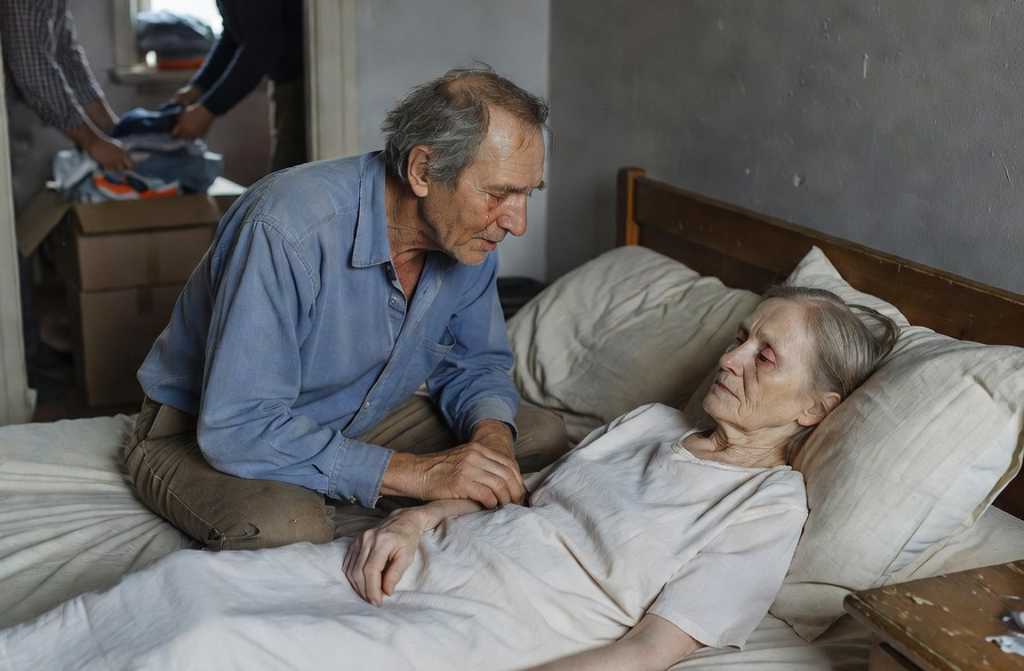
    No teenager wants to spend an evening trapped in endless parental rows. We walked straight to the neighbouring block where Grandma Elizabeth lived. Her flat had become our refuge over the past months. Weekend visits had quietly turned into almost nightly stays.

    The tension at home had grown impossible to bear. Mum and Dad seemed to have forgotten the rest of the world, shouting at each other without pause. Worst of all, they kept trying to pull us into the middle of it. I remember Mum spinning toward me and demanding, Tell me Im right. You agree with me, dont you? Dad would immediately turn to Matthew and insist, No, Im the one whos right here. Confirm it!

    We said nothing. Neither of us wanted to choose sides or become part of their endless battle. All we longed for was silence, calm, and warmththe very things we found at Grandmas. These outbursts happened daily, like a broken record no one dared to stop. We had learned to read the warning signs: the sharp tone, the sudden movements, the way they glanced at each other. Any child would dread living in that constant strain, where an ordinary chat could explode without warning.

    We never quite grasped what had set off the disaster. Our family was never the perfect picture from adverts, but Mum and Dad used to know how to compromise. Small disagreements happened, yet they ended in quiet talks over tea rather than raised voices. Then, roughly two years earlier, everything shifted after their holiday together. It felt as though someone had replaced our parents with versions who found fault in the tiniest thingsa mug left on the table, a shirt on the wrong hook, a spoon forgotten in the sink.

    One evening at Grandmas I sat stirring my tea, watching the amber circles form, and finally asked with a heavy heart, Grandma, how did it all go so wrong? Everything changed after their holiday. What actually happened?

    She paused, set her cup down, and gently rested her hand on mine. I could tell she had her own suspicions and they brought her no comfort. Grown-ups will work it out, she answered softly, keeping her voice steady. Sometimes people need time to decide whats best.

    I nodded, though doubt stayed in my eyes. I sensed she was holding something back, yet I didnt push. As long as she still saw us as children, she wouldnt share anything truly serious.

    We cant stand the shouting any longer! Matthew burst out. We cant finish homework or read in peace. I cant even remember the last time we all ate together as a family. If being together is this hard for them, they should just divorceit would be easier on everyone!

    The words came straight from the exhaustion of those months. He spoke for both of us. Grandma set aside her knitting and looked at him carefully, shaking her head. Have you thought about what happens if they split up? You two would be separated. Are you ready to live apart from Emily?

    Well live with you! I said at once, meeting her eyes. Were already here most of the time. You wouldnt mind, would you?

    Grandma stayed still. She understood how worn down we were and how much we needed a quiet place to study and feel safe. She loved us deeply and was ready to surround us with care. At the same time, she worried about our parentshow to explain that we no longer wanted to live at home, whether they would agree, and what it might do to their relationship with us. Could this choice create an even wider rift?

    Lets not rush into anything, she said with a deep breath. You know Im always glad to have you here. But first lets try speaking with your mum and dad. Perhaps together we can find a way to mend things.

    Dont worry, well talk to them ourselves, I replied, smiling because it felt like she was nearly agreeing. Just please dont turn us down. We truly cant stay there anymore. It would be better for them to live apart toootherwise they might actually hurt each other one day. I saw Dad raise his hand toward Mum yesterday He didnt strike her, I swear, but he came very close.

    I fell silent, replaying that frightening instant. I had stepped into the kitchen for water and frozen: Dad half-turned, his arm jerking upward while Mum instinctively flinched. A second later he lowered it, yet that single second had stretched into something endless for me.

    Grandma, please say yes, Matthew urged, taking her hand as though she might still refuse. Well help with everything around the house. Just dont send us back. They hardly notice us at all. Yesterday I told Dad about parents evening. Know what he said? Ask your mum. So I did. Guess what she told me?

    Ask your dad? Grandma asked quietly.

    Exactly, Matthew answered with a bitter smile. Then they spent another two hours arguing over who should go. They sat in separate rooms shouting down the hallway while I just stood there listening.

    I asked them to sign the permission form for the museum trip, I added, eyes on the floor as I twisted my sleeve. Now Im the only one in my class who cant go. Neither of them signed it. Instead they started rowing againMum insisting it was Dads job, Dad claiming Mum should handle school matters.

    Grandma watched us and saw the deep weariness in our facesnot ordinary tiredness, but the kind that builds after months of constant strain replacing any family warmth.

    Its always the same, Matthew sighed, letting his shoulders drop. Every request we make becomes another argument. We dont even want to come home anymore. A few nights ago we got back at eleven and they didnt even scold us. They simply sent us to bed without asking where wed been. Later they spent ages blaming each other for bad parenting.

    We both sighed at the same moment. Lately we had begun to think divorce might be the only escape. Yet the prospect of being split apart terrified usone of us with Mum, one with Dad, our closeness reduced to occasional weekends. We whispered about possibilities in our room. Once Matthew joked about running away, grabbing our bags and disappearing. He smiled to ease the mood, but for a moment I took the idea seriously. What if we really left, even for a couple of days? In that instant we both realised how unbearable things had become.

    Then the thought struck us at once: Grandma. Why not ask to live with her? I said it first. Lets ask Grandma if we can move in. She wont shout or argue. We wont have to listen to those fights anymore Matthew agreed at once. Yes! Shes kind and always backs us. Her flat is big enough.

    We began picturing quiet breakfasts, homework done in peace, evenings playing board games with Grandma. No shouting, no accusations, no need to hide. For the first time in a long while hope flickered inside us.

    When we finally gathered the courage, we stood before our parents in the living room. Mum, Dad, we need to talk seriously, we said together. We had waited for an evening when both were home. I gripped Matthews hand for steadiness. But first promise youll hear us out completely before you answer.

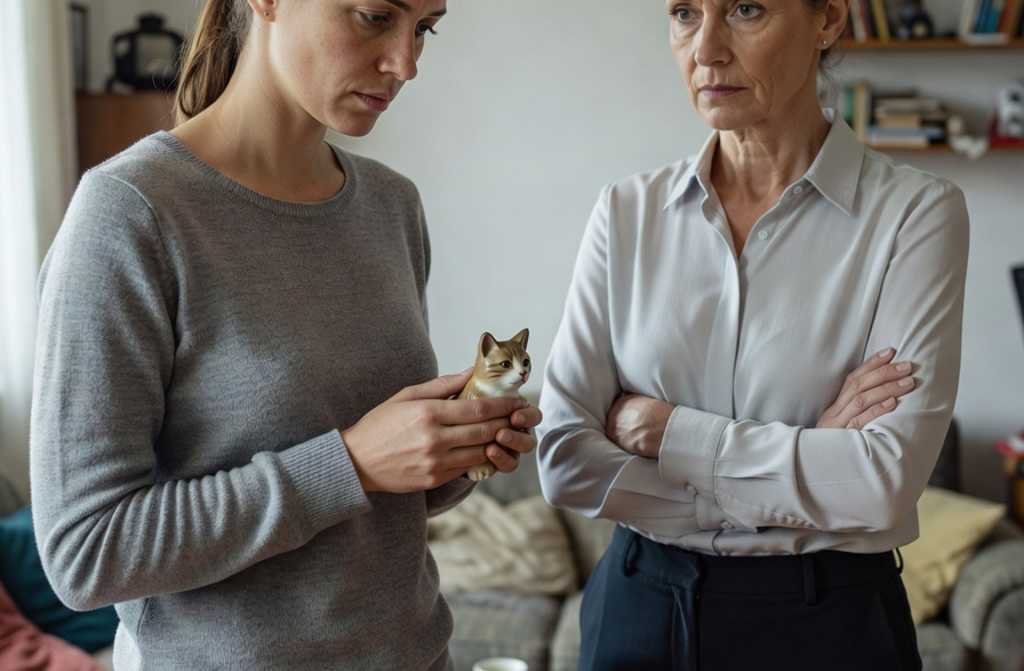
    Dad looked up from his phone, startled. Mum, sorting laundry on the sofa, straightened with an expression of disbelief. This is all your influence! she snapped, folding her arms. The children are already giving us ultimatums! As though we owe them explanations!

    And look whos talking! Dad shot back, setting his phone aside. Im out working every day to keep this family afloat. Youve been with them all along! What exactly have you taught them that they now think they can order us around?

    We glanced at each other. We had expected the usual blame game, yet we couldnt retreat. Thats enough! I cried, my voice cracking. I stepped forward, forcing myself to speak steadily even though I trembled inside. Matthew and I have decided you should get a divorce.

    Silence fell. Mums mouth stayed open; Dad rose slowly from the sofa. Well, thats a surprise, she said in a dangerous tone. Emily, youre far too young to lecture adults on how to live. And what else have you two decided? Perhaps youd like to divide the flat for us as well?

    If you dont divorce, well contact social services, Matthew said, tightening his grip on my hand. Then, Dad, you could lose your job. Your company doesnt tolerate scandals, does it? Youve said yourself that reputation matters most.

    And you, Mum, I went on, meeting her gaze, the neighbours will lose all respect for you. They wont even speak to you once we add what really goes on here.

    Theyre threatening uslook at them! Mum exclaimed, turning from one of us to the other. These are our children! How can you speak to us this way?

    Were not threatening, Matthew answered quietly but steadily. We simply want you to see that this cannot continue. Were exhaustedtired of the shouting, of being ignored, of every small request turning into a row.

    Youll divorce and move apart, and well live with Grandma, we finished together. It will be better for everyone: calm for us, an end to constant conflict for you. We refuse to stay caught between you any longer.

    Our parents stood frozen. For once they had no immediate reply. Normally they would have started interrupting and accusing each other, yet now both seemed unable to speak. Their thirteen-year-old twins were behaving with unexpected maturity, standing side by side, holding hands, and discussing matters the adults themselves avoided.

    They had considered divorce before but always stopped at the question of where we would live. Splitting twins felt unthinkable. The idea of us staying with Grandma had never occurred to them until that moment. Now they wondered whether it might be the answer. Grandma adored us, her flat was spacious, and she was always pleased to see us.

    Ill ring Mum, Dad muttered at last. If she agrees

    He never finished. Mum cut in, her voice thick with a weariness that seemed to surprise even her. Then we can finally stop tormenting each other. Call her. Ill be glad not to see your face every single day.

    Her words lingered. She hadnt meant to sound so sharp, yet years of hurt had pushed them out. And Ill be equally relieved, Dad answered, hiding his pain behind a wry tone. There was no real anger left, only a bitter recognition of what their marriage had become. He dialled Grandmas number while they avoided each others eyes. They sensed that something irreversible might already have happened.

    That day our family reached a turning point. It started with a long conversation between Dad and Grandma. She listened without interrupting, asking only a few careful questions. When he finished, she sighed and said, If you both believe this is best for the children, then I agree. Theyll be safe here and Ill look after them.

    By evening Mum and Dad sat in the kitchen for the first time in ages without raised voices. They discussed practical steps until they agreed that divorce was the only reasonable path. We would move in with Grandma, and they would send her money each month for our support. Both promised to keep seeing uson alternate weekends so they could avoid each other. Dad would collect us on Saturday mornings for outings; Mum would come on Sundays. Their aim was to reduce contact and prevent fresh arguments. They promised never to criticise one another in front of us or try to win us over.

    We remain their parents, Dad said. That doesnt change just because were no longer married.

    Time proved the choice was the right one. We finally relaxed and began living like ordinary teenagers. I joined an art club I had wanted for years but never had the peace of mind to pursue. Matthew started football and made new friends. We walked through town together, went to the cinema, and talked about school without dreading an explosion at any moment.

    Our studies steadied. We had a quiet space to work without constant interruptions, and our marks improved. Teachers remarked on how focused we had become. Life settled into a calmer, more predictable pattern. We stopped hiding in our room or flinching at loud voices. We simply lived.

    Five years on, things in the Harrington family moved at a steady, quiet pace. Matthew and I had grown accustomed to the routineschool, clubs, friends, gentle evenings with Grandma. Our parents still visited on their separate days, bringing small gifts and attention but no old complaints. Over time they had learned to speak politely and keep old anger in check.

    Their first real meeting after the divorce happened at our school prom. Both attended the formal evening. At first they kept their distance, sitting at opposite sides of the hall, but gradually the awkwardness eased. When the dancing began, Dad walked over and asked Mum if she would dance with him to remember old times. She hesitated, then agreed.

    Afterwards they sat for a long while in the school grounds, watching the other students celebrate by the fountain. Talk came naturally, first about us and then about their shared past. They spoke of happier moments from their marriage and behaved with dignity, focusing on what had once been good between them. From a distance we watched, hearts lifting a little. It had hurt to see the two people we loved most treat each other like strangers.

    The very next day they invited us to a café. Over tea they took each others hands and Dad announced with a broad smile that they had decided to marry again. They had realised their feelings had never truly disappeared and wanted to give the family another chance. Mum looked radiant, clearly expecting joy from us.

    Matthew and I exchanged glances, our faces darkening. Doubt rose in me at once; he clenched his fists beneath the table. Not the same mistakes all over again. Could they really live together without the old conflicts? Are you serious? was all I could manage.

    Completely, Dad answered. Weve both changed. Weve learned to listen. We want to try again.

    We stayed silent. Conflicting feelings churned inside ushope that they truly had changed, yet fear of repeating the old pain. We offered no argument against the idea and made no comment at all, which clearly wounded them. Mum looked bewildered. Arent you pleased? We thought you would be happy for us.

    We simply glanced at each other and shrugged. What could we have said without sounding cruel or false? The rest of the meeting felt strained. They tried to share their plans while we nodded politely, our thoughts elsewhere. On the way home I murmured to Matthew, I hope they understand what theyre doing. He only sighed.

    They went ahead with a modest ceremony at the register office and a small dinner with close family and friends. In the photographs they appeared genuinely content, holding hands and exchanging soft looks. It seemed as though past hurts had been set aside and the time apart had helped. We wondered whether this time might truly be different.

    It was not. The first weeks after the wedding passed peacefully enough. They made an effort to be considerate and avoided petty criticisms. Within a month, however, the old patterns returned. Raised voices reappeared, beginning with quiet but cutting remarks about undone chores or forgotten messages. Soon open arguments broke out over trivial matterswet towels, missing groceries, the television volume. Voices grew louder and the gaps between rows shorter.

    Two months later, exactly as Matthew had predicted, matters reached a breaking point. One evening an argument over who should shop for food escalated. Dad, losing control, hurled a cup against the wall; it shattered loudly. Mum seized a plate and smashed it on the floor. The sound of breaking crockery rang through the flat.

    After every such scene they would telephone us. The calls always began the same wayone of them, still breathless, would unload their grievances. Mum would weep to me that Dad refused to understand her; Dad would tell Matthew that Mum seemed determined to find fault.

    We had learned to cut these conversations short with calm firmness. We no longer allowed ourselves to be drawn into long debates about who was right. My replies stayed brief: Mum, Im in a lecture, Ill ring later. Matthew would say he had urgent work and suggest discussing it at the weekend. Those postponements became permanent. We invented excusesstudies, part-time jobs, friendsand gradually the calls grew rarer. We felt no guilt; we were simply guarding our own peace, knowing we could not fix what lay between them.

    By then we truly possessed lives of our ownbusy, purposeful, and distant from parental storms. Each day consisted of our own plans and interests rather than waiting for the next explosion. I immersed myself in psychology, fascinated by how minds work and how people might be helped through difficulty. In my third year I began volunteering at a centre for teenagers from troubled homes, leading groups and helping them voice their feelings. I recognised echoes of my own past in them and tried to offer the attention and support I had once needed.

    Matthew discovered his place in IT. Programming captivated himthe logic, the creation of functioning systems, the solving of intricate problems. He spent hours coding, learned new languages, and took part in student hackathons. In his fourth year his team placed third in a regional competition for mobile applications, which gave him confidence. He found part-time work at a small company where he proved reliable and quick to learn.

    We began planning our futures without reference to our parents rows. I dreamed of my own practice helping families communicate. Matthew considered starting his own business. We sketched ideas over tea in cafés and filled notebooks with possibilities. In those moments we felt anchored and free.

    When Mum and Dad once again tried to draw us into their troublesringing in tears to describe how badly everything was goingwe answered with the calm resolve we had agreed upon beforehand. Thats enough, I told them firmly. You have your life; we have ours.

    But youre our children! Mum sobbed. You ought to support us.

    If you behaved like adults instead of children, we would, Matthew replied at once. You chose to remarry and you continue to torment each other. If you cannot share the same space, why keep hurting one another? Divorce and separate already.

    The words may have sounded harsh, yet my brother and I simply wanted to live without being pulled back into their storm.

  • A tense atmosphere gripped the business class. The passengers shot hostile glances at the elderly woman as she settled into her seat. Yet the airplane captain still turned to her at the end of the flight.

    A tense atmosphere gripped the business class. The passengers shot hostile glances at the elderly woman as she settled into her seat. Yet the airplane captain still turned to her at the end of the flight.

    The atmosphere in business class was as tense as a last-minute boarding call, with passengers firing disapproving glances at the elderly woman as she eased into her seat, their faces suggesting she might have wandered in from the wrong gate entirely. Yet the plane’s captain would turn out to have a special word for her by the end of the journey. Margaret settled in with a flutter of nerves and excitement. Right away, a fuss kicked off.

    “I’m not sitting next to her!” a man in his forties shouted, his piercing stare locked on her plain dress as he turned to the flight attendant.

    The chap was Victor Thompson, and he made no secret of his lofty contempt.

    “Terribly sorry, but this passenger has a ticket for that exact seat. We can’t rearrange things,” the stewardess replied calmly, though Victor kept glaring at Margaret as if she might spoil the leather.

    “These seats cost a fortune, far too rich for the likes of her,” he sneered, glancing around for backup like someone expecting a round of applause at a village fete.

    Margaret stayed quiet, though her insides were in knots. She wore her best dress, simple but spotless, the only one that felt right for such an important day.

    A few passengers swapped looks, and a couple nodded along with Victor, as if this mix-up was the scandal of the decade.

    Before long, the old lady couldn’t take it. She raised a hand gently and spoke up.

    “It’s all right… If there’s room in economy, I’ll move down there. I’ve saved up my whole life for this flight and don’t want to be a bother to anyone.”

    Margaret was eighty-five. This was her very first flight. The trip from Manchester to London had been full of hurdles: corridors stretching for miles, terminals buzzing like a market on market day, and waits that dragged on forever. An airport worker had even tagged along so she wouldn’t get lost in the crowd.

    Now, with her dream just hours away, she had to face this instead.

    The stewardess stood firm.

    “I’m sorry, love, but you’ve paid for this ticket and you’ve every right to be here. Don’t let anyone take that away.”

    She gave Victor a stern look, then added coolly, “If you don’t stop, I’ll call security.”

    Victor fell silent at that, muttering under his breath.

    The plane lifted off. In her excitement, Margaret dropped her bag, and to everyone’s surprise, Victor silently bent to help gather the things.

    As he handed it back, his eye caught on a pendant with a deep red stone.

    “Lovely locket,” he said. “A ruby, perhaps? I know a bit about old bits and bobs. A piece like that isn’t cheap.”

    Margaret smiled.

    “I don’t know what it’s worth these days… My father gave it to my mother before he went off to war. He never came back. She passed it to me on my tenth birthday.”

    She opened the locket, showing two faded photos: one of a young couple, the other of a little boy smiling up at the world.

    “Those were my parents…” she said softly. “And this is my son.”

    “Are you flying to see him?” Victor asked carefully.

    “No,” Margaret replied, eyes down. “I left him at an orphanage when he was just a baby. No husband or steady job then, so I couldn’t give him a proper life. I only tracked him down recently with a DNA test. I wrote to him, but he replied that he didn’t want to meet. It’s his birthday today. I just wanted to be near him, even if only for a moment.”

    Victor looked surprised.

    “Then why take the flight?”

    The old woman smiled faintly, a trace of sadness in her eyes.

    “He’s the captain of this plane. It’s the only way to be close to him. At least for a glimpse.”

    Victor said nothing. Shame washed over him, and he looked away.

    The stewardess, who had heard it all, slipped quietly off to the cockpit.

    A few minutes later, the captain’s voice came over the speakers.

    “Dear passengers, we’ll soon begin our descent to Heathrow. But first, a word for a special lady on board. Mum, please stay after we land. I’d like to see you.”

    Margaret froze. Tears ran down her face. The cabin went quiet, then someone started clapping, and others joined in, smiling through misty eyes.

    Once the plane landed, the captain broke the rules. He dashed from the cockpit, tears in his eyes, and hurried straight to Margaret. He hugged her tightly, as if trying to make up for all the lost years in one go.

    “Thank you, Mum, for everything you did for me,” he whispered, holding her close.

    Margaret sobbed as she clung to him.

    “There’s nothing to forgive. I’ve always loved you.”

    Victor stepped aside, head bowed. He felt a proper fool. It struck him that behind the simple dress and wrinkles lay a story of real sacrifice and love.

    This hadn’t been just a flight. It was two hearts finding each other again after years apart.The atmosphere in business class was as tense as a last-minute boarding call, with passengers firing disapproving glances at the elderly woman as she eased into her seat, their faces suggesting she might have wandered in from the wrong gate entirely. Yet the plane’s captain would turn out to have a special word for her by the end of the journey. Margaret settled in with a flutter of nerves and excitement. Right away, a fuss kicked off.

    “I’m not sitting next to her!” a man in his forties shouted, his piercing stare locked on her plain dress as he turned to the flight attendant.

    The chap was Victor Thompson, and he made no secret of his lofty contempt.

    “Terribly sorry, but this passenger has a ticket for that exact seat. We can’t rearrange things,” the stewardess replied calmly, though Victor kept glaring at Margaret as if she might spoil the leather.

    “These seats cost a fortune, far too rich for the likes of her,” he sneered, glancing around for backup like someone expecting a round of applause at a village fete.

    Margaret stayed quiet, though her insides were in knots. She wore her best dress, simple but spotless, the only one that felt right for such an important day.

    A few passengers swapped looks, and a couple nodded along with Victor, as if this mix-up was the scandal of the decade.

    Before long, the old lady couldn’t take it. She raised a hand gently and spoke up.

    “It’s all right… If there’s room in economy, I’ll move down there. I’ve saved up my whole life for this flight and don’t want to be a bother to anyone.”

    Margaret was eighty-five. This was her very first flight. The trip from Manchester to London had been full of hurdles: corridors stretching for miles, terminals buzzing like a market on market day, and waits that dragged on forever. An airport worker had even tagged along so she wouldn’t get lost in the crowd.

    Now, with her dream just hours away, she had to face this instead.

    The stewardess stood firm.

    “I’m sorry, love, but you’ve paid for this ticket and you’ve every right to be here. Don’t let anyone take that away.”

    She gave Victor a stern look, then added coolly, “If you don’t stop, I’ll call security.”

    Victor fell silent at that, muttering under his breath.

    The plane lifted off. In her excitement, Margaret dropped her bag, and to everyone’s surprise, Victor silently bent to help gather the things.

    As he handed it back, his eye caught on a pendant with a deep red stone.

    “Lovely locket,” he said. “A ruby, perhaps? I know a bit about old bits and bobs. A piece like that isn’t cheap.”

    Margaret smiled.

    “I don’t know what it’s worth these days… My father gave it to my mother before he went off to war. He never came back. She passed it to me on my tenth birthday.”

    She opened the locket, showing two faded photos: one of a young couple, the other of a little boy smiling up at the world.

    “Those were my parents…” she said softly. “And this is my son.”

    “Are you flying to see him?” Victor asked carefully.

    “No,” Margaret replied, eyes down. “I left him at an orphanage when he was just a baby. No husband or steady job then, so I couldn’t give him a proper life. I only tracked him down recently with a DNA test. I wrote to him, but he replied that he didn’t want to meet. It’s his birthday today. I just wanted to be near him, even if only for a moment.”

    Victor looked surprised.

    “Then why take the flight?”

    The old woman smiled faintly, a trace of sadness in her eyes.

    “He’s the captain of this plane. It’s the only way to be close to him. At least for a glimpse.”

    Victor said nothing. Shame washed over him, and he looked away.

    The stewardess, who had heard it all, slipped quietly off to the cockpit.

    A few minutes later, the captain’s voice came over the speakers.

    “Dear passengers, we’ll soon begin our descent to Heathrow. But first, a word for a special lady on board. Mum, please stay after we land. I’d like to see you.”

    Margaret froze. Tears ran down her face. The cabin went quiet, then someone started clapping, and others joined in, smiling through misty eyes.

    Once the plane landed, the captain broke the rules. He dashed from the cockpit, tears in his eyes, and hurried straight to Margaret. He hugged her tightly, as if trying to make up for all the lost years in one go.

    “Thank you, Mum, for everything you did for me,” he whispered, holding her close.

    Margaret sobbed as she clung to him.

    “There’s nothing to forgive. I’ve always loved you.”

    Victor stepped aside, head bowed. He felt a proper fool. It struck him that behind the simple dress and wrinkles lay a story of real sacrifice and love.

    This hadn’t been just a flight. It was two hearts finding each other again after years apart.

  • No Means NoNo Means No

    Many years ago, on a Monday morning, the office of a large company in London was filled with the usual work bustle. From the very start of the workday, employees hurried to their places, chatting lively as they went. In the corridors, greetings and short conversations about the weekend could be heard now and then. Someone shared impressions from a trip to the cinema, someone told about meeting friends, and someone simply exchanged routine phrases, rushing to their desk.

    Emma sat in a spacious office that she shared with three other colleagues. She was a short woman with short light brown hair that neatly framed her face. Her brown eyes, always attentive and concentrated, were now fixed on the documents she was methodically laying out on the table.

    While she was busy sorting papers, David a manager from the next department walked up to her desk. Leaning on the edge of the table, he smiled widely and said cheerfully:

    “Hi, Emma! How did the weekend go?”

    Emma looked up, a slight polite smile appearing on her face. Being a non-confrontational person, she tried to maintain good relations with all colleagues without exception.

    “Fine, thanks. I was busy with household chores,” she replied calmly, tilting her head a bit. “And you?”

    “Oh, it was brilliant!” David perked up, his voice sounding enthusiastic, and a spark of excitement lit in his eyes. He leaned a little closer, as if wanting to share a secret. “I went to the countryside with friends, we had a barbecue and sang songs with a guitar. You really should come with us sometime. You’re on your own now, right? You got divorced quite recently?”

    Emma froze for a moment but quickly composed herself. She nodded reservedly, trying not to show the irritation that had crept into her soul. She didn’t like it much when colleagues touched on her personal life, but she was used to answering politely, not giving cause for extra talk.

    “Yes, I’m divorced. And thanks for the offer, but I’m not planning to go anywhere right now, especially with unfamiliar company,” she said in an even voice, lowering her gaze back to the documents.

    “Why ‘not planning’ right away?” David didn’t give up, his smile becoming a bit more insistent. He clearly wasn’t going to back off and continued to push his idea. “After a divorce, it’s just the time for new experiences. I’m thinking, maybe we could go somewhere together? This Friday, for example?”

    Emma carefully stacked the papers into a neat pile, aligning the edges of the sheets with almost ritual care. She looked David straight in the eye, trying to keep her voice calm and steady, without a hint of the irritation that was already rising in her throat.

    “David, I appreciate your attention, but I’m not looking for new relationships right now. Let’s just work without extra suggestions,” she said clearly, hoping the direct hint would get through to him.

    David just waved his hand, as if brushing off her words as insignificant. A light, slightly mocking smile played on his face; the man was confident in his own irresistibility.

    “Come on,” he said casually. “Why are you being like this? You’re attractive, I’m attractive why not?”

    Emma felt a wave of irritation rising inside, but she held back. She didn’t want to argue, didn’t want to turn the workday into a series of scandals. Instead, she looked at him firmly, without a trace of a smile.

    “I’m serious, David. I’m not interested. Let’s stick to work matters,” she repeated, this time a bit more firmly, making it clear she wasn’t going to return to the topic.

    “Alright, as you say,” David finally conceded, slightly spreading his hands as if showing he was backing off. “But think about it, will you? I mean it from the heart.”

    He turned and headed for the exit, but Emma managed to notice how he paused for a moment to look at her before turning away.

    The following few weeks the situation didn’t improve. David seemed not to hear her refusals or didn’t want to. He kept finding reasons to come to her desk, each time coming up with a new pretext. Sometimes it was an “important work question” that somehow couldn’t be discussed by email. Other times he offered to help with a report, although Emma had never asked him for that. And sometimes he just came over to ask how she was feeling, with such a look as if he genuinely cared about her well-being.

    Each time he was near, the conversation inevitably turned to what Emma tried to avoid. David subtly but persistently returned to the topic of a possible date, as if her previous refusals were not a final “no”, but only part of a game. He said it with a smile, as if joking, but determination showed in his eyes he wasn’t going to give up.

    Emma tried to react calmly. She answered politely but firmly, each time reminding him that her position hadn’t changed. She didn’t get openly angry, didn’t raise her voice, but inside this persistence irritated her more and more. She wanted David to finally understand: her “no” was really “no”, and not an invitation to continue the conversation.

    Nevertheless, he continued to glance her way, sometimes holding his look a bit longer than work relations required. Emma noticed this, but pretended not to pay attention, focusing on her tasks. She hoped that sooner or later he would understand her position and stop trying to start conversations on personal topics.

    That evening the office was almost empty most employees had gone home several hours earlier. Only in the far corner, by the window, was the light on: Emma had stayed to finish an urgent project. She worked concentratedly, occasionally adjusting her glasses and making notes in a notebook. Next to her on the table stood an already cooled cup of coffee, and the clock on the wall showed almost nine in the evening.

    The silence was broken by the sound of the door opening. Emma looked up and saw David, who confidently walked to her desk. He looked relaxed, holding car keys in his hands, with his usual half-smile on his face.

    “Wow, you’re still here?” he said, casually sitting on the edge of the desk. His posture clearly showed nonchalance, as if he didn’t notice how Emma froze for a moment, looking up from the screen. “Work isn’t going anywhere. Maybe we could go somewhere, relax? I know a great cafe nearby. They’ve got live music there tonight.”

    Emma slowly closed her laptop, carefully moving it aside. She turned to David, looking straight into his eyes calmly but firmly. There was no irritation in her look, only tired determination to explain the obvious again.

    “David, I’ve said many times that I don’t want anything like that. Please respect my boundaries,” she said in an even voice, trying to make sure there was no irritation or offense in it.

    David’s face suddenly changed. The light smile disappeared, his brows furrowed, and his voice unexpectedly became louder than usual.

    “What’s wrong with you?” he asked sharply, leaning forward a bit. “You’re single! After a divorce any woman in your place would be happy! I’m not suggesting anything bad, just a date. What, do you think I’m not worthy?”

    Emma took a deep breath, mentally counting seconds to not give in to the growing irritation. She didn’t rush to answer first she evened her breathing, then slightly raised her chin, looking at her interlocutor without challenge, but with unwavering confidence.

    “It’s not about you or your ‘worthiness’,” she said, carefully choosing words. “It’s about me. I don’t want to date anyone right now. This is my decision, and it won’t change. I think I’ve explained it clearly enough.”

    The man straightened up abruptly, pushing off from the desk. His face flushed, and his fingers clenched into fists, but he immediately unclenched them, as if catching himself showing his emotions.

    “Fine then!” he snapped, taking a step back. “Just don’t be surprised later if you end up alone. People like you are always like that they turn up their noses at first, and then regret it.”

    Without waiting for an answer, he sharply turned and headed for the door of the meeting room, which was nearby. The door slammed loudly, the echo spreading through the empty office, making Emma flinch slightly.

    She remained sitting in her place, looking at the closed door. His last words still rang in her ears, but she tried not to give them importance. Inside, two feelings mixed: relief that this conversation had finally ended, and a slight annoyance not because of the words themselves, but because she had to defend her boundaries again.

    Emma looked at the clock, then at the unfinished report. She knew that this was probably not the end. David was unlikely to drop his attempts right away he was known for his particular persistence in any matter. And if in work this was useful, then in such situations simply unacceptable. Why couldn’t he leave her alone? She had explained everything clearly and plainly…

    The next day in the office everything looked as usual. Employees came to work, turned on computers, exchanged greetings. David acted as if he didn’t remember yesterday’s sharp conversation. He kept appearing near Emma’s workplace sometimes “accidentally” passing by, sometimes approaching with some minor question. Each time he smiled, tried to joke, as if there had been no tension between them.

    Emma answered him briefly, trying to keep the conversation strictly within work frames. She wasn’t rude, didn’t show irritation she just clearly limited communication to work questions only. She deliberately didn’t support light jokes or attempts to steer the conversation to unrelated topics.

    David, however, didn’t give up. He seemed not to notice her restraint or pretended not to. He would ask if she wanted to look at a new report together, or offer to help with tables, or suddenly recall some common project and start animatedly discussing its details and in such a way as if it was the most natural reason for conversation.

    On Thursday morning Emma went to the kitchen area to get herself some coffee. It was still quite early most colleagues were only trickling into the office. The room smelled of freshly brewed coffee and toast from the neighboring machine. David was standing at the coffee machine. He was stirring sugar in a mug, looking out the window, but hearing footsteps, he immediately turned around and smiled.

    “Hi again,” he said, and although the smile stayed in place, a barely noticeable tension slipped into his voice. “Listen, I’ve been thinking… Maybe we just misunderstood each other? I really just want to chat, without any of that… well, you know.”

    Emma silently poured herself coffee from the machine. She tried not to look at David, focusing on not spilling the hot drink. Her movements were measured, as if she was performing a habitual morning routine that didn’t require special attention.

    “David, I’ve said it all. Let’s not go back to that,” she replied calmly, taking the mug in her hands.

    “Why not?!” his voice suddenly became sharper, and his hand jerked involuntarily, causing coffee to splash on the countertop. He didn’t even notice it, staring at Emma. “What’s wrong with that? I’m not asking you to marry me! Just a date, just to talk! What, are you scared?”

    Emma placed the mug on the table, carefully, without sudden movements. Then she turned to him and spoke quietly but firmly, clearly pronouncing each word:

    “I’m not scared. I just don’t want to. And I don’t like that you don’t accept my refusal. It’s simply unacceptable.”

    Emma left the kitchen, leaving David standing at the counter with a confused expression. He watched her go, as if he couldn’t believe the conversation had ended that way. His fingers still gripped the mug, and a puddle of spilled coffee slowly spread on the countertop but he paid no attention. Thoughts swirled in his head, mixed and contradictory: on one hand, he didn’t understand why Emma was so categorical, on the other he felt irritation growing inside from his own helplessness.

    In the evening, already at home, Emma still couldn’t calm down. Thoughts kept returning to the morning conversation. She went over every word in her head, analyzing if she could have said something differently to avoid tension. But each time she came to the same conclusion: she had spoken clearly and directly, and David simply didn’t want to hear her.

    She took out her phone and opened the voice recorder app. There was a recording of the last conversation with David the one where he persistently offered to meet, ignoring her refusals. Emma looked at the file for a long time, thinking. Her fingers trembled slightly as she hovered the cursor over the play button, but in the end she didn’t play it. Instead, she opened the page for David’s wife and, after thinking a bit, clicked on “messages”.

    “Hello,” she typed the text, carefully choosing words. “Sorry to bother you, but I think you should know how your husband is behaving at work. I’ve attached a recording of our conversation.”

    She read the message several times, checking how it sounded. It was all written reservedly, without extra emotions just facts. Then she attached the file and pressed “Send”.

    The next morning Emma came to the office with a heavy feeling. She didn’t know if she had done the right thing, but she saw no other way to stop David. All night she had thought about the consequences, but hadn’t found another solution. She had thought a lot about how exactly the woman would perceive her message, and whether the situation would get worse. But she pushed these thoughts away, reminding herself that she had acted out of necessity to protect her interests.

    As soon as she sat at her desk, turned on the computer and started sorting through email, an enraged David rushed up to her. He didn’t even bother to hide his state: his face was red, his eyes burned with anger, and his voice trembled with restrained fury.

    “What have you done?!” he hissed, looming over her desk so that Emma involuntarily leaned back. “You sent this to my wife?!”

    Emma raised a calm look at him. As she had thought, the colleague had had a difficult conversation at home, apparently. But… he deserved it!

    “Yes. I warned you that I didn’t want to communicate with you on any matters not related to work. You didn’t listen. So I took measures.”

    “You set me up!” David clenched his fists, barely holding back from hitting the desk. “We were communicating normally, and you…”

    “Normally?” Emma allowed herself to raise her voice for the first time; there was no longer any need to hold back. “Is this, in your opinion, normal communication? When you said I should be glad for your attention only because I’m divorced? When time after time you didn’t hear my refusals and only became more persistent? No, David, this is completely not normal!”

    Around them, colleagues began to turn. Some did it discreetly, out of the corner of their eye, others openly turned in their direction, pausing work. A tense silence hung in the office, broken only by the occasional tapping of keyboards and rustling of papers. David noticed the attention of those around and sharply lowered his volume, although his voice still rang with restrained anger.

    “You’ve ruined everything,” he hissed, leaning toward Emma. “Now I have problems at home, and you… you… I just liked you! But I’m married, so you decided to destroy my marriage this way!”

    “Seriously? You think I like you?” the woman allowed herself a smirk. “What arrogance! I said time after time that you’re not my type! Time after time I asked you to leave me alone!” Emma stood up, leaning on the desk. She really wanted to see the man’s eyes, to know if it had gotten through to him. “But you just ignored my words and only became more persistent! Now reap the fruits of your efforts.”

    David froze for a second, his face tensed, his lips pressed into a thin line. He sharply turned and walked away, deliberately loudly stomping his heels on the floor.

    Emma sank into her chair. Only now did she feel how her hands were shaking. She clenched them into fists, then slowly unclenched them, trying to stop the slight tremble. She took a deep breath, exhaled and looked around. Surprised by her outburst, colleagues instantly pretended to be very busy.

    The following days passed in a tense atmosphere. David no longer approached her desk he didn’t contact her at all. He didn’t even look in her direction, but Emma felt his anger almost physically. It hung in the air, thickened around him, like an invisible cloud. When they accidentally crossed in the corridor or at meetings, an invisible wall seemed to arise between them dense, prickly, noticeable even to others.

    Colleagues whispered, cast sideways glances, but no one dared to talk to Emma about it. Some pretended nothing was happening, some smiled awkwardly when meeting, but everyone seemed to have agreed to stay silent. The office lived by new unspoken rules: avoid sharp corners, don’t ask unnecessary questions, don’t interfere in other people’s affairs.

    Two days after sending the message, David was called to the boss’s office. Emma was sitting at her desk when she heard the office door slam, and then muffled voices could be heard. She couldn’t make out the words, but the intonations spoke for themselves: the boss was speaking strictly, and David was responding haltingly, sometimes raising, sometimes lowering his voice.

    When David came out, his face was pale, and his gaze distant, as if he was somewhere far away. He passed by Emma’s desk without even looking in her direction. At that moment he looked not like a self-confident manager, but like a person who had just received a serious reprimand.

    By lunchtime, rumors began to circulate in the office. Someone said that David’s wife had come to the office with a loud scandal, causing a scene right at the reception. Someone claimed that management had given David a strict warning and cautioned about possible consequences. Some whispered that the matter could lead to disciplinary action. Emma neither confirmed nor denied anything she just continued working, trying not to attract extra attention. She answered emails, checked reports, participated in briefings, pretending everything was going as usual.

    The next day, Sophie, a manager from the marketing department, approached her desk. She clearly felt awkward: fidgeting with the edge of her blouse, glancing around as if checking if anyone could hear their conversation. Her movements were fidgety, and her voice quiet, almost a whisper.

    “Emma, can I have a minute?” she asked quietly, stopping at the edge of the desk.

    “Of course,” Emma leaned back in her chair, gesturing for Sophie to sit on the empty chair nearby. “What’s happened?”

    Sophie looked around, made sure no one was nearby, and spoke faster, as if afraid she would be interrupted:

    “I just… wanted to say thank you. I’ve long noticed that David is too pushy, but I was afraid to say anything. But you… you managed it.”

    Emma raised her eyebrows in surprise. She hadn’t expected such an admission and was taken aback for a moment.

    “You had problems with him too?” she asked, trying to speak calmly.

    “Yes,” Sophie sighed, lowering her eyes. “A month ago he suggested we ‘have dinner and discuss work matters’. I refused, but he didn’t stop. He sent messages, waited by the lift… I didn’t know how to behave. I was afraid that if I complained, it would all turn against me.”

    She fell silent, nervously adjusting a strand of hair. In her eyes was a mixture of relief and anxiety as if she had finally been able to say what she had long held inside, but was still not sure if she had done the right thing.

    “Now he seems to understand that you can’t do that,” Emma noted reservedly, slightly tilting her head. There was no triumph or gloating in her voice only a calm awareness that her actions had led to the necessary consequences.

    “I hope so,” Sophie nodded, and a shy smile flashed on her face. She relaxed a bit, seeing that Emma took her words without tension. “Thanks again. You… you’re great.”

    A week later, at a scheduled meeting held in a spacious conference hall, the company director Mr. Henry Whitaker unexpectedly touched on the topic of corporate ethics. The hall was almost completely filled employees sat at a long table, laying out notebooks, setting up laptops, in general, preparing to work actively.

    Mr. Henry Whitaker stood up, slightly adjusting his glasses, and spoke in a calm but firm voice:

    “Colleagues, recently we have faced a situation that requires attention. At work we are first and foremost professionals! Personal sympathies and antipathies should not affect the work process! We are obliged to respect each other’s personal boundaries and build professional relationships based on mutual trust and correctness.”

    The director looked around at those present. Most listened attentively, some nodded in agreement. David sat at the far end of the table, looking down. His fingers nervously tapped a pen on the notebook once, twice, three times as if he was trying to drown out inner anxiety with mechanical movement. He didn’t raise his eyes, avoiding meeting colleagues’ gazes.

    “If anyone has similar problems,” continued Mr. Henry Whitaker, slightly raising his voice to attract the attention of those who were distracted, “please contact me personally. We will definitely sort it out. No one should feel uncomfortable at the workplace. This is not just a rule it’s the foundation of our corporate culture.”

    He made a small pause, letting the words sink into the employees’ minds, then smiled a bit warmer:

    “And now let’s return to the planned issues. We have a lot of work, and I’m sure that together we will cope with all the tasks.”

    After the meeting, the atmosphere in the office became a bit lighter. Work conversations sounded more natural, laughter in the corridors more sincere. People again felt themselves in a familiar work environment, where boundaries were clear, and rules precise.

    David no longer approached Emma, didn’t try to start a conversation. He kept his distance, performed his duties, answered colleagues’ questions, but didn’t start unnecessary conversations with anyone. Sometimes Emma noticed his look cold, full of resentment when he passed by her desk or met her in the corridor. But now he kept his distance, fearing fines and loss of bonuses.

    A month later, Emma accidentally ran into David in the lift. The morning was ordinary: employees were hurrying to work, in the hall greetings and the sound of heels on the tiles could be heard. Emma entered the lift on the ground floor, David followed they didn’t even look at each other, just stood in opposite corners of the cabin.

    The lift was quiet, only the numbers on the display clicked monotonously, marking the ascent. Both looked at them, as if enchanted by this rhythmic flickering. Emma tried not to think about the past, focusing on plans for the day: she had to discuss a new project with the team and prepare a report for management. David, judging by his tense posture, clearly felt awkward he kept adjusting the sleeve of his jacket and avoided meeting Emma’s gaze.

    When the lift stopped at Emma’s floor, she stepped toward the exit. The doors had already begun to close, but suddenly she heard his voice quiet, unusually restrained:

    “Emma…” he paused, as if choosing words. “I… wanted to apologize. I probably really overstepped.”

    She stopped, turned to him. In his eyes there was no anger, as before, but rather embarrassment and a sincere desire to fix the situation. Emma tried to stay calm not out of pride, but because she really wanted to close this chapter.

    “Thank you for recognizing that,” she replied in an even voice, without a trace of reproach.

    “It’s just…” he stumbled, looking somewhere to the side, as if it was difficult for him to formulate the thought. “I thought I was doing something good. I thought you were just shy to admit that you were interested too.”

    “That’s not the case,” she answered softly but firmly. “But it’s important that you understood your mistake.”

    David nodded, not raising his eyes. His shoulders slightly dropped, as if he had finally shed a burden he had carried for a long time. The lift doors smoothly closed, cutting him off from Emma, and she slowly headed to her workplace. For the first time in a long while, she felt at peace inside.

    In the following weeks David began to behave differently. He still kept his distance, but no longer looked at her with anger or resentment. Sometimes they crossed in the corridor or at meetings exchanged short polite phrases like “Good morning” or “How’s the project going?” and that was enough. No hints, no attempts to start a personal conversation. Everything became simpler, as if a silent agreement had been established between them: we are colleagues, and that’s enough.

    One evening, when the office was almost empty, Emma was packing her things before leaving. She put documents in her bag, turned off the computer, checked her purse and suddenly noticed a small card on the edge of the desk. It lay so neatly that it immediately caught the eye, although it definitely hadn’t been there in the morning.

    Emma took the card in her hands. On the front a neutral drawing: abstract lines in calm tones, no inscriptions or hints. She carefully opened it and read a short phrase written in neat handwriting:

    “Thank you for showing me how not to. I hope you find someone who will respect your boundaries from the first word.”

    There was no signature on the card, but Emma immediately understood from whom it was. She stood for a few seconds, holding the paper in her hands, then carefully closed the card and put it in the pocket of her jacket. Her heart felt warm finally everything had fallen into place. She turned off the light, closed the office and went out into the empty corridor, feeling that a calm and clear evening awaited her ahead.

    Life in the office gradually returned to its usual course. Work tasks again took center stage: morning briefings, document coordination, discussions with the team. Emma immersed herself in the process with that special pleasure that comes when nothing distracts, presses, or forces one to be on guard.

    After work she sometimes met with friends in a cozy cafe nearby or just walked around the city, talking about everything: about new films, about vacation plans, about funny cases at work. These meetings brought lightness, reminding her that the world didn’t boil down to one difficult episode.

    Gradually Emma got used to the idea that divorce was not the end, but the beginning of something new. Not a failure, not a defeat, but simply another chapter. She stopped mentally returning to past mistakes, to words that could have been said differently, to decisions that could no longer be replayed. Instead, she learned to notice small joys: the aroma of freshly brewed coffee in the mornings, the warm light of autumn sun on the office windowsill, the genuine laughter of friends.

    Passing by a mirror in the hall, she sometimes noticed how she smiled to herself not forced, not out of politeness, but naturally, as if a quiet, steady light had lit up inside. She no longer felt any guilt, fear, or need to justify herself to someone or to herself. Only a calm confidence that she had done the right thing and that this “right” didn’t require proof.

    And one day at a company event an informal evening with colleagues from different departments Emma met Oliver. He worked in a neighboring division, dealt with analytics, and before that they had only occasionally crossed paths in the corridors.

    Oliver didn’t give the impression of a “romance hero”: he didn’t shower her with loud compliments, didn’t try to impress with wit, didn’t insist on dates. Instead, he simply asked how she had spent the weekend, and listened to her answers with genuine interest without being distracted by his phone, without glancing around, without trying to steer the conversation to himself.

    He never interrupted, didn’t impose his opinion, didn’t try to turn the conversation into a personal one if he saw that Emma wasn’t in the mood. His attention was unobtrusive but tangible like a warm blanket on a cool evening: it doesn’t constrain, doesn’t press, but simply creates a feeling of comfort.

    One day, seeing her off after a joint lunch, he stopped at the entrance to the underground station and said calmly:

    “It’s easy with you. I’d like to continue communicating if you don’t mind.”

    Emma thought for a second, feeling an unfamiliar feeling spreading inside not tension, not anxiety, but a soft, warm confidence. She looked him in the eyes and smiled:

    “I don’t mind.”

    They began meeting once a week sometimes in a cozy cafe near the office, sometimes at an exhibition, sometimes just walking around the city. Oliver didn’t rush things, didn’t ask uncomfortable questions about the past, didn’t try to fill all her space. He was simply there calm, reliable, respectful.

    With him there was no need to build defensive barriers, no need to prepare for defense, no need to weigh every word so as not to give false hope. With Oliver everything was… natural. Conversations flowed easily, pauses didn’t seem awkward, and silence didn’t cause anxiety.

    After several months Emma caught herself thinking: she was feeling for the first time in a long time not like “a woman going through a divorce”, but simply like herself alive, interesting, worthy of care and respect. And this feeling was not the result of struggle, but a natural consequence of the fact that a person had appeared nearby who could see her real self without masks, without roles, without the need to prove something.

    One day in autumn, when the days had become shorter and the air fresher, Emma and Oliver were walking in the park. The trees had already partially shed their leaves, and fallen leaves rustled underfoot yellow, crimson, brown. The sun broke through rare clouds, casting dappled shadows on the ground.

    They walked unhurriedly, talking about trifles: about a new exhibition at the city museum, about weekend plans, about what books they had read lately. Suddenly Oliver stopped at an old bench, on which the wind had thrown a whole handful of maple leaves. He looked ahead, as if gathering his thoughts, and said quietly:

    “You know, I thought for a long time whether to say this now. But it seems important to me: I value how you know how to stand up for your boundaries. This is a rare quality. And it makes you truly strong.”

    Emma turned to him, slightly raising her eyebrows. There was no pathos in his voice, no desire to make an impression only sincere confidence in what he was saying. She hadn’t expected such an open compliment and was at a loss for a second.

    “You can’t even imagine how long I had to learn this,” she replied, smiling a little. There was no bitterness in her voice, but rather a calm recognition of the path traveled.

    “But now you can. And it’s wonderful,” Oliver simply said, looking her in the eyes.

    Emma didn’t find what to answer. Instead of words she silently took his hand. Their fingers intertwined easily, without tension. In this touch there was no anxiety, no attempt to prove something only warmth and trust that didn’t need to be explained in words.

    Over time Emma began to notice that changes affected not only her personal life, but also work. Before, she sometimes hesitated before expressing her opinion at a meeting, fearing that her idea would seem uninteresting or inappropriate. Now she spoke confidently, not afraid that she would be interrupted or not appreciated. She began to participate more actively in discussions, offer non-standard solutions, and if she disagreed with something calmly but firmly explained her position.

    Colleagues noticed this too. They turned to her for advice more and more often sometimes on work issues, sometimes just to discuss a difficult case. People felt that with Emma one could speak openly: she would listen, wouldn’t mock or devalue someone else’s opinion, but also wouldn’t go along if she thought it was wrong.

    Management also began to treat her differently. Mr. Henry Whitaker, who previously saw her as a reliable performer, now saw in her an initiative employee ready to take responsibility.

    One day after a briefing he detained her at the door:

    “Emma, I want to offer you to lead a new project. I understand that the workload will increase, but I’m sure you can handle it. This is a serious task, but you’re exactly the person who can pull it off.”

    Emma thought for a second, assessing the scale of the proposal. But inside there was no fear or doubt only calm confidence that she was really ready.

    “Thank you for the trust,” she smiled. “I agree.”

    In the evening she told Oliver about it. They sat in a cozy cafe, it was already getting dark outside, and warm lamp light glowed in the hall. Oliver listened attentively, and then sincerely, without a shadow of envy or formality, rejoiced:

    “That’s great! You deserve it. I’m happy for you.”

    Emma looked at him and felt a calm, warm feeling spreading inside not euphoria, not delight, but a quiet, confident joy. She understood: the changes that had seemed so complicated had led her where she wanted to be. And most importantly she was no longer afraid to go further.

    A year and a half passed. During this time a lot of important things happened in Emma’s and Oliver’s life, but the most significant event was their wedding. They didn’t strive for a lavish celebration both valued coziness and sincerity more than ostentatious luxury. Therefore the holiday turned out quiet and heartfelt: a small restaurant with warm lighting, a table decorated with modest bouquets of autumn flowers, and the closest people around.

    Emma was in a simple but elegant dress of a light shade. She didn’t wear heavy jewelry only thin earrings and a wedding ring that Oliver had chosen with special care. Her hair was styled in a casual hairstyle, several loose strands softly framed her face.

    Among the guests Emma noticed David with surprise. He came not alone his wife was next to him. Later Emma learned that after all the events David had managed to mend relations in the family. He had worked on it for a long time: attended counseling, tried to be more attentive, learned to listen. And although the path was not easy, they managed to find common ground and save the marriage.

    Before the start of the celebration David approached Emma. He looked calm, there was no trace of his former pushiness or resentment in his look.

    “Congratulations. You look happy,” he said sincerely, without a hint of falseness.

    “Thank you,” Emma nodded, meeting his gaze without tension. “And thank you for the card. It meant a lot to me.”

    David smiled slightly, as if remembering the moment when he decided to write it.

    “I’m glad everything turned out well. Really glad.”

    He didn’t stay long nodded as a farewell and went over to his wife, who was waiting for him nearby. Emma watched as they laughed together about something, and felt a light, warm gratitude. Not for herself, not for the past, but for the fact that people are capable of changing, admitting mistakes and moving on.

    When the evening came to an end, the guests began to leave. Emma stood by a large window in the restaurant, watching as people went out into the street, said goodbye, got into cars. The evening was cool but clear the first stars were already lighting up in the sky. A few people remained in the hall, music played softly, and waiters carefully cleared the tables.

    Oliver approached from behind, quietly hugged her shoulders. His touch was so familiar that Emma involuntarily relaxed, leaned against him.

    “What are you thinking about?” he asked softly, leaning slightly toward her ear.

    “About how sometimes the most difficult decisions lead to the most correct consequences,” she replied, turning to him. Her voice sounded calm, without a trace of regret. “And that I don’t regret anything.”

    She pressed against his chest, feeling the even beating of his heart, the warmth of his hands, the familiar scent of his cologne. At that moment everything seemed in its place not perfectly, not flawlessly, but truly.

    Oliver kissed the top of her head, squeezed the embrace a bit tighter.

    “Me too,” he whispered.

    They stood like that for a few more minutes, until it was completely dark outside and the hall was almost empty. Then they took each other’s hands and went to the exit together, calmly, confidently, toward what awaited them ahead.Many years ago, on a Monday morning, the office of a large company in London was filled with the usual work bustle. From the very start of the workday, employees hurried to their places, chatting lively as they went. In the corridors, greetings and short conversations about the weekend could be heard now and then. Someone shared impressions from a trip to the cinema, someone told about meeting friends, and someone simply exchanged routine phrases, rushing to their desk.

    Emma sat in a spacious office that she shared with three other colleagues. She was a short woman with short light brown hair that neatly framed her face. Her brown eyes, always attentive and concentrated, were now fixed on the documents she was methodically laying out on the table.

    While she was busy sorting papers, David a manager from the next department walked up to her desk. Leaning on the edge of the table, he smiled widely and said cheerfully:

    “Hi, Emma! How did the weekend go?”

    Emma looked up, a slight polite smile appearing on her face. Being a non-confrontational person, she tried to maintain good relations with all colleagues without exception.

    “Fine, thanks. I was busy with household chores,” she replied calmly, tilting her head a bit. “And you?”

    “Oh, it was brilliant!” David perked up, his voice sounding enthusiastic, and a spark of excitement lit in his eyes. He leaned a little closer, as if wanting to share a secret. “I went to the countryside with friends, we had a barbecue and sang songs with a guitar. You really should come with us sometime. You’re on your own now, right? You got divorced quite recently?”

    Emma froze for a moment but quickly composed herself. She nodded reservedly, trying not to show the irritation that had crept into her soul. She didn’t like it much when colleagues touched on her personal life, but she was used to answering politely, not giving cause for extra talk.

    “Yes, I’m divorced. And thanks for the offer, but I’m not planning to go anywhere right now, especially with unfamiliar company,” she said in an even voice, lowering her gaze back to the documents.

    “Why ‘not planning’ right away?” David didn’t give up, his smile becoming a bit more insistent. He clearly wasn’t going to back off and continued to push his idea. “After a divorce, it’s just the time for new experiences. I’m thinking, maybe we could go somewhere together? This Friday, for example?”

    Emma carefully stacked the papers into a neat pile, aligning the edges of the sheets with almost ritual care. She looked David straight in the eye, trying to keep her voice calm and steady, without a hint of the irritation that was already rising in her throat.

    “David, I appreciate your attention, but I’m not looking for new relationships right now. Let’s just work without extra suggestions,” she said clearly, hoping the direct hint would get through to him.

    David just waved his hand, as if brushing off her words as insignificant. A light, slightly mocking smile played on his face; the man was confident in his own irresistibility.

    “Come on,” he said casually. “Why are you being like this? You’re attractive, I’m attractive why not?”

    Emma felt a wave of irritation rising inside, but she held back. She didn’t want to argue, didn’t want to turn the workday into a series of scandals. Instead, she looked at him firmly, without a trace of a smile.

    “I’m serious, David. I’m not interested. Let’s stick to work matters,” she repeated, this time a bit more firmly, making it clear she wasn’t going to return to the topic.

    “Alright, as you say,” David finally conceded, slightly spreading his hands as if showing he was backing off. “But think about it, will you? I mean it from the heart.”

    He turned and headed for the exit, but Emma managed to notice how he paused for a moment to look at her before turning away.

    The following few weeks the situation didn’t improve. David seemed not to hear her refusals or didn’t want to. He kept finding reasons to come to her desk, each time coming up with a new pretext. Sometimes it was an “important work question” that somehow couldn’t be discussed by email. Other times he offered to help with a report, although Emma had never asked him for that. And sometimes he just came over to ask how she was feeling, with such a look as if he genuinely cared about her well-being.

    Each time he was near, the conversation inevitably turned to what Emma tried to avoid. David subtly but persistently returned to the topic of a possible date, as if her previous refusals were not a final “no”, but only part of a game. He said it with a smile, as if joking, but determination showed in his eyes he wasn’t going to give up.

    Emma tried to react calmly. She answered politely but firmly, each time reminding him that her position hadn’t changed. She didn’t get openly angry, didn’t raise her voice, but inside this persistence irritated her more and more. She wanted David to finally understand: her “no” was really “no”, and not an invitation to continue the conversation.

    Nevertheless, he continued to glance her way, sometimes holding his look a bit longer than work relations required. Emma noticed this, but pretended not to pay attention, focusing on her tasks. She hoped that sooner or later he would understand her position and stop trying to start conversations on personal topics.

    That evening the office was almost empty most employees had gone home several hours earlier. Only in the far corner, by the window, was the light on: Emma had stayed to finish an urgent project. She worked concentratedly, occasionally adjusting her glasses and making notes in a notebook. Next to her on the table stood an already cooled cup of coffee, and the clock on the wall showed almost nine in the evening.

    The silence was broken by the sound of the door opening. Emma looked up and saw David, who confidently walked to her desk. He looked relaxed, holding car keys in his hands, with his usual half-smile on his face.

    “Wow, you’re still here?” he said, casually sitting on the edge of the desk. His posture clearly showed nonchalance, as if he didn’t notice how Emma froze for a moment, looking up from the screen. “Work isn’t going anywhere. Maybe we could go somewhere, relax? I know a great cafe nearby. They’ve got live music there tonight.”

    Emma slowly closed her laptop, carefully moving it aside. She turned to David, looking straight into his eyes calmly but firmly. There was no irritation in her look, only tired determination to explain the obvious again.

    “David, I’ve said many times that I don’t want anything like that. Please respect my boundaries,” she said in an even voice, trying to make sure there was no irritation or offense in it.

    David’s face suddenly changed. The light smile disappeared, his brows furrowed, and his voice unexpectedly became louder than usual.

    “What’s wrong with you?” he asked sharply, leaning forward a bit. “You’re single! After a divorce any woman in your place would be happy! I’m not suggesting anything bad, just a date. What, do you think I’m not worthy?”

    Emma took a deep breath, mentally counting seconds to not give in to the growing irritation. She didn’t rush to answer first she evened her breathing, then slightly raised her chin, looking at her interlocutor without challenge, but with unwavering confidence.

    “It’s not about you or your ‘worthiness’,” she said, carefully choosing words. “It’s about me. I don’t want to date anyone right now. This is my decision, and it won’t change. I think I’ve explained it clearly enough.”

    The man straightened up abruptly, pushing off from the desk. His face flushed, and his fingers clenched into fists, but he immediately unclenched them, as if catching himself showing his emotions.

    “Fine then!” he snapped, taking a step back. “Just don’t be surprised later if you end up alone. People like you are always like that they turn up their noses at first, and then regret it.”

    Without waiting for an answer, he sharply turned and headed for the door of the meeting room, which was nearby. The door slammed loudly, the echo spreading through the empty office, making Emma flinch slightly.

    She remained sitting in her place, looking at the closed door. His last words still rang in her ears, but she tried not to give them importance. Inside, two feelings mixed: relief that this conversation had finally ended, and a slight annoyance not because of the words themselves, but because she had to defend her boundaries again.

    Emma looked at the clock, then at the unfinished report. She knew that this was probably not the end. David was unlikely to drop his attempts right away he was known for his particular persistence in any matter. And if in work this was useful, then in such situations simply unacceptable. Why couldn’t he leave her alone? She had explained everything clearly and plainly…

    The next day in the office everything looked as usual. Employees came to work, turned on computers, exchanged greetings. David acted as if he didn’t remember yesterday’s sharp conversation. He kept appearing near Emma’s workplace sometimes “accidentally” passing by, sometimes approaching with some minor question. Each time he smiled, tried to joke, as if there had been no tension between them.

    Emma answered him briefly, trying to keep the conversation strictly within work frames. She wasn’t rude, didn’t show irritation she just clearly limited communication to work questions only. She deliberately didn’t support light jokes or attempts to steer the conversation to unrelated topics.

    David, however, didn’t give up. He seemed not to notice her restraint or pretended not to. He would ask if she wanted to look at a new report together, or offer to help with tables, or suddenly recall some common project and start animatedly discussing its details and in such a way as if it was the most natural reason for conversation.

    On Thursday morning Emma went to the kitchen area to get herself some coffee. It was still quite early most colleagues were only trickling into the office. The room smelled of freshly brewed coffee and toast from the neighboring machine. David was standing at the coffee machine. He was stirring sugar in a mug, looking out the window, but hearing footsteps, he immediately turned around and smiled.

    “Hi again,” he said, and although the smile stayed in place, a barely noticeable tension slipped into his voice. “Listen, I’ve been thinking… Maybe we just misunderstood each other? I really just want to chat, without any of that… well, you know.”

    Emma silently poured herself coffee from the machine. She tried not to look at David, focusing on not spilling the hot drink. Her movements were measured, as if she was performing a habitual morning routine that didn’t require special attention.

    “David, I’ve said it all. Let’s not go back to that,” she replied calmly, taking the mug in her hands.

    “Why not?!” his voice suddenly became sharper, and his hand jerked involuntarily, causing coffee to splash on the countertop. He didn’t even notice it, staring at Emma. “What’s wrong with that? I’m not asking you to marry me! Just a date, just to talk! What, are you scared?”

    Emma placed the mug on the table, carefully, without sudden movements. Then she turned to him and spoke quietly but firmly, clearly pronouncing each word:

    “I’m not scared. I just don’t want to. And I don’t like that you don’t accept my refusal. It’s simply unacceptable.”

    Emma left the kitchen, leaving David standing at the counter with a confused expression. He watched her go, as if he couldn’t believe the conversation had ended that way. His fingers still gripped the mug, and a puddle of spilled coffee slowly spread on the countertop but he paid no attention. Thoughts swirled in his head, mixed and contradictory: on one hand, he didn’t understand why Emma was so categorical, on the other he felt irritation growing inside from his own helplessness.

    In the evening, already at home, Emma still couldn’t calm down. Thoughts kept returning to the morning conversation. She went over every word in her head, analyzing if she could have said something differently to avoid tension. But each time she came to the same conclusion: she had spoken clearly and directly, and David simply didn’t want to hear her.

    She took out her phone and opened the voice recorder app. There was a recording of the last conversation with David the one where he persistently offered to meet, ignoring her refusals. Emma looked at the file for a long time, thinking. Her fingers trembled slightly as she hovered the cursor over the play button, but in the end she didn’t play it. Instead, she opened the page for David’s wife and, after thinking a bit, clicked on “messages”.

    “Hello,” she typed the text, carefully choosing words. “Sorry to bother you, but I think you should know how your husband is behaving at work. I’ve attached a recording of our conversation.”

    She read the message several times, checking how it sounded. It was all written reservedly, without extra emotions just facts. Then she attached the file and pressed “Send”.

    The next morning Emma came to the office with a heavy feeling. She didn’t know if she had done the right thing, but she saw no other way to stop David. All night she had thought about the consequences, but hadn’t found another solution. She had thought a lot about how exactly the woman would perceive her message, and whether the situation would get worse. But she pushed these thoughts away, reminding herself that she had acted out of necessity to protect her interests.

    As soon as she sat at her desk, turned on the computer and started sorting through email, an enraged David rushed up to her. He didn’t even bother to hide his state: his face was red, his eyes burned with anger, and his voice trembled with restrained fury.

    “What have you done?!” he hissed, looming over her desk so that Emma involuntarily leaned back. “You sent this to my wife?!”

    Emma raised a calm look at him. As she had thought, the colleague had had a difficult conversation at home, apparently. But… he deserved it!

    “Yes. I warned you that I didn’t want to communicate with you on any matters not related to work. You didn’t listen. So I took measures.”

    “You set me up!” David clenched his fists, barely holding back from hitting the desk. “We were communicating normally, and you…”

    “Normally?” Emma allowed herself to raise her voice for the first time; there was no longer any need to hold back. “Is this, in your opinion, normal communication? When you said I should be glad for your attention only because I’m divorced? When time after time you didn’t hear my refusals and only became more persistent? No, David, this is completely not normal!”

    Around them, colleagues began to turn. Some did it discreetly, out of the corner of their eye, others openly turned in their direction, pausing work. A tense silence hung in the office, broken only by the occasional tapping of keyboards and rustling of papers. David noticed the attention of those around and sharply lowered his volume, although his voice still rang with restrained anger.

    “You’ve ruined everything,” he hissed, leaning toward Emma. “Now I have problems at home, and you… you… I just liked you! But I’m married, so you decided to destroy my marriage this way!”

    “Seriously? You think I like you?” the woman allowed herself a smirk. “What arrogance! I said time after time that you’re not my type! Time after time I asked you to leave me alone!” Emma stood up, leaning on the desk. She really wanted to see the man’s eyes, to know if it had gotten through to him. “But you just ignored my words and only became more persistent! Now reap the fruits of your efforts.”

    David froze for a second, his face tensed, his lips pressed into a thin line. He sharply turned and walked away, deliberately loudly stomping his heels on the floor.

    Emma sank into her chair. Only now did she feel how her hands were shaking. She clenched them into fists, then slowly unclenched them, trying to stop the slight tremble. She took a deep breath, exhaled and looked around. Surprised by her outburst, colleagues instantly pretended to be very busy.

    The following days passed in a tense atmosphere. David no longer approached her desk he didn’t contact her at all. He didn’t even look in her direction, but Emma felt his anger almost physically. It hung in the air, thickened around him, like an invisible cloud. When they accidentally crossed in the corridor or at meetings, an invisible wall seemed to arise between them dense, prickly, noticeable even to others.

    Colleagues whispered, cast sideways glances, but no one dared to talk to Emma about it. Some pretended nothing was happening, some smiled awkwardly when meeting, but everyone seemed to have agreed to stay silent. The office lived by new unspoken rules: avoid sharp corners, don’t ask unnecessary questions, don’t interfere in other people’s affairs.

    Two days after sending the message, David was called to the boss’s office. Emma was sitting at her desk when she heard the office door slam, and then muffled voices could be heard. She couldn’t make out the words, but the intonations spoke for themselves: the boss was speaking strictly, and David was responding haltingly, sometimes raising, sometimes lowering his voice.

    When David came out, his face was pale, and his gaze distant, as if he was somewhere far away. He passed by Emma’s desk without even looking in her direction. At that moment he looked not like a self-confident manager, but like a person who had just received a serious reprimand.

    By lunchtime, rumors began to circulate in the office. Someone said that David’s wife had come to the office with a loud scandal, causing a scene right at the reception. Someone claimed that management had given David a strict warning and cautioned about possible consequences. Some whispered that the matter could lead to disciplinary action. Emma neither confirmed nor denied anything she just continued working, trying not to attract extra attention. She answered emails, checked reports, participated in briefings, pretending everything was going as usual.

    The next day, Sophie, a manager from the marketing department, approached her desk. She clearly felt awkward: fidgeting with the edge of her blouse, glancing around as if checking if anyone could hear their conversation. Her movements were fidgety, and her voice quiet, almost a whisper.

    “Emma, can I have a minute?” she asked quietly, stopping at the edge of the desk.

    “Of course,” Emma leaned back in her chair, gesturing for Sophie to sit on the empty chair nearby. “What’s happened?”

    Sophie looked around, made sure no one was nearby, and spoke faster, as if afraid she would be interrupted:

    “I just… wanted to say thank you. I’ve long noticed that David is too pushy, but I was afraid to say anything. But you… you managed it.”

    Emma raised her eyebrows in surprise. She hadn’t expected such an admission and was taken aback for a moment.

    “You had problems with him too?” she asked, trying to speak calmly.

    “Yes,” Sophie sighed, lowering her eyes. “A month ago he suggested we ‘have dinner and discuss work matters’. I refused, but he didn’t stop. He sent messages, waited by the lift… I didn’t know how to behave. I was afraid that if I complained, it would all turn against me.”

    She fell silent, nervously adjusting a strand of hair. In her eyes was a mixture of relief and anxiety as if she had finally been able to say what she had long held inside, but was still not sure if she had done the right thing.

    “Now he seems to understand that you can’t do that,” Emma noted reservedly, slightly tilting her head. There was no triumph or gloating in her voice only a calm awareness that her actions had led to the necessary consequences.

    “I hope so,” Sophie nodded, and a shy smile flashed on her face. She relaxed a bit, seeing that Emma took her words without tension. “Thanks again. You… you’re great.”

    A week later, at a scheduled meeting held in a spacious conference hall, the company director Mr. Henry Whitaker unexpectedly touched on the topic of corporate ethics. The hall was almost completely filled employees sat at a long table, laying out notebooks, setting up laptops, in general, preparing to work actively.

    Mr. Henry Whitaker stood up, slightly adjusting his glasses, and spoke in a calm but firm voice:

    “Colleagues, recently we have faced a situation that requires attention. At work we are first and foremost professionals! Personal sympathies and antipathies should not affect the work process! We are obliged to respect each other’s personal boundaries and build professional relationships based on mutual trust and correctness.”

    The director looked around at those present. Most listened attentively, some nodded in agreement. David sat at the far end of the table, looking down. His fingers nervously tapped a pen on the notebook once, twice, three times as if he was trying to drown out inner anxiety with mechanical movement. He didn’t raise his eyes, avoiding meeting colleagues’ gazes.

    “If anyone has similar problems,” continued Mr. Henry Whitaker, slightly raising his voice to attract the attention of those who were distracted, “please contact me personally. We will definitely sort it out. No one should feel uncomfortable at the workplace. This is not just a rule it’s the foundation of our corporate culture.”

    He made a small pause, letting the words sink into the employees’ minds, then smiled a bit warmer:

    “And now let’s return to the planned issues. We have a lot of work, and I’m sure that together we will cope with all the tasks.”

    After the meeting, the atmosphere in the office became a bit lighter. Work conversations sounded more natural, laughter in the corridors more sincere. People again felt themselves in a familiar work environment, where boundaries were clear, and rules precise.

    David no longer approached Emma, didn’t try to start a conversation. He kept his distance, performed his duties, answered colleagues’ questions, but didn’t start unnecessary conversations with anyone. Sometimes Emma noticed his look cold, full of resentment when he passed by her desk or met her in the corridor. But now he kept his distance, fearing fines and loss of bonuses.

    A month later, Emma accidentally ran into David in the lift. The morning was ordinary: employees were hurrying to work, in the hall greetings and the sound of heels on the tiles could be heard. Emma entered the lift on the ground floor, David followed they didn’t even look at each other, just stood in opposite corners of the cabin.

    The lift was quiet, only the numbers on the display clicked monotonously, marking the ascent. Both looked at them, as if enchanted by this rhythmic flickering. Emma tried not to think about the past, focusing on plans for the day: she had to discuss a new project with the team and prepare a report for management. David, judging by his tense posture, clearly felt awkward he kept adjusting the sleeve of his jacket and avoided meeting Emma’s gaze.

    When the lift stopped at Emma’s floor, she stepped toward the exit. The doors had already begun to close, but suddenly she heard his voice quiet, unusually restrained:

    “Emma…” he paused, as if choosing words. “I… wanted to apologize. I probably really overstepped.”

    She stopped, turned to him. In his eyes there was no anger, as before, but rather embarrassment and a sincere desire to fix the situation. Emma tried to stay calm not out of pride, but because she really wanted to close this chapter.

    “Thank you for recognizing that,” she replied in an even voice, without a trace of reproach.

    “It’s just…” he stumbled, looking somewhere to the side, as if it was difficult for him to formulate the thought. “I thought I was doing something good. I thought you were just shy to admit that you were interested too.”

    “That’s not the case,” she answered softly but firmly. “But it’s important that you understood your mistake.”

    David nodded, not raising his eyes. His shoulders slightly dropped, as if he had finally shed a burden he had carried for a long time. The lift doors smoothly closed, cutting him off from Emma, and she slowly headed to her workplace. For the first time in a long while, she felt at peace inside.

    In the following weeks David began to behave differently. He still kept his distance, but no longer looked at her with anger or resentment. Sometimes they crossed in the corridor or at meetings exchanged short polite phrases like “Good morning” or “How’s the project going?” and that was enough. No hints, no attempts to start a personal conversation. Everything became simpler, as if a silent agreement had been established between them: we are colleagues, and that’s enough.

    One evening, when the office was almost empty, Emma was packing her things before leaving. She put documents in her bag, turned off the computer, checked her purse and suddenly noticed a small card on the edge of the desk. It lay so neatly that it immediately caught the eye, although it definitely hadn’t been there in the morning.

    Emma took the card in her hands. On the front a neutral drawing: abstract lines in calm tones, no inscriptions or hints. She carefully opened it and read a short phrase written in neat handwriting:

    “Thank you for showing me how not to. I hope you find someone who will respect your boundaries from the first word.”

    There was no signature on the card, but Emma immediately understood from whom it was. She stood for a few seconds, holding the paper in her hands, then carefully closed the card and put it in the pocket of her jacket. Her heart felt warm finally everything had fallen into place. She turned off the light, closed the office and went out into the empty corridor, feeling that a calm and clear evening awaited her ahead.

    Life in the office gradually returned to its usual course. Work tasks again took center stage: morning briefings, document coordination, discussions with the team. Emma immersed herself in the process with that special pleasure that comes when nothing distracts, presses, or forces one to be on guard.

    After work she sometimes met with friends in a cozy cafe nearby or just walked around the city, talking about everything: about new films, about vacation plans, about funny cases at work. These meetings brought lightness, reminding her that the world didn’t boil down to one difficult episode.

    Gradually Emma got used to the idea that divorce was not the end, but the beginning of something new. Not a failure, not a defeat, but simply another chapter. She stopped mentally returning to past mistakes, to words that could have been said differently, to decisions that could no longer be replayed. Instead, she learned to notice small joys: the aroma of freshly brewed coffee in the mornings, the warm light of autumn sun on the office windowsill, the genuine laughter of friends.

    Passing by a mirror in the hall, she sometimes noticed how she smiled to herself not forced, not out of politeness, but naturally, as if a quiet, steady light had lit up inside. She no longer felt any guilt, fear, or need to justify herself to someone or to herself. Only a calm confidence that she had done the right thing and that this “right” didn’t require proof.

    And one day at a company event an informal evening with colleagues from different departments Emma met Oliver. He worked in a neighboring division, dealt with analytics, and before that they had only occasionally crossed paths in the corridors.

    Oliver didn’t give the impression of a “romance hero”: he didn’t shower her with loud compliments, didn’t try to impress with wit, didn’t insist on dates. Instead, he simply asked how she had spent the weekend, and listened to her answers with genuine interest without being distracted by his phone, without glancing around, without trying to steer the conversation to himself.

    He never interrupted, didn’t impose his opinion, didn’t try to turn the conversation into a personal one if he saw that Emma wasn’t in the mood. His attention was unobtrusive but tangible like a warm blanket on a cool evening: it doesn’t constrain, doesn’t press, but simply creates a feeling of comfort.

    One day, seeing her off after a joint lunch, he stopped at the entrance to the underground station and said calmly:

    “It’s easy with you. I’d like to continue communicating if you don’t mind.”

    Emma thought for a second, feeling an unfamiliar feeling spreading inside not tension, not anxiety, but a soft, warm confidence. She looked him in the eyes and smiled:

    “I don’t mind.”

    They began meeting once a week sometimes in a cozy cafe near the office, sometimes at an exhibition, sometimes just walking around the city. Oliver didn’t rush things, didn’t ask uncomfortable questions about the past, didn’t try to fill all her space. He was simply there calm, reliable, respectful.

    With him there was no need to build defensive barriers, no need to prepare for defense, no need to weigh every word so as not to give false hope. With Oliver everything was… natural. Conversations flowed easily, pauses didn’t seem awkward, and silence didn’t cause anxiety.

    After several months Emma caught herself thinking: she was feeling for the first time in a long time not like “a woman going through a divorce”, but simply like herself alive, interesting, worthy of care and respect. And this feeling was not the result of struggle, but a natural consequence of the fact that a person had appeared nearby who could see her real self without masks, without roles, without the need to prove something.

    One day in autumn, when the days had become shorter and the air fresher, Emma and Oliver were walking in the park. The trees had already partially shed their leaves, and fallen leaves rustled underfoot yellow, crimson, brown. The sun broke through rare clouds, casting dappled shadows on the ground.

    They walked unhurriedly, talking about trifles: about a new exhibition at the city museum, about weekend plans, about what books they had read lately. Suddenly Oliver stopped at an old bench, on which the wind had thrown a whole handful of maple leaves. He looked ahead, as if gathering his thoughts, and said quietly:

    “You know, I thought for a long time whether to say this now. But it seems important to me: I value how you know how to stand up for your boundaries. This is a rare quality. And it makes you truly strong.”

    Emma turned to him, slightly raising her eyebrows. There was no pathos in his voice, no desire to make an impression only sincere confidence in what he was saying. She hadn’t expected such an open compliment and was at a loss for a second.

    “You can’t even imagine how long I had to learn this,” she replied, smiling a little. There was no bitterness in her voice, but rather a calm recognition of the path traveled.

    “But now you can. And it’s wonderful,” Oliver simply said, looking her in the eyes.

    Emma didn’t find what to answer. Instead of words she silently took his hand. Their fingers intertwined easily, without tension. In this touch there was no anxiety, no attempt to prove something only warmth and trust that didn’t need to be explained in words.

    Over time Emma began to notice that changes affected not only her personal life, but also work. Before, she sometimes hesitated before expressing her opinion at a meeting, fearing that her idea would seem uninteresting or inappropriate. Now she spoke confidently, not afraid that she would be interrupted or not appreciated. She began to participate more actively in discussions, offer non-standard solutions, and if she disagreed with something calmly but firmly explained her position.

    Colleagues noticed this too. They turned to her for advice more and more often sometimes on work issues, sometimes just to discuss a difficult case. People felt that with Emma one could speak openly: she would listen, wouldn’t mock or devalue someone else’s opinion, but also wouldn’t go along if she thought it was wrong.

    Management also began to treat her differently. Mr. Henry Whitaker, who previously saw her as a reliable performer, now saw in her an initiative employee ready to take responsibility.

    One day after a briefing he detained her at the door:

    “Emma, I want to offer you to lead a new project. I understand that the workload will increase, but I’m sure you can handle it. This is a serious task, but you’re exactly the person who can pull it off.”

    Emma thought for a second, assessing the scale of the proposal. But inside there was no fear or doubt only calm confidence that she was really ready.

    “Thank you for the trust,” she smiled. “I agree.”

    In the evening she told Oliver about it. They sat in a cozy cafe, it was already getting dark outside, and warm lamp light glowed in the hall. Oliver listened attentively, and then sincerely, without a shadow of envy or formality, rejoiced:

    “That’s great! You deserve it. I’m happy for you.”

    Emma looked at him and felt a calm, warm feeling spreading inside not euphoria, not delight, but a quiet, confident joy. She understood: the changes that had seemed so complicated had led her where she wanted to be. And most importantly she was no longer afraid to go further.

    A year and a half passed. During this time a lot of important things happened in Emma’s and Oliver’s life, but the most significant event was their wedding. They didn’t strive for a lavish celebration both valued coziness and sincerity more than ostentatious luxury. Therefore the holiday turned out quiet and heartfelt: a small restaurant with warm lighting, a table decorated with modest bouquets of autumn flowers, and the closest people around.

    Emma was in a simple but elegant dress of a light shade. She didn’t wear heavy jewelry only thin earrings and a wedding ring that Oliver had chosen with special care. Her hair was styled in a casual hairstyle, several loose strands softly framed her face.

    Among the guests Emma noticed David with surprise. He came not alone his wife was next to him. Later Emma learned that after all the events David had managed to mend relations in the family. He had worked on it for a long time: attended counseling, tried to be more attentive, learned to listen. And although the path was not easy, they managed to find common ground and save the marriage.

    Before the start of the celebration David approached Emma. He looked calm, there was no trace of his former pushiness or resentment in his look.

    “Congratulations. You look happy,” he said sincerely, without a hint of falseness.

    “Thank you,” Emma nodded, meeting his gaze without tension. “And thank you for the card. It meant a lot to me.”

    David smiled slightly, as if remembering the moment when he decided to write it.

    “I’m glad everything turned out well. Really glad.”

    He didn’t stay long nodded as a farewell and went over to his wife, who was waiting for him nearby. Emma watched as they laughed together about something, and felt a light, warm gratitude. Not for herself, not for the past, but for the fact that people are capable of changing, admitting mistakes and moving on.

    When the evening came to an end, the guests began to leave. Emma stood by a large window in the restaurant, watching as people went out into the street, said goodbye, got into cars. The evening was cool but clear the first stars were already lighting up in the sky. A few people remained in the hall, music played softly, and waiters carefully cleared the tables.

    Oliver approached from behind, quietly hugged her shoulders. His touch was so familiar that Emma involuntarily relaxed, leaned against him.

    “What are you thinking about?” he asked softly, leaning slightly toward her ear.

    “About how sometimes the most difficult decisions lead to the most correct consequences,” she replied, turning to him. Her voice sounded calm, without a trace of regret. “And that I don’t regret anything.”

    She pressed against his chest, feeling the even beating of his heart, the warmth of his hands, the familiar scent of his cologne. At that moment everything seemed in its place not perfectly, not flawlessly, but truly.

    Oliver kissed the top of her head, squeezed the embrace a bit tighter.

    “Me too,” he whispered.

    They stood like that for a few more minutes, until it was completely dark outside and the hall was almost empty. Then they took each other’s hands and went to the exit together, calmly, confidently, toward what awaited them ahead.
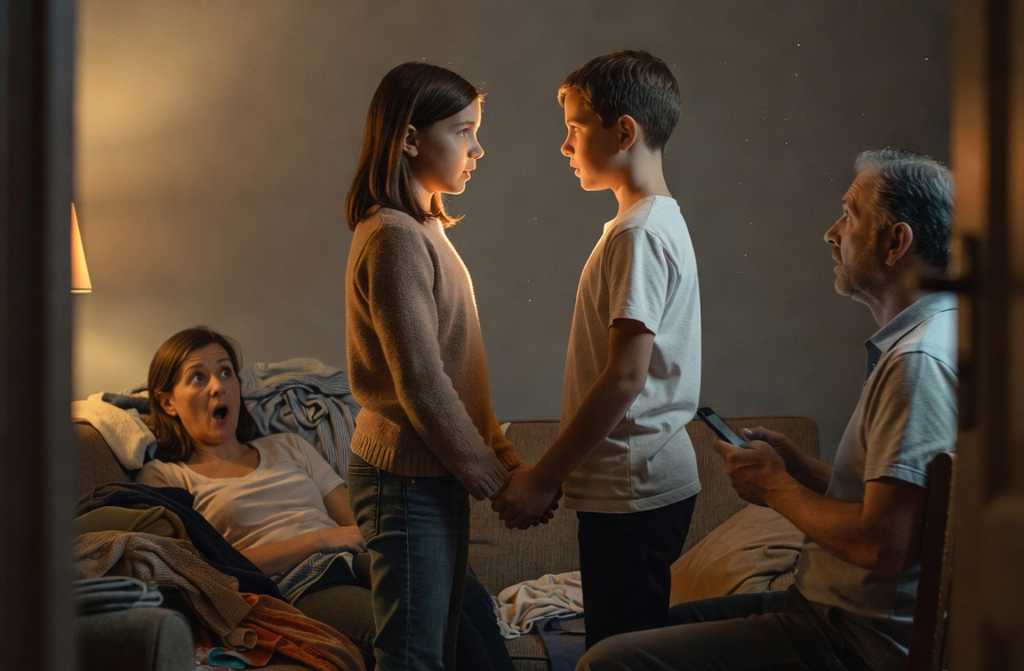
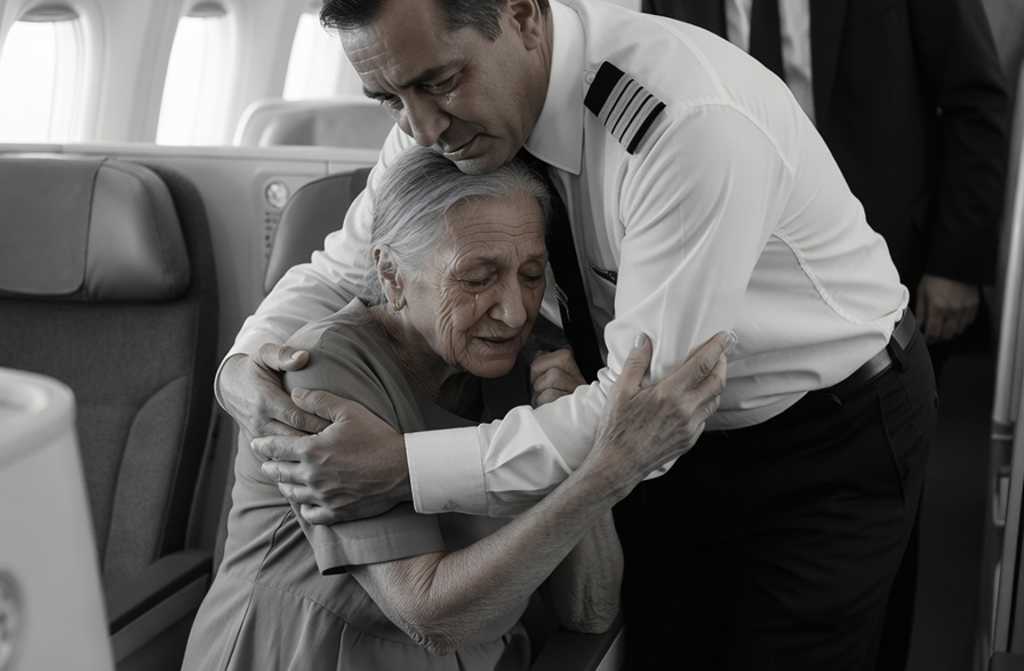
  • The

    The Man Who Asked One Question Too Quietly

    The receptionist didnt reply at once.

    Not because she hadnt caught what he said.

    But because there was something in his quiet tone that seemed to unsettle her, sending the surety from her voice drifting away.

    Little Grace stood between them, clutching her aching middle, her slight frame still trembling with pain.

    She gazed up at the gentleman before her.

    Saw the untroubled expression upon his face.

    Noticed how, in that moment, every other person in the room seemed strangely diminished.

    I Im not sure what you mean, the receptionist managed at last, trying to summon her composure. Shes simply a

    Simply a what? the man interjected, quietly.

    He wasnt stern.

    He wasnt loud.

    It was worse than that.

    He was measured.

    He adjusted his stance, lowering himself to Graces level.

    My dear, he said in a soft tone, whats your full name?

    Grace Harper, she whispered.

    Her words stumbled into the air, fragile.

    The man closed his eyes.

    Just for a heartbeat.

    When he opened them, he let out a deep sigh, as though hed been carrying some invisible burden for years.

    Behind him, a nurses cheeks went pale.

    The receptionist shifted her feet, fidgeting.

    A security guard loitering by the entrance paused, the purpose of his summons suddenly in question.

    The man reached inside his overcoat.

    Not quickly.

    Not with any alarm.

    But with a slow, deliberate intent.

    He withdrew a neatly folded photograph.

    He placed it on the countertop.

    The receptionist looked down.

    And in an instant, her attitude changed.

    There was Grace, younger then.

    Her bright smile beaming.

    Perched on the mans shoulders in a London park, clutching a balloon far too large for her tiny grip.

    The hush that fell wasnt noisy, but it pressed heavily upon all present.

    That little girl, the man said, voice lowered, is my granddaughter.

    Grace blinked.

    Grandad?

    Her voice was thin, uncertain, as if she feared the hope was just a dream.

    His face softened, growing gentle.

    Yes, he answered.

    And as he reached for her, Grace no longer hesitated.

    She stepped straight into his embrace.

    The receptionist recoiled a fraction.

    I I wasnt aware

    No, he replied softly, eyes still on Grace. You werent.

    Just then, a doctor hurried from down the corridor. He took one look at Grace and came swiftly to her side.

    Acute abdominal pain, he announced. We need her immediately.

    Yet the man stayed close, not letting go just yet.

    He kept hold of her hand as the staff lifted her onto a hospital trolley with care.

    For the first time, Grace felt seen.

    As they moved her away, she turned her head.

    Grandad are you coming?

    He squeezed her little hand.

    Always, he promised.

    Later, when things were calm again, voices in reception became quieter, more thoughtful.

    No one discussed the words exchanged.

    Instead, they reflected on what had gone unsaid.

    The receptionist lingered at her station for longer than usual.

    No reprimand was necessary.

    Because sometimes, shame requires no witnesses.

    Grace was attended to swiftly.

    Diligently.

    Kindly.

    And as the searing pain faded, so too did a different ache within hera sadness untouched by medicine.

    As the night wore on and the city of Londons glow filtered in, the old man settled beside her bed in the recovery ward.

    Grace, half-asleep, held on to his coat sleeve.

    Grandad? she mumbled.

    Yes, love.

    I thought nobody wanted me there.

    He pressed her hand gently in his own.

    Then they were mistaken, he assured her softly. And Ill see to it you never feel that way again.

    Beyond the window, the citys lights shimmered against the dusky sky.

    But inside the small room, peace finally settled.

    Not perfection.

    Not forgetting.

    Just safety.

    And that, perhaps, is where true healing begins.

    If you had been present in that waiting room, would you have spoken up like her grandfather or remained silent like all the others?

  • She Destroyed My Dress in Front of the Whole Crowd… Then They Invited Me Onto the Catwalk

    She looks as though she got dressed in the attic after the servants cleared up.

    That remark drifted across the lobby before I even saw who had spoken. A ripple of laughter followed, the sort of polite amusement youd hear at a Mayfair charity fêtecruelty served on fine china.

    I stood beneath the golden chandeliers of a London fashion gala, wearing a cream dress trimmed with pearls that I had stitched together on a rickety second-hand sewing machine. The contraption wobbled dreadfully if I pressed the pedal too firmly. More than once, my downstairs neighbour had rapped on his ceiling with an umbrella as I finished the sleeves.

    But I kept on sewing.

    Because this dress wasnt a fancy whim.

    It was my declaration.

    Stepping in front of me was Beatrice Fleming. Every magazine called her societys style queen. She swept in with a black velvet cape, coiffed hair, and eyes that sized me up as if I were something left on the kerb after market day.

    Are you lost? she enquired with a tilt of her head.

    No, I replied softly.

    That made her lips curl.

    How quaint. Confidence without credentials.

    Around us, guests busied themselves with their glasses, trying to appear uninterested while catching every word.

    Beatrice picked up the beaded cuff of my sleeve, holding it between two fingers.

    Is this handmade? she said, smirking. That explains it.

    Before I could draw back, she gave a sharp tug, snapping the delicate thread.

    Pearls tumbled onto the marble floor.

    One rolled just to her toe.

    With a soft click, she crushed it underfoot.

    There, she declared. Now, it has history.

    Something inside me grew very quiet.

    I glanced at my ruined cuff, then at the closed doors leading to the runway.

    Just beyond, they would soon announce the designer of the grand finale.

    Beyond those doors, my collection was ready.

    Not under the name Eleanor Price, who lived in a small flat and only bought cloth in the January sales.

    But under the name whispered for months among Londons fashion set.

    Morrow.

    The mysterious designer no one could find.

    Suddenly, the lobby doors swung wide.

    A young assistant, clutching a clipboard and wearing a headset, rushed in.

    Shes here! he shouted, and the room turned expectantly.

    Beatrice straightened, certain some celebrity would emerge behind her.

    But the assistant made straight for me.

    Next, the host appeared with Laura Clarke, the model selected to close the show. She wore a pearl gown with a high collar and soft sleeves matching my torn cuff.

    Laura noticed the pearls on the floor, bent down, picked one up, and pressed it gently into my palm.

    Then she faced the guests.

    Ms. Morrow, she said, your audience awaits.

    A hush deeper than velvet settled; music began to play just beyond the heavy doors.

    Beatrice stepped backshrunk by her own cape.

    I walked past her without a word.

    Not all victories need a speech.

    Sometimes, all it takes is a woman in a battered sleeve walking into the room where her name is spoken with respect.

    The room did not erupt at first.

    For several heartbeats, all anyone did was stare.

    I stood at the runways end, sleeve torn, pearls missing, heart thumping in my throat. The lights inside were brighter, making every face a portraitthe curious, the uncertain, the embarrassed, the ones now wishing they had not laughed.

    Laura reached for my hand.

    Walk with me, she whispered.

    And so I did.

    As the music softened, the first model emerged behind us.

    She wore a cream coat with pearl buttons down the back. Then a dove-grey dress with tiny flowers stitched by hand on the collar. Next, a pale blue gown with sleeves like moonlight. Each piece bore a quiet detaila modest pearl stitched close to the heart.

    Not as ornament.

    As remembrance.

    I had sewn those pearls for my mother. Years before anyone in that room had heard my name, she gave me a weathered tin with loose pearls from an old church dress shed worn once. Shed told me, One day, Eleanor, someone will see what your hands can do.

    Id laughed and told her not to dream too wildly on my behalf.

    Shed only smiled and pressed the tin into my hand.

    Thats a mothers job, shed said. We hold the dream until youre ready.

    That was the secret behind Morrow.

    Not a label crafted in a Covent Garden studio.

    Not a clever name dreamed up to dazzle strangers.

    Morrow was my mothers maiden name.

    Id chosen it so she could walk with me into any room, even if I had to walk in alone.

    When the final gown appeared, the crowd fell utterly silent.

    It was Lauras pearl gownhigh collar, soft sleeves, the very cream of my own dress. At her turn, the back spilled open into a waterfall of shimmering pearls, each catching the light like a tear transformed.

    She paused at the centre of the runway, lifting my battered cuff for all to see.

    This, she announced, her voice calm and even, isnt damage. Its proof that beauty can endure hardship.

    No one laughed then.

    Not a soul.

    The host stepped forward, clearly moved.

    Ladies and gentlemen, he said, the final presentationEleanor Price, known to the world as Morrow.

    The applause began quietly.

    Then grew, and grew, until it filled the room and swept my doubts away.

    I glanced towards the lobby.

    Beatrice stood there, pale, one hand resting on her cape. She looked nothing like the woman whod crushed a pearl moments before. She looked like someone meeting her own reflection for the first timeand finding it wanting.

    Afterwards, people crowded about me.

    They touched my arm, asked questions, offered gentle wordstheir voices careful, as though one misstep would remind everyone of their laughter in the lobby.

    I smiled, responded, thanked them.

    My eyes kept being drawn to the entrance.

    There, between the marble squares, one tiny pearl glimmered.

    The one Laura had pressed into my hand left a pale mark from where Id clutched it so tightly.

    When the crowd thinned, Beatrice walked over.

    For once, her smile was gone.

    I didnt know, she said quietly.

    I looked at her for a long time.

    The old methe woman perched over fabric at midnight, hands raw, sometimes questioning the point in tryingwanted to say something to make her hurt.

    But my mothers voice echoed gently in my mind.

    Do not become what wounded you.

    So, opening my hand, I let her see the pearl.

    No, I answered steadily. You didnt know. But you dont need to know someones story to be kind.

    Beatrices gaze fell.

    That touched her more than any applause.

    Im sorry, she whispered.

    And I believed her.

    Not because one apology is enough.

    But because sometimes the first genuine word from a proud soul means more than all their rehearsed lines.

    From my dress pocket, I drew a little needle and threadalways at the ready. My mother taught me never to be ashamed of what keeps you together.

    There beneath the golden lights, I sewed the pearl back onto my battered cuff.

    My hands shook, stitches uneven.

    But when I tied the knot, I felt something gentle settle inside me.

    Laura stood by, smiling through quiet tears.

    The host enquired if I wanted the dress repaired fully before taking photos.

    I looked at my uneven sleeve, the missing pearls, and the single new one shining bravely.

    No, I replied.

    Leave it as it is.

    Because this dress had survived embarrassment and still entered the room.

    Because it had been laughed atand became the story.

    Because sometimes, what others try to ruin becomes what everyone remembers.

    That night, when the hall finally emptied, I stepped outside into the chilly London air.

    Snow fell softly on my sleeve, on my hair, on the last pearl I’d stitched.

    In the glass doors, my reflection waited.

    Not perfect.

    Not dazzling.

    But standing.

    Behind me, the golden glow of the gala shimmereda threshold I now had courage to cross.

    And for the first time in many years, I didnt wish my mother could see me.

    I knew she had.

    Somewhere in every stitch.

    Somewhere in every pearl.

    Somewhere in the quiet fortitude that carried me into that room.

    Has anyone ever scoffed at your dream before understanding it?

    Tell medid Eleanor choose rightly to forgive Beatrice, or would you have turned away in silence?

    Id truly love to know what touched you most in this story.

  • They Ripped Up a Pregnant Woman’s Invitation—Only to Discover She Was the Owner of the Whole Country Estate

    You wouldnt believe what happened last weekend at the big gala at the Royal Crescent Hotel in Bath.

    So, there was Clairevery much pregnant, wearing a simple navy dress, and standing by herself in the grand entrance, where these old marble stairs sweep up into the ballroom. Shed got through so much just to get here. But of course, her ex-husband, Martin, was lurking at the top of the staircase, loving every second. The whole drama was his idea.

    Shes not on the guest list, he said, just loud enough for half the citys wealthiest guests to hear. It was so smug.

    Right next to Claire was Martins new fiancéeCharlotte. She let out this mean, barely disguised laugh. God, this is awkward, she muttered, loud enough for everyone nearby to pretend they werent listening, but you could see it on their faces. The kind of silence you get at posh events when everyones dying to hear more but is too polite to turn around.

    Now, not all that long agojust two yearsMartin walked out on Claire. Her pregnancy was rough; shed almost lost her life trying for their baby. After he left, he went around telling everyone she was a bit mad, fixated on him, and the lot. So tonight, he was just waiting for her to plead her way inside.

    But Claire didnt miss a beat. She handed her invitation to the bouncer as calmly as you like.

    He hesitated, but before he could say anything certain, Charlotte just snatched the invitation from his hand and ripped it right in two.

    I swear, a few people actually gasped.

    Oh, whoops, Charlotte shrugged, utterly fake. Guess it just slipped.

    Martin looked positively delighted with the whole scene.

    Claire just stared at the torn card, saying absolutely nothing. Then the baby kickeda proper thump, by the looks of it. She pressed a hand to her bump, and you could see her steadied by it.

    She reached into her bag and pulled out a black keycard. And as soon as she did, the hotel managerMr. Richardsonturned as pale as the linen tablecloths. Because at that place, only owners carry black cards.

    Martin caught on just a second too late. Claire he stumbled, trying to change his tune.

    But Claire simply waved the card to security. Cool as you like, she said, Would you mind closing off the ballroom please?

    Within moments, the security team had every door locked and the music stopped dead. Everyone was whispering. You could feel the shift in the air.

    Mr. Richardson made a beeline for Claire, offered his deepest bow, and said, Welcome back, Ms. Turner.

    Martin looked like hed seen a ghost.

    Claire finally turned to face him. You spent years trying to convince people I couldnt live without you, she said in a low voice while the whole room listened.

    Nobody even breathed.

    But yesterday, she continued, I finalised the purchase of this entire hotel.

    Charlotte just about fell over in her heels. A gentle wave of shock went through the crowd.

    Martin tried to put on his best fake smile. Claire, surely we can talk this through in private?

    She nearly laughed. You wanted an audience before. Lets finish this with one.

    And she nodded to the guards. Show them both out.

    For once, Martin looked absolutely petrified.

    He left without any of the smugness hed shown before. At the doorway, he paused, jaw clenched, cheeks burning in the glow of the chandelier. Youll regret this, he spat.

    Claire just placed a hand across her bump and looked at him in a way that cut deeper than any harsh words.

    No, Martin, she replied, gentle and steady. The regrets already behind me.

    And just like that, the doors clicked shut behind him and Charlotte.

    For a while, the whole ballroom was silent. Then, from the first table, an older womanbeautiful in a powder-blue shawl and pearlsslowly stood. Tears in her eyes, she said, I owe you the biggest apology. We believed what he said.

    Claire looked around. So many old faces. People who used to cross the street to avoid her. People whod stopped inviting her for lunches or Sunday roasts. Women whod whispered over teacups. Men whod looked at her like she was some sort of ghost.

    She could have said so muchreminded them of every mean-spirited thing shed overheardbut then the baby nudged her hand, softly this time, as if to remind her: Let it go.

    She breathed in. Im not here for revenge, she said. I came back because this place truly matters to me.

    Mr. Richardson lowered his head, a little embarrassed. Everyone in Bath knew the Royal Crescent Hotel, but hardly anyone knew that Claires mother had worked there for thirty years: folding towels, polishing silver, saving up birthday candles so her little girl could have a cake in the staff room after closing.

    When I was eight, Claire said, my mum used to sneak me in through the side door and Id draw in the laundry while she worked her late shift. She always told me, One day, youll walk through the front door like you own the place.

    Her voice shook, but she didnt let it break.

    After Martin left, I came back here one night to remember the person I was before everyone told me I should just disappear. The staff remembered herand they looked after me. They made me tea, found me a seat, gave me a bit of peace.

    The atmosphere in the ballroom softened. Even those whod just laughed at her now looked a mite ashamed.

    Thats why I bought this hotel, Claire went on. Not to settle scores. For her. For every woman who was ever made to feel small in a room she helped build.

    The manager blinked back a tear.

    Then, slowly, a housekeeper at the back of the room started to clap. Another joined in. And then all the kitchen staff. Before long, everyone was standing, applause rolling through the chandelier lightnot for Martin, not for the drama, but for Claire.

    She closed her eyes for a moment, letting it all settle. For the first time in years, she didnt have to justify her pain.

    That night, after most guests had gone home and the lights dimmed, Claire wandered out onto the terrace. The garden below was peaceful, the moonlight stretching out over the Crescent itself. Somewhere, the wind made the leaves in the trees shimmer, almost like they were echoing her mums old promise.

    She looked at her bump and smiled through a few tears.

    We did it, she whispered.

    And standing there in the heart of Bath, hotel glowing behind her and the night stretching ahead, Claire finally realised: Sometimes a closed door is just a kind of protection. And sometimes, the right doors open the moment youre ready to step through as the woman you were meant to be.

    Have you ever had a moment like that? Where everyone wrote you off, but life proved them wrong and showed you just how strong you really are? Id love to hear about it.

  • She Laughed at My Homemade Dress at London Fashion Week — But When the Doors Opened, Everyone Was Talking About Me

    The first barb landed before Id even made it to the backstage entrance.

    Is that meant to be fashion or your grans tablecloth?

    Laughter drifted across the courtyard outside London Fashion Week. Champagne flutes paused mid-sip. Mobiles angled in my direction. I could feel myself becoming the nights light entertainment.

    My name is Clara Finch, but not a soul out there recognised it.

    The cream dress clinging to me had cost six sleepless nights. Id embroidered tiny glass beads along the collar, mended the lining twice, and pressed the skirt with a borrowed iron that left my flat smelling of steam and aged cotton.

    It wasnt flawless.

    But it was mine.

    The one who taunted me was Beatrice Ashdown, a socialite whose family had brushed shoulders with both royalty and designers for decades. She wore deep green velvet and a smile so sleek it must have been rehearsed.

    She approached, head cocked to one side.

    How bold, she murmured. Wearing something homemade to a day like this.

    A man laughed into his sleeve.

    Someone muttered, Probably one of the help.

    I could have told them Id skipped supper the night before to keep sewing. I could have told them these pearls on my cuffs came from my grandmothers snapped necklace. I could have told them this dress wasnt born of want.

    It was made of memory.

    But I kept quiet.

    Beatrice hated that.

    She reached for the little pearl brooch at my shoulder.

    Let me tidy you up, she said.

    Before I could stop her, she plucked it free.

    Something ripped.

    A small gasp passed through the crowd.

    Pearls scattered soundlessly over the flagstones as the brooch fell.

    Beatrice smiled as if shed just finished the punchline.

    There. At least now its honest.

    I scooped up the battered brooch. My hands shook, not from shame, but with anticipation.

    Because through those black doors, thirty models were dressed in my debut collection.

    Because the finale dress was cut from the very same ivory cloth.

    Because the invitations everyone clawed for carried just one word:

    Finch.

    My hidden name.

    My label.

    My life.

    The backstage door swung open.

    The creative director rushed out, scanning the crowd, anxious.

    Is Clara here? he called.

    Suddenly, the air changed.

    Heels tapped across the cobbles.

    Naomi Carter, the model headlining the show, appeared swathed in pearls and silk. She noticed the tear at my shoulder and her expression softened.

    She walked straight past Beatrice.

    She took my hand, unbothered by the watching phones.

    Miss Finch, she said, your shows about to begin.

    Whispers stopped.

    Beatrice staredat the torn fabric in my hand, at the dress on Naomis body, then at me.

    For the first time all evening, she said nothing.

    I pressed the broken brooch into my palm, stepped towards the lights, and felt a quiet certainty.

    Some people will always try to rip apart what they dont understand.

    But the truth has a talent for making it out onto the runway anyway.

    For a moment I just stood there, the skewered pin digging into my hand.

    Naomi squeezed my fingers.

    Come on, she whispered. Theyre waiting for you.

    And then the world outside those doors vanished.

    Backstage shimmered with powder, warm cloth, heady bouquets and tense excitement. Dressers hastened between racks heavy with cream, pearl, and gentle gold. One was tying a sash. Another flicked lint from a jacket. Thirty models wore my creationsnot sketches or daydreams or scraps from my tiny lounge, but full, living garments lit by stage lamps.

    My first collection.

    My grandmothers name.

    Finch.

    Id chosen it quietly, years ago, when I discovered her old sewing basket stashed beneath Mums bed. Inside, there were wooden reels of thread, hand-drawn patterns, a thimble thinned by use, and a delicate card with her script:

    Let no one teach you to feel shame in your handiwork.

    My grandmother, Elsie Finch, spent her life sewing for people who never knew her name. Stunning coats. Gowns for evenings. Bridal veils. Dresses that entered ballrooms while she sat alone in small rooms, bent to her lamp, her tea always cold.

    When she was gone, people called her such a sweet lady.

    But she was more than sweet.

    She was gifted.

    Every bead Id stitched on that cream dress had been for her.

    The show began before Id caught my breath.

    The first model glided on in a simple cream coat, pearl buttons at the wrist catching the spotlights. The room hushed. Not that brittle silence from the courtyardbut that breathless pause when people sense theyre about to witness something sincere.

    A pale linen dress appeared, hand-sewn flowers around the hem.

    A long skirt that glimmered like flame.

    A fitted jacket embroidered with white finches along the collar.

    Each piece whispered of my grans world: laundry snapping on a line, lace at the window, a chipped cup beside a pincushion, a woman humming while mending what others had discarded.

    I watched from the shadows, hands trembling still.

    Then the applause began.

    Hesitant at first.

    One or two clapping.

    Then more.

    And suddenly the whole room seemed to stand with it.

    Naomi closed the show in the pearl-gowned finale. Identical ivory cloth. Identical beading at the neck. But at her shoulder was a blank space, intentional, where my grans old brooch ought to be.

    The creative director looked over.

    Go on, he said, gently. Take your place.

    I stared down at the broken brooch in my palm.

    One pearl missing.

    The pin bent.

    The clasp looked fragile, wounded.

    I remembered Beatrices laughter outside. The torn fabric under my collarbone. The way handmade things are so often mistaken for something small.

    I stepped onto the catwalk.

    The spotlights blinded me, but I could sense the hush in the room. The shift. The dawning realisation.

    Naomi bowed her head, held out her hand.

    I pinned the broken brooch in place, filling the empty space.

    It sat at an angle.

    A little off-kilter.

    But somehow, that made it more beautiful.

    There was a moments pause, a held breath.

    Then came a lone clap.

    Slow.

    Low.

    And gradually, everyone joined in.

    I didnt cry at first. I only stood, gazing at that imperfect brooch glowing as if it had been made for exactly that moment.

    Afterwards, people surrounded me. Some asked about my stitches. Some about the pearls. A few simply said it was the most heartfelt show theyd ever seen.

    But the quietest, dearest moment came much later, when the room was half-dark, the flowers cleared away from the stage.

    Beatrice waited by the door.

    Her green velvet looked heavy now, not grand.

    For a while, she said nothing.

    Then glanced at the rip on my shoulder and lowered her eyes.

    I was spiteful, she muttered. And utterly wrong.

    I couldve turned away.

    Part of me wanted to.

    But, a few feet behind her, on a little table, lay the shows printed note:

    For Elsie Finch, and every woman whose hands made beauty before her name was known.

    Beatrice had read itI saw it in her eyes.

    My gran had a scarf, she murmured. Cream. Tiny white birds along the edge. Kept it wrapped up for years. She used to say the woman who made it had hands like music.

    My heart caught.

    Elsie embroidered birds, I whispered.

    Her face changed.

    Not with pride. Nor shame.

    But something softer.

    Something gently human.

    I never realised, she said.

    No, I replied. You didnt.

    She swallowed.

    I am sorry, Clara.

    For once, she spoke my name as though it counted.

    I watched her for a long beat. I thought of Gran mending cuffs under a lamp. Mum teaching me the patient way to fold a sheet. All the women whod bitten back pain or felt dismissed in silence, and carried on anyway.

    I wont pretend it didnt hurt, I said quietly. But Im not taking it with me past tonight.

    Beatrice nodded.

    There was no grand speech. No embrace. Just two women in a corridor, sunlight flickering off the last pearls on the floor.

    Before she left, Beatrice stooped and picked up the missing pearl.

    She pressed it into my hand.

    I think this is yours, she said.

    The next morning, I sat by my tiny kitchen window, a mug of tea cooling beside me, just like my gran always did.

    My cream dress was draped across my knees. The shoulder was still ragged, but I didnt rush to cover it.

    Instead, I stitched the lost pearl into the brooch.

    And next to the tear, I embroidered a single, tiny white finch.

    Not to disguise the mark.

    To honour it.

    Because some things arent ruined when torn.

    Sometimes, they become part of the story.

    And sometimes, the hands others mock are the very hands that gather up something unforgettable.

    Have you ever been doubted by someone who didnt know what lived inside your story?

    If any of this lingered with you, let me knowwhich moment found its way into your heart?

  • Bob hired a car when his wife was discharged from the hospital, and he and the neighbor carried her into the house. “Everything will be fine,” he comforted his wife, “just live. Even if you sit and talk with me. Just live. And I’ll manage everything. Just don’t leave me, my little dove…!”Bob hired a car when his wife was discharged from the hospital, and he and the neighbor carried her into the house. “Everything will be fine,” he comforted his wife, “just live. Even if you sit and talk with me. Just live. And I’ll manage everything. Just don’t leave me, my little dove…!

    Bob hired a car when his wife was discharged from the hospital, and he and the neighbor carried her into the house. “Everything will be fine,” he comforted his wife, “just live. Even if you sit and talk with me. Just live. And I’ll manage everything. Just don’t leave me, my little dove…!”Bob hired a car when his wife was discharged from the hospital, and he and the neighbor carried her into the house. “Everything will be fine,” he comforted his wife, “just live. Even if you sit and talk with me. Just live. And I’ll manage everything. Just don’t leave me, my little dove…!

    Grace, in her thirty-fifth year, believed she would never know a woman’s true happiness, yet fate had other plans. They came together when both were nearly forty. Brian had been a widower for three years by then. Grace had never married, but she had borne a son. As folks say, she had the child for herself. In her youth she had a relationship with a handsome dark-haired man named Oliver, who promised marriage and charmed young Grace. She fell for his words, which proved empty. It turned out the suitor from the town was already married.

    Oliver’s lawful wife even came to Grace, begging the girl not to break up another family. Young and inexperienced, Grace gave in. But she decided to keep the baby.

    That is how it went. Grace gave birth to Ethan, and the boy became her only comfort and joy. Ethan was well raised and studied hard. After finishing school he entered an economics university. Brian visited Grace several times and suggested they live together, yet the woman hesitated even though she liked him. Grace felt somewhat ashamed of her son and the chance to finally be happy. One evening Ethan chose to speak with his mother. He said he had no objection: Mom, I wont be living at home forever anyway. Brian is a reliable man. Just make sure he doesnt hurt you. What matters most is that you are happy. Brians son felt the same.

    And so they began to live as one. They married and held a small celebration. Grace worked at the village library, while Brian was a farmer. They did everything together. They ran the household, kept livestock, and tended the garden. They loved and respected each other, though sadly God had not granted them children of their own.

    Both sons married and grandchildren arrived. Every holiday they prepared gifts for the children and grandchildren: fresh eggs, milk, cream, pork, and chicken from their own stock. On festive days their cottage filled with many guests. Then Brian and Grace would sit at the table, content and glad they had loved ones with whom to celebrate.

    Only in the evenings, when the elderly couple went to bed, each quietly hoped the other would leave this world first and never feel alone.

    Years took their toll. One day trouble crept up. That morning Grace felt unwell while she began to cook soup in the kitchen. The elderly woman collapsed. Brian, with help from neighbors, called an ambulance. The doctors said she had suffered a stroke. All functions remained except one. Grace could no longer walk. Ethan and his wife came to visit the mother. He gave money for the medicines and left.

    Brian hired a car, and when his wife was discharged from the hospital he and a neighbor carried her into the house.

    Everything will be all right, he comforted his wife. Just live. Even if you sit and talk with me. Just live. I can manage everything. Only dont leave me, my dear.

    Brian cared for his wife well. After a month she moved to a wheelchair and helped him in the kitchen. They still did everything together. They peeled potatoes and carrots, sorted beans, and even baked bread. In the evenings Grace and Brian discussed how they would go on. Winter was ahead, and Brian no longer had the strength to chop wood.

    Perhaps the children could take us in for the winter, and in spring and summer we could manage on our own.

    One weekend Ethan and his wife arrived. The daughter-in-law, Helen, looked around the room and declared: Well have to separate you two, my dears. Well come for Mother next week. I just need to ready the room. Then well return.

    But what about me? Brian whispered awkwardly. We have never been apart. Children, how can this be?

    Well, that was before, when you had the strength for the farm and could look after yourselves, but now it is different. Let your son take you in as well. No one will take both of you together.

    Ethan and his wife drove home. Brian and Grace sighed bitterly and wondered what to do next. Each, falling asleep, wished not to wake and see any of it.

    The following weekend both sons arrived and set about packing things. Brian sat by Graces bed. He kept looking at her, remembering their younger years, and wept. He leaned against his ailing wife and whispered: Forgive me, Grace, that it has come to this. Somewhere we failed in raising the children. They are separating us like unwanted strays. Forgive me. I love you.

    Grace wished to stroke her husbands cheek, but she no longer had the strength. Brian left, wiping tears with his sleeve, and once in the car he stopped wiping them.

    Then the son with his wife and a neighbor bundled Grace in a blanket and began to carry her from the house feet first. The sick woman thought it quite symbolic. She offered no resistance; her will had left her when Brian departed. The ailing woman only hoped not to live until evening.

    A week passed. On a fine autumn day their wish came true. Grace and Brian met in the next world. This story teaches us that true love can survive many trials yet families must never let time or hardship divide those who have shared a lifetime, for the greatest regret is allowing loved ones to feel discarded when they need each other most.Grace, in her thirty-fifth year, believed she would never know a woman’s true happiness, yet fate had other plans. They came together when both were nearly forty. Brian had been a widower for three years by then. Grace had never married, but she had borne a son. As folks say, she had the child for herself. In her youth she had a relationship with a handsome dark-haired man named Oliver, who promised marriage and charmed young Grace. She fell for his words, which proved empty. It turned out the suitor from the town was already married.

    Oliver’s lawful wife even came to Grace, begging the girl not to break up another family. Young and inexperienced, Grace gave in. But she decided to keep the baby.

    That is how it went. Grace gave birth to Ethan, and the boy became her only comfort and joy. Ethan was well raised and studied hard. After finishing school he entered an economics university. Brian visited Grace several times and suggested they live together, yet the woman hesitated even though she liked him. Grace felt somewhat ashamed of her son and the chance to finally be happy. One evening Ethan chose to speak with his mother. He said he had no objection: Mom, I wont be living at home forever anyway. Brian is a reliable man. Just make sure he doesnt hurt you. What matters most is that you are happy. Brians son felt the same.

    And so they began to live as one. They married and held a small celebration. Grace worked at the village library, while Brian was a farmer. They did everything together. They ran the household, kept livestock, and tended the garden. They loved and respected each other, though sadly God had not granted them children of their own.

    Both sons married and grandchildren arrived. Every holiday they prepared gifts for the children and grandchildren: fresh eggs, milk, cream, pork, and chicken from their own stock. On festive days their cottage filled with many guests. Then Brian and Grace would sit at the table, content and glad they had loved ones with whom to celebrate.

    Only in the evenings, when the elderly couple went to bed, each quietly hoped the other would leave this world first and never feel alone.

    Years took their toll. One day trouble crept up. That morning Grace felt unwell while she began to cook soup in the kitchen. The elderly woman collapsed. Brian, with help from neighbors, called an ambulance. The doctors said she had suffered a stroke. All functions remained except one. Grace could no longer walk. Ethan and his wife came to visit the mother. He gave money for the medicines and left.

    Brian hired a car, and when his wife was discharged from the hospital he and a neighbor carried her into the house.

    Everything will be all right, he comforted his wife. Just live. Even if you sit and talk with me. Just live. I can manage everything. Only dont leave me, my dear.

    Brian cared for his wife well. After a month she moved to a wheelchair and helped him in the kitchen. They still did everything together. They peeled potatoes and carrots, sorted beans, and even baked bread. In the evenings Grace and Brian discussed how they would go on. Winter was ahead, and Brian no longer had the strength to chop wood.

    Perhaps the children could take us in for the winter, and in spring and summer we could manage on our own.

    One weekend Ethan and his wife arrived. The daughter-in-law, Helen, looked around the room and declared: Well have to separate you two, my dears. Well come for Mother next week. I just need to ready the room. Then well return.

    But what about me? Brian whispered awkwardly. We have never been apart. Children, how can this be?

    Well, that was before, when you had the strength for the farm and could look after yourselves, but now it is different. Let your son take you in as well. No one will take both of you together.

    Ethan and his wife drove home. Brian and Grace sighed bitterly and wondered what to do next. Each, falling asleep, wished not to wake and see any of it.

    The following weekend both sons arrived and set about packing things. Brian sat by Graces bed. He kept looking at her, remembering their younger years, and wept. He leaned against his ailing wife and whispered: Forgive me, Grace, that it has come to this. Somewhere we failed in raising the children. They are separating us like unwanted strays. Forgive me. I love you.

    Grace wished to stroke her husbands cheek, but she no longer had the strength. Brian left, wiping tears with his sleeve, and once in the car he stopped wiping them.

    Then the son with his wife and a neighbor bundled Grace in a blanket and began to carry her from the house feet first. The sick woman thought it quite symbolic. She offered no resistance; her will had left her when Brian departed. The ailing woman only hoped not to live until evening.

    A week passed. On a fine autumn day their wish came true. Grace and Brian met in the next world. This story teaches us that true love can survive many trials yet families must never let time or hardship divide those who have shared a lifetime, for the greatest regret is allowing loved ones to feel discarded when they need each other most.

  • He Was Only 16 Years Old When He Brought Her Home… The Girl Who Had Been Around for a Long Time and Was Probably Pregnant, a Year Older.

    He Was Only 16 Years Old When He Brought Her Home… The Girl Who Had Been Around for a Long Time and Was Probably Pregnant, a Year Older.

    I was only sixteen when I brought her home, the girl who had clearly been pregnant for some time and was a year older than me. Sophie studied at the same technical college as I did, just in a different year. For several days I watched this unfamiliar girl huddle into a corner and cry softly. Her rounding belly, the same clothes worn for two weeks and that empty, hopeless gaze did not escape my notice.

    As it turned out, nearly everyone knew her story. The grandson of a well-known businessman in London had been seeing her, then simply vanished, heading off on urgent business to Manchester. His parents did not want to hear a thing about her and told her so directly. Her own parents, as if living in the Middle Ages and fearing the disgrace, threw her out of the house and went to their allotment. Some felt sorry for Sophie while others mocked her behind her back.

    She only has herself to blame. She should have used her head.

    I could not bear to watch any longer. I thought it over and approached her. It will not be easy, stop crying. I suggest you move in with me, we could even get married. But I will say it straight away, I cannot lie and I will not pretend everything is perfect. I will simply be there for you and I promise we will manage.

    Sophie wiped her tears and looked at the lad. What could one say, just an ordinary boy without any refinement. She had dreamed of a completely different husband, yet in her situation there was no choice and Sophie came with me. My parents were shocked, Mum begged me to come to my senses, but I was firm. Mum, do not overreact, we will be fine somehow. I have two scholarships, the regular one and the social one. I will take on extra work, we will manage. But you wanted to go to university. So what, people get by without it. Dad has worked his whole life in the factory and you in the shop. Folks without degrees live too. Mum, this is not the end of the world.

    Sophie moved into my room. I gave her my bed and shifted to the uncomfortable sofa bed. For several days she stayed very quiet. Like a shadow she held my hand on the way to college and back home until she finally burst out. I have had enough. Why do your parents look at me crossly, they do not like me. And why do you not spend time with me, you sit with your books or disappear somewhere.

    I was surprised. Do you not think that is normal. Sure they do not like you but they took you in and they do not harass you. Cross looks. Your own parents do not even want to see you. And where are the parents of your child’s father. I sit with books because I study and do not want to get thrown out after the first year. The scholarship will help too. Disappear because I work extra and have no wish to watch weepy soap operas with you.

    Sophie burst into tears. Why do you speak like that. How, I said I cannot lie. And by the way, when are we going to the register office. I cannot go like this, buy me a nice dress with a high waist so the belly is not visible. What are you talking about. We will bring a note from the doctor about the pregnancy, what dress. I still need to save for the pram and cot.

    Mum reached for her valerian but slowly came to terms with the situation and glanced more often at baby clothes. After all nothing terrible was happening, let them live and marry and Dad and I would help as much as possible. Only this girl seemed rather ungrateful, always dissatisfied with me, with them, with the cramped flat. Maybe once she gave birth she would change.

    But Sophie had no intention of changing. When I returned dirty and tired from the car wash, bringing a skinny cat into the room, she flew into a rage. You idiot, what do we need this ragged cat for. Get it out, throw it out of the flat. But I only smiled. No, she is pregnant. She is staying so do not even start. Better shut up and heat my dinner. Oh really, Sophie almost shrieked. Choose, either her or me. That beast is looking at me crossly too. Why, I looked at her in disbelief. It is my home and I do not have to choose. It is my cat and if it bothers you then leave. Even Mum never set such conditions for me. Maybe it is time to stop looking down on everyone.

    Sophie was hysterical, crying and jealous of that thin neglected cat. Where did I even spot a belly on her. But the belly did appear, the cat really was pregnant. I was tired but whenever regret began to creep in I pushed those thoughts away. Somehow we would manage. Sophie would give birth and calm down and before that the cat would entertain everyone. The fluffy kittens would put everyone in a better mood.

    But everything unfolded differently. Grandfather, the well-known entrepreneur in London, returned from a long business trip and learned about it all. He found his grandson, gave him a telling off and announced he would cut him off from the money if the great-grandson was raised in a stranger’s family. And the lad was very afraid of losing such support. Sophie left with him that same day without even saying goodbye to me. Luckily she had her documents with her as she was heading to the doctor after classes. She waved off her things, they would buy her new ones, and she would not return to this shabby technical college anymore.

    I was crushed. How could she. She did not even say goodbye, call or say a word. I threw out all her things and sat for a long time alone in the dark, hugging my cat. The cat understood everything. She quietly nestled against me, sensing she was needed. She sympathized, purred and comforted me. I handled her birth myself, not letting my nervous Mum and confused Dad near the cat. I sat with her, spoke gently and calmed her. I watched to make sure everything went well and kept the phone ready to call the vet if needed.

    Everything went fine, the cat gave birth to four little ones. I changed the bedding, brought fresh water and food. Once more I checked that all was in order and exhausted I lay down, closed my eyes, feeling the smallest kitten nestle into my hand. I thought that sometimes animals show more gratitude than people.I was only sixteen when I brought her home, the girl who had clearly been pregnant for some time and was a year older than me. Sophie studied at the same technical college as I did, just in a different year. For several days I watched this unfamiliar girl huddle into a corner and cry softly. Her rounding belly, the same clothes worn for two weeks and that empty, hopeless gaze did not escape my notice.

    As it turned out, nearly everyone knew her story. The grandson of a well-known businessman in London had been seeing her, then simply vanished, heading off on urgent business to Manchester. His parents did not want to hear a thing about her and told her so directly. Her own parents, as if living in the Middle Ages and fearing the disgrace, threw her out of the house and went to their allotment. Some felt sorry for Sophie while others mocked her behind her back.

    She only has herself to blame. She should have used her head.

    I could not bear to watch any longer. I thought it over and approached her. It will not be easy, stop crying. I suggest you move in with me, we could even get married. But I will say it straight away, I cannot lie and I will not pretend everything is perfect. I will simply be there for you and I promise we will manage.

    Sophie wiped her tears and looked at the lad. What could one say, just an ordinary boy without any refinement. She had dreamed of a completely different husband, yet in her situation there was no choice and Sophie came with me. My parents were shocked, Mum begged me to come to my senses, but I was firm. Mum, do not overreact, we will be fine somehow. I have two scholarships, the regular one and the social one. I will take on extra work, we will manage. But you wanted to go to university. So what, people get by without it. Dad has worked his whole life in the factory and you in the shop. Folks without degrees live too. Mum, this is not the end of the world.

    Sophie moved into my room. I gave her my bed and shifted to the uncomfortable sofa bed. For several days she stayed very quiet. Like a shadow she held my hand on the way to college and back home until she finally burst out. I have had enough. Why do your parents look at me crossly, they do not like me. And why do you not spend time with me, you sit with your books or disappear somewhere.

    I was surprised. Do you not think that is normal. Sure they do not like you but they took you in and they do not harass you. Cross looks. Your own parents do not even want to see you. And where are the parents of your child’s father. I sit with books because I study and do not want to get thrown out after the first year. The scholarship will help too. Disappear because I work extra and have no wish to watch weepy soap operas with you.

    Sophie burst into tears. Why do you speak like that. How, I said I cannot lie. And by the way, when are we going to the register office. I cannot go like this, buy me a nice dress with a high waist so the belly is not visible. What are you talking about. We will bring a note from the doctor about the pregnancy, what dress. I still need to save for the pram and cot.

    Mum reached for her valerian but slowly came to terms with the situation and glanced more often at baby clothes. After all nothing terrible was happening, let them live and marry and Dad and I would help as much as possible. Only this girl seemed rather ungrateful, always dissatisfied with me, with them, with the cramped flat. Maybe once she gave birth she would change.

    But Sophie had no intention of changing. When I returned dirty and tired from the car wash, bringing a skinny cat into the room, she flew into a rage. You idiot, what do we need this ragged cat for. Get it out, throw it out of the flat. But I only smiled. No, she is pregnant. She is staying so do not even start. Better shut up and heat my dinner. Oh really, Sophie almost shrieked. Choose, either her or me. That beast is looking at me crossly too. Why, I looked at her in disbelief. It is my home and I do not have to choose. It is my cat and if it bothers you then leave. Even Mum never set such conditions for me. Maybe it is time to stop looking down on everyone.

    Sophie was hysterical, crying and jealous of that thin neglected cat. Where did I even spot a belly on her. But the belly did appear, the cat really was pregnant. I was tired but whenever regret began to creep in I pushed those thoughts away. Somehow we would manage. Sophie would give birth and calm down and before that the cat would entertain everyone. The fluffy kittens would put everyone in a better mood.

    But everything unfolded differently. Grandfather, the well-known entrepreneur in London, returned from a long business trip and learned about it all. He found his grandson, gave him a telling off and announced he would cut him off from the money if the great-grandson was raised in a stranger’s family. And the lad was very afraid of losing such support. Sophie left with him that same day without even saying goodbye to me. Luckily she had her documents with her as she was heading to the doctor after classes. She waved off her things, they would buy her new ones, and she would not return to this shabby technical college anymore.

    I was crushed. How could she. She did not even say goodbye, call or say a word. I threw out all her things and sat for a long time alone in the dark, hugging my cat. The cat understood everything. She quietly nestled against me, sensing she was needed. She sympathized, purred and comforted me. I handled her birth myself, not letting my nervous Mum and confused Dad near the cat. I sat with her, spoke gently and calmed her. I watched to make sure everything went well and kept the phone ready to call the vet if needed.

    Everything went fine, the cat gave birth to four little ones. I changed the bedding, brought fresh water and food. Once more I checked that all was in order and exhausted I lay down, closed my eyes, feeling the smallest kitten nestle into my hand. I thought that sometimes animals show more gratitude than people.

  • Heart Shattered by Hope: The Road to a New Happiness

    Heart Shattered by Hope: The Road to a New Happiness

    Grace, it’s over between us!” David declared, his tone cold and final, slicing through the tense silence. “I want a real family, with children. You can’t give me that. I’ve filed for divorce. You have three days to gather your things. When you leave, let me know. I’ll stay at my mother’s until the apartment is ready for the child and for her mother. Yes, don’t be surprised, my new girlfriend is pregnant! Three days, Grace!”

    Grace remained silent, feeling the ground crumble beneath her feet in a wave of shock and betrayal. What could she possibly say? For five years they had fought to have a child, but three pregnancies had ended in heartbreak. The doctors assured her she was healthy, but each time something went terribly wrong. Grace lived a healthy life, and during her pregnancies she was even more careful. The last time, she fainted at work, and the ambulance didn’t get there in time…

    The door slammed shut behind David, and Grace, utterly drained, collapsed onto the sofa. She had no energy left to pack anything. Where could she go? Before the marriage, she had lived with her aunt, but after her death, the apartment was sold by her cousin. Return to the village of Oakley, to her grandmother’s house? Rent somewhere? And what about her job? Questions raced through her mind while time slipped away.

    The next morning, the door opened, and her mother-in-law, Patricia Wilson, walked in.

    “Not sleeping? Good,” she said in a dry voice. “I’ve come to make sure you don’t take anything that doesn’t belong to you.”

    “I’m not taking your son’s old socks,” Grace replied, her face tightening. “Do you want to count my things?”

    “What cheek! You were so gentle before. It was me who told David after the first pregnancy that you could never give birth.”

    “Is that what you came to say? Then stay quiet and watch.”

    “Why are you taking the dinner set?” the mother-in-law said, alarmed.

    “It’s mine, from my aunt, a memory of her.”

    “It’ll be empty here without it!”

    “Not my problem. But at least you’ll have a grandchild.”

    “Take only what belongs to you!”

    “The laptop, the coffee maker, and the microwave are gifts from my colleagues. I bought the car before the wedding. Your son has his own.”

    “You have everything you need, but you can’t have children!”

    “It’s not your business. It seems that’s what God wanted.”

    “Don’t you regret it? Maybe you did it on purpose?”

    “You’re talking nonsense. I can’t even think about it without it hurting.”

    Grace looked aroundthe things that were hers had vanished. The brush, the makeup, the slippers… She had forgotten something vital. The presence of the mother-in-law bothered her. She remembered the cat figurine, a keepsake from her grandmother. Inside was a secret compartment with earrings and a ringnot valuable, but dear to her. David had thought it a trifle. Had he thrown it away? Grace opened the balcony.

    “What are you looking for there?” the mother-in-law’s voice rang out. “Come on, take your things and leave!”

    She found the cat figurine, everything intact. Now she could go.

    “Here are the keys, goodbye. I hope we never see each other again.”

    Grace went to the office. She was on medical leave, but she requested some vacation time.

    “We’re with you,” the boss said. “But it’s hard without you. Will three weeks be enough?”

    Grace closed her eyes and felt Oliver’s hand gently squeezing hers, knowing that after so much pain, her new life was just beginning.Grace, it’s over between us!” David declared, his tone cold and final, slicing through the tense silence. “I want a real family, with children. You can’t give me that. I’ve filed for divorce. You have three days to gather your things. When you leave, let me know. I’ll stay at my mother’s until the apartment is ready for the child and for her mother. Yes, don’t be surprised, my new girlfriend is pregnant! Three days, Grace!”

    Grace remained silent, feeling the ground crumble beneath her feet in a wave of shock and betrayal. What could she possibly say? For five years they had fought to have a child, but three pregnancies had ended in heartbreak. The doctors assured her she was healthy, but each time something went terribly wrong. Grace lived a healthy life, and during her pregnancies she was even more careful. The last time, she fainted at work, and the ambulance didn’t get there in time…

    The door slammed shut behind David, and Grace, utterly drained, collapsed onto the sofa. She had no energy left to pack anything. Where could she go? Before the marriage, she had lived with her aunt, but after her death, the apartment was sold by her cousin. Return to the village of Oakley, to her grandmother’s house? Rent somewhere? And what about her job? Questions raced through her mind while time slipped away.

    The next morning, the door opened, and her mother-in-law, Patricia Wilson, walked in.

    “Not sleeping? Good,” she said in a dry voice. “I’ve come to make sure you don’t take anything that doesn’t belong to you.”

    “I’m not taking your son’s old socks,” Grace replied, her face tightening. “Do you want to count my things?”

    “What cheek! You were so gentle before. It was me who told David after the first pregnancy that you could never give birth.”

    “Is that what you came to say? Then stay quiet and watch.”

    “Why are you taking the dinner set?” the mother-in-law said, alarmed.

    “It’s mine, from my aunt, a memory of her.”

    “It’ll be empty here without it!”

    “Not my problem. But at least you’ll have a grandchild.”

    “Take only what belongs to you!”

    “The laptop, the coffee maker, and the microwave are gifts from my colleagues. I bought the car before the wedding. Your son has his own.”

    “You have everything you need, but you can’t have children!”

    “It’s not your business. It seems that’s what God wanted.”

    “Don’t you regret it? Maybe you did it on purpose?”

    “You’re talking nonsense. I can’t even think about it without it hurting.”

    Grace looked aroundthe things that were hers had vanished. The brush, the makeup, the slippers… She had forgotten something vital. The presence of the mother-in-law bothered her. She remembered the cat figurine, a keepsake from her grandmother. Inside was a secret compartment with earrings and a ringnot valuable, but dear to her. David had thought it a trifle. Had he thrown it away? Grace opened the balcony.

    “What are you looking for there?” the mother-in-law’s voice rang out. “Come on, take your things and leave!”

    She found the cat figurine, everything intact. Now she could go.

    “Here are the keys, goodbye. I hope we never see each other again.”

    Grace went to the office. She was on medical leave, but she requested some vacation time.

    “We’re with you,” the boss said. “But it’s hard without you. Will three weeks be enough?”

    Grace closed her eyes and felt Oliver’s hand gently squeezing hers, knowing that after so much pain, her new life was just beginning.