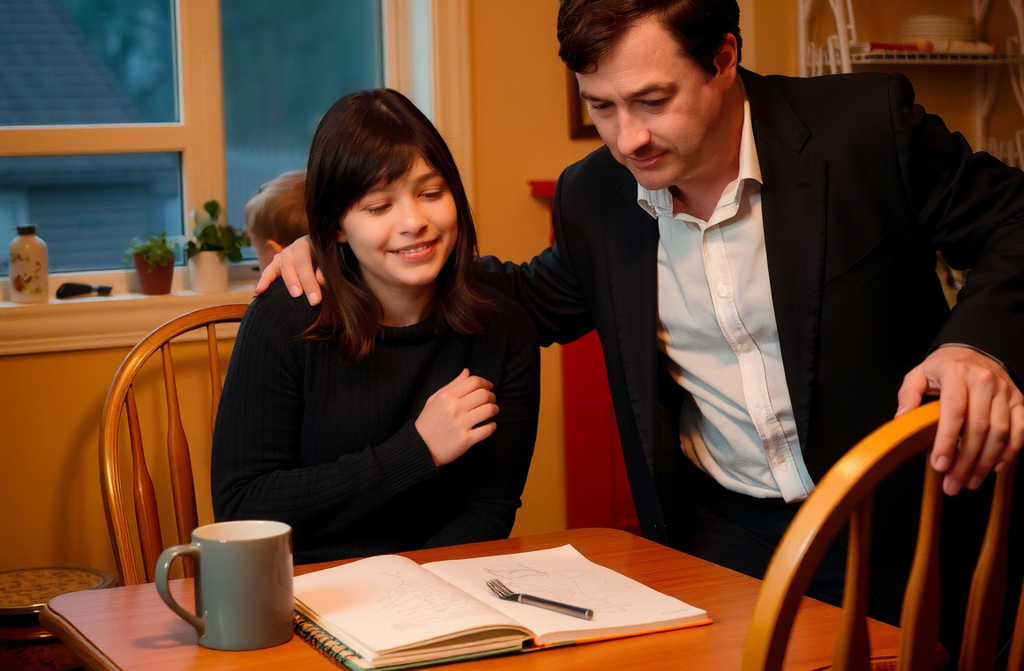
Blythe wakes before dawn in her tiny flat in East London, the cheap alarm ticking away. She silences it quickly, careful not to rouse her younger brother Tom, who lies still, his pale face and shallow breaths a reminder of the illness that is slowly draining him. While she whips up a modest breakfast, Blythe worries about the cash she needs for Toms medication. Her parttime cleaning job barely covers the rent, and the bills seem to multiply each week.
Today will be better, she mutters, smoothing her grey uniform before heading out. The glass façade of Whitmore Enterprises looms over the street, a sleek contrast to Blythes modest world. Every morning she slips through the revolving doors with a shy smile and heads straight for the locker room.
She is invisible to most staff, which, deep down, suits her fine. On this particular morning, Charles Whitmore, the companys owner, moves about with an unusually tight jaw. The millionaire, famed for his indifference and exacting standards, is gearing up for an important meeting with overseas investors.
His immaculate suit and haughty posture make him an intimidating presence. I will not tolerate any mistakes today, he tells his team before striding into the conference suite.
Blythe glides down the corridors, quietly cleaning as the employees bustle, nerves evident in their hurried movements. When the hour arrives, Charles enters the room with his lawyers. The investors are already there, leafing through documents and exchanging calculating smiles.
Tasked with a quick tidyup before the session begins, Blythe wipes the polished table, trying to stay unseen. The doors close, but a sliver remains ajar. From the hallway she catches fragments of the discussion.
One of the investors, an elderly gentleman with a thick accent, urges Charles to sign the contract immediately. This is an opportunity you cannot miss, Mr. Whitmore, he says. Charles replies coolly, I do not make hasty decisions. My team will review everything first. Though his tone is firm, the pressure on him is palpable.
Blythes breath catches when she hears the name of one of the investors. Her heart stopsit is a man linked to the financial collapse that ruined her fathers life years ago. The memory of fraud that cost her father his health and their home surges forward.
Without thinking, she darts into the conference room, ignoring the startled looks of those inside. Charles, stop! Do not sign that contract, she says, voice trembling yet determined.
The room falls silent. Charles rises slowly, his face a mix of confusion and anger. What are you doing here? he snaps.
Blythe lowers her eyes, refusing to retreat. Im just trying to warn you. This man is unreliable. My family lost everything because of someone like him, she declares. Charles fixes her with a cold, scrutinising stare. And who are you to tell me what to do? he retorts, his words cutting like a knife.
She feels she has crossed a dangerous line, but she stands her ground. I have nothing to lose, Charles. I just wanted to warn you, she says, the tremor in her voice unmistakable.
Charles smirks, turns to his team and orders, Remove her and make sure she never interrupts me again. Security escorts Blythe out; her heart pounds, tears well up, but she knows she has no choice.
The conference doors close behind her, yet the muffled voices inside continue. Inside, Charles attempts to regain control, his expression unreadable but his eyes tense. He glances at the investors, whose attention has shifted because of the interruption. I apologise for the inconvenience, he says calmly, masking any emotion. These things happen. My employee must have been overwhelmed. We will address it.
The senior investor, a man with a heavy foreign accent, asks, Mr. Whitmore, are you sure everything is under control? Charles nods, maintaining composure. Of course. Thank you for your understanding. Lets continue.
The atmosphere remains charged. After another halfhour of discussion, the investors decide to postpone. Perhaps we should reconvene at a later date, when conditions are more favourable, one suggests. Charles agrees, realizing pushing forward now would be futile.
When the investors leave, Charles sits alone, breathing deeply to calm his irritation. Blythes words replay in his mindher courage, her desperation, the fierce look in her eyes. He cannot simply ignore what happened.
Back in the cleaning cupboard, Blythes hands shake as she gathers her things. She knows her actions may cost her the job, but she feels she had no other option. She hears the faint echo of the meeting behind the closed doors, and the memory of Charless cold stare lingers.
At the end of her shift, Blythe summons the courage to visit her boss, Helen, in her office. Helen, I need to apologise, Blythe says, I overstepped, but I couldnt stay silent. Helen looks up, a mixture of sternness and curiosity in her eyes. Whitmore could have fired you on the spot, she remarks. I know, but I thought it was the right thing to do, Blythe replies, lowering her gaze. After a pause, Helen says, Carry on as normal. Dont worry. Blythe leaves a little lighter, though uncertainty still shadows her.
From his sleek office, Charles watches Blythe exit. Over the years he has learned not to trust anyone who challenges his authority, yet this cleaning lady has taken a risk without expecting any reward. He flips through a stack of documents, sighing. For the first time in years, someone has disturbed his cold, orderly world.
He presses the intercom. Laura, call the analyst who reviewed those investors, immediately. Within minutes, Peter, a middleaged senior analyst, steps in, nervous. Did you call for me, Mr. Whitmore? he asks. Charles points to a chair. Sit down, Peter. He slams a folder of dubious transactions and hidden lawsuits onto the desk. How could you have missed this? Charles demands. Peter scans the papers, stammering, We followed standard protocols. At first glance everything looked clean. Charles cuts him off, This isnt negligence. Youve jeopardised the company and thousands of jobs. Peter swallows, We can redo the check. Charless voice hardens, I need results, not excuses. He dismisses Peter, Youre dismissed. Peter leaves, cheeks flushed, and Charles sits alone, the room silent.
He then calls the chief legal officer, Alexander. Suspend all negotiations with these investors until we have full clarity. Alexander asks, What made you change your mind? Charles pauses, recalling Blythes face. Call it intuition, he answers curtly.
That evening Blythe returns home, her heart heavy. Tom, still frail, sits up in bed with a pencil and an old sketchbook. Mum, Ive drawn another house, he says, smiling. Blythe looks at the picturea cosy home with a garden and a bright sun. One day well live there, Tom, she says, trying to sound confident. Really? he asks, eyes sparkling with hope. Of course, love, she replies, kissing his forehead before starting dinner.
She cannot stop thinking about Charles. Why hasnt he acted after her interruption? The contract still lies on his desk, alongside the other documents. His thoughts drift back to her words: This man is unreliable. My family lost everything because of someone like him. The image of Blythes determined face haunts him. He sighs, presses the call button, and leans back, staring at the London skyline. He tells himself the suspicion is just instinct, but the evidence is mounting.
The next day Blythe walks through the building, noticing the curious glances of colleagues. Whispers follow her: What was she thinking? I dont know, but I hope Charles doesnt fire her. She nods, aware that Charless reputation for ruthlessness is wellknown.
Charles continues to pore over the investor files. The more he reads, the clearer it becomes that Blythe may have saved him from a disaster. Financial reports reveal shady intermediaries, hidden lawsuits, and contracts that have driven other firms into bankruptcy. His irritation builds as he realises his own team has endangered the companys future.
He presses the intercom again: Laura, arrange a dinner at my house. Invite Blythe and Tom. Laura, surprised but obedient, books the evening.
When the invitation arrives, Blythe is startled. She is not used to such gestures. Her friend Sonya, ever supportive, urges her to accept. Its your chance, Blythe. You deserve a night out, especially with someone like Charles, Sonya says. Blythe hesitates, then agrees.
At Charless stylish townhouse in Kensington, Blythe arrives in a simple yet elegant dress, Tom in his favourite sneakers. Charles greets them warmly. The dinner is relaxed; Tom chats animatedly about his drawings, and Charles listens with genuine interest, casting occasional, softer looks at Blythe.
When the evening ends, Charles escorts them to the door. He takes Blythes hand briefly. Youve changed a lot, Blythe, he says quietly. Thank you, she whispers, unsure how to respond, but a new feeling flickers inside her.
Days later, during a lunch break, Sonya leans in, conspiratorial. Have you noticed Charles always finds reasons to be near you? Blythe protests, Hes just checking on Tom. Sonya smiles, Sure, but its obvious he likes you. Blythe shakes her head, though her thoughts keep returning to Charless lingering gaze.
Charles, meanwhile, finds himself seeking Blythe out more oftenpassing her in the corridors, stopping by the break room. He cannot ignore the shift in his perception; her modesty, strength, and devotion to her brother impress him. He finally decides to speak plainly.
Blythe, he says, gesturing for her to sit, I need to be honest. Our worlds are different, but since you stepped into my life, things have changed. Youve shown me what courage and honesty look like. Blythe looks startled. I I dont know what to say, she murmurs. Charles softens, Call me Charles. They sit in quiet, the tension easing.
Later that night, Blythe lies awake while Tom sleeps, her mind replaying the conversation. She feels both hope and fear. For the first time in years, she dares to imagine a future beyond survival.
The following week, Charles invites Blythe and Tom over again, this time for a casual barbecue in his garden. Tom proudly displays a new drawing of a family portrait, and Charles laughs, genuinely impressed. After dinner, Charles steps onto the terrace, the city lights twinkling below. Blythe, would you let me be part of your life, not just as a benefactor but as someone who truly cares for you and Tom? he asks.
Blythes voice shakes, Im scared. Our lives are so different. Charles replies calmly, Differences dont matter if we both want this. Im willing to walk this path with you.
Tears well up as she whispers, Thank you. He smiles, giving her space, letting the moment linger.
In the weeks that follow, Charles becomes more involved in Blythes and Toms lives, proving his words are not empty promises. Toms health improves, his smile returns, and the bond between Blythe and Charles deepens.
Months later, they hold a modest wedding in a charming chapel in the countryside, surrounded by the few friends and colleagues who have supported them. Tom, wearing a tidy suit, stands proudly beside his sister. As Blythe walks down the aisle, Charles whispers, You are everything Ive ever wanted. She replies, And you are my new chance at happiness. Their vows draw applause, sealing a future they never imagined possible.
After the ceremony, they move into a cosy semidetached house in a leafy suburb, ready to build the life they have fought so hard to create.
Leave a Reply